
74 out of 100 residents say they’re happy in Buda—but that number hides a more interesting story. Happiness here isn’t about perfection; it’s about alignment. Buda works beautifully for people who want outdoor space, a slower suburban rhythm, and proximity to Austin without the price tag. It frustrates people who crave walkable neighborhoods, dense amenities, or a finished small-town identity. The city is caught in a productive tension: growing fast, adding infrastructure, but still figuring out what it wants to be when it grows up.
What makes Buda emotionally complex is that it delivers strongly in some areas—park access, healthcare presence, housing affordability relative to Austin—while leaving gaps in others. School density lags behind family demand. Errands cluster along corridors rather than spreading evenly. Walkability exists in pockets but hasn’t yet become the norm. For people who value what Buda offers and can work around what it doesn’t, the city feels like a smart tradeoff. For people who need the missing pieces, it feels like waiting for a place to catch up.
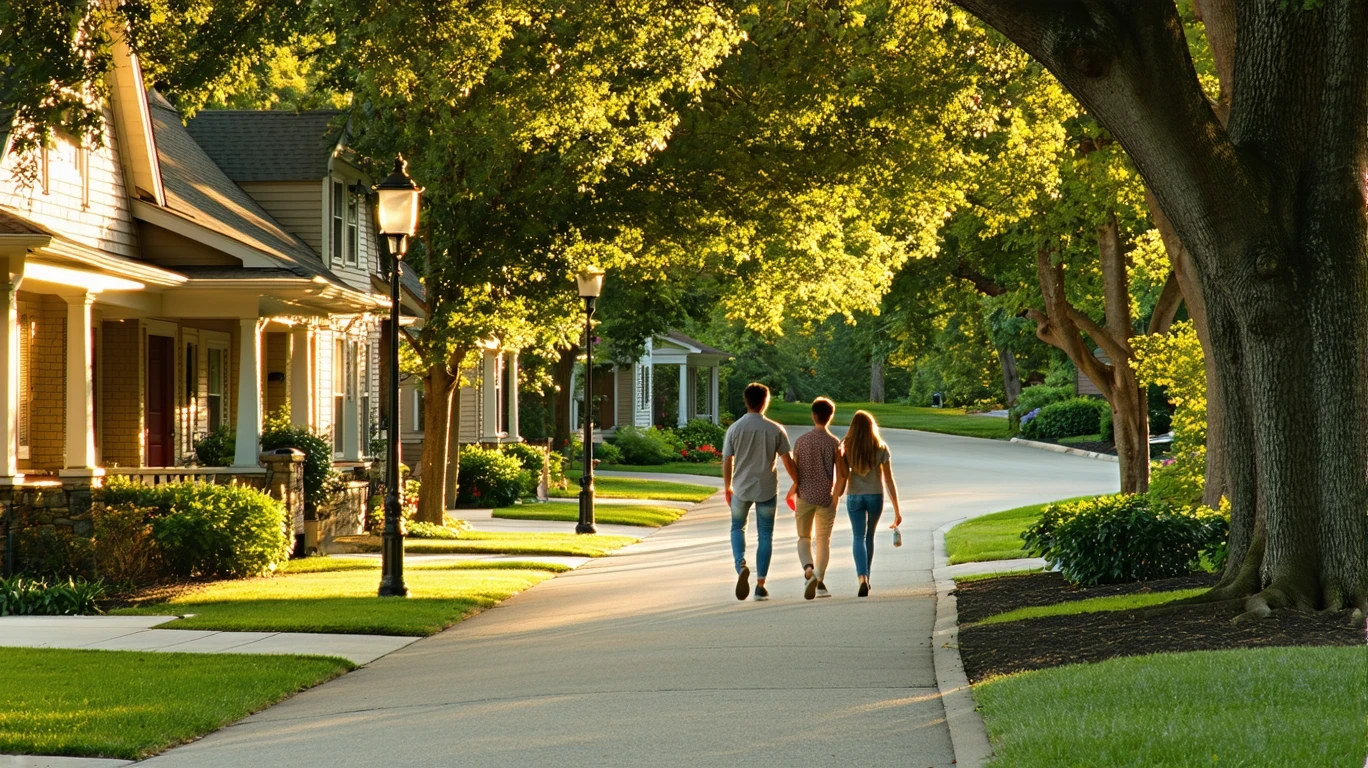
What the Everyday Vibe Feels Like
Buda’s vibe is shaped by its role as an Austin suburb with its own identity—or at least, the memory of one. Long-time residents describe a small-town feel that’s fading but not gone. Newcomers describe a growing city with good bones and unfinished infrastructure. Both are right. The city is adding people, retail, and housing faster than it’s adding texture, and that creates a specific emotional experience: optimism mixed with impatience.
The outdoor environment is Buda’s strongest lifestyle asset. Park density exceeds high thresholds, water features are present, and green space access is woven into daily life in a way that many suburban cities don’t achieve. Families with young kids, dog owners, and people who want to be outside without driving far tend to feel immediately at home. But the infrastructure that supports indoor routines—schools, walkable errands, spontaneous social spaces—hasn’t kept pace. That imbalance shapes how people experience the city day to day.
Mobility in Buda reflects a car-dependent baseline with emerging walkable zones. The pedestrian-to-road ratio is high in certain areas, meaning some neighborhoods support walking better than others. But food and grocery access is corridor-clustered, not broadly distributed, so even in walkable pockets, errands often require driving. For households comfortable with car dependency, this feels normal. For people who want to walk to coffee or pick up dinner on foot, it feels limiting.
Healthcare access is a quiet strength. Buda has a hospital—unusual for a city of this size—along with pharmacies and clinics. That reduces friction for families, retirees, and anyone managing routine or urgent care without driving to Austin. It’s the kind of infrastructure that doesn’t announce itself until you need it, and then it matters a lot.
How this article was built: In addition to public economic data, this article incorporates location-based experiential signals derived from anonymized geographic patterns—such as access density, walkability, and land-use mix—to reflect how day-to-day living actually feels in Buda, TX.
Social Media Buzz in Buda
On platforms like Facebook and Reddit, Buda residents talk about growth more than almost anything else. The tone isn’t uniformly positive or negative—it’s conflicted. People celebrate new restaurants, retail, and amenities arriving, but worry about traffic, crowding, and losing the quiet suburban character that drew them here in the first place. There’s a protective streak in the conversation, a sense that Buda is “ours” and needs to be managed carefully as it changes.
“We moved here for the small-town feel, and now it’s turning into everywhere else,” one recurring sentiment goes. Another counters: “If you want small-town, you have to accept small-town limits—Buda is finally getting what it needs.” The tension between these two perspectives runs through most local discussion.
Outdoor life gets consistent praise. People post about trails, parks, and weekend mornings at green spaces with genuine enthusiasm. The complaint side focuses on errands and convenience: “Everything’s a drive,” and “I miss being able to walk to the store.” There’s also frequent mention of school crowding and the need for more family infrastructure, though park access and outdoor amenities earn steady appreciation.
Local News Tone
Local coverage in and around Buda tends to frame the city through the lens of growth management and identity negotiation. Headlines reflect recurring themes rather than isolated incidents:
- “Community Debates What Growth Should Look Like”
- “New Retail and Dining Options Arrive as Town Expands”
- “Residents Weigh Convenience Against Quiet”
- “Infrastructure Investments Aim to Keep Pace with Population”
- “Buda’s Outdoor Spaces Draw Families and Active Lifestyles”
The tone is generally optimistic but not uncritical. Coverage acknowledges that Buda is in transition, and that transition brings both opportunity and friction. There’s less focus on conflict and more on process: how the city is planning, what’s coming next, and how residents are adjusting. It’s the journalistic equivalent of a city taking itself seriously without declaring victory.
Review-Based Public Perception
On Google, Yelp, and Nextdoor-style platforms, Buda earns praise from people who wanted suburban comfort and outdoor access. Families with young kids highlight park quality and safety. Austin commuters appreciate housing tradeoffs that let them live in a quieter setting without giving up metro access. Retirees and remote workers mention the slower pace and lack of urban intensity as positives.
Complaints tend to come from people who expected more walkability, more dining variety, or more spontaneous convenience. “It’s fine if you drive everywhere, but don’t expect to walk to much,” is a common refrain. Newer planned areas get described as clean and family-friendly but somewhat generic. Older pockets get credit for character but less attention overall.
Service quality—restaurants, retail, healthcare—gets mixed but improving reviews. The sense is that Buda is catching up, but hasn’t fully arrived yet. People who compare it to Austin’s variety or San Marcos’s college-town energy tend to feel let down. People who compare it to Kyle or other nearby suburbs tend to feel satisfied.
Comparison to Nearby Cities
| Dimension | Buda | Kyle | San Marcos |
|---|---|---|---|
| Overall Vibe | Suburban growth with outdoor strength | Quieter, more residential, less retail | College-town energy, younger demographic |
| Walkability | Pockets emerging, mostly car-dependent | Very car-dependent | More walkable near campus, mixed elsewhere |
| Family Feel | Strong parks, limited school density | Family-oriented, quieter pace | Less family-focused, more transient |
| Dining & Retail | Growing but still limited | Sparse, requires driving | More variety, college-driven options |
| Austin Proximity | Close, manageable commute | Similar distance, quieter feel | Farther south, more independent identity |
Buda sits between Kyle’s quieter residential character and San Marcos’s college-town texture. If you want outdoor access and suburban calm with some emerging walkability, Buda offers more infrastructure and amenity growth than Kyle. If you want dining variety and walkable neighborhoods now, San Marcos delivers more texture but with a younger, more transient population. Buda works best for people who value what it has today and can wait for what it’s building.
What Locals Are Saying
“We love the parks and the space, but I do miss being able to walk to get coffee or run a quick errand. Everything’s a five-minute drive, which is fine, but it’s not the same.”
“Buda’s growing fast, and that’s both exciting and a little nerve-wracking. We’re getting more restaurants and stores, but traffic is picking up and it doesn’t feel as sleepy as it used to.”
“For families who want outdoor time and a slower pace, this place is perfect. My kids are outside every day, and we’re close enough to Austin that we don’t feel isolated.”
“I work remotely and wanted somewhere quieter than Austin but not totally disconnected. Buda fits that. It’s not walkable, but it’s peaceful, and I can get into the city when I need to.”
“The hospital here is a huge plus. I didn’t realize how much I’d appreciate having one nearby until I needed it. For a city this size, that’s unusual.”
“It’s a great place if you’re okay with driving. If you’re hoping to walk to dinner or the grocery store, you’ll be disappointed. The infrastructure just isn’t there yet.”
“I’ve been here ten years, and it’s changed a lot. Some of that’s good—better shopping, more options—but it’s also busier and less tight-knit. It’s not a small town anymore, even if it feels like one sometimes.”
Does Buda Feel Like a Good Fit?
Buda works for people who value outdoor access, suburban calm, and proximity to Austin without the intensity or cost. It works for families who prioritize park time over walkable errands, for remote workers who want quiet during the day, and for commuters willing to trade convenience for housing affordability. The city’s healthcare infrastructure and green space access are genuine strengths that shape daily life in meaningful ways.
It frustrates people who need walkability now, who want dense school infrastructure, or who expect a finished small-town identity. Buda is in transition—adding retail, housing, and amenities faster than it’s adding texture—and that creates a specific emotional experience. If you’re comfortable with that tradeoff, the city offers a lot. If you need what’s missing, it feels like waiting.
The best way to know if Buda fits is to spend time understanding what drives your day-to-day needs—how you move, where you spend time, what kind of infrastructure makes life feel easy or hard. Buda’s vibe isn’t for everyone, but for the right household, it’s exactly what they’re looking for.
The perspectives shown reflect commonly expressed local sentiment and recurring themes in public discussion, rather than individual accounts.