
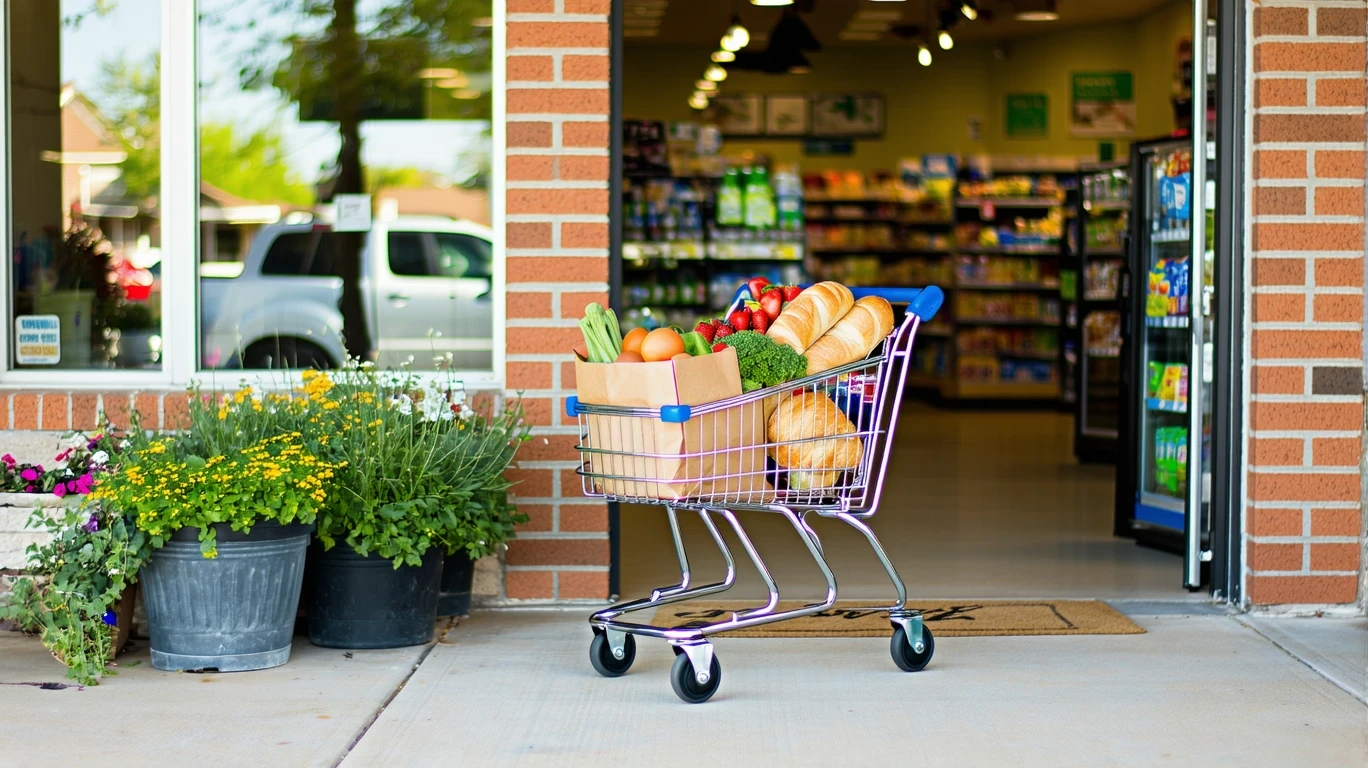
How Grocery Costs Feel in Buda
Grocery prices in Buda track close to the national average, with the city’s regional price parity sitting at 98—just slightly below the baseline of 100. For most households, that translates to a shopping experience that feels neither notably cheap nor expensive compared to other mid-sized Texas communities. Staples like bread, eggs, chicken, and milk cost roughly what you’d expect in similar suburban markets, and the modest discount relative to the national benchmark doesn’t fundamentally reshape how people think about their weekly food runs. What matters more than the baseline is how income, household size, and store choice interact to determine whether grocery spending feels manageable or tight.
With a median household income of $105,378 per year, many Buda families have enough financial cushion to absorb grocery price swings without reworking their budgets. For these households, grocery costs sit comfortably in the background—present but not pressing. Singles and couples without children often find that food spending remains one of the more controllable parts of their monthly outflow, especially when they’re flexible about brands, sales, and store selection. But for larger families, single-income households, or retirees on fixed budgets, even modest per-item costs add up quickly. A family of four buying fresh produce, proteins, dairy, and pantry staples multiple times a week will feel grocery pressure more acutely than a two-person household with simpler meal routines.
The experience of grocery shopping in Buda also depends heavily on where you shop and how intentional you are about planning. Food and grocery options tend to cluster along commercial corridors rather than being evenly distributed across neighborhoods, which means most trips require a short drive rather than a walk to the corner store. That corridor-based layout gives residents access to multiple store tiers—discount grocers, mid-tier chains, and premium markets—but it also means that convenience and proximity don’t always align. Households that prioritize speed or location may end up paying more per item, while those willing to drive a bit farther or compare prices across stores can stretch their dollar further. In Buda, grocery costs aren’t just about what items cost—they’re about how you navigate the options available and how much time and flexibility you bring to the process.
Grocery Price Signals (Illustrative)
These prices illustrate how staple items tend to compare locally—not a full shopping list. They’re derived estimates based on national baselines adjusted by regional price parity, and they reflect typical pricing patterns rather than specific store shelves or weekly promotions. Use them as reference points for understanding relative cost positioning, not as guarantees of what you’ll pay at checkout.
| Item | Typical Price |
|---|---|
| Bread (per pound) | $1.80/lb |
| Cheese (per pound) | $4.64/lb |
| Chicken (per pound) | $1.98/lb |
| Eggs (per dozen) | $2.66/dozen |
| Ground beef (per pound) | $6.55/lb |
| Milk (per half-gallon) | $3.97/half-gallon |
| Rice (per pound) | $1.05/lb |
Chicken and rice remain among the most budget-friendly staples, while ground beef and cheese sit at the higher end of the everyday protein and dairy spectrum. Eggs and milk fall somewhere in the middle, and their prices tend to fluctuate more with seasonal supply shifts and regional distribution patterns. Bread prices stay relatively stable, though specialty or bakery loaves will cost significantly more than standard sandwich bread. These figures give a sense of how Buda’s grocery landscape compares to other markets, but they don’t account for brand premiums, organic options, or bulk discounts—all of which can shift the actual cost per item by 20 to 50 percent or more depending on where and how you shop.
Store Choice & Price Sensitivity
Grocery price pressure in Buda varies more by store tier than by any single “average” experience. Discount grocers—chains focused on private-label products, limited selection, and no-frills layouts—offer the lowest per-item costs and appeal to budget-focused shoppers willing to trade convenience and variety for savings. Mid-tier chains provide a broader selection, more name-brand options, and a more comfortable shopping environment, with prices that sit comfortably in the middle. Premium markets emphasize organic produce, specialty items, prepared foods, and curated selections, and their prices reflect that positioning. For a household buying the same basket of staples, the difference between discount and premium can easily approach 30 to 40 percent, even within the same city.
In Buda, where grocery stores cluster along commercial corridors, store choice becomes a deliberate decision rather than a default. Families with tight budgets or larger households often make discount grocers their primary stop, supplementing with mid-tier stores for items that aren’t available or don’t meet quality expectations. Higher-income households or those prioritizing convenience and quality may anchor at mid-tier or premium stores, accepting the higher per-item cost in exchange for a faster, more pleasant shopping experience. Singles and couples with flexible schedules sometimes split their shopping across multiple stores—buying bulk staples at discount chains and fresh or specialty items at premium markets—to balance cost and quality without fully committing to one tier.
The corridor-clustered layout of grocery options in Buda reinforces the importance of intentionality. Unlike denser urban areas where multiple stores sit within walking distance, or sprawling suburban zones where a single superstore dominates, Buda’s grocery landscape requires residents to think about proximity, store tier, and trip frequency as interconnected variables. Households that plan weekly trips and consolidate errands tend to feel less pressure than those making frequent, unplanned stops at whichever store is closest. Store choice isn’t just about price—it’s about how grocery shopping fits into the rhythm of daily life and how much control a household wants over where their food budget goes.
What Drives Grocery Pressure Here
Income plays the most significant role in determining how grocery costs feel in Buda. With a median household income above $105,000, many families can absorb grocery price increases without making hard tradeoffs elsewhere. For these households, food spending remains flexible—they can buy organic when they want, skip sales without stress, and prioritize convenience over cost. But for households earning below the median, especially those with one income or multiple dependents, grocery costs become a more active pressure point. Even modest per-item prices add up quickly when you’re feeding three or four people multiple times a day, and the gap between discount and mid-tier pricing starts to matter in ways it doesn’t for higher earners.
Household size amplifies grocery sensitivity more than almost any other factor. A single person or couple can keep weekly food costs relatively low by cooking in small batches, avoiding waste, and eating out occasionally without breaking the budget. A family of four or five, on the other hand, burns through staples—milk, eggs, bread, fresh produce—at a pace that makes grocery trips a constant presence in the household routine. Larger families also face more pressure to buy in bulk, which requires upfront cash and storage space, and to plan meals carefully to avoid waste. In Buda, where grocery access is corridor-based rather than hyper-local, larger households often find themselves making midweek runs to restock essentials, which adds time and transportation costs on top of the food itself.
Regional distribution patterns and seasonal variability also shape how grocery costs behave over time. Texas benefits from strong agricultural production and relatively short supply chains for many staples, which helps keep baseline prices stable. But certain items—fresh produce, dairy, eggs—can see sharper price swings during extreme weather events, supply disruptions, or seasonal demand peaks. Buda residents don’t face the same level of price volatility as more isolated or import-dependent markets, but they’re not insulated from it either. Households that build flexibility into their meal planning—swapping ingredients based on what’s in season or on sale—tend to smooth out those swings more effectively than those locked into rigid shopping lists.
Practical Ways People Manage Grocery Costs
The most effective way to manage grocery costs in Buda is to treat store choice as a strategic decision rather than a default. Households that anchor their shopping at discount grocers for pantry staples, bulk items, and everyday proteins can reduce their baseline spending significantly without sacrificing nutrition or variety. Supplementing with mid-tier or premium stores for fresh produce, specialty items, or last-minute needs allows for flexibility without paying premium prices across the board. This approach requires a bit more planning and an extra stop or two each week, but it gives households more control over where their food budget goes and reduces the pressure of paying top-tier prices for every item.
Meal planning and batch cooking also help reduce both cost and waste. Households that plan meals around what’s already in the pantry or what’s on sale that week avoid the cycle of buying ingredients for single recipes and letting the rest spoil. Cooking larger portions and freezing leftovers extends the value of each grocery trip and reduces the temptation to order takeout on busy nights. In Buda, where grocery stores cluster along corridors rather than sitting in every neighborhood, reducing trip frequency through better planning also saves time and transportation costs, which matters for households juggling work, school, and other commitments.
Buying in bulk works well for non-perishable staples—rice, pasta, canned goods, frozen proteins—but it requires upfront cash and storage space, which not all households have. For families with the capacity to stock up, bulk buying smooths out price volatility and reduces the per-unit cost of items that get used regularly. For smaller households or those with limited storage, buying in bulk can backfire if food goes unused or takes up space that’s needed for other things. The key is to match bulk buying to actual consumption patterns rather than assuming it always saves money. In Buda, where household sizes and income levels vary widely, what works for one family won’t necessarily work for another.
Groceries vs Eating Out (Directional)
Cooking at home almost always costs less per meal than eating out, but the tradeoff isn’t purely financial—it’s also about time, convenience, and mental load. A household that cooks most meals at home will spend significantly less on food overall than one that relies heavily on takeout or restaurant dining, but that savings comes at the cost of grocery planning, meal prep, cooking time, and cleanup. For dual-income households or parents managing multiple schedules, the time saved by ordering in or picking up prepared food can feel worth the extra cost, especially on busy weeknights. For retirees, single-income families, or households with more flexible schedules, cooking at home offers a clear way to stretch the food budget without adding unsustainable effort.
In Buda, where monthly expenses are shaped heavily by housing and transportation, grocery spending tends to sit in the middle of the cost hierarchy—less fixed than rent or a mortgage, but more predictable than discretionary spending like entertainment or travel. Households that feel pressure from housing or commuting costs often look to groceries as one of the few categories where they can exercise real control. Cutting back on dining out and shifting more meals to home cooking is one of the most direct ways to free up cash without changing where you live or how you get to work. But it’s also one of the most labor-intensive adjustments, and it requires sustained effort rather than a one-time decision.
The balance between groceries and eating out is ultimately a household-specific calculation that depends on income, time, preferences, and competing financial pressures. In Buda, where grocery costs track close to the national average and income levels provide some cushion, many families find a middle path—cooking most meals at home while leaving room for occasional takeout or restaurant meals without guilt. The key is to treat dining out as a deliberate choice rather than a default, and to recognize that even small shifts in meal frequency can add up over time without requiring a complete overhaul of how the household eats.
FAQs About Grocery Costs in Buda (2026)
Is it cheaper to shop in bulk in Buda? Bulk buying reduces per-unit costs for non-perishable staples like rice, pasta, and canned goods, but it requires upfront cash and storage space. For larger families or households with room to stock up, bulk buying smooths out price volatility and reduces trip frequency, which saves both money and time.
Which stores in Buda are best for low prices? Discount-tier grocers offer the lowest per-item costs and focus on private-label products and no-frills layouts. Mid-tier chains provide more variety and name-brand options at moderate prices, while premium markets emphasize organic and specialty items at higher price points. Store choice matters more than any single “average” price in Buda.
How much more do organic items cost in Buda? Organic produce, dairy, and proteins typically cost 20 to 50 percent more than conventional equivalents, depending on the item and store tier. Premium markets carry the widest organic selection but charge the highest prices, while mid-tier chains increasingly offer organic options at more moderate premiums.
How do grocery costs for two adults in Buda tend to compare to nearby cities? Buda’s regional price parity of 98 suggests grocery costs run slightly below the national average, though the difference is modest. Nearby cities in the Austin metro area show similar pricing patterns, with store tier and shopping habits driving more variation than city-to-city differences.
How do households in Buda think about grocery spending when cooking at home? Most households view grocery spending as one of the more controllable parts of their budget, especially compared to fixed costs like housing or transportation. Families that cook at home regularly can manage food costs through meal planning, store choice, and flexibility around sales, while those relying more on takeout or dining out face higher overall food spending.
Do grocery prices in Buda change much with the seasons? Fresh produce, eggs, and dairy can see sharper price swings during extreme weather, supply disruptions, or seasonal demand peaks, though Texas benefits from strong agricultural production and relatively short supply chains. Households that build flexibility into meal planning—swapping ingredients based on what’s in season or on sale—tend to smooth out those swings more effectively.
How does household size affect grocery pressure in Buda? Larger families burn through staples faster and face more pressure to buy in bulk, plan meals carefully, and avoid waste. Singles and couples can keep weekly food costs lower by cooking in small batches and eating out occasionally without breaking the budget, while families of four or more often find grocery trips a constant presence in their routine.
How Groceries Fit Into the Cost of Living in Buda
Grocery costs in Buda sit in the middle of the household budget hierarchy—less fixed than housing or utilities, but more predictable than discretionary spending like entertainment or travel. For most families, food spending represents one of the few categories where behavior and choice directly influence the bottom line. Unlike rent or a mortgage, which lock in at signing, or transportation costs, which depend heavily on commute distance and vehicle type, grocery spending responds immediately to decisions about store choice, meal planning, and how often the household eats out. That responsiveness makes groceries a natural place to look for budget flexibility, but it also means that managing food costs requires sustained attention rather than a one-time adjustment.
Housing and transportation tend to dominate the financial landscape in Buda, with median home values and commute patterns shaping how much room households have left for everything else. For families spending 30 percent or more of their income on housing, grocery costs become one of the first places to tighten when money feels tight. For those with lower housing costs or higher incomes, grocery spending can expand to include more convenience, quality, and variety without creating real pressure. The interaction between fixed costs and flexible spending determines how much attention a household needs to pay to food prices, and in Buda, where income levels provide some cushion, many families find they can absorb modest grocery price increases without reworking their entire budget.
For a complete picture of how grocery costs fit into monthly spending—including housing, utilities, transportation, and other essentials—see the Monthly Spending in Buda: The Real Pressure Points guide. That article breaks down the full cost structure and shows how different household types allocate their income across competing priorities. Grocery costs are one piece of the puzzle, but they don’t exist in isolation. Understanding how food spending interacts with housing pressure, commute costs, and income gives households the context they need to make confident decisions about where to live, how to shop, and how to balance cost and quality in ways that fit their specific situation.
How this article was built: In addition to public economic data, this article incorporates location-based experiential signals derived from anonymized geographic patterns—such as access density, walkability, and land-use mix—to reflect how day-to-day living actually feels in Buda, TX.