
Megan stared at her first full utility bill in Kyle, confused by line items she’d never tracked before: a kWh charge that spiked in July, a separate trash fee, and a natural gas bill that barely registered in summer but would climb come winter. She’d rented before, but always in apartments where some costs were bundled or averaged out. Now, in a single-family rental, every kilowatt-hour and gallon mattered—and she had no idea what was normal.
Understanding Utilities in Kyle
Utility expenses in Kyle represent the second-largest recurring cost for most households after housing, yet they’re often underestimated during move-in budgeting. Unlike rent or a mortgage, which remain fixed month to month, utilities fluctuate with weather, usage habits, and household size. For renters transitioning from apartments to single-family homes—or newcomers arriving from regions with milder climates—the variability can be jarring.
In Kyle, utility costs typically include electricity, water, natural gas, trash collection, and recycling. Electricity dominates the bill structure due to extended cooling seasons driven by Texas heat, while natural gas plays a secondary role during winter months. Water and trash fees vary by provider and neighborhood, with some areas bundling services and others billing separately. Understanding how these categories behave throughout the year is essential for avoiding bill shock and maintaining predictable household finances.
For apartment renters, some utilities may be included in rent or averaged across units, softening the impact of seasonal swings. Single-family households, by contrast, bear the full weight of consumption and efficiency decisions. Families with children, remote workers, or anyone spending significant time at home will see higher baseline usage across all categories. The structure of Kyle—where cost structure is shaped by car dependency and sparse errands accessibility—means households spend more time at home or driving, indirectly increasing both electricity (from extended HVAC runtime) and transportation fuel costs.
Utilities at a Glance in Kyle
The table below shows how core utility costs typically behave for a mid-size household in a single-family home in Kyle. Where city-level prices are available in the data feed, they are shown directly. When exact figures are not provided, categories are described qualitatively to reflect how costs are structured and what drives variability.
| Utility Category | Cost Structure in Kyle |
|---|---|
| Electricity | 15.87¢/kWh; usage-sensitive and climate-driven |
| Water | Tiered pricing; usage-dependent |
| Natural Gas | $19.31/MCF; winter-driven and heating-dependent |
| Trash & Recycling | Often bundled with water or HOA; varies by provider |
| Total | Seasonal variability driven by electricity and heating exposure |
This table reflects utility cost structure for a mid-size household in a single-family home in Kyle during 2026. Where exact figures are not provided in the IndexYard data feed, categories are described directionally to reflect how costs behave rather than a receipt-accurate total.
Electricity is the most exposure-sensitive utility in Kyle, driven more by climate and home efficiency than by base rates. At 15.87¢ per kWh, the rate itself sits near the Texas average, but consumption spikes dramatically during summer months when air conditioning runs nearly continuously. Homes with poor insulation, older HVAC systems, or west-facing windows see the steepest increases. For illustrative context, a household using 1,000 kWh per month would face roughly $159 in electricity charges before fees and taxes—but summer usage often exceeds that baseline significantly.
Water costs in Kyle are typically structured with tiered pricing, meaning the per-gallon rate increases as usage climbs. Outdoor irrigation, pools, and larger households push consumption into higher tiers, especially during dry summer months. Billing is often bundled with trash collection, though some neighborhoods contract separately. Without feed-backed pricing, it’s difficult to pin down a single figure, but water remains a secondary cost driver compared to electricity.
Natural gas is billed at $19.31 per thousand cubic feet (MCF) and becomes relevant primarily during winter months when heating demand rises. For illustrative context, a household using 1 MCF per month during heating season would see roughly $19 in natural gas charges before fees and taxes. Homes with gas water heaters or ranges will carry a small year-round baseline, but the majority of exposure is seasonal. Kyle’s winters are mild compared to northern climates, so gas bills rarely dominate the way electricity does in summer.
Trash and recycling fees vary widely depending on whether service is provided by the city, a private hauler, or included in HOA dues. Some Kyle neighborhoods bundle trash with water bills, while others require separate contracts. Costs are generally stable month to month, making this the most predictable line item in the utility budget.
Electricity is typically the most exposure-sensitive utility in Kyle, driven more by climate and home efficiency than by base rates.
How Weather Impacts Utilities in Kyle
Kyle’s climate is defined by long, hot summers and short, mild winters—a pattern that creates pronounced seasonal swings in utility costs. From June through September, daytime temperatures regularly climb into the 90s, with stretches of triple-digit heat that push air conditioning systems to their limits. Humidity adds to the discomfort, forcing HVAC units to work harder to maintain indoor comfort. Many Kyle households experience noticeably higher electric bills during peak summer compared to spring, with July and August representing the most expensive months of the year.
Winter brings relief from cooling costs but introduces modest heating expenses. Freezing nights are rare, and extended cold snaps are uncommon, so natural gas or electric heating bills remain manageable. Homes with electric heat pumps may see a slight uptick in electricity usage during December and January, but nothing approaching the summer surge. The shoulder seasons—spring and fall—offer the lowest utility costs, as mild temperatures reduce both heating and cooling demand.
One regional quirk worth noting: Kyle’s proximity to the Texas Hill Country means occasional late-spring storms and heavy rainfall, which can temporarily reduce outdoor water usage but also increase indoor humidity, making air conditioning feel less effective. Homeowners with programmable thermostats and good attic insulation can smooth out some of the seasonal volatility, but the climate itself remains the dominant driver of monthly expenses.
How to Save on Utilities in Kyle
Reducing utility costs in Kyle starts with understanding which categories offer the most control. Electricity is the largest lever, and even modest efficiency improvements can lower exposure significantly. Natural gas and water offer smaller savings opportunities but are still worth addressing, especially for families or households with high baseline usage. The goal isn’t to eliminate variability—Texas summers make that impossible—but to reduce volatility and avoid waste.
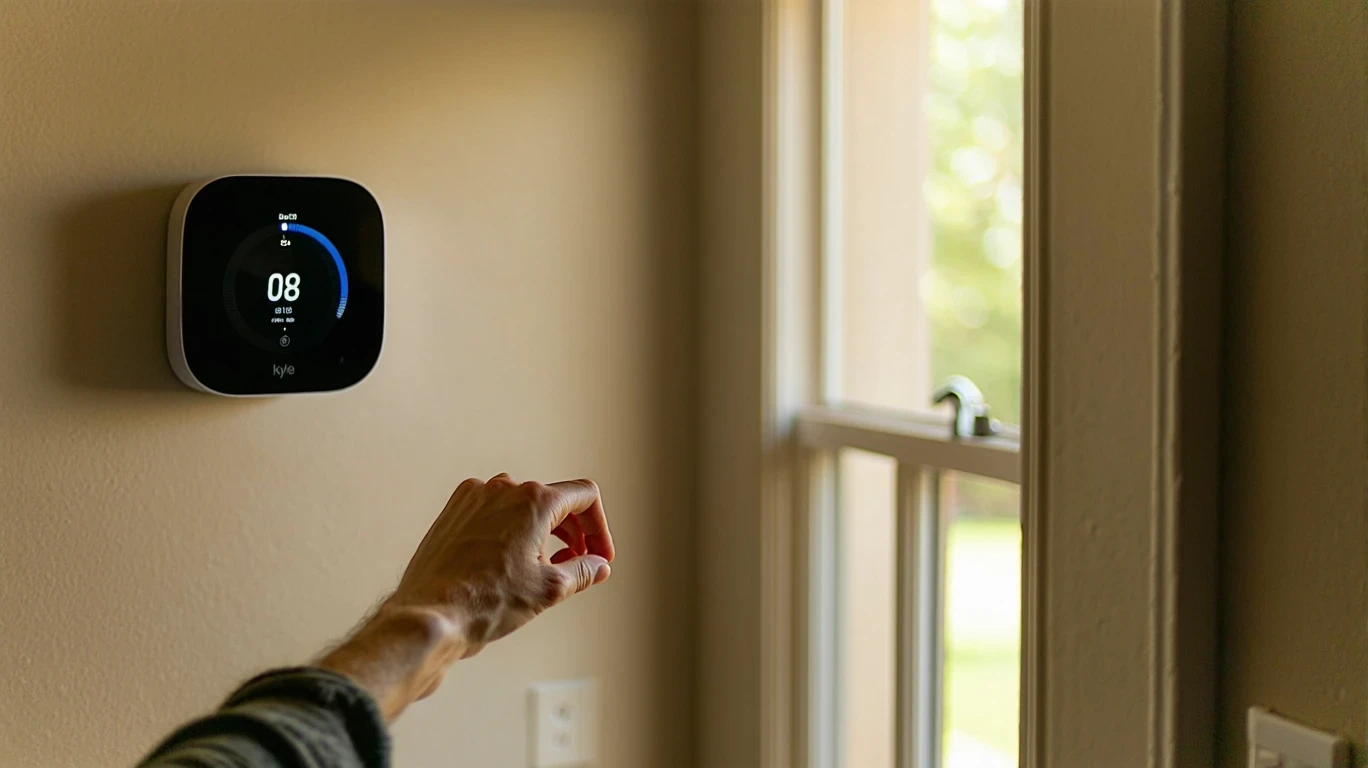
Common strategies include enrolling in time-of-use or off-peak billing programs offered by local providers, which reward households for shifting usage away from peak afternoon hours. Smart thermostats help automate temperature adjustments when no one is home, and ceiling fans reduce the perceived temperature without lowering the thermostat setting. Insulation upgrades—particularly in attics—pay off quickly in climates with extended cooling seasons. Shade trees planted on the west and south sides of a home can lower indoor temperatures by several degrees, reducing HVAC runtime.
- Enroll in budget billing or equalized payment plans to smooth out seasonal swings
- Check for rebates on energy-efficient air conditioning units or heat pumps
- Install low-flow showerheads and faucet aerators to reduce water consumption
- Switch to LED bulbs throughout the home to lower baseline electricity usage
- Seal air leaks around windows, doors, and ductwork to improve HVAC efficiency
- Run dishwashers and laundry during off-peak hours if your provider offers time-of-use rates
- Consider solar panels if your roof orientation and shading allow; Texas offers strong incentives
🏆 Tip: Check if your provider in Kyle offers rebates for energy-efficient AC units or heating systems. Many Texas utilities subsidize upgrades that reduce peak demand, and the payback period can be shorter than expected in high-usage climates.
How Living Patterns in Kyle Shape Utility Exposure
Kyle’s spatial structure—characterized by walkable pockets but sparse errands accessibility overall—means most households rely on cars for daily needs. Grocery stores, pharmacies, and services are spread out, requiring deliberate trips rather than quick walks. This car dependency doesn’t just increase fuel costs; it also affects how people use their homes. When errands require planning and driving, households tend to consolidate trips and spend more time at home between outings, which extends HVAC runtime and increases electricity consumption.
Families with school-age children face additional logistical complexity, as limited playground and school density means more driving for activities and pickups. Remote workers and retirees, who spend the majority of their day indoors, see the highest baseline utility usage. The low-rise, mixed-use character of Kyle’s urban form means most residents live in single-family homes rather than apartments, which increases per-household energy consumption compared to denser housing types. Understanding these patterns helps explain why utility costs in Kyle aren’t just about rates—they’re about how the city’s layout shapes daily routines and time spent at home.
FAQs About Utility Costs in Kyle
Why are utility bills so high in Kyle during summer?
Kyle’s extended cooling season and frequent triple-digit heat push air conditioning systems to run nearly continuously from June through September, driving electricity consumption well above baseline levels. Homes with older HVAC units or poor insulation see the steepest increases.
Do HOAs in Kyle usually include trash or water in their fees?
It varies by neighborhood. Some Kyle HOAs bundle trash and water into monthly dues, while others require homeowners to contract separately with the city or private haulers. Always confirm what’s included before signing a lease or purchase agreement.
How much should a family of four budget for utilities in Kyle each month?
Utility costs depend heavily on home size, efficiency, and season. Electricity will dominate in summer, with smaller contributions from water, gas, and trash. Families should expect higher bills than single-person households due to increased usage across all categories, and should plan for seasonal swings rather than a fixed monthly amount.
Do utility providers in Kyle offer budget billing or equalized payment plans?
Many Texas electricity providers offer budget billing programs that average your annual usage into equal monthly payments, smoothing out summer spikes and winter dips. Check with your specific provider to confirm availability and enrollment requirements.
How does seasonal weather affect monthly utility bills in Kyle?
Summer heat drives the highest electricity costs due to air conditioning demand, while mild winters keep natural gas heating bills relatively low. Spring and fall offer the lowest utility costs overall, as moderate temperatures reduce both heating and cooling needs.
How Utilities Fit Into Kyle’s Cost Structure
Utilities represent a significant but manageable share of household expenses in Kyle, sitting below housing costs but above most discretionary spending. Electricity dominates the utility budget, with natural gas, water, and trash playing secondary roles. The key challenge isn’t the base rates—which are competitive with other Texas cities—but the seasonal volatility driven by climate. Households that plan for summer spikes, invest in efficiency upgrades, and enroll in budget billing programs can reduce both costs and unpredictability.
For renters, especially those moving from apartments to single-family homes, the transition to managing all utilities independently can be jarring. Homeowners have more control over efficiency investments but also bear the full cost of upgrades and repairs. Families and remote workers face the highest baseline usage, making efficiency improvements particularly valuable. Understanding how utilities behave throughout the year—and how Kyle’s spatial layout influences time spent at home—helps households avoid bill shock and maintain stable finances.
Utilities are just one piece of Kyle’s broader cost picture. For a complete view of how housing, transportation, groceries, and other expenses interact, explore IndexYard’s Kyle Affordability: What’s Easy, What’s Expensive guide. And for detailed breakdowns of how these costs fit into a realistic monthly budget, see What a Budget Has to Handle in Kyle.
How this article was built: In addition to public economic data, this article incorporates location-based experiential signals derived from anonymized geographic patterns—such as access density, walkability, and land-use mix—to reflect how day-to-day living actually feels in Kyle, TX.
—