
Is Kyle the kind of place you grow roots—or just pass through? That question sits at the heart of what it feels like to live here. Kyle is a city caught between identities: no longer a sleepy small town, not yet a fully formed suburb, and always in conversation with Austin’s gravitational pull. For some, that in-between space is exactly the appeal—a chance to claim affordability, space, and a front-row seat to growth. For others, it’s a source of friction, a place where the infrastructure hasn’t quite caught up to the population, and where convenience often requires a car, a plan, and a little patience.
The people who tend to feel at home in Kyle are those who value trade-offs over perfection: a longer commute in exchange for a bigger yard, fewer dining options in exchange for lower housing costs, a quieter pace in exchange for proximity to Austin’s opportunities. The people who tend to feel restless are those who crave spontaneity, walkability, and variety—who want to grab dinner on a whim, run errands on foot, or find nightlife without a 20-minute drive. Kyle rewards planners and frustrates improvisers.
What the Conversation Sounds Like Online
In local Facebook groups and on platforms like Reddit, the tone of discussion about Kyle tends to swing between optimism and impatience. There’s pride in the city’s growth—new schools going up, more retail arriving, the sense that Kyle is “finally getting noticed.” But there’s also a recurring thread of frustration: traffic that wasn’t there five years ago, a lack of grocery options in certain pockets, the feeling that the city is playing catch-up with its own population boom.
“We moved here for the space and the price, and we got both. But sometimes it feels like we’re living in a construction zone that never quite finishes.”
“I love that it’s not Austin. I don’t love that I still have to drive to Austin for half the things I need.”
“It’s a great place to raise kids if you’re okay with driving them everywhere. There’s not a lot they can walk to on their own.”
The emotional center of these conversations is often about expectations: people who came here hoping for a quieter, more affordable life tend to feel satisfied. People who expected suburban convenience—walkable errands, abundant parks, easy access to services—tend to feel let down. The city’s infrastructure is catching up, but it’s not there yet, and that gap shows up in daily routines.
How Local Coverage Frames the City
Local news and community outlets tend to frame Kyle through the lens of growth and change. The tone is rarely negative, but it’s not uncritical either—there’s a steady focus on what’s coming, what’s delayed, and what residents are asking for. Coverage tends to cluster around a few recurring themes:
- “New Development Brings Optimism and Growing Pains”
- “Residents Debate What Kind of City Kyle Should Become”
- “Schools and Infrastructure Struggle to Keep Pace with Population”
- “Austin Spillover Reshapes Identity of Once-Sleepy Town”
- “Community Voices Concern Over Traffic and Sprawl”
The framing is less about crisis and more about transition. Kyle is a city in motion, and the coverage reflects that—stories about ribbon cuttings and planning meetings, about what’s been promised and what’s been postponed. For readers trying to get a sense of the city’s vibe, the takeaway is clear: this is a place where change is constant, and where your experience will depend heavily on how much patience you have for that process.
What Reviews and Public Perception Reveal
On platforms like Google Reviews, Yelp, and Nextdoor, public perception of Kyle tends to split along expectation lines. People who moved here from more expensive parts of the Austin metro tend to express relief and satisfaction—they got the space they wanted, the schools they hoped for, and a mortgage payment they can manage. People who moved here expecting a fully built-out suburb with abundant amenities tend to express disappointment.
Positive reviews often highlight affordability, newer construction, and a sense of community in planned neighborhoods. There’s appreciation for the fact that Kyle feels less congested than Round Rock or Cedar Park, and that it’s possible to find a single-family home with a yard without stretching the budget to the breaking point.
Critical reviews tend to focus on what drives expenses beyond housing: the need to drive for most errands, limited dining variety, sparse entertainment options, and a lack of walkable infrastructure outside of a few pockets. Some reviewers note that grocery stores and pharmacies exist but aren’t always conveniently located, and that running a quick errand can easily turn into a 30-minute round trip. Others mention that while parks are present, they’re not always easy to access without a car, and that family-oriented amenities like playgrounds and schools are still catching up to demand.
Neighborhood variation matters here, though it’s often described in broad strokes: newer planned areas tend to feel more polished and family-friendly, with HOA-maintained landscaping and community pools, while older pockets closer to the center of town feel more lived-in and less structured. Neither is better or worse—it’s a question of what kind of texture you’re looking for.
How Kyle Compares to Nearby Cities
| Dimension | Kyle | Buda | San Marcos |
|---|---|---|---|
| Overall Vibe | Growing suburban, in-between identity | Quieter, more established small-town feel | College-town energy, younger demographic |
| Walkability | Limited, car-dependent for most errands | Similar, mostly car-oriented | More walkable downtown core |
| Dining & Nightlife | Sparse, improving slowly | Very limited, quieter | More variety, college-town options |
| Family Appeal | Strong, but infrastructure still catching up | Strong, more settled feel | Less family-focused, more transient |
| Commute to Austin | Moderate, I-35 dependent | Slightly shorter, similar traffic | Longer, less practical for daily commute |
Kyle sits in a middle zone between Buda’s quieter, more settled character and San Marcos’s college-town vibrancy. If you’re looking for a place that feels more established and less in flux, Buda might be a better fit. If you want more walkability, dining variety, and a younger social scene, San Marcos offers that—but with less family-oriented infrastructure and more transience. Kyle’s appeal is for people who want suburban affordability and growth potential without fully committing to either extreme.
What Locals Are Saying
“We moved here from North Austin and it was the right call. We got a house we could actually afford, and the commute isn’t terrible if you time it right. But yeah, we still go back to Austin for date night.”
“It’s a good place to raise kids if you’re the kind of parent who’s okay driving them everywhere. There’s not much they can walk to, and playdates require planning. But the schools are decent and the neighborhoods feel safe.”
“I work remotely, so the lack of walkability doesn’t bother me as much as it might for someone commuting daily. But I do wish there were more coffee shops and third spaces. It can feel a little isolating if you’re not plugged into a neighborhood group.”
“We’ve been here for ten years and the change has been wild. It used to feel like a small town where everyone knew each other. Now it’s just another suburb. I’m not sure if that’s good or bad—it’s just different.”
“The housing market here is still more reasonable than Austin, but it’s not the bargain it was five years ago. If you’re looking for value, you’ll find it, but don’t expect to feel like you’re getting away with something.”
“I like that it’s quiet and that there’s space to breathe. But if you’re someone who needs things to do, or who likes being able to walk to a restaurant or a park, this might not be your place. You have to be okay with driving for almost everything.”
“The city is trying. You can see it. New parks, new retail, new schools. But it’s slow, and in the meantime, you’re living in a place that feels like it’s under construction all the time.”
The Day-to-Day Texture of Living Here
One of the most important things to understand about Kyle is how place structure shapes daily routines. Because grocery stores and food establishments are relatively sparse and not evenly distributed, running errands isn’t something you do on a whim—it’s something you plan. You learn which stores are closest to your neighborhood, you batch trips, and you get used to driving even for small purchases. For some households, that’s a minor inconvenience. For others—especially those without reliable transportation, or those used to walkable urban neighborhoods—it’s a constant source of friction.
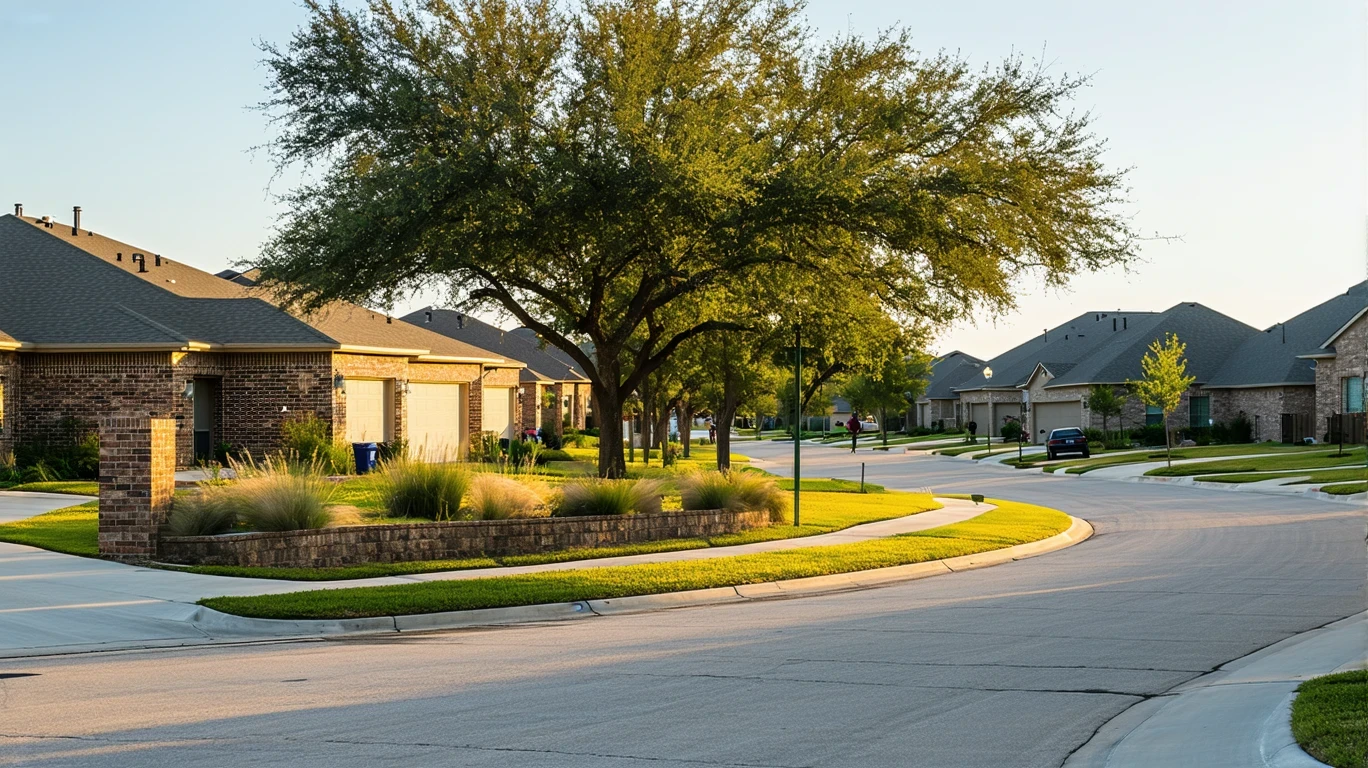
The city does have some walkable pockets, and the pedestrian-to-road ratio is higher than you might expect in a suburban setting. But those pockets are limited, and they don’t define the citywide experience. Most of Kyle is built for cars, and your quality of life here will depend heavily on how comfortable you are with that reality. If you’re someone who values the ability to walk to a coffee shop, grab groceries on foot, or let your kids bike to a friend’s house, you’ll find that day-to-day costs include not just dollars but also time and planning.
Parks and green space are present, and water features add some natural texture to the landscape. But access isn’t always intuitive—you’ll likely need to drive to reach them, and the distribution isn’t uniform across the city. Family infrastructure is still catching up: schools and playgrounds exist, but density is low, and parents often describe a sense of having to coordinate heavily to give kids access to activities and social opportunities.
Healthcare access is routine-local, meaning you’ll find clinics and pharmacies for everyday needs, but for anything more specialized, you’ll likely head toward Austin or another nearby hub. That’s typical for a city of Kyle’s size, but it’s worth noting for households with ongoing medical needs or anyone who values having a hospital nearby.
Does Kyle Feel Like a Good Fit?
Kyle doesn’t ask you to love it unconditionally—it asks you to decide whether its tradeoffs align with your priorities. This is a city that rewards people who value space, affordability, and proximity to Austin over walkability, spontaneity, and urban texture. It works well for families who are comfortable with car dependency and who see growth as opportunity rather than disruption. It works less well for people who want a fully built-out suburb with abundant amenities, or for those who crave the kind of neighborhood life where errands and socializing happen on foot.
The city is still figuring out what it wants to be, and that in-between identity is part of the experience. If you’re someone who enjoys watching a place evolve, who doesn’t mind a little inconvenience in exchange for lower housing pressure, and who’s willing to drive for most of what you need, Kyle can feel like a smart, strategic choice. If you’re someone who needs things to be easy, convenient, and already in place, you’ll likely find yourself frustrated.
Ultimately, Kyle is a city for planners, not improvisers—a place where your satisfaction will depend less on what’s here today and more on how patient you are with what’s coming tomorrow.
How this article was built: In addition to public economic data, this article incorporates location-based experiential signals derived from anonymized geographic patterns—such as access density, walkability, and land-use mix—to reflect how day-to-day living actually feels in Kyle, TX.
The perspectives shown reflect commonly expressed local sentiment and recurring themes in public discussion, rather than individual accounts.