
Seventy-four out of 100 residents say they’re happy in Hutto — but happiness here isn’t about perfection. It’s about whether you’re wired for what Hutto offers: elbow room, outdoor access, and a front-row seat to a town in transition. The question isn’t whether Hutto is “good.” It’s whether the tradeoffs match your wiring.
What It Feels Like to Live in Hutto
Hutto sits in the Austin metro’s outer orbit, close enough to tap into the region’s energy but far enough out to feel distinctly separate. It’s a place caught between identities: no longer a quiet rural town, not yet a fully formed suburb. That in-between status shapes everything — the pace of change, the infrastructure gaps, the emotional texture of daily life.
People who thrive here tend to be comfortable with incompleteness. They value space, quiet, and access to parks and trails more than they prioritize walkable errands or a dense roster of nearby amenities. They’re willing to drive for groceries, plan ahead for errands, and accept that some conveniences simply aren’t around the corner yet. In exchange, they get affordable single-family homes, low-rise neighborhoods, and a slower pace than the inner metro.
People who struggle here often arrived expecting a different equation. They wanted suburban comfort but assumed that would include easy access to schools, playgrounds, and a variety of grocery stores within a short drive. They expected small-town charm but found a community still figuring out what it wants to be. The friction isn’t about Hutto failing to deliver — it’s about mismatched expectations.
The town’s infrastructure reflects its growth phase. While hospital and pharmacy access is solid, grocery and retail options remain sparse relative to the population. Walkable pockets exist, particularly in some newer planned areas, but they don’t extend across the city. For daily errands, a car isn’t optional — it’s the baseline. That structure works beautifully for households who already live car-dependent lives. It feels limiting for those who hoped to walk to a coffee shop or grab milk without a five-mile round trip.
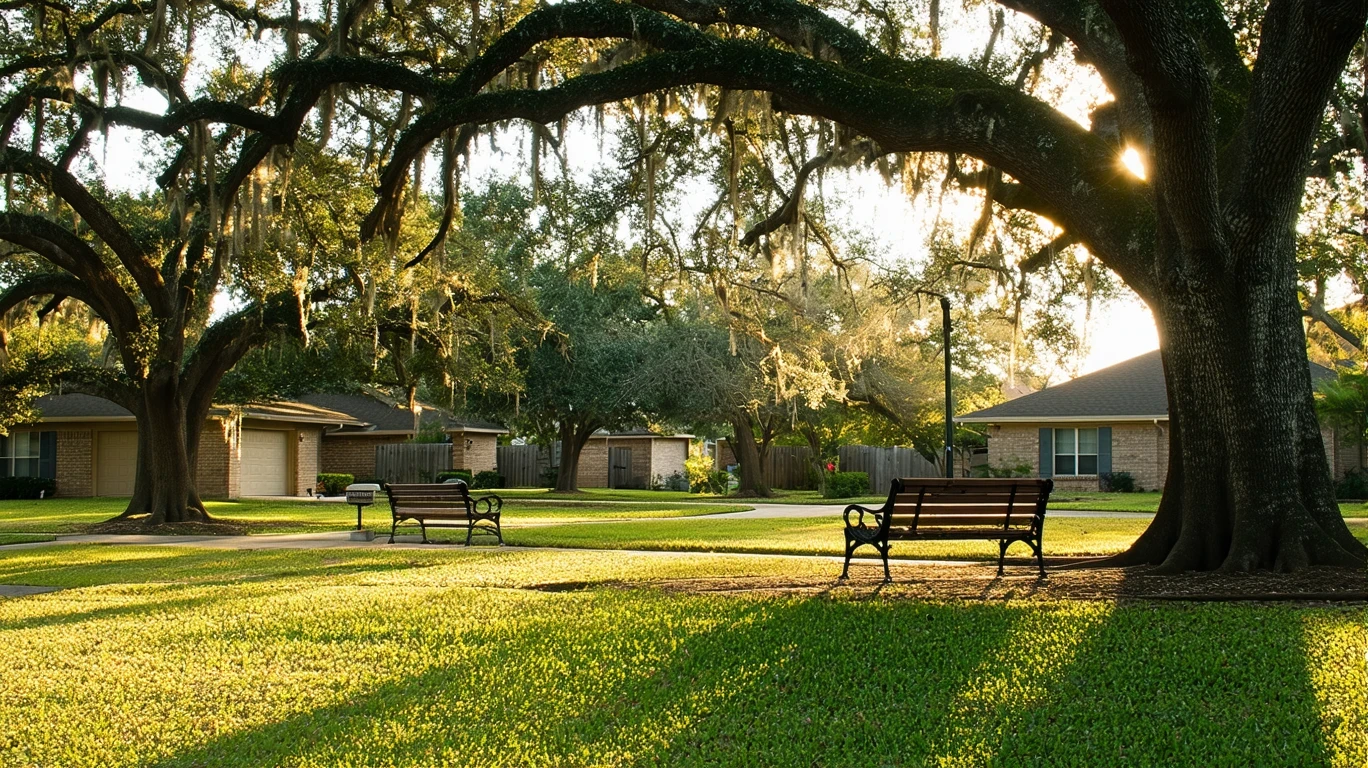
Outdoor access tells a different story. Parks and green spaces are woven throughout Hutto, with water features adding texture to the landscape. Families who prioritize trail access, open space, and room to move find that Hutto delivers on that promise consistently. It’s one of the town’s most reliable emotional anchors.
Social Media Buzz in Hutto
Online conversations about Hutto tend to cluster around a few recurring themes: growth, commute logistics, and the tension between old-timer identity and newcomer expectations. Tone varies widely depending on how long someone has lived here and what they hoped to find.
“We moved here for the space and the price, and we got both. But I didn’t realize how much I’d be driving just to get basics done. It’s not a dealbreaker, but it’s definitely a factor.”
“Hutto still feels like a small town to me, even with all the new builds. I like that it’s not as crowded or rushed as Round Rock or Pflugerville. It’s quieter, and that’s worth the tradeoff.”
“The parks here are genuinely great. We’re outside almost every weekend. If you’re an indoor-entertainment family, though, you’ll probably feel the limitations more.”
Growth is a frequent flashpoint. Long-time residents express protectiveness over the town’s character, while newcomers often advocate for more retail, dining, and services. The conversation isn’t hostile, but it’s persistent — a low hum of “what should Hutto become?” that colors everything from zoning discussions to grocery store wish lists.
Commute talk dominates among working families. With 48.3% of workers facing long commutes and only 7.1% working from home, transportation logistics shape daily routines and household decisions. People swap route tips, complain about traffic surges, and debate whether the drive is worth the housing savings. The answer depends entirely on how much someone values time versus money.
Local News Tone
Local coverage of Hutto tends to frame the city through the lens of change and potential. Stories focus on infrastructure projects, new developments, and community debates about growth management. The tone is generally forward-looking, with an undercurrent of tension between preserving small-town identity and accommodating rapid expansion.
Typical story themes include:
- “New Retail and Dining Options Arrive as Population Grows”
- “Community Debates What Growth Should Look Like”
- “Residents Weigh Convenience vs Quiet”
- “Schools and Infrastructure Struggle to Keep Pace”
- “Outdoor Amenities Expand Across Town”
The framing rarely declares Hutto a success or failure. Instead, it presents the town as a work in progress — a place where outcomes depend on planning decisions still being made. That ambiguity mirrors how residents describe their experience: hopeful but cautious, invested but watchful.
Review-Based Public Perception
Public reviews of Hutto — whether on Google, neighborhood platforms, or local forums — reveal a pattern: people who wanted space, parks, and affordability tend to leave positive feedback. People who wanted walkability, variety, and established infrastructure tend to express disappointment.
Praise centers on:
- Affordability relative to inner Austin metro cities
- Access to parks, trails, and outdoor recreation
- Newer housing stock and low-rise neighborhood character
- Quieter pace and less congestion than nearby suburbs
- Strong sense of community among families in planned neighborhoods
Criticism focuses on:
- Limited grocery and retail options requiring longer drives
- School and playground density below expectations for a family-oriented town
- Lack of walkable errands and car dependency for daily tasks
- Growth outpacing infrastructure in some areas
- Limited dining and entertainment options compared to Round Rock or Pflugerville
Neighborhood variation exists but is often described in broad terms: newer planned areas tend to have more sidewalks and parks, while older pockets feel more rural and spread out. Neither is better — they simply attract different household types.
Comparison to Nearby Cities
| Dimension | Hutto | Round Rock | Pflugerville |
|---|---|---|---|
| Overall Vibe | Quiet, transitional, space-focused | Established, retail-dense, busier | Balanced, family-oriented, accessible |
| Errands Accessibility | Sparse, car-dependent | Broadly accessible, varied options | Moderate, improving steadily |
| Outdoor Access | Integrated, park-rich | Present, but more urban texture | Strong, trail-focused |
| Commute Tradeoff | Longer drives, lower housing costs | Shorter commutes, higher costs | Middle ground on both |
| Growth Phase | Rapid, identity still forming | Mature, infrastructure established | Steady, infrastructure catching up |
Hutto appeals to households willing to trade convenience for space and affordability. Round Rock suits those who want established infrastructure and shorter commutes, even if it costs more. Pflugerville offers a middle path: more accessible than Hutto, less expensive than Round Rock, with strong outdoor amenities and a family-friendly reputation.
None of these cities is objectively better. The right fit depends on whether you prioritize access, cost, or elbow room — and how much patience you have for a town still building itself.
What Locals Are Saying
“We moved here from Round Rock to get more house for less money. The commute is longer, but we’re home by 6:30 most nights, and the kids have a yard. It’s a tradeoff, but it works for us.”
“I thought Hutto would feel more like a small town, but it’s really just a suburb in progress. It’s not bad, just different than I expected. You have to be okay with driving everywhere.”
“The parks here are honestly some of the best we’ve seen. We’re outside constantly. If you’re looking for nightlife or walkable coffee shops, though, this isn’t it.”
“I work remotely, so the commute doesn’t affect me. For us, Hutto is perfect — quiet, affordable, and close enough to Austin when we want it. But I can see why it wouldn’t work for everyone.”
“We’ve been here for 15 years, and it’s changed so much. Some of it’s good — more options, better parks. Some of it’s hard — more traffic, less of that small-town feel. It’s bittersweet.”
“The grocery situation is frustrating. We drive 20 minutes just to get to a decent store. I know more are coming, but it’s been slow. If you’re used to having options nearby, it’s an adjustment.”
“Hutto works if you’re patient and you like space. If you need everything now and you want walkability, you’ll probably be happier closer in. It’s not a criticism — it’s just reality.”
Does Hutto Feel Like a Good Fit?
Hutto tends to work for households who value outdoor access, low-rise neighborhoods, and housing tradeoffs that favor space over proximity. It suits commuters who can absorb longer drive times in exchange for affordability, and remote workers who don’t need to navigate rush hour. It appeals to families who prioritize parks and trails over dense school and playground infrastructure, and to people who are comfortable with a town still figuring out its identity.
Hutto tends to frustrate households who expected walkable errands, abundant nearby amenities, and established infrastructure. It challenges families who assumed a family-oriented reputation would translate into high school and playground density. It wears on people who value variety, spontaneity, and the ability to run errands without planning ahead.
The town’s emotional profile isn’t about happiness or unhappiness — it’s about alignment. If you’re wired for space, patience, and car-dependent logistics, Hutto delivers. If you need texture, convenience, and immediate access, the friction will compound quickly.
For more insight into what drives expenses in Hutto or how quality of life factors shape daily routines, explore the related guides. Hutto isn’t for everyone — but for the right household, it’s exactly enough.
How this article was built: In addition to public economic data, this article incorporates location-based experiential signals derived from anonymized geographic patterns—such as access density, walkability, and land-use mix—to reflect how day-to-day living actually feels in Hutto, TX.
The perspectives shown reflect commonly expressed local sentiment and recurring themes in public discussion, rather than individual accounts.