
‘We moved to Leander for the schools, but stayed for the neighbors.’
That sentiment captures a lot of what draws people to Leander — and a lot of what keeps the conversation complicated. This growing suburb north of Austin has become a landing spot for families chasing affordability, space, and a quieter pace than the city offers. But living here means navigating tradeoffs that don’t always match the brochure: excellent park access but sparse grocery options, rail service into Austin but a car-dependent daily rhythm, and a community identity still forming as growth accelerates.
Leander tends to work beautifully for people who value outdoor space, don’t mind planning their errands, and see the Austin commute as worth the suburban payoff. It tends to frustrate people who expect walkable spontaneity, dense family infrastructure, or the kind of established neighborhood texture that takes decades to build. The vibe here isn’t about urban energy or small-town nostalgia — it’s about negotiating growth, managing expectations, and deciding whether the tradeoffs feel like wins or compromises.
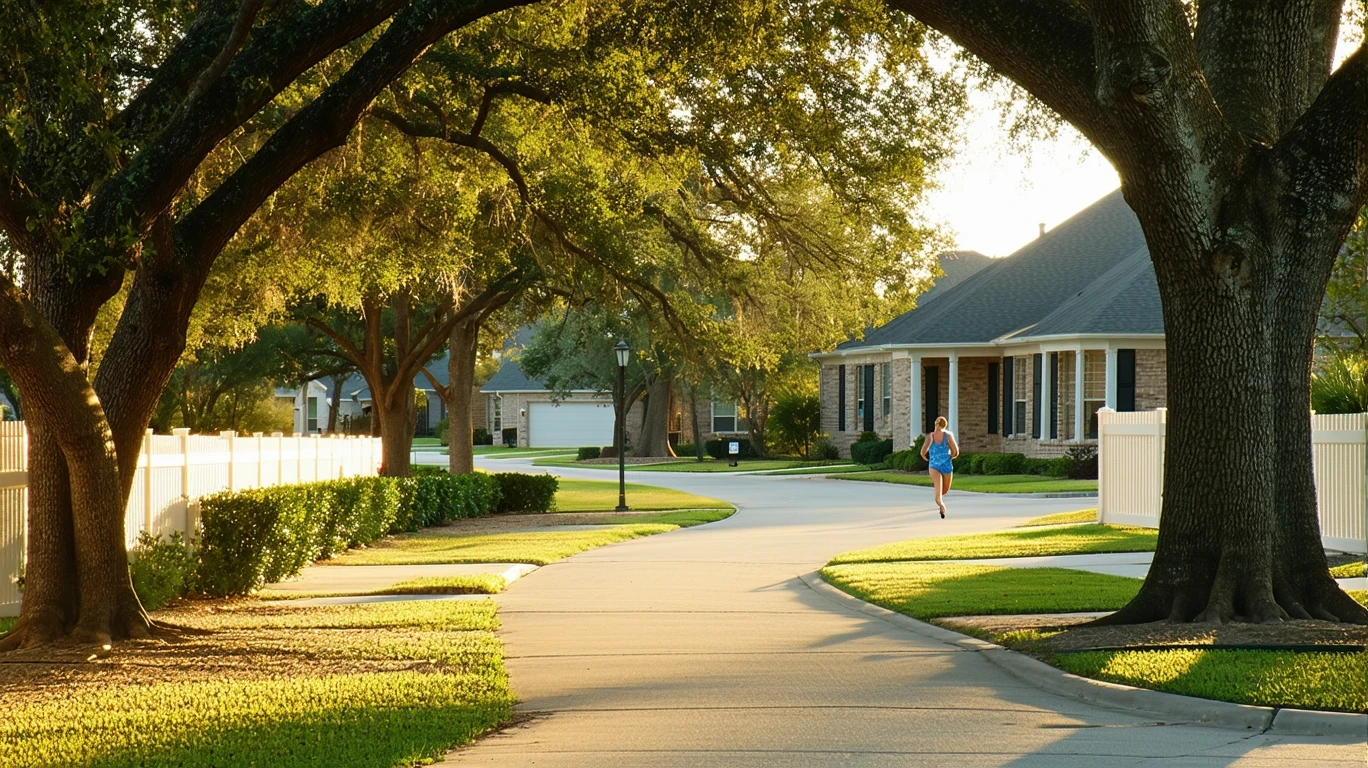
What Leander Feels Like Day to Day
Leander’s emotional tone is shaped by its position in the Austin metro: close enough to access the city’s jobs and culture, far enough to escape its density and price pressure. The median household income here is $129,684, which creates a community of people who’ve made intentional choices about where to spend their money and how to structure their lives. Many residents describe feeling like they’re investing in future potential — a bigger yard, a newer home, a place their kids can grow up — even if that means accepting some present-day friction.
The city’s park density is genuinely strong, with water features woven into the landscape and green space that exceeds typical suburban thresholds. Families who prioritize outdoor time, weekend trail walks, and backyard living tend to feel richly rewarded here. But the infrastructure that supports spontaneous daily life — grabbing groceries on the way home, walking to a coffee shop, letting kids bike to school — is noticeably thin. Food and grocery establishment density falls below what you’d expect for a suburb of this size and income level, which means most households plan their errands in batches and drive nearly everywhere.
That car-dependent rhythm is a defining feature of life in Leander, even though rail service into Austin exists and parts of the city show higher pedestrian-to-road ratios than you’d find in purely auto-oriented sprawl. The walkable pockets are real, but they’re pockets — not a citywide texture. For people who grew up in denser suburbs or moved here from urban neighborhoods, that can feel isolating. For people who wanted space and quiet above all else, it feels like exactly what they paid for.
Social Media Buzz in Leander
Online discussion about Leander tends to circle around a few recurring themes: growth, schools, commute logistics, and the tension between small-town identity and big-city proximity. Facebook groups and local Reddit threads reflect a community that’s proud of what it’s building but also wary of losing what drew people here in the first place.
The tone is often protective. Residents celebrate new parks, defend their choice to live “out here,” and share recommendations for navigating Austin traffic or finding the best HEB. But there’s also fatigue — about construction timelines, about crowded roads during peak hours, about the gap between what the city promises and what it delivers on a Tuesday afternoon when you just need milk and forgot to plan ahead.
“It’s not the same place we moved to five years ago, and I’m not sure that’s all bad — but it’s definitely not all good either.”
“If you’re okay driving everywhere and your idea of community is your street, not your block, you’ll love it here.”
“We have amazing parks. We do not have amazing pizza. Know what you’re signing up for.”
The conversation isn’t bitter, but it’s not uncritical either. People tend to frame Leander as a place that works if your expectations are aligned — and doesn’t if they’re not.
Local News Tone
Coverage of Leander tends to focus on growth management, infrastructure expansion, and the evolving identity of a city that’s adding residents faster than it’s adding texture. The tone is generally optimistic but not without tension. Headlines and story themes often reflect the push-pull of development:
- “New Retail and Dining Options Arrive as Population Grows”
- “Residents Debate Traffic Solutions and Commute Pressures”
- “Parks and Trails Expand to Meet Demand”
- “Community Weighs Suburban Charm Against Urban Convenience”
- “Schools and Infrastructure Struggle to Keep Pace with Growth”
The framing tends to position Leander as a city in transition — no longer a sleepy bedroom community, not yet a fully realized suburb with its own center of gravity. That in-between status shapes how people talk about living here: hopeful about what’s coming, nostalgic for what’s fading, and pragmatic about what’s here now.
Review-Based Public Perception
On platforms like Google Reviews, Yelp, and Nextdoor-style forums, Leander earns praise for space, safety, and access to nature. Families who wanted room to breathe, a place to raise kids away from urban intensity, and proximity to Austin without Austin prices tend to feel like they made the right call. The parks, trails, and overall “newness” of many neighborhoods get consistent positive mentions.
But the complaints are just as consistent: limited dining variety, sparse grocery options relative to household density, longer-than-expected drives for basics, and a sense that the city’s infrastructure hasn’t caught up to its population. People who moved here expecting a fully built-out suburb with walkable errands and abundant family amenities often feel let down. The gap between “suburban convenience” and “Leander reality” is a recurring theme.
“Great if you love your house and your yard. Less great if you want to walk anywhere or have dinner options.”
“We have parks for days. We do not have a grocery store I can walk to, or a coffee shop I can bike to, or a school my kid can get to without me driving.”
“It’s quiet, it’s safe, it’s affordable compared to Austin. But it’s also kind of boring, and you will spend a lot of time in your car.”
Newer planned areas tend to get more favorable reviews for aesthetics and amenities, while older pockets get credit for established trees and slightly more character. But across the board, the review landscape reflects a city that rewards people who plan ahead and frustrates people who value spontaneity.
Comparison to Nearby Cities
| Dimension | Leander | Cedar Park | Round Rock |
|---|---|---|---|
| Overall Vibe | Spacious, growing, car-dependent with strong parks | More established retail, denser suburban feel | More urban texture, mixed-use pockets |
| Errands & Walkability | Sparse, requires planning and driving | Better grocery and retail density | Noticeably more walkable corridors |
| Family Infrastructure | Limited school/playground density | Moderate family amenities | Stronger school and park access |
| Commute to Austin | Rail option available, but car-dependent locally | Similar commute, more local retail | Closer to Austin, more traffic |
| Community Tone | Protective, hopeful, growth-wary | Settled, pragmatic | Diverse, established, busier |
Leander, Cedar Park, and Round Rock all serve Austin commuters, but they offer different tradeoffs. Leander tends to appeal to people who prioritize space, outdoor access, and a quieter feel — and who are willing to drive for nearly everything. Cedar Park offers a bit more retail convenience and a more established suburban rhythm without losing the space advantage. Round Rock feels denser and more urban, with better walkability and more spontaneous errand options, but also more traffic and less of the “small suburb” vibe.
If you want the most space and the most parks, and you don’t mind planning your grocery runs, Leander fits. If you want a bit more texture and convenience without giving up the suburban structure, Cedar Park or Round Rock might feel more complete. None of these cities will satisfy someone looking for urban walkability or dense neighborhood life — but among them, Leander leans hardest into the “space over spontaneity” tradeoff.
What Locals Are Saying
“We love the parks and the trails. Our kids are outside every weekend. But during the week, it’s a lot of driving — school drop-off, grocery runs, everything. If you’re not a planner, it gets old fast.”
“I work remotely, so the commute doesn’t hit me. For us, Leander is perfect — quiet, affordable compared to Austin, and we have a yard. But I get why people with kids feel frustrated about the lack of nearby schools and activities.”
“It’s growing too fast for its own good. The roads can’t handle it, the retail can’t keep up, and it feels like we’re always waiting for the next phase of something to open.”
“If you’re moving here from California or a bigger city, this will feel sleepy. If you’re moving here from a small town, it’ll feel busy. Know where you’re coming from.”
“We moved here for the schools, but honestly, the school options near us are limited. We ended up driving to Cedar Park for some activities. It’s not what we expected.”
“The rail into Austin is a lifesaver for my partner. For me, staying local, it’s all car all the time. I miss being able to walk to a coffee shop.”
“It’s a good place to raise kids if you’re okay being the driver for everything. If you want your kids to have independence — biking to friends’ houses, walking to school — this isn’t set up for that yet.”
Does Leander Feel Like a Good Fit?
Leander works beautifully for people who want space, outdoor access, and a suburban structure that prioritizes home life over street life. It tends to reward families and remote workers who value quiet, plan their errands in batches, and see the housing tradeoffs as worth the distance from Austin’s density and prices. The parks are genuinely excellent, the income level supports a stable community, and the rail option into Austin adds flexibility for commuters.
But Leander frustrates people who expect walkable spontaneity, abundant family infrastructure, or the kind of established neighborhood rhythm that makes daily life feel effortless. The sparse grocery and retail density, limited nearby schools and playgrounds, and car-dependent texture mean that convenience requires planning, and independence requires driving. For people who grew up in denser suburbs or moved here expecting a fully built-out community, the gaps can feel significant.
The city’s vibe isn’t about being happy or unhappy — it’s about alignment. If your mental model of suburban life includes driving everywhere, investing in your home and yard, and waiting for the city to grow into itself, Leander will likely feel like a smart choice. If your model includes walkable errands, nearby schools, and a neighborhood you can navigate on foot, the friction will be constant.
Leander is still becoming what it will be. Whether that feels exciting or exhausting depends entirely on what you need from a place right now — and how much you’re willing to drive to get it.
For a clearer picture of how day-to-day costs play out, or what it takes to feel stable here, explore the related guides on income pressure and monthly budget realities.
How this article was built: In addition to public economic data, this article incorporates location-based experiential signals derived from anonymized geographic patterns—such as access density, walkability, and land-use mix—to reflect how day-to-day living actually feels in Leander, TX.
The perspectives shown reflect commonly expressed local sentiment and recurring themes in public discussion, rather than individual accounts.