
Is Leander expensive to live in? Leander is considered moderately priced in 2026, with a median home value of $412,000 anchoring most household budgets. The value proposition depends on housing entry cost versus car dependence, as daily errands and grocery access require driving despite the presence of commuter rail.
Overall Cost of Living Snapshot
Leander sits just below the national average in overall cost pressure, with a regional price parity index of 98. That near-parity baseline, however, masks the real story: costs here are shaped by housing entry barriers and transportation structure, not day-to-day purchases. The median household income of $129,684 per year signals that most residents are buying rather than renting, and the $412,000 median home value reflects a market built for ownership. Rent exists—$1,802 per month is the median—but the income profile and suburban form suggest that renting is often a transitional step, not the long-term norm.
Utilities and groceries generate moderate, predictable pressure. Electricity runs 15.87¢ per kilowatt-hour, and natural gas costs $19.31 per thousand cubic feet. Groceries track close to national averages, with ground beef at $6.60 per pound and milk at $3.95 per half-gallon. The unemployment rate of 3.6% reflects a stable local economy, and the current temperature of 68°F (feels like 67°F) hints at the seasonal swings that define energy costs here.
The primary cost driver is housing ownership. The secondary driver is transportation: Leander has rail service and walkable pockets in some areas, but grocery density is low and food options are concentrated along corridors. That means most households still depend on cars for daily errands, even if they can walk to a park or take the train to work. The surprise for newcomers often comes from the gap between infrastructure presence and daily logistics—having a rail station nearby doesn’t eliminate the need for a vehicle when the nearest grocery store requires a drive.
Driver verdict: Housing entry cost dominates, transportation creates recurring exposure despite rail access, and utility seasonality swings with summer heat. Surprises come from the mismatch between walkable pockets and sparse grocery access, and from the cumulative cost of car ownership in a place that looks—but doesn’t fully function—like a transit-accessible suburb.
Housing Costs (Primary Driver)
Housing is the center of gravity in Leander’s cost structure. The $412,000 median home value sets the baseline for most households, and the $129,684 median household income suggests that buyers are the dominant group. Renting is possible—$1,802 per month is the median gross rent—but the income distribution and suburban development pattern point toward ownership as the expected path.
Renting in Leander often functions as a bridge: newcomers test the area, families wait for the right purchase, or workers on short-term assignments avoid the commitment of buying. The rental stock exists, but it’s not the core of the housing market. Ownership, by contrast, brings property tax exposure, HOA fees in many newer subdivisions, and maintenance costs that scale with home size and age. The tradeoff is equity accumulation and stability in a market where rental increases can be sharp during tight inventory periods.
Leander is an ownership city. The income base supports it, the housing stock reflects it, and the cost structure assumes it. Renters are present, but they’re navigating a market designed for buyers.
| Housing Type | Cost Anchor | What That Buys You |
|---|---|---|
| Median Home Value | $412,000 | Single-family home in suburban subdivision; property tax and HOA exposure; equity-building path |
| Median Gross Rent | $1,802/month | Apartment or rental home; flexibility and lower upfront cost; less common than ownership |
Utilities & Energy Risk
Utilities in Leander are shaped by climate, not by extreme pricing. The electricity rate of 15.87¢ per kilowatt-hour is close to the state average, and natural gas runs $19.31 per thousand cubic feet. For illustrative context, a household using 1,000 kilowatt-hours per month would see a baseline electric bill around $159 before fees and taxes. Natural gas usage varies with the season, but heating demand in this climate is minimal compared to cooling.
The real driver is summer heat. Leander experiences triple-digit temperatures during an extended cooling season, and air conditioning dominates energy usage from late spring through early fall. Homes with poor insulation, older HVAC systems, or west-facing exposure see the highest bills. The risk isn’t in the per-unit price—it’s in the volume of usage that hot weather demands.
Winter brings relief. Heating needs are light, and natural gas or electric heat runs only during occasional cold snaps. The seasonal swing is predictable: summer bills climb, winter bills drop, and the annual average smooths out to moderate exposure. Efficiency upgrades—better insulation, programmable thermostats, HVAC maintenance—reduce usage and help stabilize costs, but they don’t eliminate the structural reality of cooling a home in Central Texas heat.
Risk classification: moderate. Pricing is not extreme, but seasonal volume creates noticeable swings. Households with older homes or high cooling needs face the upper end of that range.
Groceries & Daily Costs
Groceries in Leander track close to national norms, with the regional price parity index of 98 reflecting near-average pricing. Ground beef costs $6.60 per pound, eggs run $2.45 per dozen, and milk is $3.95 per half-gallon. Bread, cheese, chicken, and rice all fall within expected ranges for a mid-sized Texas suburb. The pressure here is not in the price per item—it’s in the logistics of access.
Grocery density is low, and food establishments are concentrated along corridors rather than distributed evenly across neighborhoods. That means most households drive to shop, even if they live in one of Leander’s walkable pockets. The cost isn’t just the sticker price—it’s the fuel, time, and vehicle dependence required to stock a pantry. For families managing multiple trips per week, or for households without reliable transportation, that friction adds up.
Daily costs beyond groceries—personal care, household supplies, occasional dining—follow the same pattern. Pricing is moderate, but access requires planning and mobility. The city’s structure rewards households with flexible schedules and reliable vehicles, and it penalizes those who depend on proximity or transit for routine errands.
Transportation Reality
Leander has commuter rail service, and some neighborhoods feature pedestrian infrastructure with high pedestrian-to-road ratios. On paper, that suggests transit viability and walkability. In practice, the city’s structure still requires car ownership for most households. Grocery density is low, food options are corridor-clustered, and daily errands—picking up prescriptions, dropping off dry cleaning, running to the hardware store—are not accessible by foot or rail for the majority of residents.
The rail line serves commuters heading into Austin or other regional hubs, and it’s a valuable option for workers with fixed schedules and destinations near stations. But it doesn’t replace a car for household logistics. Gas prices sit at $3.29 per gallon, and for illustrative context, a household driving a typical 25-mile round-trip commute in a vehicle averaging 25 miles per gallon would use about one gallon per day, or roughly $3.29 in fuel. Over a month, that’s close to $66 in gas for commuting alone, before adding errands, weekend trips, or multi-vehicle households.
Cycling infrastructure exists in pockets, with bike-to-road ratios in the medium band, but it’s not a primary mode for most residents. The city’s layout, combined with summer heat and distance between destinations, makes biking a recreational or occasional option rather than a daily solution. Transportation here is a recurring exposure: fuel, maintenance, insurance, and depreciation all compound, and the presence of rail service reduces but does not eliminate that burden.
Cost Exposure Profiles
Cost exposure in Leander is dominated by housing entry and transportation dependence. The $412,000 median home value creates a high upfront barrier, but it also locks in long-term stability for buyers who can clear that threshold. Renters face lower entry costs but higher volatility, as rental increases can be sharp when inventory tightens. The choice between renting and owning is less about monthly cash flow and more about exposure type: renters trade equity for flexibility, while owners trade liquidity for control.
Transportation creates the second layer of exposure. Even households with rail access still depend on cars for groceries, errands, and household logistics. That means fuel costs, maintenance, insurance, and vehicle depreciation are structural, not optional. Single-vehicle households face less pressure than multi-vehicle families, but the baseline requirement is the same: you need a car to live here efficiently.
Utility exposure is moderate and seasonal. Summer cooling bills rise with triple-digit heat, but winter heating costs are minimal. Households in older homes or with poor insulation see the high end of that range, while newer construction with efficient HVAC systems stays closer to the baseline. The swing is predictable, and it’s manageable for most households, but it’s not trivial.
Low-exposure situations: single-vehicle households, newer homes with efficient systems, owners who bought before recent price increases, and workers who can use rail for commuting. High-exposure situations: multi-vehicle families, renters facing renewal increases, households in older homes with high cooling costs, and residents who must drive for all errands due to location or schedule constraints.
How Day-to-Day Living Actually Works in Leander
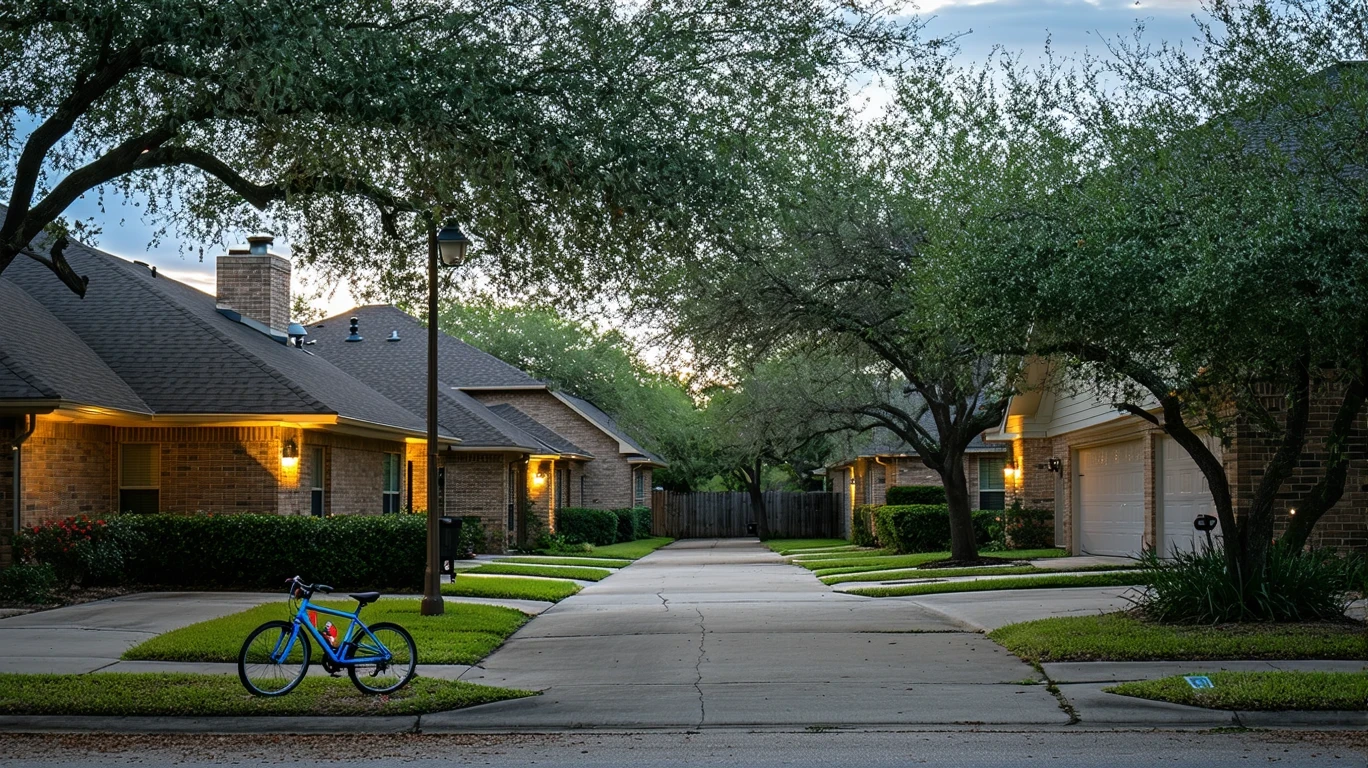
Leander’s infrastructure creates a hybrid experience that doesn’t fit neatly into “suburban car dependency” or “transit-accessible walkability.” Some neighborhoods have high pedestrian-to-road ratios and feel walkable—sidewalks are present, parks are integrated, and the streetscape supports foot traffic. But grocery density is low, and food establishments cluster along corridors rather than spreading evenly across residential areas. That means even residents in walkable pockets still drive to shop, because the nearest grocery store isn’t within walking distance.
Rail service adds another layer of complexity. The train connects Leander to regional job centers, and for commuters with fixed schedules and destinations near stations, it’s a real alternative to driving. But it doesn’t solve the daily logistics problem. Picking up kids, running errands, or making a quick trip to the pharmacy all require a car. The result is a pattern where households might use rail for work but still depend on a vehicle for everything else.
This structure affects how people plan their days. Errands get batched into car trips rather than handled on foot. Grocery shopping becomes a weekly or twice-weekly event rather than a daily walk to a corner store. Families with multiple vehicles can split tasks, but single-vehicle households or those relying on one working car face more friction. The city’s layout rewards planning and mobility, and it penalizes spontaneity or transit dependence for routine needs.
Top 3 Costs That Surprise Most Newcomers
- Commuting and vehicle ownership costs despite rail presence. The rail line is visible and functional, and it creates an expectation that car dependence will be lower than in other suburbs. In reality, most households still need a vehicle for groceries, errands, and daily logistics. Fuel, maintenance, insurance, and depreciation add up quickly, and the presence of rail reduces but does not eliminate that burden.
- Summer cooling bills during extended triple-digit heat. Newcomers from cooler climates or those accustomed to milder summers often underestimate the cost of air conditioning in Central Texas. The extended cooling season and sustained high temperatures drive electricity usage well above baseline, especially in older homes or those with west-facing exposure. The per-kilowatt-hour rate is moderate, but the volume of usage creates noticeable bills.
- HOA fees and property tax increases in newer subdivisions. Many of Leander’s newer developments come with homeowners association fees that cover amenities, landscaping, and common area maintenance. Those fees are recurring and can rise over time. Property taxes also adjust as home values increase, and in a market where appreciation has been strong, tax bills can climb faster than newcomers expect. The combination of HOA dues and rising tax assessments adds a layer of cost that isn’t always visible during the home-buying process.
Frequently Asked Questions
Is Leander more affordable than Austin in 2026? Leander tends to offer lower housing entry costs than central Austin, with a median home value of $412,000 compared to higher prices closer to downtown. However, transportation costs are higher in Leander due to car dependence and commuting distance, which offsets some of the housing savings.
What does a typical cost profile look like in Leander? Most households in Leander are homeowners facing mortgage payments on a $412,000 median home value, plus property taxes, HOA fees, and seasonal utility swings. Transportation costs are significant due to car dependence for daily errands, even with rail service available for commuting.
Do utilities cost more in Leander than in nearby areas? Utility rates in Leander are close to regional averages, with electricity at 15.87¢ per kilowatt-hour. The main cost driver is usage volume during the extended summer cooling season, not the per-unit price. Households in older homes or with high cooling needs see the highest bills.
What costs tend to surprise newcomers in Leander? Newcomers are often surprised by the need for a car despite rail access, by summer cooling bills during triple-digit heat, and by HOA fees and property tax increases in newer subdivisions. The gap between infrastructure presence and daily logistics creates unexpected transportation expenses.
Are property taxes higher in Leander than in nearby cities? Property taxes in Leander are set by local taxing entities and can vary by subdivision and school district. Rates are generally comparable to other suburbs in the Austin metro area, but rising home values can push tax bills higher over time, especially in neighborhoods with recent appreciation.
Is Leander a good value for families in 2026? Leander offers strong park access, integrated green space, and a stable local economy with a 3.6% unemployment rate. However, family infrastructure—schools and playgrounds—is limited based on density measures, and daily errands require driving. Families with reliable vehicles and flexible schedules tend to find the value proposition stronger than those depending on walkability or transit for routine needs.
How does Leander compare to Round Rock or Cedar Park for cost of living? Leander’s cost structure is similar to nearby suburbs like Round Rock and Cedar Park, with housing and transportation as the primary drivers. Specific differences depend on neighborhood, commute distance, and access to amenities. All three cities require car ownership for daily logistics, and all experience similar utility seasonality.
What’s the biggest cost tradeoff when moving to Leander? The biggest tradeoff is between housing entry cost and transportation dependence. Leander offers lower home prices than central Austin, but most households must own at least one vehicle and budget for fuel, maintenance, and commuting costs. The presence of rail service helps some commuters, but it doesn’t eliminate the need for a car for household errands.
How this article was built: In addition to public economic data, this article incorporates location-based experiential signals derived from anonymized geographic patterns—such as access density, walkability, and land-use mix—to reflect how day-to-day living actually feels in Leander, TX.