
The alarm goes off at 6:45 a.m. in a quiet Cedar Park subdivision. You’re catching the first train into Austin, which means driving five minutes to the park-and-ride, waiting on the platform as the sun comes up, and settling in for the ride south. By 8:00 a.m., you’re walking into your office downtown—no traffic, no parking hunt, no dashboard stress. It works. But only because your job, your schedule, and your home align with the narrow slice of Cedar Park where transit actually functions as a daily tool.
Most mornings in Cedar Park don’t look like that. They look like backing out of a driveway, merging onto 183 or Parmer, and driving—to work, to school, to the grocery store, to everything. Transportation options in Cedar Park exist, but the reality is that most residents depend on a car for nearly every trip. Public transit plays a role, but it’s a supporting one, and it works best for a specific type of commuter in a specific part of town.
This article explains how people actually get around Cedar Park in 2026—what transit covers, where driving is unavoidable, and who benefits from which system. It’s not about costs or fares; it’s about access, structure, and the daily tradeoffs that shape life here.
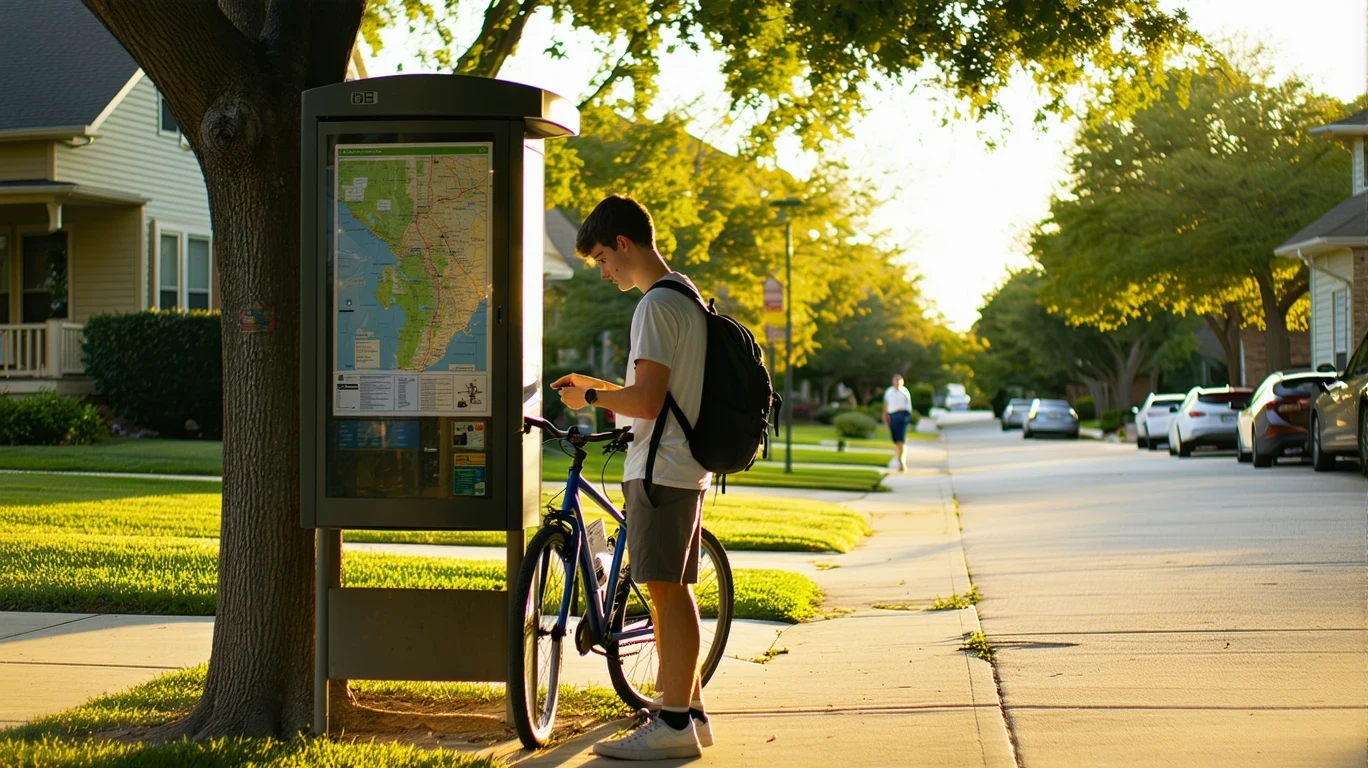
How People Get Around Cedar Park
Cedar Park is a suburban city northwest of Austin, and its transportation landscape reflects that geography. The dominant pattern is car-first. Most neighborhoods are low-rise residential subdivisions with limited pedestrian infrastructure outside specific pockets. Streets are wide, blocks are long, and daily destinations—work, groceries, schools—are spread across a region that prioritizes vehicle access over walkability.
That said, Cedar Park isn’t a transit desert. Rail service connects parts of the city to the Austin metro core, and certain corridors show higher pedestrian and cycling infrastructure density. But these are pockets, not the norm. If you live near a station and work along a transit line, your day-to-day mobility can look very different from someone in a subdivision three miles west.
Newcomers often misunderstand this. They see “Austin metro” and assume transit viability across the region. In practice, Cedar Park’s layout means that getting around without a car requires either living in one of the walkable, transit-adjacent zones or accepting significant friction in the form of longer trip times, limited service windows, and gaps in coverage.
Public Transit Availability in Cedar Park
Public transit in Cedar Park often centers around systems such as Capital Metro, the regional transit authority serving the Austin metro area. Rail service is present, connecting certain parts of Cedar Park to downtown Austin and other points along the line. This is the backbone of transit access here—it’s reliable for peak commutes, it avoids highway congestion, and it works well for people whose destinations align with station locations.
But rail doesn’t cover the whole city. It serves specific corridors, and if your home or workplace isn’t near a station, the system’s utility drops sharply. Bus service exists to fill some of those gaps, but frequency and coverage vary. Routes tend to prioritize major roads and commercial corridors, leaving residential subdivisions with limited or no direct service.
Transit works best in Cedar Park’s denser, mixed-use pockets—areas where pedestrian infrastructure supports the walk to and from the station, where errands and services cluster near stops, and where land use allows people to function without a car for at least part of the week. Outside those zones, transit becomes a secondary option, useful for specific trips but not a replacement for driving.
Late hours, weekends, and off-peak times see reduced service. If your schedule doesn’t align with traditional commute windows, or if you need to make multi-stop trips across different parts of the metro, transit’s practicality diminishes quickly.
Driving & Car Dependence Reality
For most Cedar Park residents, driving isn’t a preference—it’s a structural necessity. The city’s layout, its relationship to the broader Austin metro, and the distribution of jobs, schools, and services all reinforce car dependence. Subdivisions are built around vehicle access. Parking is abundant and free in most contexts. Roads are designed to move cars efficiently, not to support alternative modes.
This has tradeoffs. Driving offers flexibility, control, and the ability to structure your day around multiple stops without waiting for transfers or checking schedules. It’s faster for most trips within Cedar Park and essential for reaching destinations outside the transit network. Families with children, households managing complex logistics, and workers with non-traditional hours tend to rely on cars by default.
But car dependence also creates exposure. Gas prices fluctuate—currently $2.46 per gallon in Cedar Park—and while that’s relatively low, the cost structure of driving (fuel, maintenance, insurance, depreciation) is ongoing and unavoidable. Commutes into Austin or other metro employment centers can be long, especially during peak hours, and traffic congestion is a persistent friction point.
Parking in Cedar Park itself is rarely an issue, but commuting into denser parts of Austin often means either paying for parking or competing for limited street spots. The tradeoff isn’t just financial—it’s time, predictability, and mental load.
Commuting Patterns & Daily Mobility
Cedar Park functions as a residential base for many workers commuting into Austin. The typical pattern is a single-destination commute: home to work, work to home. For those near rail stations, this can mean a predictable, traffic-free trip. For everyone else, it means driving south on 183, Mopac, or I-35, navigating congestion, and absorbing the time cost of distance.
But not all commutes are single-destination. Parents dropping kids at school before heading to work, workers making client visits across the metro, and households managing errands alongside employment all face multi-stop logistics that transit can’t easily support. In those cases, driving becomes the only practical option, even if rail service exists nearby.
Daily mobility in Cedar Park also depends on where you work. If your job is downtown Austin or along a transit corridor, rail access is a meaningful advantage. If you work in Round Rock, Pflugerville, or another suburban node, you’re almost certainly driving. The metro’s employment geography is decentralized, and transit networks are built around core-to-core connections, not suburb-to-suburb movement.
Proximity matters. Living within walking distance of a station changes the equation. Living three miles away, even with a park-and-ride option, adds friction—drive time, parking availability, schedule alignment. That friction is enough to tip many households back toward full-time car use.
Who Transit Works For — and Who It Doesn’t
Transit in Cedar Park works best for a specific profile: individuals or couples without children, working traditional hours, employed in downtown Austin or along the rail line, and living in or near one of the city’s walkable, transit-adjacent pockets. For this group, rail service is a genuine alternative to driving. It’s cheaper than parking, avoids traffic, and offers predictability.
Renters in denser, mixed-use areas near stations are the most likely to benefit. They’re closer to the infrastructure, more likely to have walkable access to errands and services, and less likely to be managing the complex logistics that make car dependence unavoidable.
Transit works less well—or not at all—for families with children, especially those managing school drop-offs, extracurriculars, and multi-stop days. It doesn’t work for people whose jobs are outside the transit network, whose hours don’t align with service schedules, or who need to make frequent trips across different parts of the metro. And it doesn’t work for residents in the majority of Cedar Park’s residential subdivisions, where the walk to the nearest stop is long, indirect, or nonexistent.
Homeowners in low-density neighborhoods, workers with variable schedules, and households managing complex daily logistics almost always default to driving. The city’s structure supports that choice, but it also locks in the costs and exposure that come with it.
Transportation Tradeoffs in Cedar Park
Choosing between transit and driving in Cedar Park isn’t about optimization—it’s about fit. Transit offers lower direct costs, predictability during peak hours, and freedom from parking logistics. It works when your life aligns with the network: fixed schedule, core-bound commute, walkable home location.
Driving offers flexibility, speed for most trips, and the ability to manage complex logistics without waiting for transfers or checking schedules. It works when your destinations are spread out, your hours are variable, or your household includes children and the errands that come with them.
The tradeoff isn’t just financial. It’s time, control, and exposure to volatility. Transit riders avoid fuel price swings and traffic unpredictability but lose flexibility and face longer trip times for non-commute travel. Drivers gain control and convenience but absorb ongoing vehicle costs and the mental load of navigation, parking, and congestion.
For most Cedar Park households, the question isn’t “Should I use transit?” It’s “Does my life fit the narrow slice of the city where transit actually works?” If the answer is no, the decision is already made.
FAQs About Transportation in Cedar Park (2026)
Is public transit usable for daily commuting in Cedar Park?
Yes, but only if you live near a rail station and work along the transit line into Austin. For that specific commute pattern, rail service is reliable and avoids highway congestion. Outside those corridors, transit becomes less practical, and most residents rely on driving.
Do most people in Cedar Park rely on a car?
Yes. Cedar Park’s layout, low-density residential character, and the distribution of jobs and services across the metro make car dependence the norm. Transit exists and works for some, but the majority of households depend on a vehicle for daily mobility.
Which areas of Cedar Park are easiest to live in without a car?
Areas near rail stations with higher pedestrian infrastructure and mixed land use—where you can walk to the station, access groceries and services on foot, and work along the transit line—are the most viable for car-free or car-light living. These are pockets, not the citywide norm.
How does commuting in Cedar Park compare to nearby cities?
Cedar Park’s commute reality is similar to other suburban nodes in the Austin metro: car-dependent for most, with rail access offering an alternative for core-bound commuters. Compared to denser parts of Austin, transit coverage is narrower, and driving is more essential for daily logistics.
Does Cedar Park have bike infrastructure?
Some areas have cycling infrastructure, particularly in pockets with higher bike-to-road ratios, but it’s not comprehensive. Biking works for recreation and short trips in certain neighborhoods, but it’s not a primary commuting mode for most residents.
How Transportation Fits Into the Cost of Living in Cedar Park
Transportation isn’t just a line item—it’s a structural factor that shapes where you can live, how you spend your time, and what tradeoffs you’re willing to accept. In Cedar Park, mobility costs are largely determined by whether you can make transit work or whether you’re locked into car dependence.
For the minority who live near rail stations and work along the line, transportation costs can be lower and more predictable. For everyone else, driving is unavoidable, and the costs—fuel, insurance, maintenance, depreciation—are ongoing and harder to control. Those costs don’t appear in rent or mortgage calculations, but they shape affordability just as much as your monthly budget.
Understanding how you’ll actually get around Cedar Park, and what that will require, is essential before committing to a lease or a purchase. The city offers options, but they’re not evenly distributed, and the difference between living in a transit-viable pocket and living three miles away is the difference between flexibility and dependence.
If you’re evaluating Cedar Park, start with your commute. Know where you’ll be working, how you’ll get there, and whether your daily logistics fit the transportation structure that exists here. The city works well for many households, but only when expectations align with reality.
How this article was built: In addition to public economic data, this article incorporates location-based experiential signals derived from anonymized geographic patterns—such as access density, walkability, and land-use mix—to reflect how day-to-day living actually feels in Cedar Park, TX.