
Cedar Park is considered moderately priced in 2026, with a median home value of $427,800 and median rent of $1,677 per month. The main exposure is housing entry cost combined with car dependency for most households, though rail access and walkable pockets reduce transportation pressure for some residents.
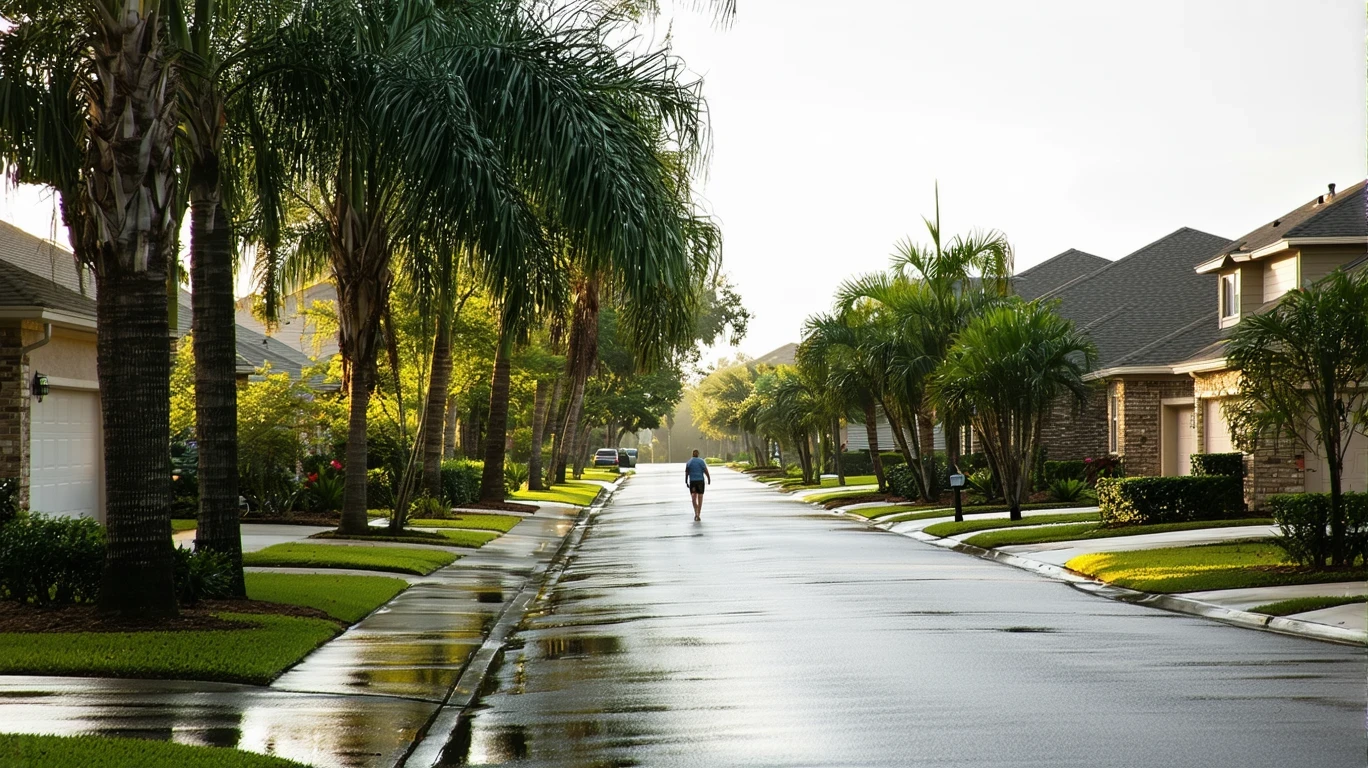
Overall Cost of Living Snapshot
Cedar Park’s cost structure in 2026 revolves around three pressure points: housing entry barriers, transportation infrastructure gaps, and seasonal utility swings. The city’s regional price parity index of 98 suggests costs track slightly below the national baseline, but that broad measure obscures where money actually goes. Housing dominates the financial equation—whether you’re buying into a $427,800 median-priced home or renting at $1,677 per month, shelter claims the largest share of household budgets. Transportation follows closely, shaped by how the city’s physical layout forces most daily errands and commutes into a car. Utility costs add a third layer of exposure, driven by triple-digit summer heat that makes air conditioning non-negotiable for months at a time.
What surprises newcomers isn’t any single line item—it’s how these three categories interact. A household that locks in predictable housing costs through ownership still faces variable transportation expenses if they commute outside Cedar Park, and everyone confronts the same summer electricity spikes. The city’s structure creates pockets of lower transportation burden near rail stations and in areas with substantial pedestrian infrastructure, but for most residents, vehicle ownership remains the default. Grocery costs and healthcare access add modest pressure but rarely tip the scales. The unemployment rate of 3.6% signals a stable local economy, yet the median household income of $118,903 per year reflects the reality that Cedar Park attracts households who’ve already cleared significant income thresholds.
Driver verdict: Housing entry cost dominates, with car dependency and cooling-season utility bills creating secondary but persistent exposure. Surprises come from property tax obligations on higher home values and the non-negotiable nature of vehicle ownership for households outside walkable or transit-served pockets.
Housing Costs (Primary Driver)
Housing in Cedar Park splits into two distinct experiences. For renters, the $1,677 median monthly gross rent represents a significant but manageable commitment for households earning near or above the city’s median income. Rent here buys access to a suburban environment with strong family infrastructure—schools and playgrounds meet density thresholds across the city—and integrated green space that includes parks and water features. The rental market serves as a transitional platform for households testing fit before committing to ownership, or as a long-term option for those prioritizing flexibility over equity accumulation.
Ownership, however, carries the heavier load. A $427,800 median home value translates into substantial upfront costs and ongoing property tax obligations that many first-time buyers underestimate. Texas has no state income tax, but property taxes compensate, and a home at this price point generates annual tax bills that function as a second rent payment. Mortgage interest, insurance, and maintenance add layers of fixed and variable costs that don’t appear in the purchase price. The tradeoff is control: owners lock in principal and interest payments while building equity, insulating themselves from rent increases and gaining the ability to modify their living environment. For households planning to stay five years or longer, ownership shifts from expense to investment. For those with shorter timelines or uncertain income, the entry cost and illiquidity create risk.
Cedar Park functions as a buying city for established families and a renting city for newcomers still evaluating whether the transportation and lifestyle tradeoffs align with their priorities. The housing stock is low-rise with mixed residential and commercial land use, creating a suburban texture that appeals to households seeking space and relative quiet without full rural isolation.
| Housing Type | Cost Anchor | What That Buys You |
|---|---|---|
| Renting | $1,677/month median | Flexibility, lower entry cost, access to family infrastructure and green space |
| Buying | $427,800 median value | Equity accumulation, payment predictability, control over property, exposure to tax and maintenance costs |
Utilities & Energy Risk
Utility costs in Cedar Park carry major seasonal volatility, driven almost entirely by cooling demand during the extended summer heat. Electricity rates sit at 16.11¢ per kilowatt-hour, a baseline that becomes significant when air conditioning runs continuously through triple-digit afternoons and warm nights. Households face months of elevated bills with little room to reduce usage without sacrificing comfort or safety. The current temperature of 21°F (feels like 9°F) signals rare cold exposure, but winter heating needs pale in comparison to summer cooling pressure. Natural gas, priced at $30.71 per thousand cubic feet, plays a minor role in most households’ annual utility budgets.
The risk here isn’t the rate—it’s the intensity and duration of demand. A household that budgets for moderate electricity costs in spring will see bills spike as soon as sustained heat arrives, and those increases persist for months. Efficiency measures—programmable thermostats, insulation upgrades, strategic shading—reduce exposure but don’t eliminate it. Renters face the added constraint of limited control over building efficiency, leaving them more vulnerable to seasonal swings. Owners can invest in improvements that lower long-term costs, but upfront expenses delay payoff.
Risk classification: Major. Summer cooling dominates utility exposure, creating predictable but unavoidable cost increases that every household must absorb. Winter heating adds minimal pressure by comparison.
Groceries & Daily Costs
Grocery costs in Cedar Park reflect the city’s near-national price parity, with modest variation across categories. Food and grocery establishments cluster along corridors rather than distributing evenly, meaning most households plan shopping trips rather than walking to nearby stores. This pattern—corridor-clustered accessibility with high food density but medium grocery density—shapes how people manage daily errands. Households near these corridors gain convenience; those farther out add drive time and vehicle costs to every grocery run.
The derived grocery estimates (bread at $1.80 per pound, chicken at $1.98 per pound, ground beef at $6.55 per pound, eggs at $2.66 per dozen) suggest costs align closely with national baselines after regional adjustment. The pressure point isn’t price—it’s the logistical burden of reaching stores. A household that can consolidate trips and buy in bulk reduces both time and fuel costs. One that makes frequent small trips or lacks storage capacity faces higher effective costs through repeated travel. The presence of both residential and commercial land use throughout the city helps, but the low-rise building character and car-oriented infrastructure mean most errands still require a vehicle.
Daily costs beyond groceries—pharmacies, clinics, and other routine needs—benefit from the city’s hospital and pharmacy presence, reducing the need to travel outside Cedar Park for basic healthcare. This containment lowers transportation overhead for medical errands, a meaningful advantage for families with young children or older adults.
Transportation Reality
Transportation in Cedar Park operates on two tracks. Most of the city requires a car for nearly every trip—work commutes, errands, school runs, and social activities all assume vehicle access. The physical layout, with substantial pedestrian infrastructure in pockets but car-oriented design overall, makes walking or biking viable only for households in specific neighborhoods. Gas prices at $2.46 per gallon keep fuel costs moderate, but the recurring nature of vehicle ownership—insurance, maintenance, registration, depreciation—adds up regardless of per-gallon rates.
The presence of rail transit creates an alternative for households who live near stations and work along the rail corridor. These residents gain the option to reduce vehicle dependency, cutting both direct fuel costs and the broader expenses of car ownership. Cycling infrastructure exists in some pockets, offering another low-cost option for short trips, though the medium bike-to-road ratio suggests this remains a secondary mode for most residents. Bus service supplements rail but doesn’t replace the need for a car in most scenarios.
The transportation tradeoff in Cedar Park is straightforward: proximity to rail or residence in a walkable pocket significantly lowers recurring costs and time burdens, while location in car-dependent areas locks households into vehicle ownership as a fixed expense. Commute length and frequency amplify this divide—households commuting daily to Austin or other regional employment centers face higher fuel and time costs than those working locally or remotely. The city’s structure rewards planning and intentional location choice, penalizing households that prioritize housing cost over transportation access.
Cost Exposure Profiles
Cost exposure in Cedar Park depends on how households navigate three structural realities: housing entry versus long-term ownership costs, transportation infrastructure access, and utility seasonality. Low-exposure households typically own homes (locking in predictable housing payments), live near rail or within walkable pockets (reducing vehicle dependency), and have invested in cooling efficiency (moderating summer electricity spikes). High-exposure households rent in car-dependent areas, commute long distances daily, and occupy less efficient housing stock with limited control over utility costs.
The gap between these profiles isn’t about income alone—it’s about alignment between household structure and city geography. A family with school-age children benefits from Cedar Park’s strong family infrastructure (schools and playgrounds meeting density thresholds) but faces higher transportation costs if daily routines require multiple vehicle trips. A couple working remotely in a walkable neighborhood near parks and water features avoids commute costs entirely and enjoys lower day-to-day transportation overhead. A single-income household renting far from transit and commuting to Austin confronts the highest combined exposure: rent volatility, vehicle dependency, and limited ability to reduce utility costs.
Property taxes on owned homes create a distinct exposure that rises with home values, functioning as an ongoing cost that doesn’t decline even after a mortgage is paid off. Renters avoid this direct burden but face rent increases that can outpace wage growth. Vehicle count matters as much as vehicle type—households running two cars face doubled insurance, maintenance, and depreciation costs compared to one-car households, and those in car-dependent areas have little choice but to maintain multiple vehicles.
Utility volatility hits all households, but the impact varies by housing efficiency and household size. Larger homes with older HVAC systems and poor insulation see the steepest summer spikes. Smaller, newer units with efficient cooling systems and strategic shading experience the same heat but lower bills. Renters in older buildings face the worst combination: high seasonal costs with no ability to invest in efficiency improvements.
Frequently Asked Questions
Is Cedar Park more affordable than Austin in 2026? Cedar Park typically offers lower housing entry costs than central Austin, but the tradeoff comes in transportation—most Cedar Park households need a car for daily life, adding recurring expenses that can offset housing savings. Proximity to rail and walkable pockets narrows this gap for some residents.
What does a typical cost profile look like in Cedar Park? Housing dominates, followed by transportation (vehicle ownership and fuel) and utilities (especially summer cooling). Groceries and healthcare add moderate pressure but rarely drive overall affordability. The profile shifts significantly based on whether a household owns or rents and how close they live to transit or walkable infrastructure.
Do utilities cost more in Cedar Park than nearby areas? Electricity rates at 16.11¢ per kilowatt-hour align with regional norms, but the intensity of summer cooling demand creates higher seasonal bills than many newcomers expect. The extended heat season makes air conditioning a non-negotiable expense for months, driving up total annual utility costs.
What costs tend to surprise newcomers in Cedar Park? Property taxes on homes near $427,800, the non-negotiable nature of vehicle ownership for most households, and the magnitude of summer electricity bills during triple-digit heat. Many newcomers also underestimate the time and fuel costs of commuting if they work outside Cedar Park.
Are property taxes higher in Cedar Park than Round Rock? Both cities sit in the same regional tax environment with no state income tax and property taxes that compensate. Differences depend on specific tax districts and home values rather than city-level policy, so households should compare effective rates for their target neighborhoods rather than assuming city-wide uniformity.
Is Cedar Park a good fit for renters long-term? Cedar Park functions well as a rental market for households prioritizing flexibility or testing fit before buying, but long-term renters face ongoing exposure to rent increases without building equity. The strong family infrastructure and green space access make it appealing for renters with children, though car dependency remains a constraint.
How much does car dependency add to monthly costs in Cedar Park? Vehicle ownership includes insurance, fuel, maintenance, registration, and depreciation—costs that persist regardless of how much you drive. Households in car-dependent areas typically run at least one vehicle per adult, doubling these expenses for two-adult households. Proximity to rail or walkable pockets allows some households to reduce or eliminate one vehicle, lowering recurring transportation costs significantly.
Does Cedar Park’s green space access reduce other costs? Integrated park density and water features provide free recreational options, reducing the need for paid entertainment or gym memberships. Families with children benefit most, as playgrounds and outdoor space offer no-cost activity options that would otherwise require driving to commercial venues.
How this article was built: In addition to public economic data, this article incorporates location-based experiential signals derived from anonymized geographic patterns—such as access density, walkability, and land-use mix—to reflect how day-to-day living actually feels in Cedar Park, TX.
—