
Transit Coverage & Average Ride Times in Leon Valley
| Transit Type | Coverage Area | Typical Commute Window |
|---|---|---|
| Bus Service | Corridor-clustered | 27 minutes (average) |
| Rail Transit | Not present | — |
| Work-from-Home Rate | 7.1% | — |
| Long Commute (45+ min) | 33.1% of workers | — |
Source: U.S. Census Bureau American Community Survey
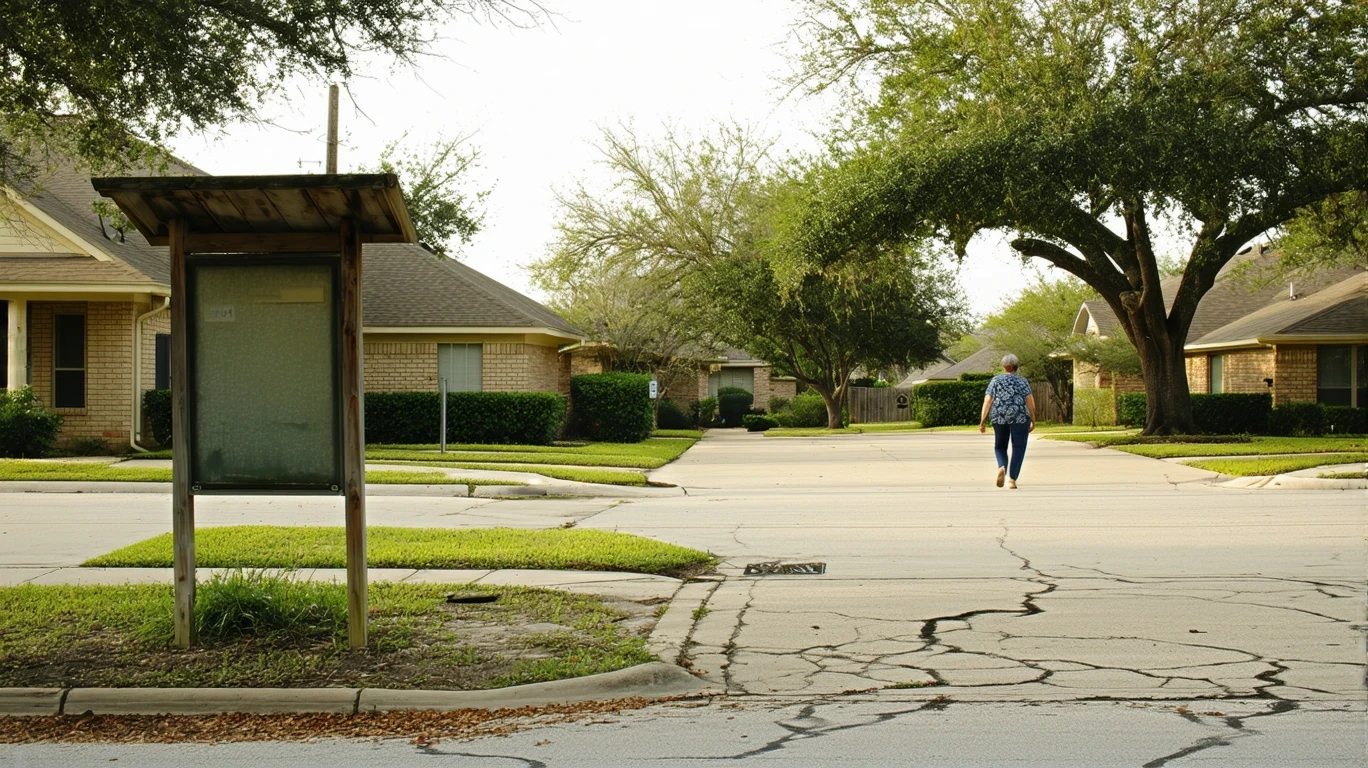
How People Get Around Leon Valley
Transportation options in Leon Valley are shaped by its suburban structure and position within the broader San Antonio metro. Most residents rely on personal vehicles for daily mobility, and the city’s low-rise, spread-out development pattern reinforces that dependence. Bus service is present and connects key corridors, but coverage is concentrated rather than comprehensive. For newcomers, the most common misunderstanding is expecting transit to function as a primary mode of transportation—it works best as a supplemental option for specific routes, not as a replacement for driving.
The city’s pedestrian infrastructure shows pockets of walkability, particularly where residential and commercial land uses overlap. That said, the pedestrian-to-road ratio reflects a place designed primarily around car access. Daily errands—groceries, pharmacies, schools—are accessible in clusters along certain corridors, but reaching them without a vehicle often requires planning and extra time. Leon Valley is not a place where you can easily string together multiple stops on foot or by bus in a single trip.
Public Transit Availability in Leon Valley
Public transit in Leon Valley often centers around systems such as VIA Metropolitan Transit, which provides bus service throughout the San Antonio region. Bus stops are present in the city, and service tends to work best along main corridors where residential density and commercial activity overlap. These routes connect Leon Valley to employment centers, shopping districts, and other parts of the metro, but frequency and span of service vary by line.
Transit falls short in areas farther from major roads, in neighborhoods with lower density, and during off-peak hours. Late-night and weekend service is limited, which narrows the window of usefulness for shift workers, families managing multi-stop errands, or anyone whose schedule doesn’t align with traditional commute times. Rail transit is not present in Leon Valley, so all public transportation relies on bus infrastructure.
For residents living near well-served corridors, transit can handle routine trips—commuting to a single workplace, attending appointments, or accessing regional amenities. For those in quieter residential pockets or needing to move laterally across the city, transit becomes less practical. The system is designed to move people efficiently along fixed routes, not to provide door-to-door flexibility.
Driving & Car Dependence Reality
Driving is the dominant mode of transportation in Leon Valley, and the city’s layout assumes most households have at least one vehicle. Parking is generally available and not a source of daily friction. Roads are designed to prioritize car movement, and most destinations—schools, grocery stores, medical clinics—are easiest to reach by driving. The average commute is 27 minutes, and more than a third of workers face commutes longer than 45 minutes, which reflects both the metro’s sprawl and the distance many residents travel to reach employment hubs.
Car dependence here is not about preference—it’s about structure. Errands that might take 20 minutes by car can stretch to over an hour when relying on transit and walking, especially if they involve multiple stops. Families managing school drop-offs, daycare pickups, and grocery runs find that driving offers the control and predictability that transit cannot match. For single adults or couples without children, the calculus is similar: transit works for linear, predictable trips, but anything more complex demands a vehicle.
Owning a car in Leon Valley means managing fuel costs, maintenance, insurance, and registration, but it also means avoiding the time penalties and logistical friction that come with car-free living in a suburban environment. The tradeoff is not between cost and convenience—it’s between control and constraint.
Commuting Patterns & Daily Mobility
Commuting in Leon Valley typically involves a single-destination trip, often to employment centers in San Antonio or nearby suburbs. The 27-minute average commute reflects a mix of short local trips and longer regional drives. Workers who commute within the metro but outside Leon Valley face the longest travel times, particularly those heading to downtown San Antonio or to industrial and office parks on the city’s north or east sides.
Multi-stop commutes—dropping kids at school, stopping for coffee, picking up dry cleaning—are common and almost always require a car. Transit does not support this kind of chained mobility well. The 7.1% of residents who work from home avoid commute friction entirely, but they represent a small minority. For everyone else, the structure of the workday is shaped by drive time, traffic patterns, and the distance between home and workplace.
Proximity matters. Residents who live near their workplace or along direct transit routes experience less daily friction. Those who live in quieter residential areas or work in locations poorly served by transit absorb more time and planning burden. The commute is not just about distance—it’s about how many transfers, turns, and stops stand between home and work.
Who Transit Works For — and Who It Doesn’t
Transit in Leon Valley works best for single adults or couples without children who live near bus corridors and work along those same routes. If your job is accessible via a direct or one-transfer trip, and your schedule aligns with peak service hours, transit can handle the commute. It also works for households using transit as a secondary option—one partner drives, the other takes the bus—or for specific trips like medical appointments or shopping along served corridors.
Transit does not work well for families managing complex logistics. School schedules, daycare pickups, and after-school activities require the flexibility and speed that only a car provides. It also falls short for residents in peripheral neighborhoods, where bus service is sparse or nonexistent. Shift workers, especially those with early-morning or late-night hours, face limited or no service during their commute windows.
Renters in denser, more centrally located areas have better access to transit than homeowners in quieter, low-rise neighborhoods. But even in well-served areas, transit is a tool for specific trips, not a full replacement for driving. The fit depends on where you live, where you work, and how much time and predictability you need in your daily routine.
Transportation Tradeoffs in Leon Valley
Choosing between transit and driving in Leon Valley is not about cost alone—it’s about control, predictability, and time. Driving offers flexibility: you leave when you want, stop where you need to, and adjust your route in real time. Transit offers lower direct costs but requires you to work within fixed schedules, accept longer trip times, and plan around service gaps.
For households managing tight schedules—school, work, errands, appointments—driving reduces friction and saves time. For individuals with simpler routines and direct access to transit, the bus can handle the commute without requiring car ownership. The tradeoff is not between good and bad options; it’s between different kinds of exposure. Driving exposes you to fuel prices, maintenance costs, and parking constraints. Transit exposes you to longer trip times, limited coverage, and schedule dependence.
In Leon Valley, most households choose driving because the city’s structure makes it the path of least resistance. Transit works as a supplement, not a substitute, and only for those whose lives align with its strengths.
FAQs About Transportation in Leon Valley (2026)
Is public transit usable for daily commuting in Leon Valley?
Public transit can handle daily commuting for residents who live near bus corridors and work along direct routes with good service frequency. It works best for single-destination trips during peak hours. For multi-stop errands, off-peak travel, or areas with limited coverage, transit becomes less practical.
Do most people in Leon Valley rely on a car?
Yes. The city’s suburban layout, low-rise development, and limited transit coverage make car ownership the dominant mode of transportation. Most households use a vehicle for daily errands, commuting, and family logistics. Transit serves as a secondary option for specific trips, not as a primary means of mobility.
Which areas of Leon Valley are easiest to live in without a car?
Areas near major bus corridors and mixed-use zones offer the best access to transit, grocery stores, and services within walking or short bus trips. Even in these areas, living without a car requires accepting longer trip times and limited flexibility. Peripheral neighborhoods with lower density and fewer transit stops are much harder to navigate without a vehicle.
How does commuting in Leon Valley compare to nearby cities?
Leon Valley’s 27-minute average commute is typical for the San Antonio metro, though more than a third of workers face longer trips. Compared to denser urban cores, Leon Valley offers less transit frequency and coverage. Compared to more rural suburbs, it provides better bus access along key corridors. The commute experience depends heavily on where you work and whether your route aligns with available service.
Can families manage daily life in Leon Valley without a car?
It is very difficult. School drop-offs, daycare, grocery shopping, and after-school activities require the flexibility and speed that transit cannot provide. Families with children almost always need at least one vehicle to manage daily logistics efficiently. Transit may work for one parent’s commute, but it rarely supports the full range of household mobility needs.
How Transportation Fits Into the Cost of Living in Leon Valley
Transportation in Leon Valley is not just a line item—it’s a structural factor that shapes where you live, how you spend your time, and what tradeoffs you accept. Choosing a home near transit may reduce driving costs but could mean higher rent or a longer walk to schools and parks. Choosing a home in a quieter neighborhood may offer more space and lower housing costs but will likely require a car and longer commutes.
The real cost of transportation is not just fuel and fares—it’s the time you spend in transit, the flexibility you gain or lose, and the friction you absorb in daily logistics. For a fuller picture of how monthly expenses interact across housing, utilities, and mobility, the Monthly Spending article provides detailed context. But the decision about how to get around is less about optimizing a budget and more about understanding how Leon Valley’s structure fits—or doesn’t fit—the way you live.
If your life is simple, your commute is direct, and you live near a bus line, transit can work. If your days are complex, your schedule is tight, or your home is off the main corridors, driving becomes necessary. Leon Valley rewards those who can align their housing and work locations with available infrastructure, and it penalizes those who cannot. The key is knowing which category you fall into before you commit to a lease or a mortgage.
How this article was built: In addition to public economic data, this article incorporates location-based experiential signals derived from anonymized geographic patterns—such as access density, walkability, and land-use mix—to reflect how day-to-day living actually feels in Leon Valley, TX.