
Imagine a household earning just under $60,000 a year in Leon Valley—solidly middle-income on paper. They’ve found a modest three-bedroom rental near Bandera Road, close enough to schools and grocery options that the location feels practical. But by mid-July, when the AC runs continuously and the electricity bill doubles, or when weekend errands require three separate stops because nothing clusters conveniently, the month tightens in ways a spreadsheet never predicted. That gap between “affordable on average” and “comfortable day-to-day” is what this article explains.
Leon Valley sits within the San Antonio metro, where the regional price level runs about 6% below the national average. But that modest discount doesn’t determine comfort—it’s the interplay of housing tradeoffs, utility volatility, transportation friction, and how your household actually moves through the city that shapes whether your income feels sufficient or strained.
What “Living Comfortably” Means in Leon Valley
Comfort in Leon Valley isn’t about luxury—it’s about margin. It means your housing cost doesn’t force you into a location that adds 20 minutes to your commute. It means a summer cooling bill that spikes doesn’t require you to defer other expenses. It means running errands doesn’t become a multi-stop expedition every time you need groceries, prescriptions, and household basics.
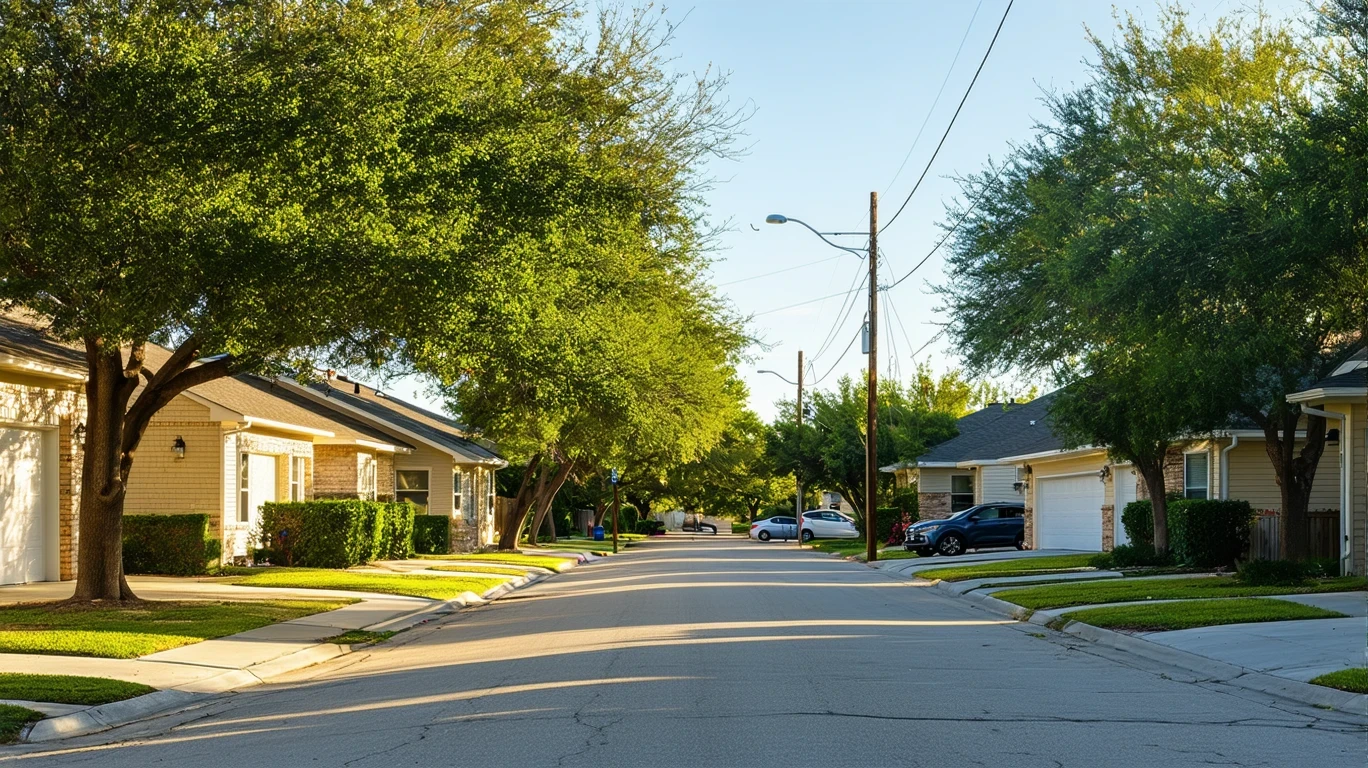
Leon Valley’s low-rise, mixed-use character creates a specific texture: residential blocks interspersed with commercial corridors. That structure works well for households who can align their routines with those corridors—Bandera Road, Evers Road, Highway 90. But it also means daily logistics require more intentionality than in places where services distribute evenly across neighborhoods.
Comfort here also means absorbing the realities of South Texas summers without constant recalibration. Cooling costs aren’t a one-month anomaly—they’re a recurring, predictable pressure from May through September. Households living comfortably have already built that rhythm into their baseline, rather than treating it as a surprise each year.
Expectations around space matter, too. The median home value of $215,800 reflects modest single-family homes and older townhomes, not new construction or large lots. Renters paying $1,109 per month are typically securing functional space in established neighborhoods, not premium finishes or walkable urban convenience. Comfort means recognizing that tradeoff as reasonable, not settling.
Where Income Pressure Shows Up First
Housing is the first decision that cascades into everything else. At the median rent of $1,109 per month, a household needs gross monthly income around $3,700 to stay within the standard 30% affordability threshold. That’s roughly $44,400 annually—well below the city’s median household income of $58,784. But that margin narrows quickly once you layer in transportation costs, cooling expenses, and the logistics of a corridor-clustered city.
Utility volatility is the second pressure point, and it’s seasonal rather than constant. Electricity in Leon Valley runs 15.87¢ per kilowatt-hour, which is moderate by Texas standards. But in a low-rise, single-family home during triple-digit summer heat, cooling a 1,200- to 1,500-square-foot space can mean sustained high usage for months. Households living comfortably have already accounted for summer bills that may run double or triple their winter baseline—not as a crisis, but as part of the annual rhythm.
Transportation costs split into two dimensions: money and time. Gas prices around $2.60 per gallon are manageable, and the 27-minute average commute is reasonable by metro standards. But Leon Valley’s structure—where errands cluster along specific corridors rather than dispersing evenly—means households often drive intentionally rather than casually. A trip for groceries might require a separate stop for pharmacy needs, and another for household goods. That’s not a cost crisis, but it’s a time tax that compounds for families juggling school pickups, activities, and work schedules.
For families, pressure intensifies around logistics complexity. School density in Leon Valley sits in the moderate range, meaning access exists but isn’t uniformly distributed. Families living comfortably have either secured housing near their preferred schools or accepted the transportation tradeoff. Playground and park access is present but not abundant, so families with young children often plan outings rather than stepping outside into immediately available green space.
How the Same Income Feels Different by Household
A single adult earning $50,000 annually in Leon Valley experiences moderate pressure but substantial control. Monthly expenses center on a one-bedroom rental well below the median, utility costs that remain manageable even in summer, and transportation that’s predictable. The corridor-clustered errands structure requires planning, but without dependents, that planning remains flexible. Comfort arrives when income exceeds $55,000–$60,000, allowing discretionary spending and savings without monthly recalibration.
A dual-income couple without children, earning a combined $70,000–$80,000, often finds Leon Valley highly comfortable. They can afford median-range housing, absorb seasonal utility swings without stress, and optimize errands around their work commutes. The city’s walkable pockets—areas where pedestrian infrastructure exceeds typical suburban density—become amenities rather than necessities. Bus service offers a backup option, though most couples rely on personal vehicles for flexibility.
Families with children face compounding friction. A household earning $75,000 with two children may find that income stretched across higher housing costs (needing three bedrooms), larger utility bills (more space to cool), more complex transportation logistics (school runs, activities), and the time cost of intentional errand routing. The same income that feels spacious for a couple feels constrained for a family, not because costs are prohibitive, but because margin evaporates quickly when every decision has dependencies.
Families living comfortably in Leon Valley typically earn above $85,000–$90,000, allowing them to choose housing for location rather than price alone, absorb utility volatility without behavior changes, and handle the logistics of corridor-based errands without constant optimization. Below that threshold, families make it work—but “making it work” means active tradeoff management rather than ease.
The Comfort Threshold (Qualitative)
Comfort in Leon Valley isn’t a single income figure—it’s the point where your household stops managing tradeoffs and starts making choices.
You’ve crossed into comfort when:
- Your housing decision is driven by preference (proximity to work, school quality, neighborhood character) rather than affordability limits.
- A summer utility bill that runs $250 instead of $120 doesn’t require you to defer another expense or adjust discretionary spending.
- Errands happen when convenient, not when you’ve optimized a multi-stop route to minimize trips.
- Transportation costs—gas, maintenance, occasional ride-shares—register as routine rather than variable budget pressure.
- Saving becomes a consistent behavior rather than something that happens only in “good” months.
For single adults, that threshold often arrives around $55,000–$65,000 in gross annual income. For couples, $70,000–$85,000. For families, $85,000–$100,000 or higher, depending on the number of children and expectations around space, activities, and school access.
These aren’t requirements—they’re the income levels where margin replaces friction, and where Leon Valley’s structure works with your household rather than against it.
Why Online Cost Calculators Get Leon Valley Wrong
Generic cost-of-living calculators treat Leon Valley as a data point: median rent, average utilities, typical transportation. They produce a total, often somewhere between $3,200 and $4,000 per month for a family, and imply that any income above that total equals comfort.
But totals don’t explain texture.
Calculators miss that Leon Valley’s errands accessibility is corridor-clustered, meaning your experience depends heavily on where you live relative to Bandera, Evers, and Highway 90. A household near those routes finds daily life straightforward. A household several blocks off those corridors adds time and intentionality to every errand.
They miss that utility costs aren’t averages—they’re seasonal swings. A $120 winter bill and a $250 summer bill average to $185, but the experience is volatility, not consistency. Comfortable households absorb that swing. Stretched households adjust behavior or defer other costs.
They miss that Leon Valley’s low-rise, single-family character means cooling costs hit harder than in denser housing types. A 1,400-square-foot house in July requires more energy than a same-sized apartment insulated by neighboring units.
And they miss that transportation isn’t just a gas price times estimated miles—it’s the time cost of a city where services cluster rather than distribute. Families feel that friction more than singles. Households with tight schedules feel it more than those with flexibility.
Calculators give you a number. They don’t tell you whether your household type, your schedule, and your expectations align with how Leon Valley actually works.
How to Judge Whether Your Income Fits Leon Valley
Instead of asking “Is my income enough?”, ask these questions:
Can you afford housing in a location that minimizes other tradeoffs?
If you’re forced to choose the cheapest rent regardless of location, you may add commute time, errand complexity, or school access challenges that compound over time.
Can you absorb a summer utility bill that’s double your winter baseline without adjusting other spending?
If a $250 cooling bill in July means deferring groceries, entertainment, or savings, your income hasn’t yet reached the comfort threshold for Leon Valley’s climate reality.
How sensitive are you to time costs?
If your schedule is tight—work, children, caregiving—Leon Valley’s corridor-clustered errands structure will create friction. If your schedule is flexible, that same structure becomes a minor inconvenience.
Do you expect walkable, spontaneous access to daily needs, or are you comfortable with intentional, car-based errands?
Leon Valley has walkable pockets, but most households rely on cars for groceries, pharmacies, and services. If car dependency feels limiting rather than normal, your expectations may not align with the city’s structure.
How much margin do you need to feel secure?
Some households feel comfortable with $200–$300 left over each month after fixed costs. Others need $800–$1,000 in discretionary buffer to feel stable. Neither is wrong, but your answer determines whether your income fits.
Leon Valley works well for households who value moderate costs, established neighborhoods, and access to the broader San Antonio metro. It works less well for households expecting urban walkability, uniform service distribution, or minimal seasonal cost swings.
FAQs About Living Comfortably in Leon Valley
Is $60,000 a year enough to live comfortably in Leon Valley?
For a single adult or a couple without children, yes—$60,000 provides meaningful margin above essential costs. For a family with children, $60,000 covers necessities but leaves little room for discretionary spending, savings, or unexpected expenses. Comfort for families typically requires $85,000 or more.
How much do utility costs really vary between summer and winter?
Seasonal swings are significant. A household paying $100–$120 for electricity in winter may see $220–$280 in July and August due to sustained cooling demand. Natural gas costs remain modest year-round. Comfortable households budget for the summer peak, not the annual average.
Does Leon Valley require two cars for a family?
Most families find two cars necessary for managing work commutes, school logistics, and errands efficiently. The city’s corridor-clustered structure and limited transit options (bus service only, no rail) make single-car households workable but friction-prone, especially with children.
Are there parts of Leon Valley where errands are easier?
Yes. Proximity to Bandera Road, Evers Road, and Highway 90 reduces errand complexity significantly. Households located within a few blocks of these corridors access groceries, pharmacies, and services with minimal routing. Households farther from these routes add time and planning to daily logistics.
What income level allows a family to stop worrying about tradeoffs?
For most families, $90,000–$100,000 in gross annual income creates enough margin to choose housing by preference, absorb utility swings without adjustment, and handle transportation and errands without constant optimization. Below that, families make it work—but ease requires active management.
How this article was built: In addition to public economic data, this article incorporates location-based experiential signals derived from anonymized geographic patterns—such as access density, walkability, and land-use mix—to reflect how day-to-day living actually feels in Leon Valley, TX.
Leon Valley can work well for many households—but only if income, expectations, and the city’s structure align. Comfort isn’t about meeting a number; it’s about whether your household has margin where it matters most.