
Housing in Alamo Heights doesn’t follow the typical Texas affordability script. With a median home value of $704,500 and median rent at $1,390 per month, this small enclave inside San Antonio operates more like an established suburban island than a sprawl-accessible metro neighborhood. The market rewards stability and school access over entry-level flexibility, and the cost structure reflects that priority at every turn.
For first-time renters, $1,390 gets you into the market—but monthly expenses extend well beyond base rent once utilities, transportation, and the realities of sparse grocery access come into play. For first-time buyers, the $704,500 entry point demands substantial reserves, not just for the down payment but for the ongoing tax obligation and maintenance exposure that comes with owning in a high-value, low-density setting. This isn’t a market built for stretch budgets or speculative entry; it’s built for households with income stability and long-term commitment.
This article explains how housing costs behave in Alamo Heights—what drives rent, what ownership actually exposes you to, and how the structure of daily life here changes the tradeoff between renting and buying. If you’re deciding whether this city fits your housing strategy, the answer depends less on whether you can technically afford the entry price and more on whether the cost behavior matches how you actually live.
The Housing Market in Alamo Heights Today
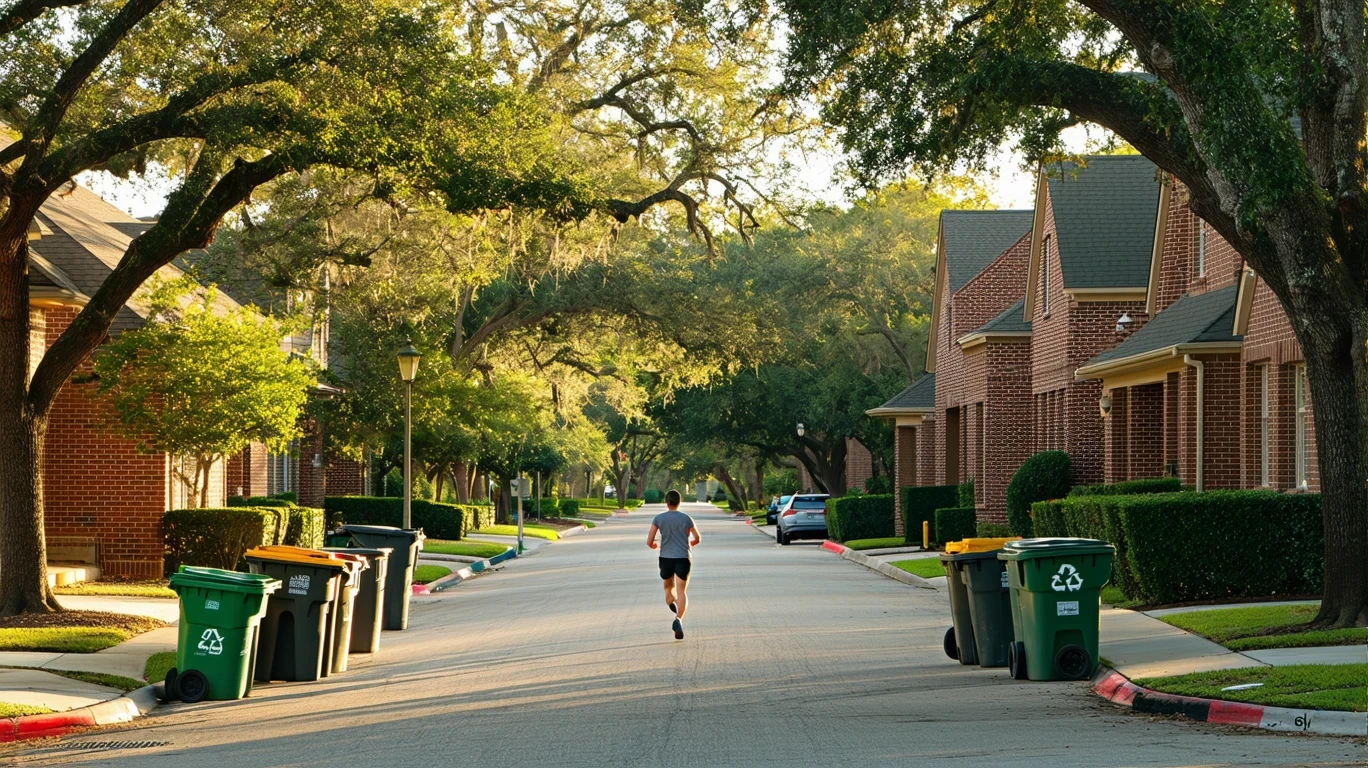
Alamo Heights operates as an independent municipality fully surrounded by San Antonio, and that geography shapes everything about its housing market. It’s a mature, low-rise residential enclave with limited land for new construction, which keeps supply constrained and values elevated relative to the broader metro. The median household income here is $149,332 per year, more than double the Texas state median, and the housing stock reflects that earning power: single-family homes dominate, and the market prioritizes space, school access, and neighborhood stability over density or walkability.
What newcomers often misunderstand is that Alamo Heights isn’t priced for commuter convenience or urban amenities—it’s priced for residential control and educational infrastructure. School density here exceeds high thresholds, meaning families with children gain access to a concentrated set of options within a compact area. But that concentration comes with tradeoffs: grocery density falls below low thresholds, and park access is limited despite the residential character. You’re paying for a specific kind of suburban structure, not a full-service walkable environment.
The regional price parity index sits at 94, meaning goods and services here generally cost about 6% less than the national baseline. But that modest cost advantage doesn’t extend to housing itself—home values in Alamo Heights far exceed what the regional index would predict, because the market isn’t competing on cost. It’s competing on exclusivity, school reputation, and the stability that comes with a small, bounded jurisdiction.
Renting in Alamo Heights
Rental inventory in Alamo Heights exists, but it’s not the market’s primary mode. The $1,390 median gross rent reflects a mix of older single-family rentals, small apartment complexes, and accessory units, but availability tends to be thin and turnover slow. This isn’t a market where you’ll find frequent new listings or aggressive landlord competition—it’s a market where rental housing serves as a niche option within an ownership-dominant landscape.
For renters, that structure creates both advantages and friction. On the advantage side, rent levels remain well below what ownership would cost on a monthly basis, and you avoid the property tax exposure and maintenance burden that come with a $704,500 home. On the friction side, you’re living in a city whose infrastructure assumes car ownership and whose commercial services are sparse. Grocery access requires planning or driving, and the limited park infrastructure means outdoor recreation often happens elsewhere. If your daily routine depends on walkable errands or frequent spontaneous access to green space, the rental experience here will feel more logistically demanding than the rent figure alone would suggest.
Renters also face the reality that Alamo Heights wasn’t designed to optimize for tenant mobility. Lease renewals tend to be stable rather than volatile, but the small rental pool means that if you need to move within the city, your options narrow quickly. The market rewards staying put, not shopping around.
Owning a Home in Alamo Heights
Ownership in Alamo Heights means buying into a high-value, low-density residential enclave where the ongoing cost structure extends well beyond the mortgage. At $704,500, the median home value creates significant property tax exposure even without knowing the exact millage rate—assessed values here are high, and Texas funds local services primarily through property taxes rather than state income tax. That means your annual tax bill will be substantial, and it will adjust over time as assessed values shift.
Maintenance and upkeep operate on a different scale than in lower-value markets. Homes here tend to be larger single-family structures, and the expectation is that you’ll manage landscaping, exterior upkeep, and seasonal systems (air conditioning, irrigation) directly. Some neighborhoods may have homeowners associations that add monthly or annual fees and enforce aesthetic or structural standards, but even without an HOA, the baseline expectation is that you maintain the property to neighborhood norms.
Utility exposure is another ownership-specific factor. Alamo Heights sits in a region with long, hot summers, and cooling costs dominate the seasonal expense cycle. Electricity rates run 16.11¢/kWh, and a larger home with older HVAC systems or poor insulation will see noticeable swings between mild and peak months. Unlike apartment living, where unit size and shared walls moderate exposure, owning a detached house means you absorb the full thermal load.
The tradeoff is control and stability. You’re not subject to lease renewals, landlord decisions, or rental market volatility. You can modify the property, lock in your housing cost structure (minus taxes and maintenance), and build equity in a market that has historically favored long-term holders. But that stability comes with the responsibility to manage every cost layer yourself, and in a high-value market, those layers add up quickly.
Apartment vs House in Alamo Heights — Cost Behavior Comparison
The table below isolates cost categories where apartments and houses behave differently in Alamo Heights specifically, based on local housing stock, climate, and infrastructure. Rows are included only where the distinction is locally meaningful, not universally true.
| Expense Category | Apartment | House |
|---|---|---|
| Base Housing Cost | Median rent $1,390/month; lower entry threshold | Median value $704,500; high entry barrier and ongoing tax exposure |
| Property Tax Exposure | Indirect (embedded in rent); landlord manages | Direct annual obligation on high assessed value; owner responsible |
| Maintenance & Upkeep | Delegated to property management; tenant handles interior only | Owner manages all systems, landscaping, exterior; expectation of neighborhood-standard upkeep |
| Utility Volatility | Smaller footprint and shared walls moderate seasonal swings | Full exposure to cooling-season demand; larger square footage and detached structure amplify costs |
| Grocery Access Friction | Sparse density affects both, but apartments more likely near commercial corridors | Typically deeper into residential zones; car dependency higher for routine errands |
Why these rows? Alamo Heights has a high median home value and property-tax-dependent revenue model, making tax exposure a primary ownership cost. The region’s long cooling season and detached housing stock create meaningful utility differences. Sparse grocery infrastructure (below low density thresholds) affects both housing types but compounds for houses located farther from commercial nodes. Categories like parking costs or HOA fees were omitted because no local data distinguishes their prevalence, and low-density form makes parking a non-issue for both types.
Utilities & Upkeep Differences
Utility and maintenance costs in Alamo Heights don’t just differ by housing type—they differ because of how the city’s climate and housing stock interact. Summers here bring extended heat, and cooling dominates the expense cycle for anyone living in a detached structure. Apartment dwellers benefit from smaller square footage and often shared walls, which buffer thermal load. House owners, especially those in older homes with single-pane windows or aging HVAC systems, face the full seasonal swing.
Electricity rates at 16.11¢/kWh aren’t extreme by Texas standards, but they’re applied to larger spaces and longer cooling seasons. The difference between a 900-square-foot apartment and a 2,500-square-foot house isn’t linear—it’s geometric once you account for insulation quality, ceiling height, and system efficiency. For houses, this isn’t a minor or occasional cost; it’s a dominant and recurring one that shapes monthly budgets from May through September.
Maintenance exposure follows a similar pattern. Apartments delegate most upkeep to property management, leaving tenants responsible only for interior care. Houses require direct management of landscaping, exterior paint, roof condition, and irrigation systems—all of which face stress from heat and occasional heavy rain. The expectation in Alamo Heights is that homes are kept to neighborhood standards, and deferred maintenance becomes visible quickly in a low-density setting where curb appeal matters.
Natural gas, priced at $30.71/MCF, plays a smaller role here than in colder climates, but homes with gas heating or water heating will see modest winter usage. The cost behavior is predictable and minor compared to summer cooling, but it’s another line item that apartment renters typically don’t manage directly.
Rent vs Buy: Long-Term Exposure in Alamo Heights
The decision between renting and buying in Alamo Heights isn’t about monthly payment math—it’s about which cost structure aligns with how you expect your life and income to evolve. Renting offers short-term predictability: your lease defines your obligation for a year, and you’re insulated from property tax shifts, maintenance surprises, and the capital risk of ownership. But that predictability comes with less control and no equity accumulation. If the rental market tightens or your landlord decides to sell, your housing stability depends on someone else’s decisions.
Buying shifts the risk profile entirely. Your mortgage payment (if financed) stays fixed, but your property tax exposure adjusts over time as assessed values and millage rates change. Maintenance costs are unpredictable—HVAC replacement, roof repair, and irrigation fixes don’t arrive on a schedule. Utility costs fluctuate with weather intensity and system efficiency. Over a multi-year horizon, ownership in a high-value market like Alamo Heights means accepting that your annual housing cost will vary, sometimes significantly, even though your mortgage doesn’t.
The tradeoff is control and equity. You’re not subject to lease terms, rent increases, or landlord preferences. You can modify the property to suit your needs, and you benefit from any long-term appreciation in home values. In a market where the median home value is $704,500 and the median household income is $149,332, ownership is structured for households with income stability and the reserves to absorb cost variability without financial strain.
For renters, the long-term question is whether the flexibility and lower entry cost outweigh the lack of equity and control. For buyers, the question is whether the stability and investment potential justify the higher entry barrier and ongoing management burden. Neither path is universally better—it depends on how much volatility you can absorb, how long you plan to stay, and whether the structure of daily life in Alamo Heights (sparse grocery access, car dependency, limited parks) fits how you actually live.
How Daily Life in Alamo Heights Shapes Housing Decisions
Housing costs in Alamo Heights don’t exist in isolation—they interact with how the city is structured and what that structure demands from your daily routine. The place is built around residential blocks and school access, not around walkable errands or spontaneous recreation. Grocery density falls below low thresholds, meaning even routine shopping requires a car and advance planning. Park access is limited, so outdoor time often means driving to nearby options rather than walking to a neighborhood green space.
For families, the school infrastructure is the primary draw: density here exceeds high thresholds, giving households with children a concentrated set of educational options within a compact area. But that advantage assumes you’re willing to manage the logistical friction that comes with sparse commercial services. If your household depends on being able to walk to a grocery store, grab takeout on foot, or let kids bike to a park, Alamo Heights will feel more car-dependent and planning-intensive than the residential character might suggest.
The city does have walkable pockets—pedestrian-to-road ratios exceed high thresholds in parts of the area—but those pockets don’t necessarily connect to daily errands. You might be able to walk your neighborhood comfortably, but you’ll still drive for groceries, healthcare, and most services. Bus service exists, but without rail and with limited commercial density, transit serves as a supplement rather than a primary mobility mode.
This structure affects both renters and buyers, but it compounds for renters who might expect a $1,390 rent to come with walkable convenience. It also matters for buyers deciding between Alamo Heights and nearby alternatives: if you’re paying $704,500 for a home, you’re paying for school access and residential stability, not for the ability to run errands on foot or access parks without a car. The housing cost makes sense only if the tradeoffs in daily logistics align with how your household actually operates.
How this article was built: In addition to public economic data, this article incorporates location-based experiential signals derived from anonymized geographic patterns—such as access density, walkability, and land-use mix—to reflect how day-to-day living actually feels in Alamo Heights, TX.
FAQs About Housing Costs in Alamo Heights
Is renting or buying more common in Alamo Heights?
Ownership dominates the market. The high median home value ($704,500) and residential character indicate that most housing stock is owner-occupied single-family homes. Rentals exist but serve as a smaller, niche segment of the market.
What drives the high home values in Alamo Heights?
Limited land supply, strong school infrastructure, and the city’s status as an independent municipality within San Antonio all contribute. The market prioritizes stability and educational access over affordability or density, and that priority is reflected in pricing.
How does property tax exposure work for homeowners in Alamo Heights?
Texas funds local services primarily through property taxes rather than state income tax. With a median home value of $704,500, assessed values here are high, creating substantial annual tax obligations. Those obligations adjust over time as values and rates shift, making taxes a variable rather than fixed cost of ownership.
Does Alamo Heights require a car for daily life?
Effectively, yes. Grocery density is below low thresholds, park access is limited, and while walkable pockets exist, they don’t connect to most daily errands. Bus service is present, but the structure of the city assumes car ownership for routine logistics.
What kind of household fits best in Alamo Heights?
High-income families prioritizing school access and residential stability fit best. The market rewards long-term commitment and the ability to absorb property tax exposure, maintenance costs, and the logistical friction of sparse commercial services. First-time buyers without substantial reserves or renters expecting walkable convenience will find the cost structure and daily logistics more challenging.
Making Housing Choices in Alamo Heights
Housing in Alamo Heights is expensive, but the cost isn’t arbitrary—it reflects a specific set of priorities embedded in the city’s structure. You’re paying for school access, residential control, and a low-density environment where stability matters more than convenience. The $704,500 median home value and $1,390 median rent aren’t outliers; they’re the price of entry into a market that serves established, high-income households willing to manage the tradeoffs that come with sparse grocery access, limited parks, and car-dependent errands.
If you’re deciding whether to rent or buy here, the answer depends less on monthly payment comparisons and more on whether the long-term cost behavior aligns with your income stability, household logistics, and tolerance for variability. Renting offers flexibility and lower entry costs but no equity or control. Buying offers stability and investment potential but demands reserves, direct management of all cost layers, and acceptance of property tax exposure that adjusts over time.
For more detail on how these housing costs fit into the broader expense structure, see the big pressure points that shape budgets here. And if you’re planning a move into or out of the area, understanding which move is best for you can help you manage the logistics and costs of the transition itself.