
Is Cibolo the kind of place you grow roots—or just pass through? That question tends to surface quickly for people weighing a move here. Cibolo sits in the orbit of San Antonio, offering newer suburban homes, generous outdoor space, and a quieter pace—but it also asks residents to accept tradeoffs that shape daily life in ways that aren’t always visible from the curb.
This isn’t a city where you stumble into coffee shops on foot or run errands without a plan. It’s a place where the rhythm is car-first, where green space is plentiful but grocery runs require intention, and where the appeal hinges less on spontaneity and more on predictability. For families chasing affordability, space, and a low-rise neighborhood feel, Cibolo tends to deliver. For those hoping to walk to dinner or find dense urban texture, friction sets in fast.
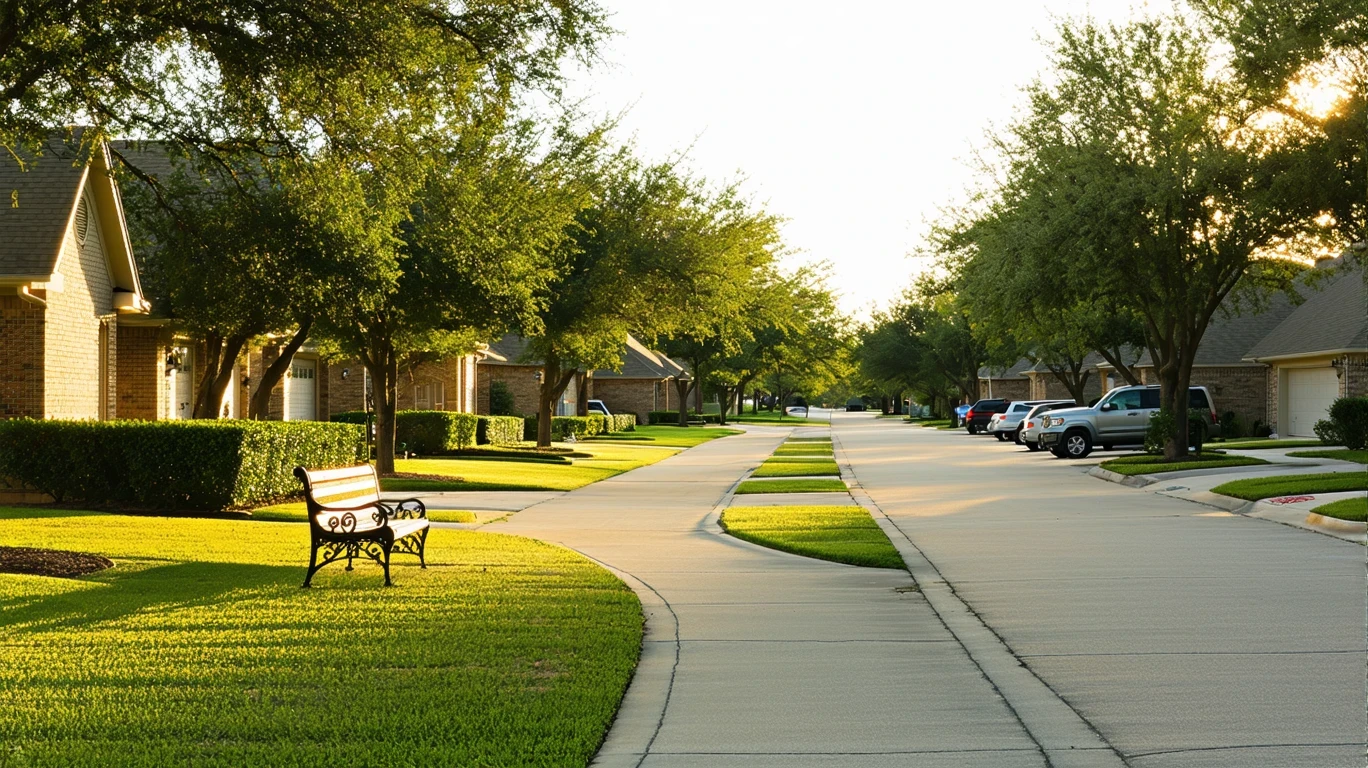
What Cibolo Feels Like Day to Day
Cibolo’s emotional tone is shaped by its structure. The city has abundant parks and water features—outdoor access here exceeds typical suburban thresholds, and families often cite this as a core quality-of-life win. But the pedestrian-to-road ratio sits in a middle band, and food and grocery density falls below low thresholds. What that means in practice: you’ll find plenty of places to take kids outside, but running out for milk or grabbing takeout requires getting in the car, and options feel limited compared to denser parts of the metro.
The urban form is low-rise and mixed-use elements are present, but dispersed. Clinics are available locally, though there’s no hospital in city limits. School density is below threshold, which surprises some families given the city’s suburban family branding. The layout rewards those who value space and quiet over walkable convenience, and it penalizes those who assumed “suburban” would still mean “everything nearby.”
This structure creates a predictable daily rhythm: errands are batched, driving is constant, and spontaneity requires more effort. For households that plan well and don’t mind car dependency, it’s manageable. For those used to grabbing what they need on foot or expecting a quick walk to school, it registers as friction.
Social Media Buzz in Cibolo
In cities like Cibolo, locals often describe the vibe as caught between small-town nostalgia and rapid suburban growth. Online discussion tends to circle around a few recurring themes: pride in the outdoor amenities, frustration with limited dining and shopping variety, protectiveness over the quiet character, and anxiety about whether growth will bring more services or just more traffic.
“We moved here for the space and the parks, and we got that. But I didn’t realize how much I’d miss being able to walk anywhere or have more than three dinner options.”
“It’s peaceful, the neighbors are friendly, and my kids can ride bikes safely. That’s worth the drive to get groceries.”
“Cibolo feels like it’s still figuring out what it wants to be—suburban bedroom community or something with its own identity.”
The tone isn’t angry, but it’s not uncritical either. There’s affection for what works—safety, green space, affordability relative to closer-in suburbs—and impatience with what doesn’t: sparse amenities, car dependence, and a sense that infrastructure hasn’t kept pace with population.
Local News Tone
Local coverage tends to frame Cibolo through the lens of growth, infrastructure catch-up, and identity negotiation. Headlines and story themes often sound like:
- “Community Debates What Growth Should Look Like”
- “New Amenities Arrive as Town Identity Evolves”
- “Residents Weigh Convenience vs Quiet”
- “Outdoor Spaces Draw Families, But Services Lag”
- “Balancing Small-Town Feel with Suburban Expansion”
The framing is rarely alarmist, but it does reflect tension: people moved here for a reason, and they’re protective of that reason, even as they acknowledge gaps. The tone suggests a city in transition, where optimism about potential coexists with frustration over present-day limitations.
Review-Based Public Perception
On platforms like Google, Yelp, and Nextdoor-style forums, Cibolo’s reviews tend to split along expectation lines. Those who wanted suburban space, safety, and parks tend to leave positive feedback. Those who expected walkable errands, diverse dining, or quick access to urban amenities tend to express disappointment.
Praise often centers on:
- Abundant parks and trails
- Newer homes with larger lots
- Quiet, family-friendly streets
- Lower cost compared to closer-in San Antonio suburbs
Complaints often focus on:
- Limited restaurant and retail variety
- Car dependency for all errands
- Longer drives to reach denser services or entertainment
- Perception that schools and clinics are spread thin
Neighborhood variation exists—newer planned areas tend to feel more polished and amenity-rich within their boundaries, while older pockets can feel more disconnected—but the overarching pattern holds: Cibolo rewards those who plan around driving and prioritize outdoor space over walkable texture.
Comparison to Nearby Cities
| Aspect | Cibolo | Schertz | New Braunfels |
|---|---|---|---|
| Overall Vibe | Quiet, car-dependent, park-rich | Slightly denser, more retail options | Historic downtown, tourist draw, more walkable core |
| Walkability | Low; errands require driving | Low to moderate; some pockets more connected | Moderate in downtown; suburban elsewhere |
| Dining & Retail | Limited, chain-focused | More variety, still suburban | Broader mix, local spots downtown |
| Green Space | Abundant, well-distributed | Present, less emphasized | Strong, river access adds appeal |
| Family Appeal | High for space seekers; infrastructure gaps noted | High, more established school presence | High, more amenities and activities |
Cibolo, Schertz, and New Braunfels all serve families looking for suburban life near San Antonio, but the texture differs. Cibolo leans hardest into quiet and green space, at the cost of walkability and amenity density. Schertz offers a bit more retail and dining without losing the suburban feel. New Braunfels brings a walkable downtown core and tourist-driven variety, though it comes with higher visibility and traffic. If you prioritize outdoor access and don’t mind driving everywhere, Cibolo fits. If you want more spontaneity or a stronger sense of “town center,” New Braunfels or even Schertz may feel more complete.
What Locals Are Saying
“We love the parks and the space our kids have to play. But I do wish there were more places to eat that weren’t chains, and I miss being able to walk to grab something quick.”
“Cibolo is perfect if you work from home or don’t mind the commute. It’s affordable, safe, and the neighbors actually talk to each other. Just know you’re driving everywhere.”
“I thought suburban meant convenient. Here it means quiet and spread out. That’s great for some things, frustrating for others.”
“The green space is honestly the best part. We’re outside constantly. But yeah, if you need a hospital or want your kids to walk to school, you’ll notice the gaps.”
“It’s a good place to raise a family if you’re okay with planning your errands and driving to San Antonio for anything beyond basics.”
“We moved from a denser suburb and the adjustment was real. It’s peaceful, but it’s also isolating if you don’t have a car or don’t like driving.”
“Cibolo feels like it’s still catching up to its own growth. The bones are good, but the services haven’t filled in yet.”
Does Cibolo Feel Like a Good Fit?
Cibolo’s emotional profile is consistent: it works beautifully for households that value outdoor space, newer homes, and a low-rise, car-oriented suburban rhythm. It frustrates those who expect walkable errands, dense amenities, or quick access to urban texture. The city isn’t trying to be something it’s not—it’s quiet, green, and affordable relative to closer-in options—but that clarity also means the tradeoffs are non-negotiable.
If you’re a family prioritizing space, safety, and parks, and you’re comfortable with driving as the default mode for everything, Cibolo tends to feel like a strong fit. If you’re hoping for spontaneity, walkability, or a dense service layer, friction will show up quickly. The city rewards planning and patience; it penalizes those who assumed “suburban” would still mean “convenient.”
For a clearer sense of what it feels like to manage a household here, or to explore what makes life feel tight in a car-dependent layout, or to weigh the tradeoffs between renting and buying, those guides offer deeper texture on the decisions that shape daily life in Cibolo.
How this article was built: In addition to public economic data, this article incorporates location-based experiential signals derived from anonymized geographic patterns—such as access density, walkability, and land-use mix—to reflect how day-to-day living actually feels in Cibolo, TX.
The perspectives shown reflect commonly expressed local sentiment and recurring themes in public discussion, rather than individual accounts.