
Can you live in Mount Sterling without a car? For most people, the honest answer is no — and understanding why helps clarify what daily life actually looks like here. Mount Sterling is a small regional city in central Kentucky where the infrastructure, layout, and rhythm of daily errands are built around driving. That doesn’t mean it’s inconvenient or isolating, but it does mean that vehicle access is less of a luxury and more of a practical necessity for nearly every household type.
This article explains how people actually get around Mount Sterling, what transportation options exist in practice, and how mobility shapes the daily routines and tradeoffs that define life here in 2026.
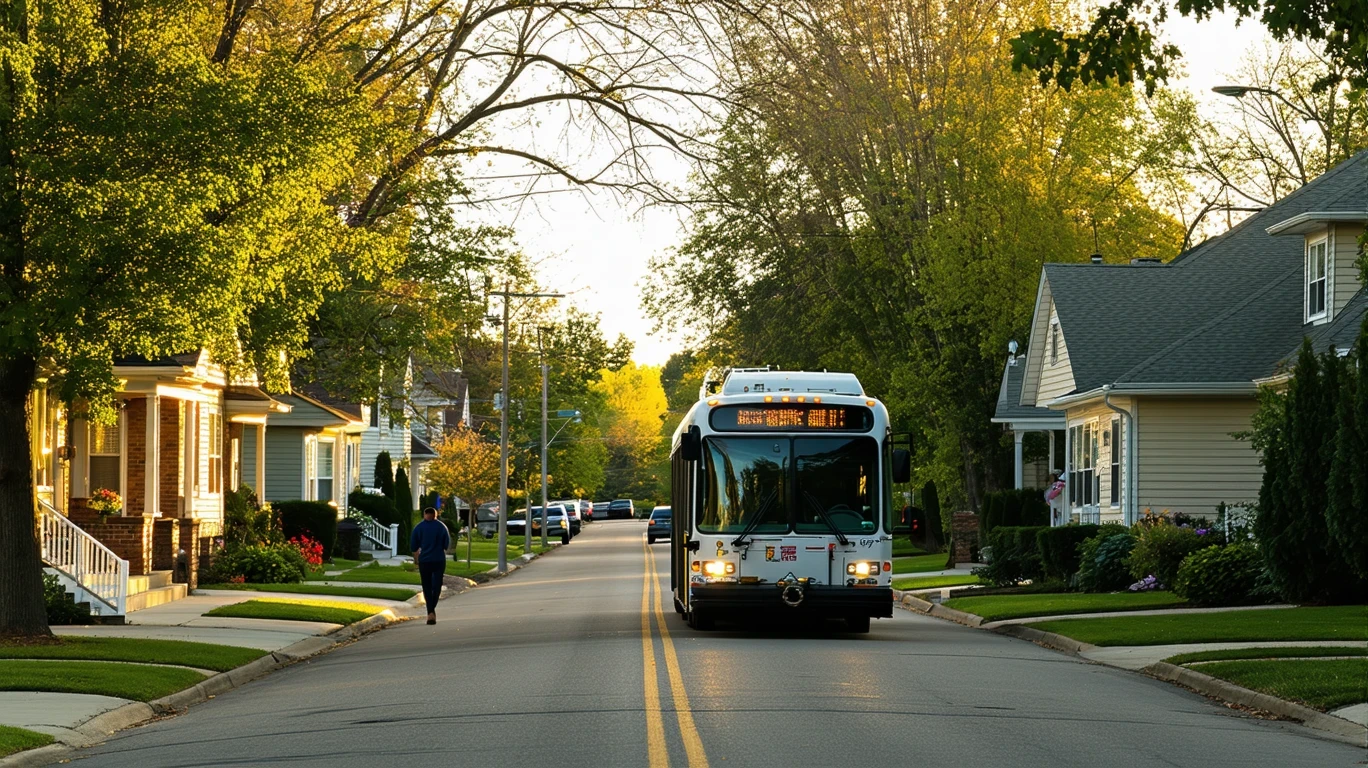
How People Get Around Mount Sterling
Mount Sterling operates as a car-first city. The street network, commercial development, and residential layout reflect decades of planning oriented around personal vehicles. Pedestrian infrastructure is minimal relative to the road network, and the density of sidewalks, crosswalks, and pedestrian-friendly corridors falls well below the threshold that would support routine walking for errands or commuting.
What newcomers often misunderstand is that this isn’t about preference or lifestyle choice — it’s structural. Grocery stores, pharmacies, schools, and workplaces are distributed in ways that assume drivers. Even when distances seem short on a map, the lack of connected pedestrian paths and the design of commercial corridors make walking impractical for most daily tasks. The city’s development pattern clusters food and grocery options along specific corridors rather than distributing them evenly, which means day-to-day costs and errands are managed through planned, multi-stop driving trips rather than spontaneous walks.
This car-oriented texture shapes everything from where people choose to live to how they structure their weekly routines. Households plan around vehicle access, and those without reliable transportation face significant friction in managing work, errands, and family logistics.
Public Transit Availability in Mount Sterling
Public transit does not play a meaningful role in daily mobility for most Mount Sterling residents. There is no evidence of bus routes, rail service, or regional transit connections that would allow someone to commute, run errands, or access healthcare without a car. While some rural and small-city transit systems exist elsewhere in Kentucky, Mount Sterling’s infrastructure and development pattern do not currently support a transit-dependent lifestyle.
This absence isn’t a gap to work around — it’s a defining feature of how the city functions. Households moving here from cities with established transit networks will find that the strategies they used elsewhere (timing trips around bus schedules, living near a station, relying on late-night service) simply don’t apply. The city’s layout assumes that every adult in a household either drives or is driven.
Driving & Car Dependence Reality
Driving in Mount Sterling is not just common — it’s foundational. Parking is generally accessible and free in most commercial areas, which removes one of the friction points that makes car ownership costly or stressful in denser cities. Roads are designed to move vehicles efficiently, and traffic congestion is rare compared to larger metros.
But car dependence also means that vehicle ownership, maintenance, insurance, and fuel become non-negotiable expenses for nearly every household. A broken-down car isn’t an inconvenience here; it’s a crisis that can prevent someone from getting to work, picking up children, or accessing groceries. Households with multiple working adults often need multiple vehicles, and those costs compound quickly.
The tradeoff is predictability and control. Drivers in Mount Sterling aren’t at the mercy of transit schedules, service cuts, or coverage gaps. They can structure their day around their own needs, make last-minute stops, and travel outside the city for work or recreation without logistical complexity. For families, retirees, and anyone managing irregular schedules, that flexibility is a significant advantage.
Commuting Patterns & Daily Mobility
Commuting in Mount Sterling often means driving, whether the destination is local or regional. The city sits within the Lexington metro area, and many residents commute to larger employment centers for work. Without transit options, those commutes are entirely car-based, and the time and fuel costs depend on distance, frequency, and route.
Local workers — those employed within Mount Sterling itself — still rely on driving for daily mobility. Even short commutes require a vehicle because the pedestrian infrastructure and land-use patterns don’t support walking or biking as practical alternatives. Errands, school drop-offs, and medical appointments are typically bundled into driving loops, and households plan their weeks around vehicle availability.
For people working from home or managing flexible schedules, the car-dependent structure is less of a daily burden but still a background requirement. Groceries, pharmacies, and services are corridor-clustered rather than neighborhood-integrated, so even infrequent trips require a car.
Who Transit Works For — and Who It Doesn’t
In Mount Sterling, public transit doesn’t work for anyone in a practical sense, because it doesn’t exist in a form that supports daily life. This isn’t about individual suitability or household type — it’s a structural reality that applies across the board.
Renters and homeowners face the same mobility requirements. Families with children need vehicles to manage school, activities, and errands. Singles and couples need cars to access work and services. Retirees who no longer drive face significant isolation unless they have access to family support, rideshare services, or volunteer transportation networks.
The city’s layout doesn’t create walkable pockets or transit-served corridors that might allow a subset of residents to live car-free. Even in denser or more centrally located neighborhoods, the lack of pedestrian infrastructure and the spacing of essential services make car ownership functionally required.
Transportation Tradeoffs in Mount Sterling
The primary tradeoff in Mount Sterling isn’t between transit and driving — it’s between the flexibility and control that come with car ownership and the financial and logistical burden of maintaining a vehicle.
Driving offers predictability. You’re not waiting for a bus that may not come, adjusting your schedule around limited service hours, or walking long distances in extreme weather. You can leave when you want, stop where you need to, and manage complex trips (errands, kid pickups, medical appointments) without transferring between modes or routes.
But that control comes with costs that never fully disappear: insurance, registration, maintenance, repairs, and fuel. Gas prices in Mount Sterling currently sit at $2.58 per gallon, and while that’s a visible cost, the less obvious expenses — oil changes, tire replacements, unexpected breakdowns — add up over time. For households with tight budgets, a single large repair can create serious financial stress.
There’s also the time cost of driving itself. Commuters to Lexington or other regional centers spend significant time behind the wheel, and that time isn’t flexible or productive in the way remote work or transit commuting can be. For families managing multiple jobs, school schedules, and activities, the logistics of coordinating vehicles and drivers can become a daily puzzle.
The absence of transit doesn’t just remove an option — it removes a fallback. In cities with public transportation, a household can sometimes get by with one car instead of two, or delay a vehicle purchase while relying on buses or trains. In Mount Sterling, that buffer doesn’t exist.
FAQs About Transportation in Mount Sterling (2026)
Is public transit usable for daily commuting in Mount Sterling?
No. Public transit is not available in a form that supports daily commuting, errands, or routine mobility in Mount Sterling. The city’s infrastructure is designed around personal vehicle use, and nearly all households require car access to manage work and daily tasks.
Do most people in Mount Sterling rely on a car?
Yes. Car ownership is functionally required for nearly all residents. The layout of the city, the spacing of services, and the lack of pedestrian and transit infrastructure mean that driving is the primary — and often only — practical way to get around.
Which areas of Mount Sterling are easiest to live in without a car?
No area of Mount Sterling is designed to support car-free living. Even neighborhoods closer to schools, groceries, or commercial corridors lack the pedestrian infrastructure and density that would make walking a reliable option for daily needs.
How does commuting in Mount Sterling compare to nearby cities?
Mount Sterling’s commuting reality is shaped by its small size and regional role. Local commutes are short but still require a car. Commuters traveling to Lexington or other metro centers face longer drives without the option of transit, carpool lanes, or rail alternatives that might exist in larger cities.
What happens if I don’t have a car in Mount Sterling?
Living without a car in Mount Sterling creates significant challenges. Accessing work, groceries, healthcare, and services becomes difficult without relying on family, friends, or rideshare services. The city’s infrastructure does not provide practical alternatives for car-free households.
How Transportation Fits Into the Cost of Living in Mount Sterling
Transportation in Mount Sterling isn’t just a line item in a budget — it’s a structural factor that shapes housing decisions, time allocation, and household flexibility. Because car ownership is required rather than optional, every household must account for vehicle-related expenses as a baseline cost, not a discretionary one.
That baseline shifts what a budget has to handle in Mount Sterling. Rent or mortgage payments may be lower than in transit-rich cities, but those savings are offset by the need to own, insure, fuel, and maintain at least one vehicle — and often two or more for multi-adult households. The predictability of driving comes with the unpredictability of repair costs, and those expenses don’t pause when money is tight.
For people evaluating whether Mount Sterling fits their needs, the question isn’t whether they prefer driving or transit. It’s whether they’re prepared to build their household budget and logistics around vehicle ownership as a non-negotiable requirement. The city rewards that structure with low traffic, accessible parking, and the freedom to move on your own schedule — but it offers no fallback for those who can’t or don’t want to drive.
How this article was built: In addition to public economic data, this article incorporates location-based experiential signals derived from anonymized geographic patterns—such as access density, walkability, and land-use mix—to reflect how day-to-day living actually feels in Mount Sterling, KY.