
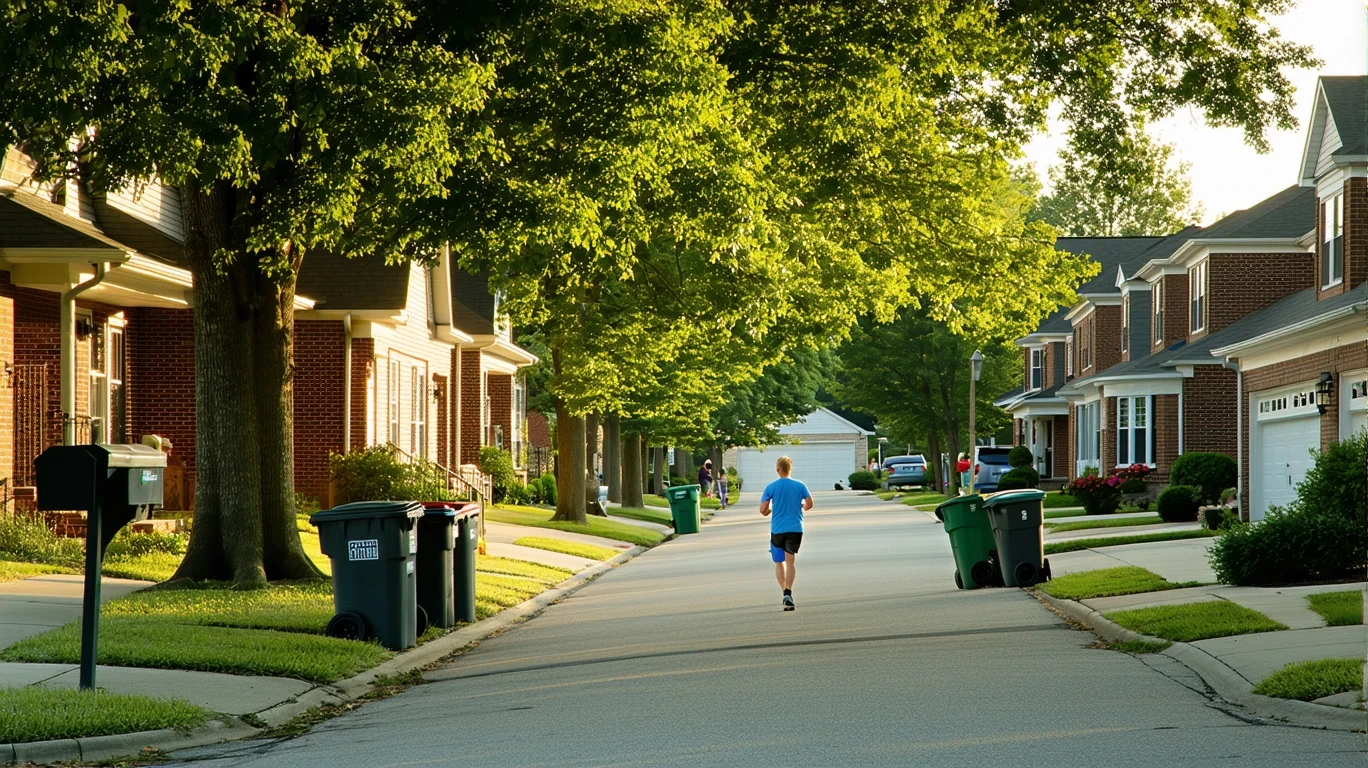
There’s a persistent myth that Lawrenceburg and Georgetown are interchangeable suburbs in the Lexington metro—similar commutes, similar costs, similar trade-offs. The reality is more textured. Both cities sit within the same regional price environment, but where cost pressure shows up differs sharply depending on household structure, transportation habits, and how much flexibility you have in day-to-day logistics. In 2026, the decision between Lawrenceburg and Georgetown isn’t about which city is “cheaper overall”—it’s about which cost structure aligns with how your household actually operates.
Lawrenceburg offers lower housing entry costs and appeals to households prioritizing space and ownership affordability. Georgetown commands higher rent and home prices but delivers more walkable infrastructure, better errand accessibility, and a mixed-use urban form that reduces car dependency for some households. Both cities share the same regional energy rates and grocery price environment, so differences in cost structure come down to housing, transportation friction, and the hidden time costs embedded in how each city is built. For families weighing these two options, the right choice depends on which expenses dominate your budget—and which trade-offs you’re equipped to manage.
Housing Costs
Housing is where Lawrenceburg and Georgetown diverge most clearly. Lawrenceburg’s median home value sits at $168,300, while Georgetown’s reaches $223,700—a structural difference that shapes entry barriers, monthly obligations, and long-term equity exposure. Renters face a similar gap: Lawrenceburg’s median gross rent is $849 per month, compared to Georgetown’s $1,106 per month. These aren’t small variations—they represent fundamentally different housing markets serving different income bands and household priorities.
For first-time buyers, Lawrenceburg’s lower home values translate to smaller down payments, reduced mortgage principal, and less pressure on monthly cash flow. Households stretching to enter homeownership often find Lawrenceburg’s housing stock more accessible, particularly for single-family homes with yards. Georgetown’s higher home values reflect a different market structure: newer construction, proximity to mixed-use corridors, and neighborhoods designed with more pedestrian infrastructure. Buyers in Georgetown are paying not just for square footage, but for urban form—walkable pockets, integrated land use, and reduced reliance on driving for daily errands.
Renters experience the same structural divide. Lawrenceburg’s lower rent supports households prioritizing space over convenience, particularly those willing to drive for groceries, healthcare, and services. Georgetown’s higher rent reflects tighter housing supply in areas with better errand accessibility and shorter commutes. For renters without cars—or those trying to minimize transportation costs—Georgetown’s corridor-clustered services and walkable pockets can offset some of the rent premium by reducing the need for a second vehicle or frequent long drives.
| Housing Type | Lawrenceburg | Georgetown |
|---|---|---|
| Median Home Value | $168,300 | $223,700 |
| Median Gross Rent | $849/month | $1,106/month |
| Typical Housing Form | Low-rise, single-family dominant | Mixed building heights, landuse mix present |
Housing takeaway: Lawrenceburg fits households where entry cost and monthly housing obligations are the primary constraint. Georgetown fits households with higher income who value walkability, errand accessibility, and urban form that reduces transportation friction. The difference isn’t just price—it’s what you’re buying into structurally.
Utilities and Energy Costs

Utilities in Lawrenceburg and Georgetown operate within nearly identical rate structures. Lawrenceburg’s electricity rate is 13.70¢/kWh, while Georgetown’s is 13.62¢/kWh—a negligible difference. Both cities share the same natural gas price of $19.61/MCF. What matters more than rates is how housing stock, building age, and household size interact with Kentucky’s climate exposure—hot, humid summers that drive cooling costs, and cold winters that require heating.
Lawrenceburg’s low-rise housing stock skews toward older single-family homes, which tend to have less efficient insulation, older HVAC systems, and larger conditioned square footage per household. Families in standalone homes face higher baseline usage simply because they’re heating and cooling more space. Georgetown’s mixed building heights and newer construction mean more apartments and townhomes with shared walls, which reduce heating and cooling loads. Households in multi-family units experience lower utility volatility because they’re not absorbing the full seasonal swing that hits detached homes.
For single adults or couples in smaller units, utility costs in either city remain predictable and modest. For families in larger homes—particularly older stock in Lawrenceburg—summer cooling and winter heating can introduce noticeable monthly swings. Georgetown’s newer housing and denser building forms help stabilize utility exposure, especially for households in apartments or attached housing. The structural difference isn’t the rate—it’s the building type and how much conditioned space you’re responsible for.
Utility takeaway: Households in larger, older single-family homes face more utility volatility in Lawrenceburg. Households in apartments or newer construction in Georgetown experience more predictable baseline costs. The rate environment is identical; the difference is housing form and building age.
Groceries and Daily Expenses
Lawrenceburg and Georgetown share the same regional price parity index (93), meaning grocery staples, household goods, and everyday purchases cost roughly the same at checkout. What differs is how you access those goods—and how much friction that access introduces into your weekly routine. Lawrenceburg’s sparse food and grocery density means most households drive to consolidated shopping trips, often to big-box stores or regional grocery chains. Georgetown’s corridor-clustered food and grocery options create more flexibility: shorter drives, more frequent small trips, and better access to prepared food and convenience options.
For families managing larger grocery volumes, Lawrenceburg’s car-dependent model works well if you’re already planning weekly bulk trips and have storage space at home. The trade-off is time: fewer nearby options mean longer drives and less ability to pick up forgotten items without a dedicated errand. Georgetown’s medium-density food infrastructure supports more spontaneous trips—grabbing dinner ingredients on the way home, picking up milk without a 20-minute round trip, or accessing takeout without driving across town. That convenience can reduce planning burden, but it also creates more opportunities for incremental spending on prepared foods and dining out.
Single adults and couples in Georgetown benefit most from the corridor-clustered layout, especially if they’re balancing work schedules and prefer flexibility over bulk planning. Families with kids in Lawrenceburg can manage grocery costs effectively with disciplined planning, but they absorb more time cost in the process. The price environment is identical; the difference is whether your household thrives on consolidated efficiency or values frequent, low-friction access.
Grocery takeaway: Lawrenceburg fits households comfortable with car-dependent, bulk shopping routines. Georgetown fits households that value errand accessibility and are willing to manage convenience spending creep. Price sensitivity is less about checkout totals and more about access structure and planning discipline.
Taxes and Fees
Property taxes, sales taxes, and local fees operate within the same Kentucky tax framework for both Lawrenceburg and Georgetown, but the base to which those taxes apply differs significantly. Georgetown’s higher median home value means homeowners pay property taxes on a larger assessed base, even if the millage rate is similar. Lawrenceburg’s lower home values reduce the absolute property tax obligation, which matters for households managing tight monthly budgets or planning for long-term ownership.
Sales taxes apply uniformly across both cities, so households spending similar amounts on taxable goods face comparable sales tax burdens. Where differences emerge is in recurring local fees—trash collection, water, sewer, and stormwater management. Georgetown’s more developed infrastructure and mixed-use corridors often come with higher service fees, particularly in newer subdivisions or areas with homeowners’ associations. Lawrenceburg’s lower-density layout can mean lower base fees, but also less bundled service coverage, requiring households to manage more vendors independently.
Homeowners planning to stay several years in Georgetown absorb higher property tax exposure as home values appreciate, but they also benefit from better access to services and infrastructure funded by those taxes. Renters in both cities are insulated from direct property tax bills, but landlords pass through those costs in rent structure. Lawrenceburg’s lower tax base supports lower rent, but with trade-offs in service density and infrastructure investment.
Tax and fee takeaway: Georgetown homeowners face higher property tax exposure due to elevated home values, but gain access to better-funded infrastructure. Lawrenceburg homeowners benefit from lower absolute tax obligations, with trade-offs in service density. Renters in both cities see these costs reflected indirectly in rent structure.
Transportation & Commute Reality
Transportation costs in Lawrenceburg and Georgetown are shaped less by gas prices—which are nearly identical at $2.59/gal in Lawrenceburg and $2.58/gal in Georgetown—and more by how much you drive and whether you can avoid driving at all. Georgetown’s walkable pockets and corridor-clustered errands mean some households can consolidate trips, walk to nearby services, or reduce vehicle dependency for daily logistics. Lawrenceburg’s mixed pedestrian infrastructure and sparse errand density mean most households rely on cars for nearly every trip—groceries, healthcare, dining, and services.
Georgetown’s average commute time is 20 minutes, with 26.3% of workers facing long commutes and just 3.7% working from home. That suggests most Georgetown residents are driving to work, but the commute itself is relatively predictable and manageable. Lawrenceburg lacks comparable commute data, but its position in the Lexington metro and sparse local employment base suggest similar or longer commute patterns for most workers. The structural difference is that Georgetown’s mixed-use urban form allows some households to reduce non-commute driving, while Lawrenceburg’s layout embeds car dependency into nearly every aspect of daily life.
For single adults or couples without kids, Georgetown’s walkability and errand accessibility can meaningfully reduce weekly mileage and the friction of constant driving. For families managing school drop-offs, activities, and weekend errands, Lawrenceburg’s car-oriented layout is less of a penalty if you’re already driving everywhere—but it offers no flexibility for households trying to reduce transportation costs or manage with one vehicle.
Transportation takeaway: Georgetown’s walkable pockets and corridor-clustered services reduce non-commute driving for some households. Lawrenceburg’s sparse infrastructure embeds car dependency into daily logistics, increasing mileage and time costs for all household types. Gas prices are identical; the difference is how much you drive and whether you have alternatives.
Cost Structure Comparison
Housing dominates the cost experience in both cities, but the nature of that pressure differs. Lawrenceburg’s lower home values and rent create more accessible entry points, particularly for first-time buyers and renters prioritizing space over convenience. Georgetown’s higher housing costs reflect a market structured around walkability, mixed-use corridors, and reduced transportation friction—households pay more upfront, but some of that premium offsets car dependency and time costs embedded in Lawrenceburg’s layout.
Utilities introduce similar exposure in both cities due to identical rate structures, but Georgetown’s newer construction and mixed building forms stabilize costs for households in apartments or townhomes. Lawrenceburg’s older single-family stock increases volatility, particularly for families heating and cooling larger spaces. The difference isn’t the rate—it’s the building type and how much conditioned space you’re managing.
Daily living costs—groceries, dining, household goods—operate within the same regional price environment, but Georgetown’s corridor-clustered food density reduces planning burden and trip consolidation requirements. Lawrenceburg’s sparse infrastructure means more time spent driving and less flexibility for spontaneous errands. Families comfortable with bulk shopping and disciplined planning can manage grocery costs effectively in Lawrenceburg; households valuing convenience and frequent access fit better in Georgetown’s layout.
Transportation patterns matter more in Georgetown, where walkable pockets and mixed-use corridors allow some households to reduce non-commute mileage. Lawrenceburg’s car-oriented structure embeds driving into every aspect of daily life, increasing both time and fuel costs. For households already committed to two vehicles and long commutes, the difference is marginal. For households trying to minimize transportation expenses or manage with one car, Georgetown’s infrastructure provides more flexibility.
The better choice depends on which costs dominate your household. Households sensitive to housing entry barriers and monthly rent obligations may prefer Lawrenceburg’s lower baseline. Households with higher income who value walkability, errand accessibility, and reduced car dependency may find Georgetown’s elevated housing costs offset by lower transportation friction and time savings. For families managing tight budgets, the difference is less about price and more about predictability—whether you can absorb sparse infrastructure and car dependency, or whether you need the flexibility that comes with Georgetown’s mixed-use corridors and walkable pockets.
How the Same Income Feels in Lawrenceburg vs Georgetown
Single Adult
In Lawrenceburg, housing costs stay manageable, but car dependency becomes non-negotiable—every errand, every meal out, every social plan requires driving. Flexibility disappears if your vehicle needs repair or you’re trying to reduce mileage. In Georgetown, rent consumes more of your monthly income, but walkable pockets and corridor-clustered services mean you can occasionally skip driving, consolidate trips, or access conveniences without a 20-minute round trip. The trade-off is front-loaded housing pressure versus ongoing transportation friction.
Dual-Income Couple
In Lawrenceburg, lower housing costs free up cash flow for savings or discretionary spending, but both partners likely need reliable vehicles and face time costs from sparse errands infrastructure. Commutes and weekend logistics become more rigid. In Georgetown, higher rent or mortgage payments tighten monthly budgets, but better errand accessibility and walkable infrastructure reduce the need for constant coordination and dual-car dependency. The difference is whether you prioritize lower baseline housing costs or reduced logistics friction in daily life.
Family with Kids
In Lawrenceburg, housing space and affordability support larger homes and yards, but every school run, activity drop-off, and grocery trip requires driving—time costs compound quickly. Families absorb more planning burden and vehicle dependency. In Georgetown, higher housing costs squeeze budgets, but corridor-clustered services, medium school density, and walkable pockets reduce some logistics friction. Families with predictable schedules and higher income can absorb Georgetown’s housing premium; families prioritizing space and lower monthly obligations fit better in Lawrenceburg’s structure, provided they can manage the embedded car dependency and time costs.
Decision Matrix: Which City Fits Which Household?
| Decision factor | If you’re sensitive to this… | Lawrenceburg tends to fit when… | Georgetown tends to fit when… |
|---|---|---|---|
| Housing entry + space needs | Down payment size, monthly rent, square footage per dollar | You prioritize lower entry costs and larger homes over walkability | You can absorb higher housing costs in exchange for mixed-use access |
| Transportation dependence + commute friction | Car dependency, mileage, time spent driving daily | You’re already committed to driving everywhere and value lower housing costs | You want to reduce non-commute driving and value walkable errand access |
| Utility variability + home size exposure | Seasonal bill swings, heating/cooling larger spaces | You’re comfortable managing older single-family home utility volatility | You prefer newer construction or multi-family units with more predictable costs |
| Grocery strategy + convenience spending creep | Bulk planning vs frequent small trips, takeout accessibility | You thrive on disciplined bulk shopping and have storage space | You value frequent low-friction access and can manage convenience spending |
| Fees + friction costs (HOA, services, upkeep) | Property taxes, service fees, bundled vs unbundled costs | You prefer lower absolute tax obligations and manage vendors independently | You accept higher fees in exchange for better-funded infrastructure |
| Time budget (schedule flexibility, errands, logistics) | Coordination burden, trip consolidation, spontaneous access | You can absorb rigid logistics and longer drives for lower housing costs | You need flexibility and reduced planning burden in daily errands |
Lifestyle Fit
Lawrenceburg and Georgetown offer distinct lifestyle textures shaped by their urban form, infrastructure, and regional positioning. Lawrenceburg’s low-rise, car-oriented layout appeals to households prioritizing space, quiet neighborhoods, and lower housing entry costs. The trade-off is limited walkability, sparse errand accessibility, and minimal local healthcare infrastructure—most services require driving to nearby towns or into Lexington. Outdoor access is limited, with park density below typical thresholds, though water features provide some natural amenity. Families with school-age children find medium school density, but playground infrastructure is less developed.
Georgetown’s mixed building heights, walkable pockets, and corridor-clustered services create a more integrated daily experience. The city’s high pedestrian-to-road ratio and mixed residential-commercial land use mean some neighborhoods support walking for errands, dining, and services—a meaningful lifestyle shift for households trying to reduce car dependency. Medium park density and water features offer better outdoor access than Lawrenceburg, and the presence of local clinics provides routine healthcare without regional trips. Georgetown’s 20-minute average commute and proximity to Lexington make it a practical base for workers balancing suburban space with urban access.
Both cities sit within the same regional climate and cultural context, so differences in lifestyle come down to infrastructure and access rather than geography. Lawrenceburg fits households comfortable with car-dependent routines and willing to trade convenience for lower housing costs. Georgetown fits households valuing walkability, errand accessibility, and the flexibility that comes with mixed-use urban form. For families weighing these options, the lifestyle difference isn’t about amenities—it’s about how much time and planning your daily routine requires, and whether your household thrives on efficiency or flexibility.
Quick fact: Georgetown’s walkable pockets and corridor-clustered services reduce the need for constant driving, while Lawrenceburg’s sparse infrastructure embeds car dependency into nearly every aspect of daily life.
Quick fact: Georgetown offers routine local healthcare through clinics, while Lawrenceburg lacks hospital or clinic infrastructure, requiring regional trips for most medical needs.
Frequently Asked Questions
Is Lawrenceburg or Georgetown cheaper for renters in 2026?
Lawrenceburg’s median gross rent of $849 per month is lower than Georgetown’s $1,106 per month, but the difference reflects more than price—it’s about access structure. Lawrenceburg’s lower rent comes with sparse errand density and car dependency for nearly every trip. Georgetown’s higher rent reflects walkable pockets, corridor-clustered services, and reduced transportation friction. Renters prioritizing low monthly housing costs fit better in Lawrenceburg; renters valuing convenience and walkability may find Georgetown’s premium offset by reduced car dependency.
How do housing costs in Lawrenceburg vs Georgetown affect first-time buyers in 2026?
Lawrenceburg’s median home value of $168,300 creates a lower entry barrier—smaller down payments, reduced mortgage principal, and less monthly pressure. Georgetown’s $223,700 median home value requires more upfront capital and higher monthly obligations, but buyers gain access to walkable infrastructure, mixed-use corridors, and newer construction. First-time buyers stretching to enter homeownership often find Lawrenceburg more accessible; buyers with higher income prioritizing urban form and reduced car dependency fit better in Georgetown.
Which city has lower transportation costs, Lawrenceburg or Georgetown, in 2026?
Gas prices are nearly identical—$2.59/gal in Lawrenceburg, $2.58/gal in Georgetown—so transportation costs depend on how much you drive, not what you pay at the pump. Lawrenceburg’s sparse infrastructure and mixed pedestrian density mean most households drive for every errand, increasing mileage and time costs. Georgetown’s walkable pockets and corridor-clustered services allow some households to reduce non-commute driving. Households already committed to two vehicles and long commutes see minimal difference; households trying to minimize transportation expenses or manage with one car find more flexibility in Georgetown.
Do utilities cost more in Lawrenceburg or Georgetown in 2026?
Electricity rates are nearly identical—13.70¢/kWh in Lawrenceburg, 13.62¢/kWh in Georgetown—and both cities share the same natural gas price of $19.61/MCF. The difference is housing form and building age. Lawrenceburg’s low-rise, older single-family stock increases utility volatility, particularly for families heating and cooling larger spaces. Georgetown’s mixed building heights and newer construction stabilize costs for households in apartments or townhomes. The rate environment is identical; the difference is what you’re heating, cooling, and how efficiently your building performs.
Which city is better for families with kids, Lawrenceburg or Georgetown, in 2026?
Lawrenceburg offers lower housing costs and more space, appealing to families prioritizing affordability and yards. The trade-off is sparse infrastructure—limited park density, no local hospital or clinics, and car dependency for every school run, activity, and errand. Georgetown’s higher housing costs squeeze budgets, but families gain corridor-clustered services, medium park density, routine local healthcare, and walkable pockets that reduce logistics friction. Families with tight budgets and disciplined planning fit better in Lawrenceburg; families with higher income who value convenience and reduced car dependency fit better in Georgetown.
Conclusion
Lawrenceburg and Georgetown sit within the same regional economy, share nearly identical utility rates and grocery prices, and serve the same Lexington metro commuter base—but where cost pressure shows up differs sharply depending on household structure and daily logistics. Lawrenceburg’s lower housing entry costs and rent create accessible pathways to homeownership and larger living spaces, but those savings come with embedded car dependency, sparse errand infrastructure, and limited local healthcare. Georgetown’s higher housing costs reflect a market built around walkability, mixed-use corridors, and reduced transportation friction—households pay more upfront, but gain flexibility, convenience, and infrastructure that reduces time costs and planning burden.
The right choice depends on which costs dominate your household and which trade-offs you’re equipped to manage. Households sensitive to housing entry barriers, monthly rent obligations, and upfront capital fit better in Lawrenceburg’s structure, provided they can absorb car dependency and longer drives for daily errands. Households with higher income who value walkability, errand accessibility, and reduced logistics friction fit better in Georgetown, even with elevated housing costs. For families weighing these two cities in 2026, the decision isn’t about which place is “cheaper overall”—it’s about which cost structure aligns with how your household actually operates, and whether you prioritize lower baseline expenses or reduced friction in day-to-day life.
How this article was built: In addition to public economic data, this article incorporates location-based experiential signals derived from anonymized geographic patterns—such as access density, walkability, and land-use mix—to reflect how day-to-day living actually feels in Lawrenceburg, KY.