
‘We moved to Buena Park for the schools, but stayed for the neighbors.’
That sentiment captures much of what keeps people rooted here: a blend of practical infrastructure, accessible daily errands, and a community that feels less polished than some of its Orange County neighbors — but also less pretentious. Buena Park sits in a curious middle ground, offering suburban comfort without complete car dependency, family-friendly amenities without resort-town pricing, and enough urban texture to make errands feel manageable. But it’s also a city that asks residents to navigate tradeoffs: commutes that stretch longer than hoped, an identity that doesn’t quite fit the “classic OC” mold, and housing costs that still sting even if they’re lower than nearby alternatives.
For families who prioritize schools, playgrounds, and grocery accessibility, Buena Park tends to deliver. For those chasing walkable urban density, vibrant nightlife, or a car-free lifestyle, the city often feels like a compromise. Understanding how Buena Park feels day-to-day means understanding who tends to feel at home here — and who tends to feel restless.
The Emotional Landscape of Buena Park
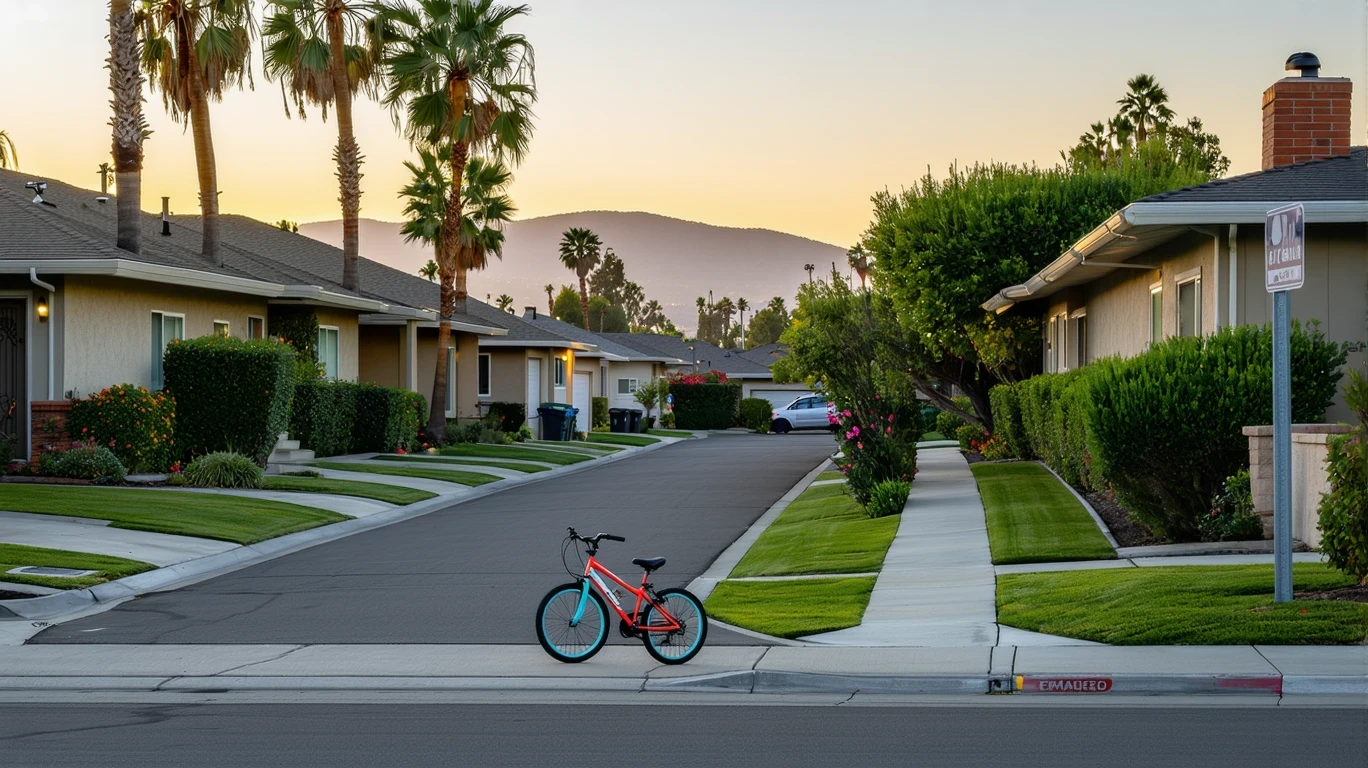
Buena Park doesn’t inspire the same aspirational buzz as some of its Orange County neighbors, and locals seem mostly fine with that. The city’s vibe is rooted in practicality: decent schools, parks integrated throughout neighborhoods, and grocery stores that don’t require a 20-minute drive. Rail transit adds a layer of flexibility that many suburban OC cities lack, giving commuters a real alternative to sitting in freeway traffic every morning. The result is a place that feels functional and family-oriented, but not especially exciting.
What tends to feel rewarding here is the ease of managing household logistics. Parents talk about being able to walk kids to playgrounds, pick up groceries on the way home, and access schools without long drives. The city’s layout supports the kind of routines that make suburban life work — errands don’t require elaborate planning, and green space is woven into the fabric of daily life rather than reserved for weekend trips.
What tends to feel limiting is the lack of cultural texture and the persistent pull of the car. While some pockets offer pedestrian-friendly streets, the overall mobility experience is mixed. Long commutes remain common, with nearly half of workers facing extended travel times. For younger professionals or couples seeking walkable urban energy, Buena Park can feel too quiet, too spread out, and too dependent on driving for anything beyond the grocery run.
The city attracts people who want Orange County proximity and family infrastructure without paying Irvine or Newport prices. It frustrates people who expected more walkability, more nightlife, or shorter commutes. The tension isn’t about whether Buena Park is “good” — it’s about whether its particular mix of convenience and compromise matches what you actually need.
Social Media Buzz in Buena Park
Online discussions about Buena Park tend to circle around a few recurring themes: pride in the city’s underrated practicality, frustration with traffic and commute times, and a defensive posture when comparisons to flashier OC cities come up. The tone is less aspirational than pragmatic — people talk about what works, what doesn’t, and what they wish outsiders understood.
Residents frequently highlight the city’s family-friendly infrastructure. “People sleep on Buena Park, but we’ve got parks everywhere, solid schools, and you can actually get groceries without a production,” one commenter noted. There’s a recurring sense that the city delivers on the basics without the pretense that sometimes accompanies other Orange County communities.
Commute complaints are a constant thread. “The 5 is a nightmare, and even with the train, getting to LA or Irvine feels like a commitment,” another resident shared. The frustration isn’t just about time — it’s about unpredictability. Traffic can turn a manageable commute into an exhausting slog, and that volatility wears on people who value routine and control.
There’s also a recurring conversation about identity. Buena Park doesn’t fit neatly into the “classic suburb” or “urban core” category, and that in-between status generates mixed feelings. Some appreciate the hybrid character; others feel the city lacks a clear sense of place. “It’s convenient, but it doesn’t feel like it has a personality,” one local observed. That ambivalence shows up often — appreciation for function, ambivalence about feeling.
Local News Tone
Coverage of Buena Park tends to focus on infrastructure, development, and community identity rather than dramatic events or rapid transformation. The tone is steady, reflecting a city that evolves incrementally rather than in headline-grabbing bursts. Recurring topic buckets include:
- “New Retail and Dining Options Arrive as City Grows”
- “Residents Weigh Convenience Against Density Concerns”
- “Schools and Parks Remain Central to Community Identity”
- “Commuters Seek Balance Between Rail Access and Freeway Dependence”
- “Buena Park Navigates Its Place in a Changing Orange County”
The framing is rarely celebratory or alarmist. Instead, it reflects a city managing growth, balancing suburban character with urban proximity, and trying to maintain affordability in a region where that’s increasingly difficult. There’s an undertone of pragmatism — Buena Park is presented as a place that works for certain households, not as a destination that demands attention.
Review-Based Public Perception
Public feedback on platforms like Google, Yelp, and neighborhood forums reveals a pattern: people who wanted suburban comfort with practical amenities tend to feel satisfied; people who wanted walkable urban texture or vibrant nightlife tend to feel disappointed.
Positive commentary often centers on quality of life factors like park access, grocery availability, and school quality. “We can walk to the park, the grocery store is five minutes away, and the schools are solid — that’s all we needed,” one review noted. Families especially appreciate the infrastructure that supports daily routines without constant driving.
Neutral or mildly critical feedback tends to focus on expectations that didn’t match reality. “It’s fine, but it’s not walkable the way we thought it would be,” one resident shared. Others mention the lack of dining variety, limited nightlife, and a sense that the city feels more like a pass-through than a destination.
Neighborhood variation exists but is often framed in general terms: newer planned areas feel more polished and family-oriented, while older pockets offer more affordable housing but less cohesive design. The divide isn’t dramatic, but it shapes how different households experience the city.
Comparison to Nearby Cities
| Dimension | Buena Park | Fullerton | Anaheim |
|---|---|---|---|
| Overall Vibe | Practical suburban comfort with rail access | College-town energy with walkable downtown core | Tourist-adjacent sprawl with pockets of density |
| Family Appeal | Strong schools and parks, integrated green space | Good schools, but less family-centric infrastructure | Mixed; some family-friendly areas, others transient |
| Walkability | Walkable pockets, but not uniform | Downtown offers genuine walkability | Car-dependent outside of resort district |
| Commute Experience | Rail helps, but long commutes common | Similar rail access, slightly shorter average commute | Freeway-heavy, limited transit alternatives |
| Cost Pressure | Moderate for Orange County, still high overall | Similar housing costs, slightly higher rent | Comparable, with more variation by neighborhood |
Buena Park sits between Fullerton’s college-town walkability and Anaheim’s sprawling, tourist-adjacent character. If you value family infrastructure and practical errands accessibility over nightlife and dense urban texture, Buena Park tends to feel more aligned than Fullerton. If you need genuine walkability or a strong sense of place, Fullerton’s downtown core offers more. Compared to Anaheim, Buena Park feels more cohesive and less transient, but Anaheim offers more neighborhood variety and slightly more housing options at different price points.
The choice isn’t about which city is “better” — it’s about which tradeoffs you’re willing to accept. Buena Park works for households who prioritize day-to-day costs and family logistics over urban energy. It frustrates those who expected more walkability or a stronger cultural identity.
What Locals Are Saying
“We love that we can walk to the park and the grocery store is close. It’s not fancy, but it works for us and the kids are happy.” — Parent of two, moved from LA County
“The commute is brutal. Even with the train, getting to work in Irvine takes forever, and the freeway is unpredictable. I wish we’d factored that in more.” — Remote worker with hybrid schedule
“Buena Park doesn’t have the reputation of some OC cities, but honestly, that keeps it more affordable and less pretentious. We’re fine with that.” — Long-time resident, retired
“It’s convenient, but it doesn’t feel like it has a personality. You’re close to everything, but you’re not really *in* anything.” — Young professional, renting
“The schools are solid, the parks are great, and we’re not paying Newport prices. That’s the whole reason we’re here.” — Family with school-age kids
“I thought it would be more walkable based on the location, but you still need a car for most things. It’s better than pure suburbia, but not by much.” — Couple, early 30s
“We’ve been here 15 years and raised our kids here. It’s not perfect, but it’s stable, safe, and you can actually afford to live here without two tech salaries.” — Parent, works locally
Does Buena Park Feel Like a Good Fit?
Buena Park tends to work for families who prioritize schools, parks, and grocery accessibility over nightlife and dense urban texture. It works for commuters who value rail access and are willing to navigate longer travel times in exchange for moderate Orange County housing costs. It works for households who want suburban comfort without the isolation of purely car-dependent sprawl.
It tends to frustrate people who expected uniform walkability, vibrant cultural energy, or short commutes. It frustrates those who wanted a strong sense of place or a city that feels like a destination rather than a functional base. And it frustrates cost-sensitive renters who hoped Orange County proximity would come with lower housing pressure.
The city’s emotional profile is rooted in practicality, not aspiration. If you value infrastructure that supports daily routines, Buena Park delivers. If you need more than that — more walkability, more energy, more identity — the city may feel like a compromise you tolerate rather than a place you love.
How this article was built: In addition to public economic data, this article incorporates location-based experiential signals derived from anonymized geographic patterns—such as access density, walkability, and land-use mix—to reflect how day-to-day living actually feels in Buena Park, CA.
The perspectives shown reflect commonly expressed local sentiment and recurring themes in public discussion, rather than individual accounts.