
Buena Park’s housing market carries a surprise that catches many newcomers off guard: the sticker price is only the beginning. California’s property tax system locks your assessment at purchase but resets it entirely when you buy, meaning move-up buyers lose their Prop 13 protection the moment they close. Supplemental tax bills arrive months later, HOA governance structures vary wildly by neighborhood, and the difference between renting and owning isn’t just about monthly payments—it’s about which risks you’re willing to own.
With a median home value of $702,600 and median rent at $2,012 per month, Buena Park sits in the middle of Orange County’s cost spectrum. But the real decision isn’t about affordability in the abstract—it’s about understanding how housing costs behave here, what changes over time, and which expenses you can predict versus which ones you can’t.
The Housing Market in Buena Park Today
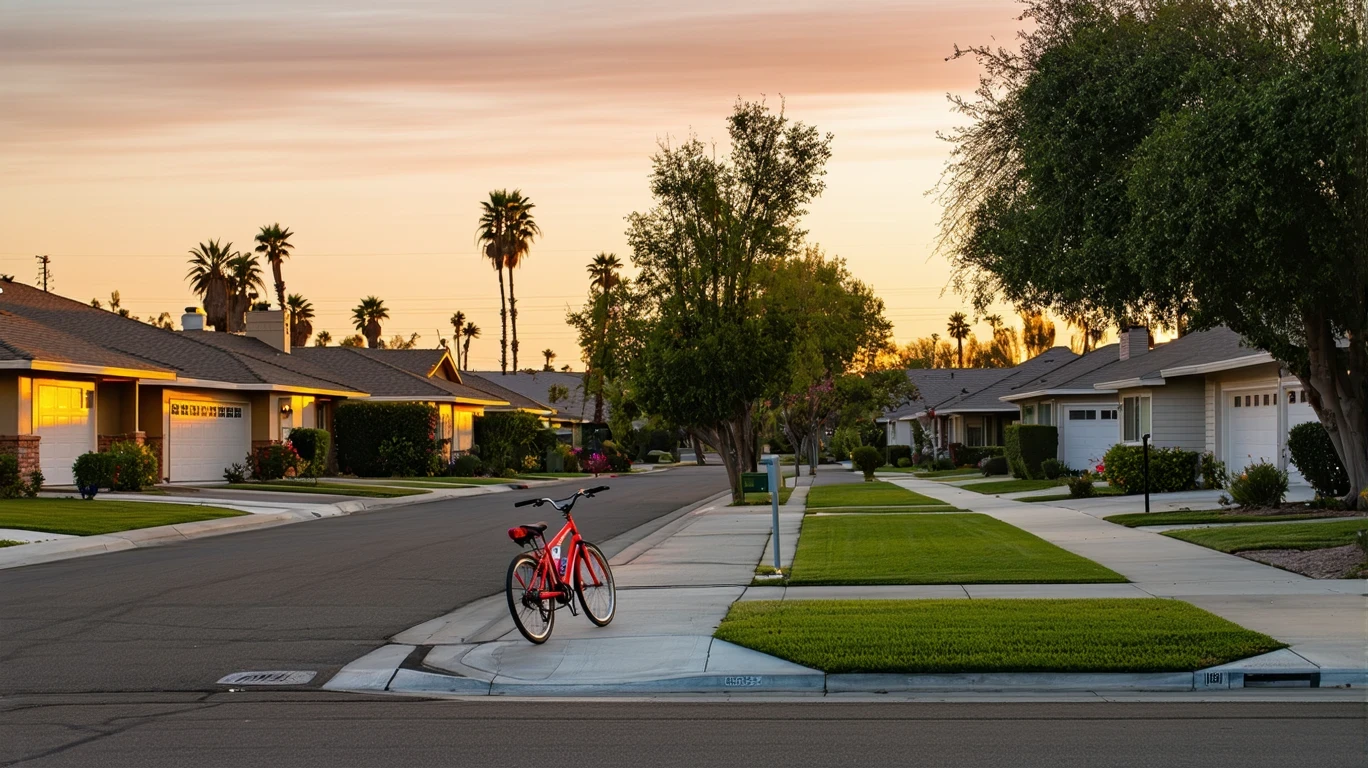
Buena Park’s housing market reflects its position as an established Orange County suburb with rail transit access and a mix of older single-family neighborhoods and newer multifamily developments. The $702,600 median home value represents decades of California appreciation layered onto a housing stock that ranges from mid-century ranch homes to recent townhome complexes. What shapes costs here isn’t just the price—it’s the infrastructure that comes with it.
The city’s walkable pockets and high pedestrian-to-road ratio signal older, established neighborhoods where homes sit closer to commercial corridors and parks. Rail service connects Buena Park to the broader Orange County job market, which matters for buyers weighing commute costs against housing premiums. Families are drawn by school and playground density that exceeds regional thresholds, but that demand keeps pressure on both rental and ownership markets.
Newcomers often misunderstand the gap between list price and total ownership exposure. California’s property tax system means your tax bill is set by what you pay, not what your neighbor paid. Two identical homes on the same street can carry vastly different tax burdens depending on when they last sold. That’s not a quirk—it’s the structure, and it resets every time the property changes hands.
Renting in Buena Park
At $2,012 per month, Buena Park’s median rent reflects the cost of access—to jobs, schools, parks, and transit—without the governance complexity of ownership. Renters here benefit from the city’s broadly accessible errands infrastructure: high grocery and food establishment density means daily logistics don’t require long drives or advance planning. That convenience compresses the rent premium between car-dependent and walkable neighborhoods, because even in less pedestrian-friendly pockets, essentials remain close.
Rental pressure in Buena Park follows Orange County’s broader patterns: renewals bring volatility, and landlords adjust to market conditions annually. But renters avoid property tax reassessment, HOA fee increases, and the maintenance surprises that come with aging housing stock. The tradeoff is predictability: you control your lease term, but not the renewal offer.
For households prioritizing flexibility or unwilling to absorb ownership’s hidden costs, renting in Buena Park offers a stable cost structure with fewer variables. The risk is renewal exposure, not surprise assessments or governance disputes.
Owning a Home in Buena Park
Ownership in Buena Park means locking your property tax assessment at purchase—but it also means accepting every cost that renters avoid. California’s Prop 13 system protects long-term owners from runaway tax increases, but new buyers pay taxes based on the $702,600 median value, not what the previous owner paid. That reset is permanent until the next sale, and it’s often the largest surprise in the first year of ownership.
Supplemental tax bills arrive months after closing, covering the gap between the old assessment and the new one. First-time buyers often budget for the annual tax bill but miss the supplemental, which can add thousands in the first year. Move-up buyers face an even sharper reset: selling one Buena Park home and buying another means losing the Prop 13 base entirely, even if you’re staying in the same city.
HOA presence varies widely. Newer townhome and condo developments often carry monthly fees that cover landscaping, exterior maintenance, and sometimes water or trash service. Older single-family neighborhoods typically don’t have HOAs, but that means owners absorb all maintenance and repair costs directly. The governance structure you buy into determines whether your monthly obligations are predictable or whether large expenses arrive as special assessments.
Maintenance exposure in Buena Park is shaped by climate and housing age. Mild Mediterranean weather reduces heating and cooling stress, but older housing stock—common in the city’s established neighborhoods—brings deferred maintenance risk. Roofs, plumbing, and HVAC systems age on timelines owners can’t control, and replacement costs land entirely on the homeowner unless an HOA budget covers them.
Apartment vs House in Buena Park — Cost Behavior Comparison
The choice between an apartment and a house in Buena Park isn’t just about space—it’s about which costs you’re willing to manage and which risks you’re prepared to carry. The table below reflects only the categories where cost behavior differs meaningfully in this market, shaped by local housing stock, climate, and governance structures.
| Expense Category | Apartment | House |
|---|---|---|
| Property Tax Exposure | Embedded in rent; landlord absorbs reassessment | Locked at purchase value; resets entirely on sale |
| HOA/Governance | Common in newer complexes; covers exterior and common areas | Varies by neighborhood; older areas often have none |
| Maintenance Control | Landlord or HOA handles; tenant insulated from surprise costs | Owner absorbs all costs; older housing stock increases risk |
| Utility Responsibility | Sometimes bundled; otherwise tenant-paid | Always owner-paid; larger space increases usage |
| Renewal/Reassessment Risk | Annual lease renewal brings volatility | Prop 13 protects long-term owners; taxes rise slowly after purchase |
Why these categories: Property tax behavior differs sharply under California’s Prop 13 system, which resets assessments on sale but protects long-term owners. HOA presence varies by housing age and type, affecting both predictability and governance complexity. Maintenance exposure is higher in older single-family housing stock common in Buena Park’s established neighborhoods. Utility responsibility shifts entirely to owners in houses, and Buena Park’s mild climate reduces seasonal extremes but doesn’t eliminate usage differences tied to square footage.
Omitted categories: Insurance, trash service, and water/sewer costs vary by provider and property type but don’t follow consistent patterns that distinguish apartments from houses in Buena Park specifically. These remain household-specific rather than structurally different.
Utilities & Upkeep Differences
Buena Park’s mild Mediterranean climate keeps heating and cooling costs lower than in regions with temperature extremes, but utility exposure still differs sharply between apartments and houses. At 33.60¢/kWh, electricity rates reflect California’s higher energy costs, and larger single-family homes use more power for cooling during warm months and for lighting and appliances year-round. Natural gas, priced at $21.94/MCF, sees limited use in a climate with minimal heating demand, but homes with gas water heaters or ranges still carry that line item.
Apartments, especially those in newer complexes, often have smaller footprints and shared walls that reduce heating and cooling loads. Some multifamily buildings bundle water, trash, or gas into rent or HOA fees, which shifts the cost but also removes the tenant’s ability to control usage. Houses place full utility responsibility on the owner, and older housing stock—common in Buena Park’s established neighborhoods—may have less efficient insulation, windows, or HVAC systems, increasing usage even in a mild climate.
Maintenance exposure follows housing age and ownership structure. Older single-family homes carry deferred maintenance risk: roofs, water heaters, and HVAC systems age on timelines owners can’t control, and replacement costs arrive as lump sums. Apartments with HOA structures spread some of those costs across units, but owners in non-HOA single-family neighborhoods absorb everything directly. Buena Park’s low weather-driven damage risk reduces emergency repair frequency, but it doesn’t eliminate the slow accumulation of wear that comes with aging housing stock.
Rent vs Buy: Long-Term Exposure in Buena Park
The decision to rent or buy in Buena Park isn’t about which option costs less in year one—it’s about which risks you’re prepared to carry over time. Renters face renewal volatility but avoid tax reassessment, surprise maintenance costs, and governance disputes. Owners gain Prop 13 protection after purchase, locking their tax base and insulating themselves from the annual reassessment pressure that landlords pass through to tenants. But that protection comes with tradeoffs: property taxes reset entirely when you buy, maintenance costs land without warning, and HOA fees or special assessments can rise regardless of your household budget.
Over time, renters in Buena Park experience cost changes driven by market conditions and landlord decisions. Lease renewals bring uncertainty, and rent can rise sharply in tight markets or when property taxes increase for the landlord. But renters avoid the long-term exposure that comes with ownership: they don’t pay for roof replacements, HVAC failures, or HOA capital improvement projects. Their cost structure remains simpler, even if less predictable year to year.
Owners, by contrast, trade short-term volatility for long-term control. After the initial tax reassessment at purchase, Prop 13 limits annual increases, which means property tax growth slows dramatically compared to rental markets. But ownership introduces costs renters never see: deferred maintenance on aging housing stock, HOA fee increases in governed communities, and the risk of supplemental assessments if improvements or additions trigger reassessment. Buena Park’s mild climate reduces weather-driven repair frequency, but it doesn’t eliminate the reality that homes age and systems fail on schedules owners don’t control.
The structural difference isn’t about monthly payment size—it’s about exposure type. Renters face market-driven volatility but retain flexibility and avoid capital risk. Owners gain tax stability and long-term predictability but absorb every cost that comes with aging property and governance structures. In Buena Park, where home values reflect decades of California appreciation and housing stock ranges from mid-century to modern, the choice depends on whether you’re optimizing for flexibility or control.
FAQs About Housing Costs in Buena Park
How do property taxes work for new buyers in Buena Park?
California’s Prop 13 system sets your property tax assessment at the price you pay when you buy. If you purchase a home in Buena Park at the $702,600 median value, your taxes are calculated on that amount, not on what the previous owner paid. That assessment stays locked with annual increases capped at 2%, but it resets entirely if you sell and buy another property—even in the same city. Supplemental tax bills often arrive months after closing, covering the gap between the old and new assessments for the partial year.
What’s the difference between renting and owning for long-term cost predictability in Buena Park?
Renters face annual lease renewal volatility, where rent can rise based on market conditions and landlord decisions. Owners gain Prop 13 protection after purchase, which locks their tax base and limits increases to 2% per year. But ownership introduces costs renters avoid: maintenance on aging housing stock, HOA fees in governed communities, and the risk of special assessments. Predictability for owners depends on housing age, governance structure, and whether major systems like roofs or HVAC are near replacement.
Do most homes in Buena Park have HOA fees?
HOA presence in Buena Park varies by neighborhood and housing type. Newer townhome and condo developments typically have HOAs that cover exterior maintenance, landscaping, and sometimes utilities. Older single-family neighborhoods often don’t have HOAs, meaning owners handle all maintenance directly. The governance structure you buy into determines whether your monthly costs are predictable through HOA dues or whether large expenses arrive as owner responsibility without a shared budget.
How does Buena Park’s climate affect home maintenance costs?
Buena Park’s mild Mediterranean climate reduces heating and cooling stress, which lowers utility costs and extends the lifespan of HVAC systems compared to regions with temperature extremes. But the city’s older housing stock still ages, and deferred maintenance on roofs, plumbing, and water heaters doesn’t disappear just because the weather is mild. Owners avoid the emergency repair frequency common in areas with harsh winters or storm seasons, but they still face the slow accumulation of wear that comes with aging homes.
What should renters in Buena Park expect at lease renewal?
Renters in Buena Park should expect renewal offers to reflect current market conditions, which means rent can rise—sometimes significantly—if demand is strong or if the landlord’s property taxes have increased. California law limits rent increases in some cases, but those protections vary by property age and type. Renters avoid property tax reassessment and maintenance surprises, but they trade that insulation for less control over annual cost changes. The renewal process is where market pressure shows up most directly for tenants.
Making Housing Choices in Buena Park
Housing costs in Buena Park aren’t just about the monthly payment—they’re about understanding which expenses reset when you buy, which ones grow over time, and which risks you’re prepared to manage. Renters gain flexibility and avoid the tax reassessment and maintenance exposure that come with ownership, but they face renewal volatility and less control over long-term cost growth. Owners lock their property tax base under Prop 13 and gain stability, but they absorb every cost that comes with aging housing stock, HOA governance, and California’s supplemental assessment system.
The city’s infrastructure—rail access, high grocery and food density, strong family amenities—supports both renters and owners, but the decision depends on whether you’re optimizing for predictability or flexibility. Buena Park’s monthly budget reflects the reality that housing is the largest single expense, and the structure you choose determines how that expense behaves over time.
For households weighing their options, the question isn’t whether Buena Park is affordable in the abstract—it’s whether the housing cost structure here aligns with your timeline, risk tolerance, and willingness to manage the complexity that comes with ownership in California’s property tax system.
How this article was built: In addition to public economic data, this article incorporates location-based experiential signals derived from anonymized geographic patterns—such as access density, walkability, and land-use mix—to reflect how day-to-day living actually feels in Buena Park, CA.