
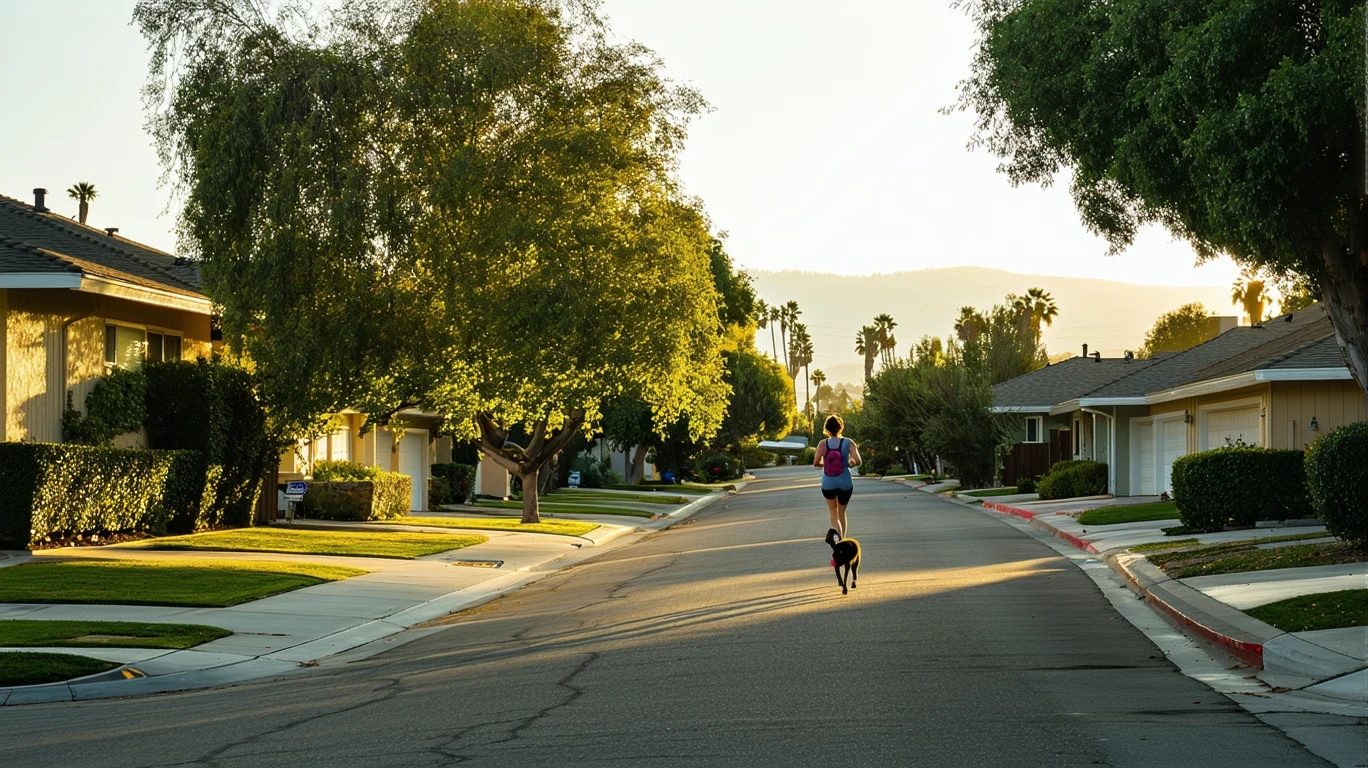
Fountain Valley’s median home value sits at $932,800—nearly $142,000 higher than Fullerton’s $791,000. That single number shapes how every other cost decision unfolds for households weighing these two Orange County cities in 2026. Both cities sit in the same metro area, share similar employment access, and offer integrated park systems with broadly accessible grocery options. Yet the financial pressure points land differently depending on whether housing entry costs or ongoing transportation friction dominate your household budget.
The comparison isn’t about which city costs less overall—it’s about where cost pressure concentrates and which households feel that pressure most acutely. Fountain Valley’s higher housing barrier creates front-loaded financial exposure that affects renters and buyers alike, while Fullerton’s rail transit access and walkable pockets shift the calculus for households sensitive to commute time and car dependency. Families prioritizing space face one set of tradeoffs; single adults optimizing for flexibility face another. Understanding how these structural differences interact with household composition reveals why the same gross income can feel stable in one city and stretched in the other.
This analysis examines housing entry barriers, utility exposure patterns, transportation infrastructure differences, and daily living costs to explain which households fit where—and why the decision hinges on which costs you can control versus which ones control you.
Housing Costs
Housing creates the sharpest divide between these two cities. Fountain Valley’s median home value of $932,800 establishes a steep entry threshold that shapes affordability from the first month. Fullerton’s $791,000 median represents lower upfront capital requirements, though still substantial by national standards. For buyers, that difference translates directly into down payment size, mortgage qualification income, and monthly principal-and-interest obligations. The gap matters most for first-time buyers operating near the edge of qualification thresholds, where an extra $140,000 in purchase price can determine whether a household qualifies at all.
Rental markets mirror this pattern. Fountain Valley’s median gross rent of $2,412 per month exceeds Fullerton’s $1,989 by $423 monthly—a difference that compounds over lease terms and affects how much financial cushion remains for other expenses. Both cities offer a mix of single-family rentals and apartment complexes, but the baseline cost floor sits higher in Fountain Valley regardless of housing type. Renters in Fountain Valley face greater pressure to allocate income toward housing before addressing transportation, utilities, or discretionary spending. Fullerton’s lower rent baseline creates more breathing room for households managing multiple cost categories simultaneously.
The housing stock in both cities skews toward low-rise construction, with Fountain Valley showing particularly consistent single-story and two-story residential patterns. Fullerton exhibits more mixed building heights, including some denser apartment clusters near transit corridors. This structural difference affects not just aesthetics but ongoing costs: larger single-family homes in Fountain Valley typically carry higher utility exposure due to square footage, while Fullerton’s mix of housing types allows more flexibility in matching housing size to household needs. Families seeking yard space and room to grow encounter higher baseline costs in Fountain Valley; those willing to trade space for lower housing obligations find more entry points in Fullerton.
| Housing Type | Fountain Valley Pressure | Fullerton Pressure |
|---|---|---|
| Median Home Value | $932,800 | $791,000 |
| Median Gross Rent | $2,412/month | $1,989/month |
| Entry Barrier Character | Steep upfront capital requirement | Moderate upfront requirement |
| Housing Form Flexibility | Predominantly low-rise single-family | Mixed heights with denser pockets |
First-time buyers face the most acute pressure differential. Fountain Valley’s higher home values require larger down payments and higher qualifying incomes, narrowing the pool of households who can enter the ownership market without significant savings or dual high incomes. Fullerton’s lower median creates a wider entry corridor, though affordability remains challenging by broader standards. Renters experience similar dynamics: Fountain Valley’s rent levels consume a larger share of median household income ($108,860 annually in Fountain Valley vs $99,279 in Fullerton), leaving less flexibility for cost overruns in other categories. Families with children weighing space needs against financial flexibility confront a direct tradeoff—Fountain Valley offers more consistent residential neighborhood character but demands higher ongoing housing payments that persist regardless of income fluctuations.
Housing takeaway: Fountain Valley imposes higher entry barriers and ongoing obligations for both renters and owners, creating front-loaded financial pressure that affects every subsequent budget decision. Households with stable high incomes and minimal transportation costs can absorb this pressure; those operating near qualification thresholds or managing variable income streams face greater exposure. Fullerton’s lower housing baseline provides more entry flexibility and leaves more income available for transportation, utilities, and discretionary spending—but households prioritizing specific neighborhood character or larger homes may find fewer options that meet both criteria.
Utilities and Energy Costs

Utility cost exposure in both cities reflects Southern California’s mild climate and the resulting emphasis on cooling over heating. Fountain Valley’s electricity rate of 31.91¢/kWh sits below Fullerton’s 33.60¢/kWh, a difference that becomes meaningful for households with high cooling loads or electric appliances. Natural gas pricing remains nearly identical—$21.89/MCF in Fountain Valley versus $21.94/MCF in Fullerton—eliminating any structural advantage for heating costs. The real differentiation emerges from housing stock characteristics and how seasonal temperature swings interact with home size and insulation quality.
Fountain Valley’s predominantly low-rise, single-family housing stock typically means larger conditioned square footage per household. Homes built across different decades exhibit varying insulation standards, with older construction showing higher baseline energy consumption during summer cooling months. Fullerton’s mixed building heights include more apartment units and attached housing, which generally reduce per-household cooling exposure through shared walls and smaller individual footprints. However, Fullerton’s slightly higher electricity rate means that households in larger detached homes face compounding pressure—more square footage to cool at a higher per-kilowatt-hour cost.
Seasonal patterns matter more than baseline rates for most households. Both cities experience warm summers requiring consistent air conditioning use, but the mild winters reduce heating exposure significantly. Households in older single-family homes—more common in Fountain Valley’s residential core—encounter higher summer volatility as aging HVAC systems work harder to maintain comfort. Fullerton’s denser pockets near transit corridors often feature newer construction with better thermal performance, reducing peak-month spikes. The tradeoff: Fountain Valley households gain more control over energy decisions (thermostat settings, appliance upgrades, insulation improvements) in detached homes, while Fullerton renters in multi-unit buildings face less control but also less individual exposure.
Household size amplifies these differences. A family of four in a 2,000-square-foot Fountain Valley home faces higher absolute cooling costs than a couple in a 900-square-foot Fullerton apartment, even with Fountain Valley’s lower rate. But the family also gains more opportunities to reduce usage through behavioral changes—closing off unused rooms, upgrading windows, or installing smart thermostats. Apartment dwellers in Fullerton benefit from lower baseline exposure but have fewer levers to pull when bills spike during heat waves. Single adults and couples in smaller housing units experience more predictable utility costs in both cities, with less seasonal swing and lower absolute exposure regardless of rate differences.
Utility takeaway: Fountain Valley’s lower electricity rate provides a structural advantage, but housing form determines actual exposure. Households in larger detached homes face higher absolute costs despite the rate benefit, while those in smaller units capture meaningful savings. Fullerton’s higher rate compounds costs for families in single-family homes but matters less for renters in multi-unit buildings with lower individual square footage. Predictability favors smaller housing units in both cities; volatility increases with home size and age, particularly during peak summer months when cooling dominates energy usage.
Groceries and Daily Expenses
Both Fountain Valley and Fullerton show broadly accessible food and grocery options, with establishment density exceeding high thresholds in each city. This infrastructure similarity means that price sensitivity—not access friction—drives grocery cost differences between households. The regional price environment affects both cities equally, eliminating any structural advantage in staple pricing. Where the cities diverge is in how daily errands integrate with transportation patterns and how convenience spending layers onto baseline grocery costs.
Fountain Valley’s car-oriented mobility texture and notable bike infrastructure create a mixed errands landscape. Most households drive to grocery stores, but the city’s bike-to-road ratio supports cycling for nearby errands when practical. This reduces convenience spending for households willing to plan trips and batch purchases, but it also means that last-minute runs or forgotten items default to car trips, adding small transportation costs to grocery spending. Fullerton’s walkable pockets and rail transit access shift the equation for households near those corridors—errands become less car-dependent, and the friction cost of picking up a few items drops. However, households outside walkable zones face similar car dependency as Fountain Valley residents.
Dining out and prepared food spending patterns reflect these structural differences. Fountain Valley’s land-use mix supports restaurant access, but the predominantly low-rise, residential character means that casual dining and takeout often require intentional trips rather than spontaneous stops. Fullerton’s denser commercial corridors and mixed-use pockets place more dining options within walking distance for some households, increasing the temptation for convenience spending. Single adults and couples without children feel this difference most acutely—Fullerton’s walkable restaurant access can either reduce cooking burden or inflate discretionary spending, depending on household discipline. Families managing larger grocery volumes in both cities rely more heavily on planned shopping trips to big-box stores, where access and parking ease matter more than walkability.
Price sensitivity intersects with household composition in predictable ways. Single adults in both cities face higher per-person grocery costs due to lack of bulk-buying efficiency, but Fullerton’s walkable access to smaller markets can reduce waste by enabling more frequent, smaller purchases. Couples gain efficiency through shared meals and bulk buying, with cost pressure similar across both cities unless one partner works near grocery-dense corridors that enable convenient shopping. Families with children encounter the highest absolute grocery spending but also the greatest opportunity for cost control through meal planning and bulk purchasing—advantages that play out equally in both cities given similar big-box access and establishment density.
Groceries takeaway: Fountain Valley and Fullerton offer equivalent grocery access and pricing environments, but transportation integration affects convenience spending patterns. Households in Fullerton’s walkable pockets face lower friction for small errands but higher temptation for dining out; Fountain Valley households benefit from planning discipline but incur small transportation costs for every grocery run. Families managing large volumes see minimal difference between cities; single adults and couples experience more variation based on proximity to walkable commercial corridors and willingness to trade convenience for cost control.
Taxes and Fees
Both Fountain Valley and Fullerton operate within California’s statewide tax structure, which establishes a common baseline for income taxes and sales taxes. The meaningful differences emerge at the property tax and local fee level, where housing values directly determine ongoing obligations. Fountain Valley’s higher median home value of $932,800 translates into higher annual property tax bills compared to Fullerton’s $791,000 median, even at identical millage rates. For homeowners, this difference persists year after year, creating a structural cost gap that compounds over time and affects long-term affordability regardless of income growth.
Property taxes in California operate under Proposition 13, which caps assessment increases at 2% annually for existing owners but resets to market value upon sale. This means that recent buyers in Fountain Valley face significantly higher property tax exposure than long-term residents who purchased decades ago. Fullerton’s lower home values reduce this reset shock for new buyers, creating a more accessible entry point not just for purchase price but for ongoing tax obligations. Households planning to stay several years benefit from predictable tax growth in both cities, but the baseline difference in assessed value means Fountain Valley homeowners consistently allocate more income to property taxes throughout ownership.
Local fees—trash collection, water, sewer, and other municipal services—vary by provider and housing type rather than by city-level policy differences. Single-family homeowners in both cities typically pay these fees directly, with costs influenced more by usage patterns and service tiers than by location. Renters see these costs embedded in rent, with landlords passing through expenses in ways that blur visibility. HOA fees introduce another layer of variability, particularly in Fountain Valley’s newer residential developments and Fullerton’s denser condo complexes. These fees can bundle services like landscaping, exterior maintenance, and shared amenities, but they also represent non-negotiable monthly obligations that reduce household flexibility. Fountain Valley’s predominantly single-family character means fewer HOA-governed properties overall, while Fullerton’s mixed housing stock includes more condos and townhomes with mandatory association fees.
The tax and fee burden affects different household types unevenly. Homeowners in Fountain Valley face higher property taxes due to elevated home values, but they also gain more control over discretionary fees by choosing properties without HOA obligations. Fullerton homeowners pay lower baseline property taxes but may encounter HOA fees more frequently if purchasing attached housing. Renters in both cities experience these costs indirectly through rent levels, with less transparency about how much of their monthly payment reflects taxes versus landlord profit margins. Long-term residents who purchased before recent price appreciation enjoy lower property tax exposure in both cities, while recent movers absorb the full weight of current market valuations.
Taxes and fees takeaway: Fountain Valley’s higher home values create persistently higher property tax obligations for homeowners, a structural difference that affects affordability throughout ownership. Fullerton’s lower assessed values reduce this ongoing burden, though HOA fees may offset savings for buyers in denser housing types. Renters experience these differences indirectly through rent levels, with less ability to parse tax exposure from other cost components. Predictability favors long-term homeowners in both cities; recent buyers face the steepest reset shock in Fountain Valley due to higher purchase prices triggering higher reassessments.
Transportation & Commute Reality
Transportation costs and commute friction separate Fountain Valley and Fullerton more sharply than any other category. Fullerton offers rail transit service, placing it on the Metrolink system that connects to broader regional employment centers. Fountain Valley relies on bus-only service, which limits transit viability for most commuters and defaults the majority of households to car dependency. This infrastructure difference doesn’t just affect transportation spending—it shapes time budgets, household logistics, and the feasibility of single-car arrangements for couples.
Fullerton’s average commute time of 30 minutes and long-commute percentage of 46.5% reveal a population that travels significant distances for work, but rail access provides an alternative to driving for some of those trips. Households near rail stations gain the option to avoid daily driving costs, parking fees, and vehicle wear associated with long commutes. Fountain Valley lacks comparable commute data in available metrics, but its bus-only transit and notable bike infrastructure suggest a different pattern: shorter local trips may be bikeable, but longer commutes default to personal vehicles. The city’s bike-to-road ratio exceeds high thresholds, indicating that some households use cycling for errands or short work trips, but this doesn’t replace cars for regional commuting.
Gas prices show a small advantage for Fullerton at $4.20/gallon compared to Fountain Valley’s $4.56/gallon—a difference of 36 cents per gallon. For a household driving 25 miles round-trip daily in a vehicle averaging 25 MPG, this gap affects weekly fuel costs modestly but doesn’t overcome the larger question of whether a household can reduce driving frequency altogether. Fullerton’s rail access and walkable pockets create opportunities to eliminate some car trips entirely, particularly for households near transit corridors. Fountain Valley’s mixed mobility texture supports walking and biking in some areas, but the overall car-oriented pattern means most households maintain at least one vehicle and use it for the majority of trips.
Household composition determines how much these differences matter. Single adults working near Fullerton’s rail stations can potentially manage without a car or with minimal driving, reducing insurance, maintenance, and fuel costs significantly. Couples in Fountain Valley typically need at least one vehicle, and dual-income couples often require two cars to manage independent work schedules. Families with children face the highest transportation complexity in both cities—school runs, activity shuttles, and grocery trips layer onto work commutes, making car ownership non-negotiable regardless of transit access. However, Fullerton’s rail option allows one working parent to commute without a second vehicle in some configurations, while Fountain Valley families almost universally operate multi-car households.
Transportation takeaway: Fullerton’s rail transit access and walkable pockets reduce car dependency for households positioned to use them, creating opportunities to lower transportation costs through reduced driving or single-car arrangements. Fountain Valley’s bus-only service and car-oriented mobility texture default most households to vehicle ownership, with bike infrastructure providing limited relief for short local trips. Commute length and household composition determine actual cost exposure—single adults near Fullerton transit save most; families in Fountain Valley face the highest baseline transportation obligations due to multi-car necessity and limited alternatives to driving.
Cost Structure Comparison
Housing pressure dominates the cost experience in Fountain Valley, where the $932,800 median home value and $2,412 median rent create steep entry barriers that persist as ongoing monthly obligations. Fullerton’s lower housing baseline—$791,000 for ownership and $1,989 for rent—reduces this front-loaded pressure and leaves more income available for other categories. The difference matters most for households operating near qualification thresholds or managing variable income, where Fountain Valley’s housing costs consume a larger share of gross income before addressing transportation, utilities, or discretionary spending.
Transportation patterns introduce the second major structural difference. Fullerton’s rail transit access and walkable pockets allow some households to reduce car dependency, lowering fuel, insurance, and maintenance costs for those positioned to use transit effectively. Fountain Valley’s bus-only service and car-oriented layout default most households to vehicle ownership, with transportation costs layering onto higher housing obligations. For single adults and couples, this difference can determine whether a single-car household remains viable; for families, it affects whether both parents need independent vehicles to manage work and household logistics simultaneously.
Utilities and energy costs follow housing form more than location. Fountain Valley’s lower electricity rate provides a structural advantage, but the city’s predominantly single-family, low-rise housing stock means larger average square footage per household and higher absolute cooling costs during summer months. Fullerton’s mixed building heights include more apartments and attached housing, which reduce per-household energy exposure through smaller footprints and shared walls. The rate difference matters most for households in similar housing types—a family in a detached home pays less per kilowatt-hour in Fountain Valley, but a couple in a small apartment faces lower total bills in Fullerton despite the higher rate.
Groceries and daily expenses show minimal structural difference between the cities. Both offer broadly accessible food and grocery options with high establishment density, eliminating access friction as a cost driver. The variation emerges in convenience spending patterns: Fullerton’s walkable commercial corridors increase temptation for dining out and last-minute purchases, while Fountain Valley’s car-oriented errands pattern rewards planning discipline but adds small transportation costs to every grocery run. Families managing large volumes see little difference; single adults and couples experience more variation based on proximity to walkable retail and personal spending habits.
The cost structure comparison reveals no universal winner. Households sensitive to housing entry barriers and ongoing rent or mortgage obligations may find Fullerton’s lower baseline more manageable, even if transportation costs remain significant. Those prioritizing transportation flexibility and willing to absorb higher housing costs may prefer Fullerton’s rail access and walkable pockets. Households with stable high incomes and minimal commute friction can absorb Fountain Valley’s higher housing costs while benefiting from lower electricity rates and consistent residential neighborhood character. The decision hinges on which costs dominate your household budget and which categories offer the most control versus which impose non-negotiable obligations regardless of income or behavior changes.
How the Same Income Feels in Fountain Valley vs Fullerton
Single Adult
Housing becomes the first non-negotiable cost, and Fountain Valley’s higher rent or mortgage payment consumes a larger share of gross income before any other expenses enter the picture. Flexibility exists in transportation if work allows bike commuting or remote arrangements, but most single adults in Fountain Valley default to car ownership due to limited transit options. Fullerton’s lower housing baseline and rail access create more breathing room for single adults near transit corridors, where eliminating a car payment and insurance frees up income for discretionary spending or savings. The cost experience diverges most sharply for single adults earning near median income—Fountain Valley’s housing costs leave less margin for error, while Fullerton’s structure allows more flexibility in transportation and convenience spending without immediate financial strain.
Dual-Income Couple
Housing costs in Fountain Valley demand a higher combined income threshold to maintain stability, but dual earners can often meet that bar if both hold steady employment. Transportation complexity increases if work locations don’t align—Fullerton’s rail access allows one partner to commute without a second vehicle in some configurations, reducing insurance and maintenance costs, while Fountain Valley couples typically operate two cars to manage independent schedules. Flexibility appears in discretionary categories like dining out and entertainment, where Fullerton’s walkable restaurant access can either reduce cooking burden or inflate spending depending on household discipline. The front-loaded housing pressure in Fountain Valley feels more manageable for couples than for single adults, but the ongoing obligation persists regardless of income growth, while Fullerton’s lower baseline creates more room to absorb cost shocks in other categories.
Family with Kids
Housing space needs collide directly with cost pressure in Fountain Valley, where larger homes command premium prices and consume a substantial share of household income even for dual high earners. School proximity and neighborhood character matter more for families, but Fountain Valley’s higher baseline means less flexibility to trade down if income fluctuates. Fullerton’s school density and transit access may reduce transportation complexity for families where one parent can commute by rail, but multi-car ownership remains nearly universal once children reach activity age. Grocery costs and household logistics create similar pressure in both cities, but the time cost of commuting—Fullerton’s 30-minute average and 46.5% long-commute rate—adds friction that compounds childcare scheduling and after-school coordination. Families in Fountain Valley face higher housing costs but more predictable residential character; families in Fullerton trade lower housing entry for greater commute friction and the need to navigate mixed neighborhood density when seeking space for children.
Decision Matrix: Which City Fits Which Household?
| Decision factor | If you’re sensitive to this… | Fountain Valley tends to fit when… | Fullerton tends to fit when… |
|---|---|---|---|
| Housing entry + space needs | You need predictable residential character and can absorb higher upfront costs | You prioritize consistent neighborhood feel and have stable high income to meet entry threshold | You need lower entry barrier and can trade some space or character for financial flexibility |
| Transportation dependence + commute friction | You want to minimize car dependency or reduce commute time costs | You work locally or remotely and can use bike infrastructure for short trips | You work near rail corridors and can eliminate or reduce driving frequency through transit access |
| Utility variability + home size exposure | You want lower electricity rates and can manage larger home cooling costs | You occupy a detached home and benefit from lower per-kilowatt-hour costs despite higher square footage | You occupy smaller attached housing and benefit from reduced total cooling exposure despite higher rates |
| Grocery strategy + convenience spending creep | You want to control discretionary spending and avoid impulse dining costs | You prefer planning discipline and batch shopping, accepting car-trip costs for errands | You value walkable restaurant access and can manage convenience spending without budget drift |
| Fees + friction costs (HOA, services, upkeep) | You want to minimize ongoing non-negotiable obligations beyond rent or mortgage | You seek single-family homes without HOA fees and gain control over maintenance timing and costs | You accept potential HOA fees in denser housing types in exchange for lower baseline housing costs |
| Time budget (schedule flexibility, errands, logistics) | You need to minimize commute time and maximize schedule control for household coordination | You work locally or have flexible remote arrangements that eliminate long commute friction | You can use rail transit to avoid driving stress and gain predictable commute timing despite longer distances |
Lifestyle Fit
Fountain Valley and Fullerton offer distinct lifestyle textures shaped by their urban form and transportation infrastructure. Fountain Valley’s low-rise residential character and integrated park system create a consistent suburban feel, with high park density and water features supporting outdoor recreation. The city’s notable bike infrastructure—bike-to-road ratio exceeding high thresholds—makes cycling viable for errands and short trips, though car dependency remains the norm for most households. Broadly accessible grocery options and mixed land use mean that daily needs stay within reach, but the predominantly residential layout requires intentional trips rather than spontaneous walkability. Households prioritizing quiet neighborhoods, outdoor access, and consistent residential character find Fountain Valley’s structure appealing, particularly if work arrangements minimize commute friction.
Fullerton’s walkable pockets and rail transit access introduce more urban texture, with pedestrian-to-road ratios exceeding high thresholds in parts of the city and mixed building heights creating denser commercial corridors. The city’s school density sits in the medium band—higher than Fountain Valley’s low density—and rail service connects residents to regional employment and entertainment centers without requiring a car. Integrated green space and high park density match Fountain Valley’s outdoor access, but Fullerton’s mixed urban form means that lifestyle experience varies more by neighborhood. Households near transit corridors and walkable commercial areas gain convenience and transportation flexibility; those in outlying residential zones experience patterns more similar to Fountain Valley’s car-oriented layout. Fullerton fits households that value transit optionality, walkable restaurant access, and tolerance for mixed neighborhood density.
Both cities support family life with present family infrastructure—schools and playgrounds meet moderate thresholds—and routine local healthcare access through clinics and pharmacies, though neither city shows hospital presence in available data. Climate and weather patterns remain nearly identical, with current temperatures in the low 60s and mild year-round conditions reducing heating costs while requiring consistent summer cooling. The lifestyle decision hinges less on climate or outdoor access—both cities excel there—and more on whether a household prioritizes residential consistency and lower-density neighborhoods (Fountain Valley) or transit access and walkable commercial corridors (Fullerton). Commute patterns matter significantly: Fullerton’s 30-minute average commute and 46.5% long-commute rate reflect a population traveling substantial distances, but rail access provides an alternative to driving for some of those trips.
Quick fact: Fountain Valley’s bike-to-road ratio exceeds