
Fountain Valley sits in the heart of Orange County, where housing costs reflect both the region’s economic strength and its persistent supply constraints. With a median home value of $932,800 and median rent at $2,412 per month, the city’s housing market operates at a premium that shapes every aspect of household budgeting. The median household income of $108,860 per year provides context: ownership is within reach for dual-income professionals, but the math is tight, and renters face sustained pressure. What distinguishes Fountain Valley from neighboring communities isn’t just the price level—it’s the combination of low-rise residential character, strong access to groceries and parks, and a street network that supports both driving and cycling. These factors don’t lower costs, but they do change how households experience them.
The city’s housing stock is predominantly single-family homes and small multifamily buildings, with average building levels well below thresholds that would indicate significant apartment density. This low-rise profile limits rental supply elasticity and keeps ownership the dominant long-term housing mode. At the same time, the pedestrian-to-road ratio sits in a medium band, and bike infrastructure exceeds typical suburban levels, meaning that while car ownership remains standard, daily errands don’t always require driving. Food and grocery density is high, and park access is integrated throughout the city, which matters for families weighing the tradeoff between housing cost and quality of life. These structural features don’t appear in affordability calculators, but they directly affect how much households spend on transportation, convenience, and time.
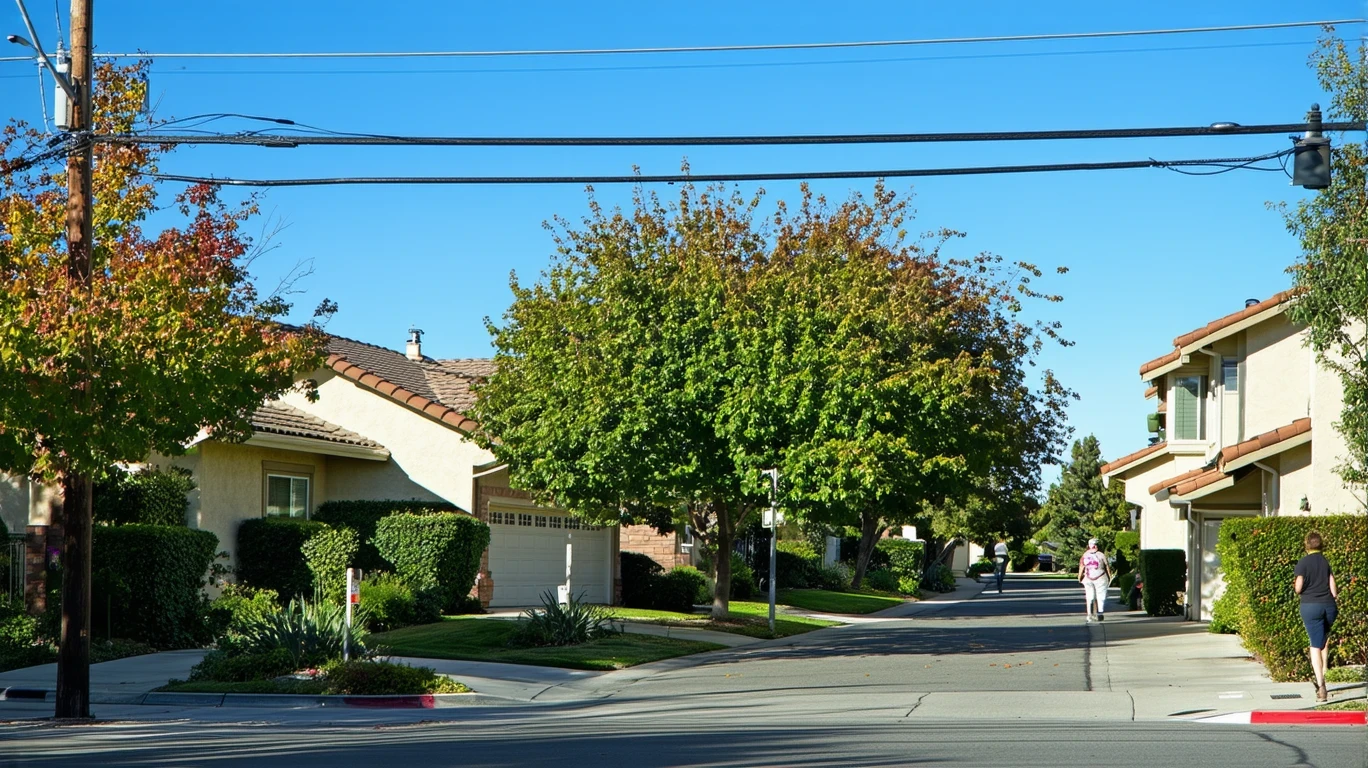
The Housing Market in Fountain Valley Today
Fountain Valley’s housing market is shaped by three overlapping forces: Orange County’s job concentration, limited new construction, and the city’s position as an established residential enclave with mature infrastructure. Unlike newer developments on the urban fringe, Fountain Valley offers proximity to employment centers, beaches, and regional transit corridors without the density or verticality of urban cores. The result is a market where homes hold value not because of rapid appreciation potential, but because of locational stability and access. Buyers here aren’t speculating—they’re locking in a known cost structure in a region where rental volatility is high and ownership provides both predictability and control.
What newcomers often misunderstand is that Fountain Valley’s housing costs aren’t driven by luxury or exclusivity. The city’s housing stock is modest in scale, and the premium reflects scarcity, not opulence. Homes are well-maintained, blocks are walkable in parts, and the street grid supports multiple modes of movement. These qualities don’t lower the entry price, but they do reduce the hidden costs that come with car-dependent sprawl or isolated apartment complexes. For households evaluating whether the price is justified, the question isn’t whether Fountain Valley is expensive—it is—but whether the cost structure aligns with how they plan to live.
Renting in Fountain Valley
At $2,412 per month, median rent in Fountain Valley reflects the broader Orange County rental market, where demand consistently outpaces supply and landlords face few structural incentives to lower prices. Renters here are competing not just with other renters, but with would-be buyers who are priced out of ownership and remain in the rental pool longer than they’d prefer. The city’s low-rise character means that large apartment complexes are rare, and most rentals are single-family homes, duplexes, or small multifamily buildings. This limits turnover and keeps vacancy rates low, which in turn gives landlords pricing power during lease renewals.
Rental pressure in Fountain Valley is compounded by the fact that the city offers tangible livability advantages that renters value but can’t easily replicate elsewhere at lower cost. High grocery and food establishment density means that daily errands are less car-dependent than in outer suburbs, and park access is strong enough that families don’t need to drive to green space. These factors don’t reduce rent, but they do explain why renters tolerate the cost: the alternative is often a cheaper unit in a less accessible location, where transportation and time costs rise. For renters planning to stay in Orange County long-term, Fountain Valley’s rental market represents a tradeoff between monthly cost and cumulative convenience.
Owning a Home in Fountain Valley
Ownership in Fountain Valley begins with a median home value of $932,800, which translates to significant upfront capital and ongoing cost exposure. Property taxes in California are governed by Proposition 13, which caps assessed value increases at 2% per year for existing owners, meaning that tax predictability improves the longer you own. For new buyers, however, the initial assessment is based on purchase price, and the tax burden reflects current market value. Insurance costs in Southern California have risen as carriers reassess wildfire and climate risk, even in areas like Fountain Valley that aren’t in direct fire zones. Maintenance expenses are tied to the age and condition of the housing stock, which in Fountain Valley skews toward homes built in the 1960s through 1980s—old enough to require periodic systems replacement, but not so old that structural issues dominate.
Ownership-specific exposures in Fountain Valley also include the governance and regulatory environment. Many neighborhoods have homeowners associations, which can bundle landscaping, street maintenance, or shared amenities, but also introduce monthly fees and rule enforcement. Even outside HOAs, California’s building codes and permitting requirements make home modifications more expensive than in less-regulated states. These factors don’t appear in the purchase price, but they shape the total cost of ownership over time. For buyers, the value proposition isn’t just the home itself—it’s the ability to lock in housing cost predictability in a region where renters face annual increases with no ceiling.
Apartment vs House in Fountain Valley — Cost Behavior Comparison
| Expense Category | Apartment | House |
|---|---|---|
| Base Housing Cost | Median rent $2,412/month; subject to annual increases with limited tenant leverage | Median value $932,800; property tax assessment locked at purchase under Prop 13, providing long-term predictability |
| Cooling Exposure | Lower total usage due to smaller square footage and shared walls; often included in rent or billed separately at lower volume | Higher total usage due to larger square footage and standalone structure; owner pays full cost at 31.91¢/kWh during warm months |
| Outdoor Maintenance | Landlord responsibility; tenant cost is zero but control over landscaping and appearance is limited | Owner responsibility; includes irrigation, turf or drought-tolerant landscaping, and ongoing upkeep in a climate with year-round growing seasons |
| Parking and Storage | Often limited to assigned spaces or street parking; storage typically restricted to unit interior | Garage and driveway standard; additional storage for bikes, tools, and recreational equipment common in single-family layouts |
| Renewal Volatility | Rent increases occur annually and reflect market conditions; tenant has no control over timing or magnitude | Property tax increases capped at 2% annually under Prop 13; insurance and maintenance rise with market conditions but owner controls timing of major expenditures |
Methodology note: The table above includes only categories where cost behavior differs meaningfully in Fountain Valley due to housing stock characteristics, climate, or California-specific governance. Categories like water, trash, and interior utilities were omitted because cost differences are minimal or not structurally tied to local conditions. The distinctions shown reflect how Fountain Valley’s low-rise residential character, mild year-round climate, and Proposition 13 tax structure shape cost exposure differently for renters and owners.
Utilities & Upkeep Differences
Utility exposure in Fountain Valley is shaped by Southern California’s mild, dry climate and the state’s high electricity rates. At 31.91¢ per kilowatt-hour, electricity costs are among the highest in the nation, but cooling demand is moderate compared to inland desert regions or humid climates. Fountain Valley’s proximity to the coast keeps summer temperatures manageable, and heating needs are minimal. The result is a utility profile where air conditioning drives costs during warm months, but the total annual burden is lower than in regions with extreme seasonal swings. Natural gas, priced at $21.89 per thousand cubic feet, is used primarily for water heating and cooking, with space heating rarely necessary.
For apartment renters, utility costs are often lower in absolute terms due to smaller square footage and shared walls that reduce heating and cooling loss. Many landlords include water and trash in rent, leaving tenants responsible only for electricity and gas. Homeowners, by contrast, pay the full cost of utilities for larger spaces and standalone structures, and they also bear responsibility for system efficiency. Older homes in Fountain Valley may have single-pane windows, minimal insulation, and aging HVAC systems, all of which increase energy consumption. Upgrading these systems reduces usage and provides more control over monthly bills, but the upfront cost is borne entirely by the owner.
Maintenance exposure in Fountain Valley reflects the age and construction of the local housing stock. Most homes were built decades ago, meaning that roofs, water heaters, and HVAC systems are approaching or past their expected lifespan. Exterior maintenance is also shaped by the climate: stucco and wood siding require periodic repainting, and irrigation systems need repair or replacement as drought-tolerant landscaping becomes more common. These costs are episodic rather than monthly, but they represent significant financial exposure for homeowners. Renters are insulated from these expenses, but they also have no control over whether systems are maintained proactively or allowed to degrade.
Rent vs Buy: Long-Term Exposure in Fountain Valley
The structural difference between renting and owning in Fountain Valley isn’t about monthly cost—it’s about predictability, control, and exposure to market forces over time. Renters face annual lease renewals where rent can rise in response to regional demand, with no cap and no ability to lock in future costs. Owners, by contrast, benefit from Proposition 13’s assessment cap, which limits property tax increases to 2% per year regardless of market appreciation. This creates a widening gap over time: renters see costs rise with the market, while owners see their largest expense—property tax—grow at a fixed, modest rate.
Ownership also shifts risk from landlord to homeowner. Insurance premiums, maintenance costs, and utility bills all rise with inflation and market conditions, and owners bear the full cost of systems replacement and repairs. But ownership also provides control: owners can choose when to upgrade, how to manage energy usage, and whether to refinance or modify the property. Renters have lower upfront costs and no responsibility for major repairs, but they also have no equity accumulation and no protection against rent increases. In a market like Fountain Valley, where rental supply is constrained and demand is sustained by Orange County’s job base, renters face long-term cost escalation with limited leverage.
For households deciding between renting and buying, the question isn’t which is cheaper today—it’s which cost structure aligns with their time horizon and risk tolerance. Renters who plan to leave Orange County within a few years avoid the transaction costs and illiquidity of ownership. Buyers who plan to stay a decade or more benefit from tax predictability, equity growth, and insulation from rental market volatility. The decision is less about affordability in the abstract and more about which exposures a household is willing to accept.
FAQs About Housing Costs in Fountain Valley
Is Fountain Valley more expensive to rent or buy compared to nearby Orange County cities?
Fountain Valley’s median rent of $2,412 and median home value of $932,800 place it in the middle range for Orange County. It’s less expensive than coastal cities like Huntington Beach or Newport Beach, but more expensive than inland communities farther from job centers. The cost reflects access, infrastructure maturity, and locational stability rather than luxury or exclusivity.
How much do property taxes add to the cost of owning a home in Fountain Valley?
California’s Proposition 13 caps property tax increases at 2% per year for existing owners, but new buyers are assessed at purchase price. For a home valued at $932,800, the initial tax burden will reflect that amount, and future increases will be predictable and modest. This makes ownership more stable over time compared to renting, where annual increases are uncapped.
Do utilities cost more in Fountain Valley because of California’s electricity rates?
Electricity in Fountain Valley is priced at 31.91¢ per kilowatt-hour, which is high by national standards. However, the city’s mild coastal climate reduces cooling and heating demand, so total annual utility costs are lower than in regions with extreme temperatures. Homeowners with older, less efficient systems will see higher bills, but efficiency upgrades can reduce exposure significantly.
Are apartments in Fountain Valley cheaper to maintain than houses?
Apartments typically have lower utility costs due to smaller square footage and shared walls, and renters aren’t responsible for exterior maintenance or systems replacement. Houses require owners to pay for landscaping, HVAC upkeep, and periodic repairs, but they also provide more control over timing and quality of maintenance. The cost difference is less about total expense and more about who bears the risk.
Does Fountain Valley’s housing market favor renters or buyers in the long term?
Fountain Valley’s housing market favors buyers who plan to stay long-term, because Proposition 13 locks in property tax predictability and ownership eliminates exposure to rental market volatility. Renters face sustained cost pressure due to limited supply and strong demand, with no mechanism to cap annual increases. For households with a multi-year time horizon, ownership provides more stability despite higher upfront costs.
Making Housing Choices in Fountain Valley
Housing costs in Fountain Valley are high, but they’re also predictable in ways that matter for long-term planning. Renters pay a premium for access and convenience, but they remain exposed to annual increases with no ceiling. Owners face significant upfront costs and ongoing maintenance exposure, but they gain tax predictability, equity accumulation, and control over their largest monthly expense. The choice between renting and buying isn’t about which is cheaper—it’s about which cost structure aligns with a household’s time horizon, risk tolerance, and plans for staying in Orange County.
What makes Fountain Valley distinct isn’t just the price level—it’s the combination of low-rise residential character, strong access to groceries and parks, and a street network that supports multiple modes of movement. These factors don’t lower housing costs, but they do reduce the hidden costs that come with car-dependent sprawl or isolated apartment complexes. For households evaluating whether Fountain Valley fits their budget, the question isn’t whether the city is expensive—it is—but whether the cost structure supports the life they’re trying to build. Understanding how housing costs behave here, and how they interact with transportation, utilities, and daily logistics, is the first step toward making that decision with clarity.
For a broader view of where money goes and how housing fits into the larger financial picture, or to see how day-to-day costs shape household budgets, IndexYard’s other Fountain Valley guides provide additional context. And for households planning a move, understanding moving companies, costs, and logistics can help reduce the friction of relocation.
How this article was built: In addition to public economic data, this article incorporates location-based experiential signals derived from anonymized geographic patterns—such as access density, walkability, and land-use mix—to reflect how day-to-day living actually feels in Fountain Valley, CA.