
“It’s not quite Atlanta, but it’s not really a small town anymore either — and honestly, that’s the whole thing you’re deciding on when you move here.”
That tension sits at the heart of what it feels like to live in Duluth, GA. It’s a city that has grown quickly, layering new subdivisions, shopping centers, and chain restaurants over what used to be a quieter suburb northeast of Atlanta. For some, that growth brings exactly what they want: access, convenience, good schools, and a sense of safety. For others, it creates a nagging sense that the place is still figuring out what it wants to be.
This article isn’t about proving whether Duluth is “happy” or ranking it against other cities. It’s about translating the emotional experience of living here — the tradeoffs people navigate, the friction points that come up again and again, and the kinds of households that tend to feel aligned versus restless. If you’re considering a move to Duluth, this is your guide to whether the vibe fits what you’re actually looking for.
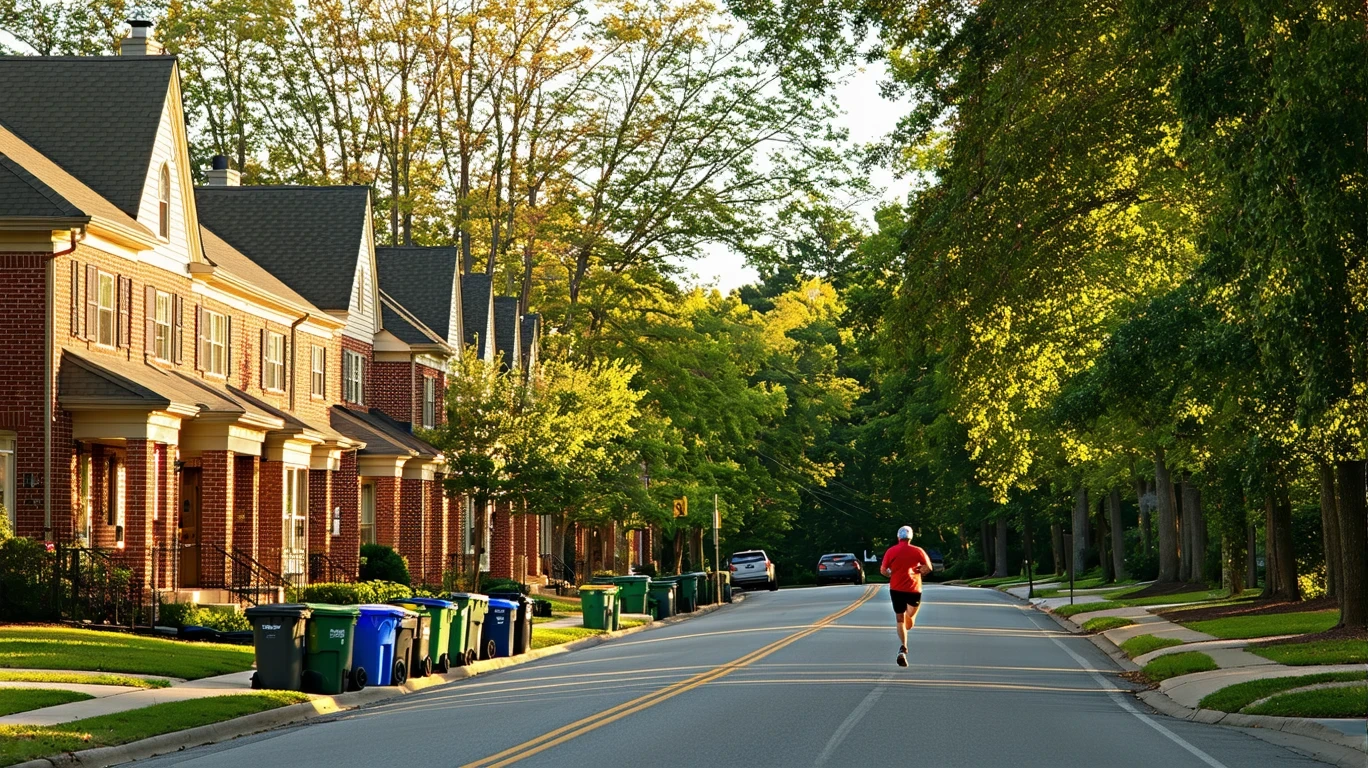
What It Actually Feels Like to Live Here
Duluth rewards people who want suburban predictability with metro access. The city sits about 25 miles northeast of downtown Atlanta, close enough to commute but far enough to feel insulated from urban intensity. Median household income runs around $88,915 per year, and the housing stock — with a median home value of $334,800 and median rent of $1,675 per month — reflects a market that attracts families, young professionals, and established households looking for space and stability.
The infrastructure here is built around cars and corridors. Food and grocery options cluster along commercial strips rather than spreading evenly across neighborhoods, which means errands often involve driving to a handful of familiar zones. Pedestrian infrastructure exists in moderate amounts, but the street network still leans heavily on vehicles for daily movement. For families with kids, that’s often fine — schools are accessible, parks are present, and the hospital and pharmacy infrastructure is strong. For people who imagined walkable errands, spontaneous outings, or a neighborhood they could explore on foot, it can feel limiting.
What keeps coming up in local conversation is the sense that Duluth is in between identities. It’s not the sleepy suburb it used to be, but it hasn’t developed the texture or walkability of a more established town center. That creates opportunity for some — newcomers who want newness, convenience, and access to chains — and ambivalence for others who miss the intimacy or character that growth tends to smooth over.
What People Talk About Online
Public discussion in Duluth tends to circle around a few recurring themes: growth, traffic, schools, and the question of what kind of place this is becoming. On platforms like Facebook neighborhood groups and regional subreddits, you’ll see pride mixed with protectiveness, optimism layered with fatigue.
Common threads include:
- Growth and development: New shopping centers and housing developments generate both excitement and concern. Some residents celebrate added amenities and job growth; others worry about congestion, overdevelopment, and losing the “small-town feel” they moved here for.
- Commute and traffic: Duluth’s location makes it a commuter suburb, and that comes with predictable tension. People talk about drive times to Atlanta, highway backups, and whether the tradeoff for more house and yard is worth the time in the car.
- Schools and family life: Families often praise the school infrastructure and the sense of safety. Playgrounds, parks, and family-oriented amenities get positive mentions, especially from households with young kids.
- Diversity and food culture: Duluth has a notable Korean and broader Asian community, and the food scene reflects that. Residents frequently highlight the variety of international restaurants as one of the city’s most distinctive and appreciated features.
Composite sentiment from local discussion might sound like:
“It’s convenient, and the schools are solid, but sometimes it feels like we’re just driving between the same three shopping centers.”
“I love that I can get authentic Korean food without going into Atlanta — that’s something you don’t get in every suburb.”
“It’s growing so fast. I’m not sure if we’re building a real community or just more subdivisions.”
How Local Coverage Frames the City
Local news and community coverage in Duluth tends to focus on growth management, infrastructure expansion, and the evolving identity of the city. The tone is generally pragmatic, highlighting both opportunity and adjustment.
Recurring topic frames include:
- “New Retail and Dining Options Arrive Along Major Corridors”
- “Community Debates Pace and Scale of Development”
- “School Enrollment Growth Prompts Infrastructure Planning”
- “Traffic and Commute Times Remain Central Concern for Residents”
- “Cultural Diversity Shapes Local Food and Business Landscape”
The framing rarely declares Duluth “booming” or “struggling” — instead, it reflects a city in transition, where residents are weighing convenience against character, growth against cohesion.
What Reviews and Public Perception Reveal
On platforms like Google Reviews, Yelp, and Nextdoor-style forums, Duluth tends to get praise for what it delivers reliably — and criticism for what it doesn’t offer at all.
Common praise:
- Safe, family-friendly environment
- Good schools and accessible parks
- Variety of chain restaurants and shopping options
- Strong international food scene, especially Korean and Asian cuisine
- Proximity to Atlanta without urban density
Common complaints:
- Heavy car dependency; limited walkability outside specific pockets
- Traffic congestion during peak commute hours
- Lack of nightlife, arts venues, or cultural programming
- Generic suburban feel in newer developments
- Sense that growth is outpacing community cohesion
The pattern is clear: Duluth works well for people who want suburban infrastructure, convenience, and access to metro amenities. It frustrates people who wanted walkable neighborhoods, local character, or a more intimate sense of place. Expectation matching is everything.
How Duluth Compares to Nearby Cities
| Dimension | Duluth, GA | Suwanee, GA | Lawrenceville, GA |
|---|---|---|---|
| Overall Vibe | Suburban, growing, car-oriented with diverse food culture | Polished, family-focused, planned community feel | More established, mixed-income, slightly grittier edges |
| Walkability | Moderate in pockets, mostly car-dependent | Limited; designed around subdivisions and parks | Slightly better near older town center, still car-reliant |
| Dining & Culture | Strong international food, especially Korean; chain-heavy otherwise | Chain-dominated with some local spots | More variety, mix of local and chain |
| Community Feel | In transition; newer residents, less established identity | Cohesive, family-oriented, events-driven | Longer-established, more neighborhood variation |
| Commute Tradeoff | Moderate distance to Atlanta; traffic a factor | Similar commute profile, slightly farther north | Comparable access; more central to Gwinnett activity |
If you’re drawn to Duluth’s international food scene and don’t mind a car-oriented layout, it may edge out Suwanee’s more homogenous suburban polish. If you want a bit more texture and established neighborhoods, Lawrenceville might feel less generic. If you prioritize family amenities and planned community cohesion, Suwanee could be the better fit. None of these cities will satisfy someone seeking walkable urbanism or nightlife — that requires a different geography entirely.
What Locals Are Saying
Here’s how the experience tends to land for different household types:
Young family, moved from Atlanta: “We wanted a yard and good schools without paying Brookhaven prices. Duluth checked those boxes. It’s quiet, the parks are clean, and we feel safe. The downside is we’re always in the car, and there’s not much to do on a Friday night unless we drive back into the city.”
Remote worker, renting: “It’s fine if you work from home and don’t need much social infrastructure. The rent is reasonable for what you get, and I like the Korean restaurants. But it’s not a place where you just walk out your door and stumble into something interesting.”
Long-time resident: “Duluth used to feel like a real town. Now it’s just subdivisions and strip malls. I get that growth brings jobs and amenities, but it’s hard not to feel like we’ve lost something.”
Commuter to Atlanta: “The commute is the price you pay for space and affordability. Some days it’s 35 minutes, some days it’s over an hour. You have to decide if that tradeoff works for you.”
Retiree, downsized from larger home: “It’s convenient and low-maintenance. I can get groceries, go to the doctor, and meet friends for lunch without much hassle. It’s not charming, but it’s comfortable.”
Young professional, single: “I moved here for a job and rent that didn’t eat my whole paycheck. It’s served that purpose, but I don’t see myself staying long-term. There’s just not much social life unless you drive somewhere else.”
Family with school-age kids: “The schools are a big reason we’re here, and the parks are great for the kids. We’ve made friends through school events and sports. It’s not the most exciting place for adults, but it works for this stage of life.”
Does Duluth Feel Like a Good Fit?
Duluth doesn’t ask you to love it for its charm, walkability, or nightlife — because it doesn’t offer much of any of those. What it does offer is suburban infrastructure, access to a strong job market, decent schools, and a growing international food culture that sets it apart from more generic suburbs.
This tends to work for:
- Families prioritizing schools, safety, and yard space over walkability
- Commuters willing to trade drive time for [housing tradeoffs](/duluth-ga/housing-costs/)
- Households that value convenience and chain amenities over local character
- People who appreciate cultural diversity, especially in food
This tends to frustrate:
- People seeking walkable neighborhoods or spontaneous street life
- Singles or young professionals looking for social infrastructure
- Households without cars or those trying to minimize driving
- Anyone hoping for arts venues, nightlife, or a cohesive town center
The question isn’t whether Duluth is “good” — it’s whether the tradeoffs align with what you actually need. If you want suburban stability, access to metro amenities, and you’re comfortable with car dependency, Duluth delivers. If you’re hoping for walkability, texture, or a strong sense of place, you’ll likely feel the gaps. Understanding [your monthly budget in Duluth](/duluth-ga/monthly-budget/) and whether you [can feel comfortable here on your income](/duluth-ga/lifestyle-requirements/) can help clarify whether the financial and lifestyle fit works for your household.
How this article was built: In addition to public economic data, this article incorporates location-based experiential signals derived from anonymized geographic patterns—such as access density, walkability, and land-use mix—to reflect how day-to-day living actually feels in Duluth, GA.
The perspectives shown reflect commonly expressed local sentiment and recurring themes in public discussion, rather than individual accounts.