
“I can walk to the station in twelve minutes, but my husband drives forty-five minutes the other direction every day. We’re in the same house, living two completely different commutes.” — Daily commuter, Brookhaven resident
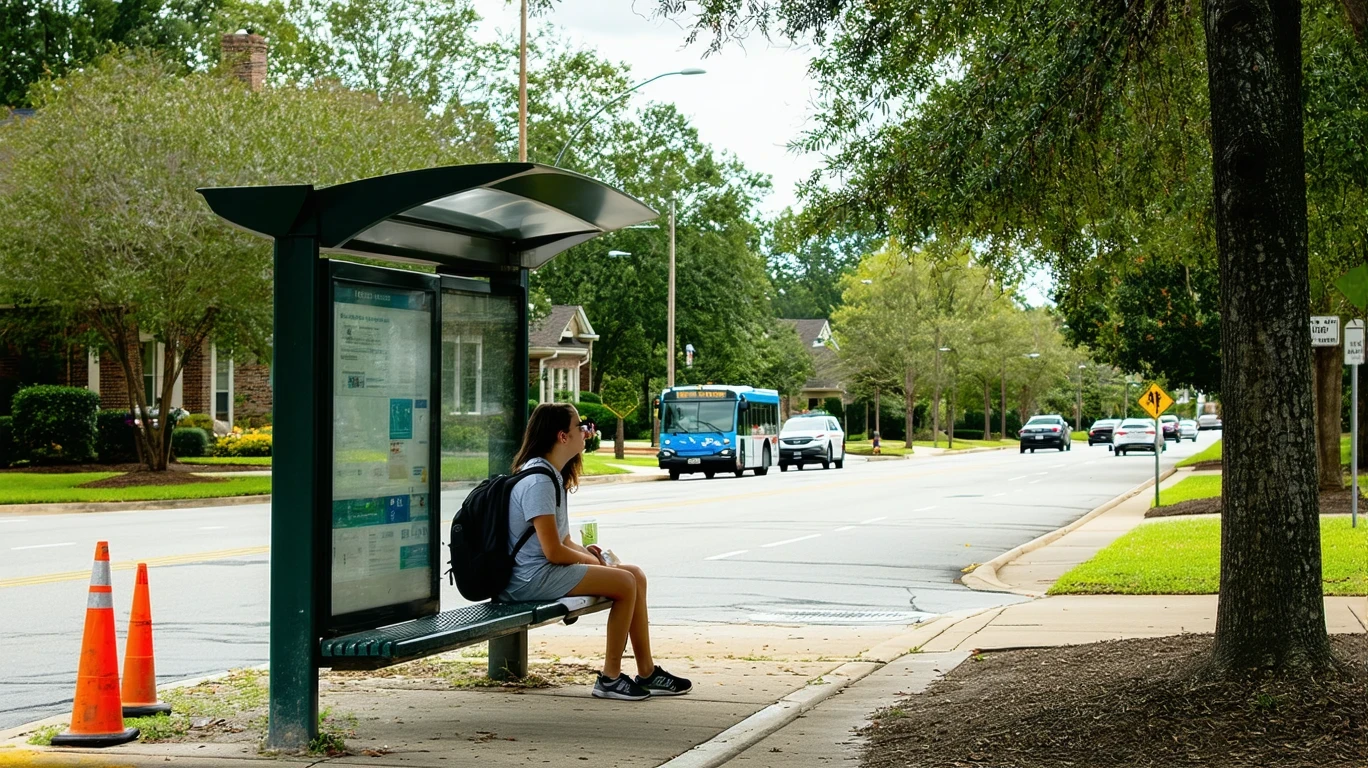
How People Get Around Brookhaven
Transportation options in Brookhaven reflect a city caught between two identities: a suburban layout built around cars, and pockets of urban density where rail transit and walkability actually work. The result is a split experience. Some residents live near stations, walk to groceries, and rarely need their car for daily errands. Others—often just a few neighborhoods away—drive everywhere, because transit doesn’t reach them or doesn’t connect to where they need to go.
Newcomers often assume Brookhaven is either fully car-dependent or fully transit-accessible. Neither is true. The city’s mobility reality depends heavily on where you live within its borders and where you need to go. Proximity to rail stations and the density of your immediate surroundings determine whether you’ll rely on a car daily or only occasionally.
Brookhaven’s layout includes areas with substantial pedestrian infrastructure and mixed-use development, where running errands on foot is practical. But the city also includes quieter residential zones where sidewalks thin out and distances stretch. Understanding which Brookhaven you’re moving to matters more than understanding “Brookhaven” as a whole.
Public Transit Availability in Brookhaven
Public transit in Brookhaven often centers around systems such as MARTA, which provides rail service connecting parts of the city to the broader Atlanta metro. Rail transit is present and plays a meaningful role for residents who live within walking distance of stations. For those households, transit offers a viable alternative to driving—particularly for commutes into Atlanta’s core employment centers.
But transit coverage is uneven. Rail service works best in and around station areas, where density supports frequent use and where the pedestrian environment makes the walk to the platform manageable. Move a mile or two away, and the calculus shifts. Bus service exists, but without the frequency or directness that makes it practical for time-sensitive commutes or multi-stop errands.
Transit tends to fall short in the city’s more residential edges, where lower density and car-oriented street design make walking to a stop inconvenient. It also struggles during off-peak hours and weekends, when service gaps widen. For households with irregular schedules, evening shifts, or jobs outside the primary rail corridors, transit becomes supplemental at best.
The role transit plays in Brookhaven is real but selective. It serves a subset of residents well and others barely at all. The difference isn’t preference—it’s geography.
Driving & Car Dependence Reality
For most Brookhaven residents, driving remains the primary mode of transportation. The city’s layout, while walkable in pockets, still reflects a suburban pattern where distances between home, work, school, and services are too great to cover on foot or by transit alone. Parking is generally available and expected, both at home and at destinations, which reinforces car use as the default.
Car dependence in Brookhaven isn’t about sprawl in the traditional sense—it’s about connectivity. Even residents who live in denser, mixed-use areas often need a car for trips that transit doesn’t serve: weekend errands, visits to family in other suburbs, or commutes to job sites outside the rail network. The city’s position within the larger Atlanta metro means many residents work in places that aren’t easily reachable without a car.
Driving offers flexibility and control, but it also locks households into the costs and logistics of car ownership: maintenance, insurance, parking, and time spent in traffic. For families, the tradeoff often feels necessary. For single professionals or couples without children, the question is more open—but even then, most choose to keep a car for the trips transit can’t handle.
Commuting Patterns & Daily Mobility
Commuting in Brookhaven varies widely depending on where residents work and how they’ve structured their daily routines. The average commute is 24 minutes, which suggests a mix of short in-town trips and longer hauls to employment centers elsewhere in the metro. Over one-third of workers face long commutes, a sign that many Brookhaven residents are traveling well beyond the city’s borders for work.
Single-destination commutes—home to office and back—are the simplest to manage, and these are the trips where transit can compete with driving, especially for workers heading into central Atlanta. But many households juggle more complex patterns: dropping kids at school, stopping for groceries, picking up a partner, or working irregular hours. For these residents, transit’s fixed routes and schedules become a constraint rather than a solution.
Only 3.9% of Brookhaven workers work from home, which is notably low and suggests most residents are commuting regularly. This reinforces the importance of where money goes in terms of time, fuel, and transportation infrastructure. Proximity to work or to reliable transit becomes a significant factor in daily quality of life.
Who Transit Works For — and Who It Doesn’t
Transit in Brookhaven works best for renters and younger professionals living near rail stations, particularly those commuting into Atlanta’s core for work. These residents benefit from the city’s walkable pockets, where pedestrian infrastructure is dense and errands are accessible on foot. For this group, transit reduces the need for a car and simplifies daily logistics.
Transit works less well for families with children, especially those managing school drop-offs, after-school activities, and multi-stop errand runs. It also falls short for residents in peripheral neighborhoods, where station access requires a drive or a long walk, effectively negating the convenience transit is supposed to provide.
Homeowners, particularly those who bought in quieter residential areas, tend to be car-dependent by design. Their neighborhoods were built with driving in mind, and retrofitting them for transit use isn’t practical. For these households, the car isn’t a backup—it’s the primary tool for daily life.
The distinction isn’t about income or preference. It’s about where you live within Brookhaven and how your daily routine is structured. Transit serves a real but narrow slice of the population well. Everyone else adapts around it or ignores it entirely.
Transportation Tradeoffs in Brookhaven
Choosing between transit and driving in Brookhaven means weighing predictability against flexibility. Transit offers lower direct costs and eliminates parking hassles, but it requires living near a station and working along a route that transit serves. Driving offers control and the ability to handle complex, multi-stop days, but it comes with ongoing expenses and exposure to traffic variability.
For residents who can structure their lives around transit, the tradeoff favors simplicity and reduced transportation overhead. For those who can’t—because of job location, family logistics, or neighborhood placement—driving becomes non-negotiable, and the tradeoff shifts to managing fuel costs, maintenance, and time spent commuting.
Neither option is universally better. The right choice depends on where you live, where you work, and how much flexibility your daily routine demands. Brookhaven’s transportation reality rewards residents who align their housing and job decisions with the infrastructure that’s actually available to them.
FAQs About Transportation in Brookhaven (2026)
Is public transit usable for daily commuting in Brookhaven?
Yes, but only if you live near a rail station and commute along a route that transit serves well. For residents in walkable pockets with station access, transit is a practical daily option. For those in peripheral neighborhoods or commuting outside core corridors, driving remains more reliable.
Do most people in Brookhaven rely on a car?
Yes. While transit is present and functional in parts of the city, most Brookhaven residents drive for daily errands, commuting, and household logistics. Car dependence is the norm, even in areas with transit access, because many trips fall outside what transit can efficiently serve.
Which areas of Brookhaven are easiest to live in without a car?
Neighborhoods near rail stations with high pedestrian infrastructure and dense access to groceries and services are the most car-optional. These areas allow residents to walk for errands and use transit for commuting, reducing the need for daily driving.
How does commuting in Brookhaven compare to nearby cities?
Brookhaven’s average commute time is moderate, but a significant share of residents face long commutes, suggesting many work outside the immediate area. Compared to denser urban cores, Brookhaven offers more driving flexibility but less transit coverage. Compared to outer suburbs, it offers better transit access but still requires a car for most households.
Can you get by with just public transit in Brookhaven?
A small subset of residents can, particularly those living near stations and working in transit-accessible areas. But for most households—especially families, shift workers, or those with jobs outside the rail network—transit alone isn’t sufficient. A car remains necessary for flexibility and coverage.
How Transportation Fits Into the Cost of Living in Brookhaven
Transportation in Brookhaven isn’t just a line item—it’s a structural factor that shapes housing decisions, time allocation, and daily flexibility. Residents who live near transit and work along its routes gain time and reduce direct transportation costs. Those who drive absorb fuel, maintenance, and insurance expenses, along with the time cost of commuting.
The city’s transportation reality creates distinct cost profiles depending on where you live and how you move. Households that can reduce car dependence gain predictability and lower overhead. Those who can’t face ongoing exposure to fuel prices, traffic delays, and vehicle upkeep.
For a fuller picture of how transportation fits alongside housing, utilities, and other expenses, see Your Monthly Budget in Brookhaven: Where It Breaks. Understanding how mobility shapes your day-to-day costs helps clarify which neighborhoods and commute patterns align with your financial structure and lifestyle needs.
Brookhaven’s transportation landscape rewards residents who match their housing and job choices to the infrastructure that’s actually available. For those who do, the city offers real mobility options. For those who don’t, it requires the same car-dependent logistics as any other Atlanta suburb—just with better access to a rail line you might not use.
How this article was built: In addition to public economic data, this article incorporates location-based experiential signals derived from anonymized geographic patterns—such as access density, walkability, and land-use mix—to reflect how day-to-day living actually feels in Brookhaven, GA.