
“Brookhaven feels like you get the best of both worlds—walkable Town Center, MARTA access, good parks—but you definitely pay for it. It’s not the sleepy suburb it used to be.”
What Does Living in Brookhaven Actually Feel Like?
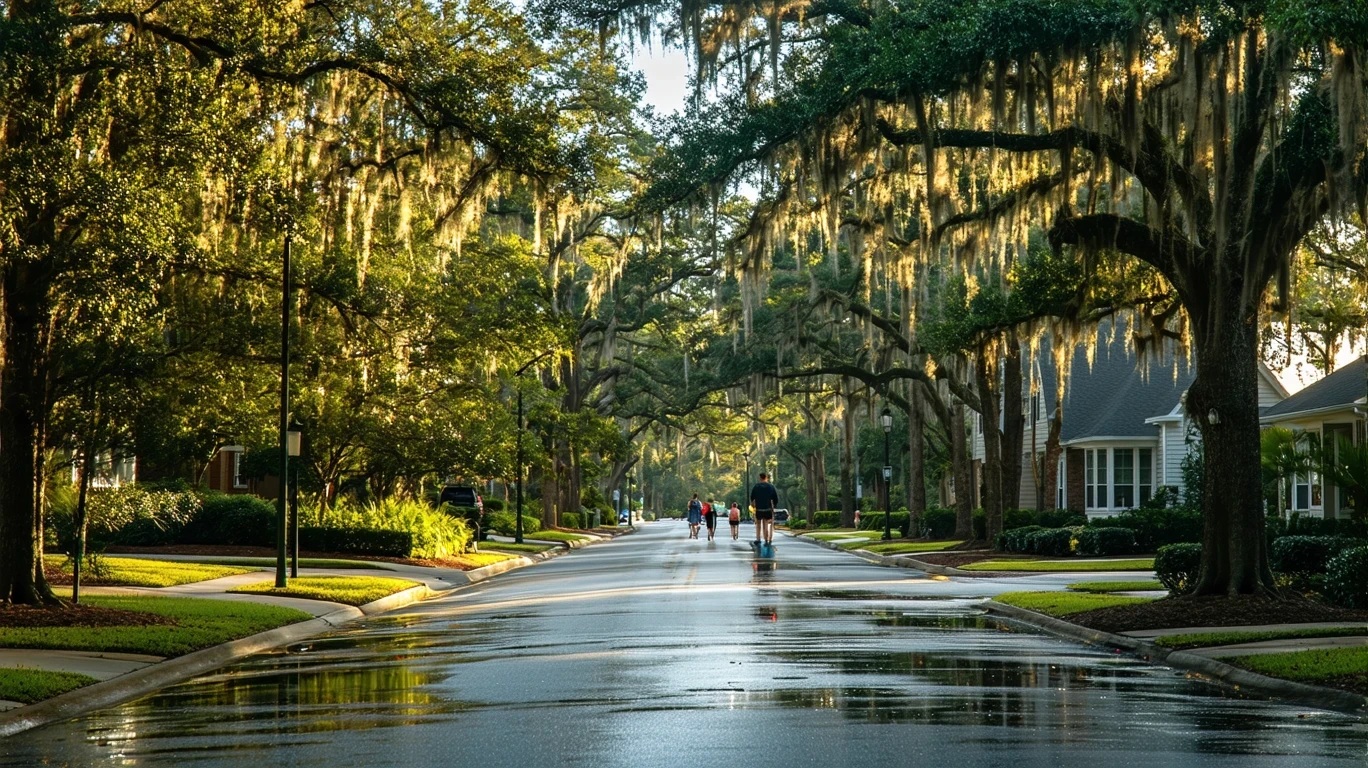
Brookhaven sits in a curious sweet spot: it offers the tidy lawns and school-focused calm that define metro Atlanta’s northern suburbs, but with pockets of walkability, rail transit access, and a growing mixed-use core that feel more urban than many neighbors. That duality shapes how people talk about living here—often with pride, sometimes with ambivalence, and occasionally with frustration over how quickly things have changed.
The city incorporated in 2012, and much of the conversation since then has revolved around identity: is Brookhaven a suburb with city amenities, or a city trying to preserve suburban character? The answer depends on where you live within its borders and what you came here looking for. Families who want excellent parks, accessible groceries, and a MARTA station within reach tend to feel like they’ve found a rare combination. Renters stretching to afford $1,711 per month in median rent, or buyers navigating a $626,800 median home value, sometimes wonder if the premium is worth it compared to nearby alternatives.
What keeps coming up emotionally is the tension between convenience and cost, between growth and nostalgia, and between wanting urban perks without urban intensity. Brookhaven doesn’t feel like a place people are indifferent about—it tends to either fit your life well, or remind you daily that it wasn’t built for your priorities.
Social Media Buzz in Brookhaven
On platforms like Reddit and local Facebook groups, Brookhaven discussions often center on a few recurring themes: development pace, traffic around Town Center, the value proposition of living here versus Decatur or Sandy Springs, and pride in the walkability that exists in certain pockets. There’s a protective streak among long-time residents who remember when Brookhaven was just a collection of neighborhoods within unincorporated DeKalb County, and a pragmatic optimism among newer arrivals who appreciate what the city has become.
Composite sentiment from public discussion tends to sound like this:
- “I love that I can walk to Whole Foods and take MARTA into Midtown. That’s not something you get in most Atlanta suburbs.”
- “It’s gotten so expensive. I don’t know how young families afford to buy here anymore.”
- “Town Center is nice, but it’s also kind of sterile. It doesn’t have the quirky, local feel that Decatur has.”
The emotional tone is rarely extreme—people aren’t declaring Brookhaven paradise or disaster. Instead, the vibe is one of measured satisfaction mixed with concern about affordability and the speed of change. There’s also a recurring undercurrent of comparison: Brookhaven residents are acutely aware of how their city stacks up against Decatur’s walkability and culture, Sandy Springs’ space and value, and Buckhead’s prestige.
How Local Coverage Frames Brookhaven
Local news and community blogs tend to frame Brookhaven through the lens of growth management, infrastructure adaptation, and quality-of-life preservation. The city is young enough that its identity is still being negotiated in public, and coverage reflects that ongoing conversation. Headlines and story themes often fall into a few timeless categories:
- “New Mixed-Use Development Brings Retail and Apartments to Corridor”
- “Residents Debate Density as City Considers Zoning Changes”
- “Brookhaven Expands Park Access and Greenway Connections”
- “MARTA Station Area Sees Continued Investment and Foot Traffic”
- “Community Voices Concerns Over Traffic and School Capacity”
The framing is rarely alarmist, but it’s not boosterish either. Coverage tends to acknowledge that Brookhaven is in transition—from a quiet suburban enclave to a more urban-adjacent city—and that transition brings both opportunity and friction. The tone suggests a place trying to manage growth thoughtfully, even when residents disagree on what “thoughtful” means.
Review-Based Public Perception
On platforms like Google Reviews, Yelp, and Nextdoor-style community boards, Brookhaven’s public perception splits along expectation lines. People who wanted suburban safety, good schools, accessible shopping, and proximity to Atlanta tend to leave positive reviews. People who wanted walkable texture, nightlife variety, or affordability tend to express disappointment or note limitations.
Common praise includes:
- Walkable Town Center with recognizable retail and dining chains
- Access to Murphey Candler Park and other well-maintained green spaces
- MARTA’s Brookhaven station enabling car-free commutes
- Family-friendly infrastructure and perceived safety
- High grocery and pharmacy density—errands don’t require long drives
Common critiques include:
- High cost of entry for both renters and buyers
- Traffic congestion around Peachtree Road and Town Center during peak hours
- Limited nightlife or cultural venues compared to intown Atlanta or Decatur
- Newer development feeling somewhat homogenous or corporate
- Older neighborhoods lacking the walkability and amenities of Town Center area
The review landscape suggests that Brookhaven delivers well on convenience, cleanliness, and access—but it doesn’t offer the grit, spontaneity, or affordability that some movers expect. It’s a place that works best for people who know exactly what they’re trading and feel good about the exchange.
Comparison to Nearby Cities
| Dimension | Brookhaven | Decatur | Sandy Springs |
|---|---|---|---|
| Overall Vibe | Polished suburban with urban perks | Quirky, walkable, community-focused | Spacious, corporate, car-oriented |
| Walkability | Strong in Town Center, limited elsewhere | Consistently walkable across downtown core | Mostly car-dependent |
| Transit Access | MARTA rail present | MARTA rail present | MARTA rail present in limited areas |
| Cost Pressure | High rent and home values | Very high, competitive market | Moderate to high, more space per dollar |
| Character | Newer, planned, tidy | Historic, eclectic, tight-knit | Corporate, sprawling, practical |
Brookhaven occupies a middle ground between Decatur’s walkable urbanism and Sandy Springs’ suburban sprawl. If you want Decatur’s character and walkability but find it too expensive or too crowded, Brookhaven offers a slightly more spacious, slightly less quirky alternative—though you’ll still pay a premium. If you want Sandy Springs’ space and value but miss walkable errands and rail access, Brookhaven delivers more convenience at a higher cost per square foot.
None of these cities is objectively better. The question is which set of tradeoffs feels less annoying day-to-day. Brookhaven tends to work for people who want suburban comfort with urban optionality, and who can afford the entry price.
What Locals Are Saying
Here’s how different kinds of residents tend to describe the experience of living in Brookhaven:
- “We moved here from Buckhead for the schools and the parks. Town Center is walkable enough that we don’t feel totally car-dependent, and MARTA is there if we need it. It’s expensive, but we feel like we’re getting what we pay for.” — Family with young children
- “I can walk to the grocery store, the gym, and a few restaurants. That’s huge for me. But I do wish there were more local spots and fewer chains. It can feel a little corporate sometimes.” — Young professional renting near Town Center
- “Brookhaven used to feel like a hidden gem. Now it’s crowded, traffic is worse, and everything is more expensive. I’m not sure I’d move here today if I were starting over.” — Long-time homeowner
- “I work remotely and wanted a safe, quiet neighborhood with good internet and easy access to the city when I need it. Brookhaven checks all those boxes. It’s not exciting, but it’s reliable.” — Remote worker in mid-30s
- “The rent is brutal. I’m paying over $1,700 for a one-bedroom, and I don’t even have in-unit laundry. I like the area, but I’m not sure how long I can justify the cost.” — Renter in late 20s
- “We love the parks and the greenway. Our kids bike to school, and we can walk to the farmers market on weekends. It feels like a real community, even with all the growth.” — Family near Murphey Candler Park
- “It’s fine. It’s clean, it’s safe, it’s convenient. But it doesn’t have a lot of personality. If you want culture or nightlife, you’re going to Decatur or intown.” — Transplant from another metro area
The common thread is that Brookhaven delivers on logistics—errands, commutes, schools, safety—but it doesn’t deliver on spontaneity, affordability, or cultural texture. People who value the former tend to feel satisfied. People who crave the latter tend to feel restless.
Does Brookhaven Feel Like a Good Fit?
Brookhaven tends to work well for families with strong household income who want suburban infrastructure with selective urban access, professionals who value MARTA convenience without living fully intown, and households who prioritize walkable errands and park access over nightlife or cultural variety. The city’s structure—walkable pockets, rail transit, high grocery density, integrated green space—means that day-to-day logistics feel less car-dependent than in most Atlanta suburbs, even if you still need a car for many trips.
It tends to frustrate renters stretching to meet high rent floors, buyers comparing cost-per-square-foot to Sandy Springs or Alpharetta, residents nostalgic for a quieter past, and households seeking the quirky, local character that defines Decatur or intown neighborhoods. Brookhaven is polished, planned, and premium-priced—and that combination either feels like a relief or a limitation, depending on what you need from a place.
If you’re trying to decide whether Brookhaven fits your life, the question isn’t whether people here are happy—it’s whether the specific tradeoffs that define this city align with your daily priorities. Convenience and access come at a cost, both financially and culturally. Growth and density bring amenities but also traffic and change. Walkability exists, but it’s concentrated rather than universal.
Understanding your monthly budget in Brookhaven and how income pressure shapes daily life can help clarify whether the premium feels justified. For some households, Brookhaven represents a rare combination of suburban safety and urban optionality. For others, it’s a place that costs too much for what it delivers. The city itself doesn’t resolve that tension—it just makes the tradeoff visible.
How this article was built: In addition to public economic data, this article incorporates location-based experiential signals derived from anonymized geographic patterns—such as access density, walkability, and land-use mix—to reflect how day-to-day living actually feels in Brookhaven, GA.
The perspectives shown reflect commonly expressed local sentiment and recurring themes in public discussion, rather than individual accounts.