
How much is enough to feel at ease? In Atlanta, that question doesn’t have a single answer—it has a dozen, depending on where you live, how you move, and what your household looks like. Comfort here isn’t about hitting a magic number; it’s about whether your income gives you choices, absorbs surprises, and leaves room to breathe after the fixed costs clear.
Atlanta’s income reality is shaped by tradeoffs that don’t show up in cost calculators: whether you prioritize walkable neighborhoods or space, whether your household can absorb seasonal utility swings, and whether your commute steals time or money. The same income can feel spacious for one household and suffocating for another, depending on how those tradeoffs land.
What “Living Comfortably” Means in Atlanta
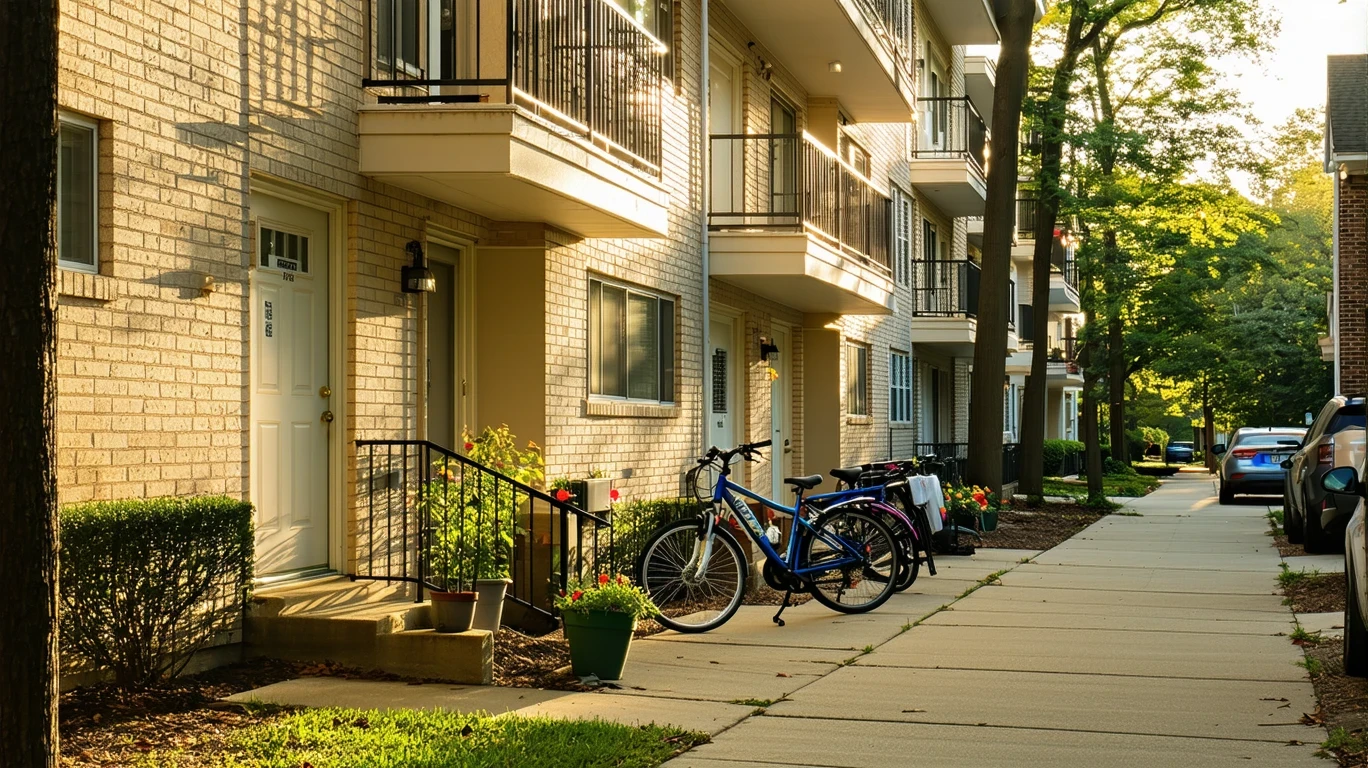
Comfort in Atlanta means different things depending on where you settle and how you structure your days. For some, it’s a single-family home with a yard in a quiet suburb, central air running through the summer, and two cars in the driveway. For others, it’s a walkable neighborhood near a rail stop, where errands don’t require driving and the commute is predictable.
What ties these experiences together is the ability to make choices without constant compromise. Comfortable households can absorb a high utility bill in August without rearranging their budget. They can choose housing based on preference, not just price. They have time left after work and commuting. And they can save, even if modestly, without feeling like they’re sacrificing essentials.
Comfort is also seasonal. Atlanta’s extended cooling season means that households feel financial pressure differently in summer than in spring. The intensity and duration of heat exposure—not just the electricity rate—determine whether utility bills feel manageable or destabilizing. Comfortable households weather that volatility without stress.
Where Income Pressure Shows Up First
In Atlanta, housing pressure dominates household budgets, but the nature of that pressure depends on what you prioritize. Walkable neighborhoods with substantial pedestrian infrastructure, accessible errands, and rail transit options command a premium. Families seeking space, good schools, and family-friendly amenities often face a different tradeoff: more square footage and strong family infrastructure, but longer commutes and car dependency.
The city’s urban form creates pockets of convenience—areas where grocery density exceeds high thresholds, park access is integrated, and hospitals are present—but those pockets aren’t evenly distributed. Households that prioritize car-light living pay more per square foot. Those who choose space over walkability pay in time and transportation costs instead.
Utility volatility is another early pressure point. Atlanta’s extended cooling season and high summer heat create bills that swing significantly month to month. Households operating close to their income limit feel that swing acutely. Comfortable households absorb it without adjusting behavior.
Transportation costs compound differently depending on household structure. A single adult with flexibility can choose proximity to work or rail transit, reducing both time and money costs. Families juggling school drop-offs, activities, and dual commutes face compounding logistics—even in neighborhoods with some cycling infrastructure and transit access, car dependency often remains unavoidable.
How the Same Income Feels Different by Household
Households at similar income levels often experience very different pressure depending on their size, structure, and priorities.
Single adults face moderate pressure, with housing costs dominating their budgets. Those who choose walkable pockets near rail transit can reduce transportation costs and gain time, but pay more in rent. Those who prioritize space or lower rent face longer commutes and higher transportation expenses. The tradeoff is direct: location convenience versus housing cost.
Couples without children have more flexibility. Dual incomes expand housing options, and shared utility costs reduce per-person exposure. However, dual commutes add complexity—especially if both partners work in different parts of the metro. Even with rail transit available, coverage is uneven, and most couples still rely on at least one car. Comfortable couples can choose housing based on lifestyle fit, not just commute optimization.
families with children face the most intense pressure. Space requirements grow, school access becomes non-negotiable, and transportation costs compound. Atlanta offers strong family infrastructure—school and playground density meet thresholds in many areas—but accessing that infrastructure often requires living farther from walkable, transit-rich neighborhoods. The result: families trade convenience for space, and income pressure shifts from rent to transportation time and cost.
Comfortable families can absorb that tradeoff without feeling trapped. They can afford space and proximity to good schools and manageable commutes. Families operating closer to their income limit face a sharper set of compromises.
The Comfort Threshold (Qualitative)
The comfort threshold in Atlanta isn’t a number—it’s the point where tradeoffs ease and choices expand. Below that threshold, households make decisions based on constraint: the cheapest rent, the shortest commute, the lowest utility bill. Above it, decisions shift toward preference: the neighborhood that feels right, the home with the layout you want, the commute that’s tolerable rather than brutal.
Comfortable households experience several shifts. Seasonal utility swings stop dictating behavior—you run the air conditioning when you need it, not when you can afford it. Housing location becomes a choice, not a forced compromise between walkability and space. Transportation shifts from a limiting factor to a managed expense. And discretionary spending emerges: dining out, activities, occasional travel.
Most importantly, saving becomes plausible. Not aggressive, not always consistent, but possible without feeling like deprivation. Comfortable households can absorb an unexpected car repair, a high summer utility bill, or a medical expense without derailing their month.
That threshold varies by household type. Single adults reach it with less income than families, but they also have less flexibility to reduce costs through shared expenses. Families need more income to reach the same level of ease, but they also face more complex logistics and fewer shortcuts.
Why Online Cost Calculators Get Atlanta Wrong
Most cost-of-living calculators treat Atlanta as a uniform place with uniform costs. They assume car dependency, average commutes, and standard housing. They miss the pockets of walkability, the intensity of summer cooling costs, and the compounding logistics that families face.
Calculators also treat housing as a static line item, ignoring the tradeoff between location and space. A household that prioritizes walkable errands and rail access will spend more on rent but less on transportation. A household that prioritizes space and schools will spend less per square foot but more on commuting time and gas. The total might look similar, but the lived experience is completely different.
Utility costs are another blind spot. Calculators use average rates and average usage, missing the seasonal volatility that defines Atlanta’s cost structure. A household that can absorb $150 summer utility bills feels very different from one that budgets for $80 year-round.
Finally, calculators ignore the role of infrastructure. Atlanta offers strong family amenities, integrated park access, and hospital presence—but accessing those amenities depends on where you live. A family near good schools and playgrounds experiences less logistical friction than one farther out, even if the rent is lower. Calculators don’t capture that friction, so they underestimate the real cost of certain housing choices.
How to Judge Whether Your Income Fits Atlanta
Instead of asking “Is my income enough?”, ask these questions:
- How sensitive are you to housing tradeoffs? Can you live with less space to gain walkability, or do you need room even if it means driving everywhere?
- Can you absorb seasonal utility swings? Atlanta’s cooling season is long and intense. If a $150 summer bill would stress your budget, that’s a signal.
- Is time or money your limiting factor? Shorter commutes cost more in rent. Longer commutes cost more in time and gas. Which constraint matters more to your household?
- Does your household need family infrastructure? Atlanta offers strong school and playground density in many areas, but accessing it often requires choosing neighborhoods farther from rail transit and walkable errands.
- How much flexibility do you expect month to month? Comfortable households have room for discretionary spending and can save at least modestly. If your budget has no slack after fixed costs, pressure will be constant.
These questions don’t produce a pass/fail score. They help you judge whether your income and lifestyle expectations align with how Atlanta actually works.
How Day-to-Day Living Actually Feels in Atlanta
Atlanta’s place structure creates distinct patterns in how people move, shop, and manage logistics. In neighborhoods with substantial pedestrian infrastructure and high food and grocery density, daily errands don’t require a car. Residents walk to coffee, pick up groceries on foot, and use rail transit for longer trips. These areas feel less car-dependent, but they command higher rents and often offer less space.
Outside those pockets, car dependency dominates. Even in areas with some cycling infrastructure, most households rely on driving for nearly every errand. Grocery trips, school drop-offs, and commutes all require a vehicle. For families, this compounds quickly—two working parents often need two cars, and transportation costs become a significant budget line.
The presence of rail transit expands options for some households, particularly single adults and couples without children who can structure their lives around transit access. But rail coverage is uneven, and families juggling school locations and activity schedules often find transit impractical, even when it’s technically available.
Park access and family amenities are broadly integrated across Atlanta, meaning families can find strong infrastructure in many neighborhoods. But accessing both good schools and walkable errands and short commutes requires income well above the median. Most families choose two out of three and absorb the tradeoff in time, money, or convenience.
How this article was built: In addition to public economic data, this article incorporates location-based experiential signals derived from anonymized geographic patterns—such as access density, walkability, and land-use mix—to reflect how day-to-day living actually feels in Atlanta, GA.
Frequently Asked Questions About Living Comfortably in Atlanta
Is Atlanta affordable for single adults?
It depends on your priorities. Single adults who prioritize walkability and transit access will pay more in rent but can reduce transportation costs. Those who choose space or lower rent farther out will spend more on commuting time and gas. Comfort depends on whether your income allows you to choose based on preference rather than constraint.
Can families live comfortably in Atlanta on one income?
It’s difficult. Families face compounding costs—space requirements, school access, transportation logistics, and seasonal utility volatility. Single-income families often face sharper tradeoffs between housing location, space, and commute length. Comfort typically requires either dual incomes or income well above the metro median of $77,655 per year.
How much do utility bills really swing in summer?
Significantly. Atlanta’s extended cooling season and high summer heat create utility bills that can double or more compared to spring and fall months. Comfortable households absorb that swing without adjusting behavior. Households operating closer to their income limit feel it acutely and may need to ration cooling or adjust other spending.
Does living near rail transit actually save money?
It can, but the savings depend on your household structure. Single adults and couples without children can reduce car dependency and save on gas, insurance, and maintenance. Families often find rail transit impractical for daily logistics, even when it’s available, and still need at least one car. The real benefit of transit proximity is time savings and reduced commute stress, not necessarily lower costs.
Why do people feel surprised by Atlanta’s costs after moving?
Because the tradeoffs aren’t obvious until you live them. Calculators show average costs, but they don’t capture the seasonal utility swings, the compounding logistics of family life, or the premium required to access walkable neighborhoods. People also underestimate how much car dependency costs—not just in gas, but in time, maintenance, and the need for multiple vehicles. The surprise isn’t the total cost; it’s where the pressure lands and how little flexibility remains after fixed expenses.
—