
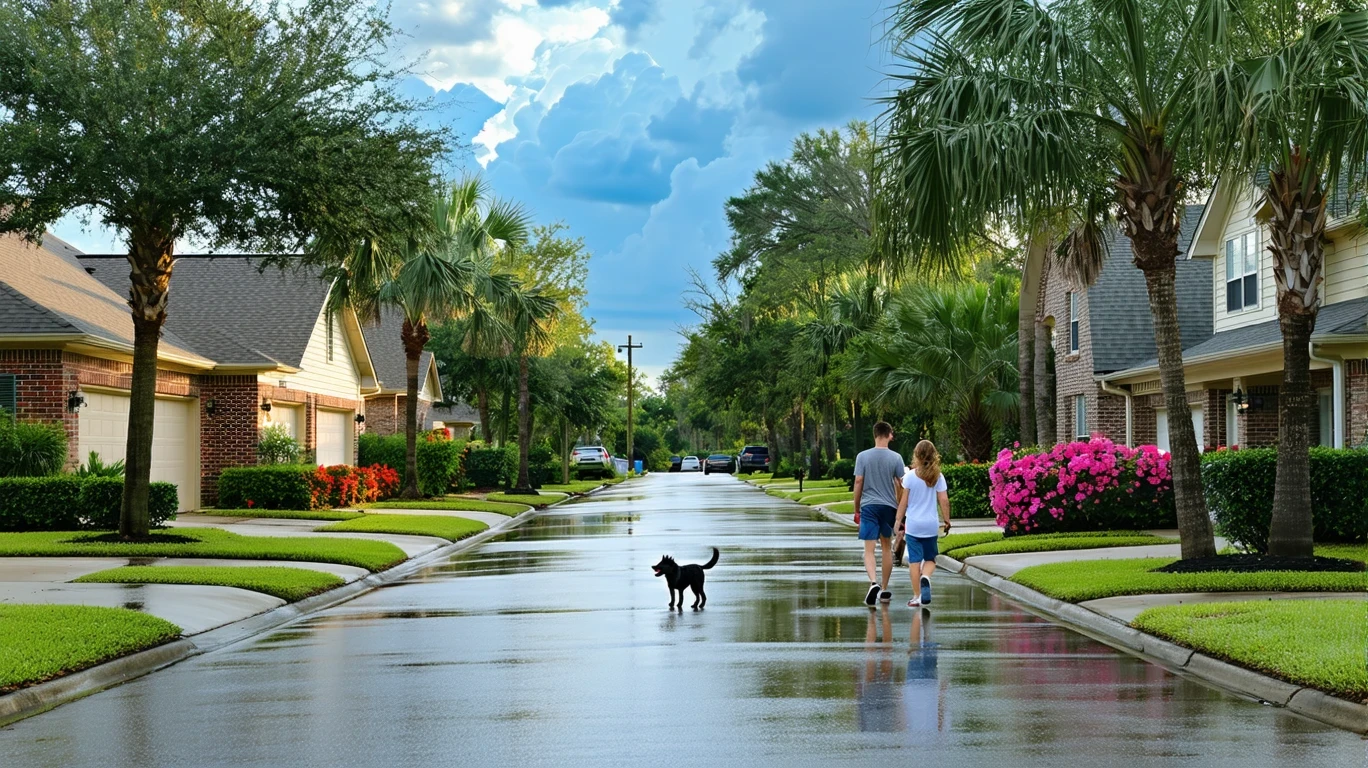
Here’s a common myth: the more affordable suburb is always the better deal. When people compare Humble and Pearland—both part of the greater Houston metro—they often assume the city with lower sticker prices wins. But cost structure matters more than headlines. Humble and Pearland attract different households because their cost pressures show up in different places, at different times, and with different tradeoffs between predictability and flexibility.
Both cities sit within the same regional economy, share similar unemployment rates, and face the same Gulf Coast climate. Yet the financial experience of living in each feels distinct. Humble offers lower entry barriers for housing, while Pearland’s higher median household income suggests a market built around dual-income professionals and families willing to pay more upfront for different amenities or school access. The decision isn’t about which city costs less overall—it’s about which cost structure aligns with your household’s income timing, spending priorities, and tolerance for variability.
This guide breaks down how housing, utilities, transportation, groceries, and fees behave differently in Humble versus Pearland in 2026. It explains where each city’s cost pressure concentrates, which households feel those differences most acutely, and why the same income can feel stable in one place and stretched in another—without declaring a universal winner.
Housing Costs
Housing represents the most visible structural difference between Humble and Pearland. Humble’s median home value sits at $176,500, while Pearland’s reaches $311,100—a gap that shapes everything from down payment requirements to property tax exposure to the types of homes available at different price points. Median gross rent follows a similar pattern: $1,123 per month in Humble compared to $1,622 per month in Pearland. These aren’t just price differences—they reflect different housing markets serving different household profiles.
For renters, the gap between Humble and Pearland matters most when income is fixed or variable. A single-income household or someone early in their career may find Humble’s rent levels leave more room for other obligations—transportation, utilities, debt repayment—while Pearland’s rent structure assumes higher baseline income or dual earners. The difference isn’t only about affordability in the abstract; it’s about how much flexibility remains after housing is paid. Renters in Pearland may face fewer lower-cost options, which can mean less ability to adjust housing spend downward if income changes or other expenses rise.
For buyers, the entry barrier difference becomes even more pronounced. A conventional mortgage on Humble’s median home value requires a smaller down payment, lower monthly principal and interest, and less stringent income verification than Pearland’s median. First-time buyers or households with limited savings may find Humble accessible where Pearland is not. But higher home values in Pearland also correlate with newer construction, larger lot sizes, or access to amenities that reduce other costs—better insulation lowering utility bills, walkable retail reducing transportation needs, or HOA-managed services reducing maintenance unpredictability. The tradeoff isn’t just entry cost versus ongoing cost; it’s also predictability versus exposure to deferred maintenance or aging infrastructure.
| Housing Type | Humble | Pearland |
|---|---|---|
| Median Home Value | $176,500 | $311,100 |
| Median Gross Rent | $1,123/month | $1,622/month |
Families managing childcare, school proximity, or multi-generational needs may weigh these differences differently than single adults or couples. Humble’s lower entry costs can mean access to single-family homes with yards at price points where Pearland offers only apartments or townhomes. Conversely, Pearland’s higher-cost market may offer newer schools, more retail density, or subdivision amenities that reduce the need for separate memberships or travel to access parks and recreation.
Housing takeaway: Humble’s housing market favors households prioritizing lower entry barriers and flexibility to allocate income elsewhere. Pearland’s market assumes higher baseline income and rewards that with access to newer housing stock and amenities that may reduce other costs or time burdens. The primary pressure in Humble is ongoing cost predictability in older housing stock; in Pearland, it’s the upfront barrier and the assumption of stable dual income.
Utilities and Energy Costs
Utility cost structure in Humble and Pearland reflects both shared regional climate and subtle differences in infrastructure and housing stock age. Electricity rates are nearly identical—15.87¢/kWh in Humble and 16.11¢/kWh in Pearland—which means cooling costs during Houston’s long, humid summers will behave similarly for comparable homes. The Gulf Coast climate imposes extended air conditioning demand from late spring through early fall, and both cities face that same baseline exposure. Households in either city should expect cooling to dominate summer utility bills, with older homes or larger square footage amplifying that pressure.
Natural gas pricing, however, diverges meaningfully. Humble’s natural gas cost sits at $19.31 per MCF, while Pearland’s reaches $30.71 per MCF. This difference matters most during winter months when heating demand rises, though Houston winters are mild compared to northern climates. For households in older single-family homes with gas heating, Pearland’s higher natural gas cost introduces more volatility during cold snaps. Newer construction—more common in Pearland’s higher-value housing market—may offset this through better insulation, programmable thermostats, or heat pump systems that reduce gas reliance. Humble’s older housing stock may face lower gas prices but higher consumption due to less efficient building envelopes.
The interaction between housing age and utility exposure creates different cost profiles. In Humble, where median home values suggest older housing stock, residents may face lower per-unit energy costs but higher consumption due to drafty windows, older HVAC systems, or inadequate attic insulation. In Pearland, higher home values correlate with newer builds that consume less energy per square foot but face higher per-unit costs for natural gas. The result: similar total exposure, but different levers for control. Humble households gain more from efficiency upgrades and behavioral changes; Pearland households benefit from newer systems but have less room to reduce usage further.
Apartment dwellers in both cities experience less utility volatility than single-family homeowners. Smaller square footage, shared walls, and landlord-managed systems reduce both baseline consumption and seasonal swings. But the natural gas price difference still affects renters indirectly—through water heater costs, building heating systems, or pass-through fees in multi-family complexes. Renters in Pearland may see slightly higher utility bills even in comparable units, though the difference is less pronounced than for homeowners with gas heating.
Utility takeaway: Humble offers lower natural gas costs, which benefits households in older homes with gas heating and those willing to invest in efficiency upgrades. Pearland’s higher gas costs are partially offset by newer housing stock with better baseline efficiency, but households face less flexibility to reduce costs further. Cooling costs remain the dominant summer expense in both cities, with exposure driven more by home size and age than by rate differences.
Groceries and Daily Expenses
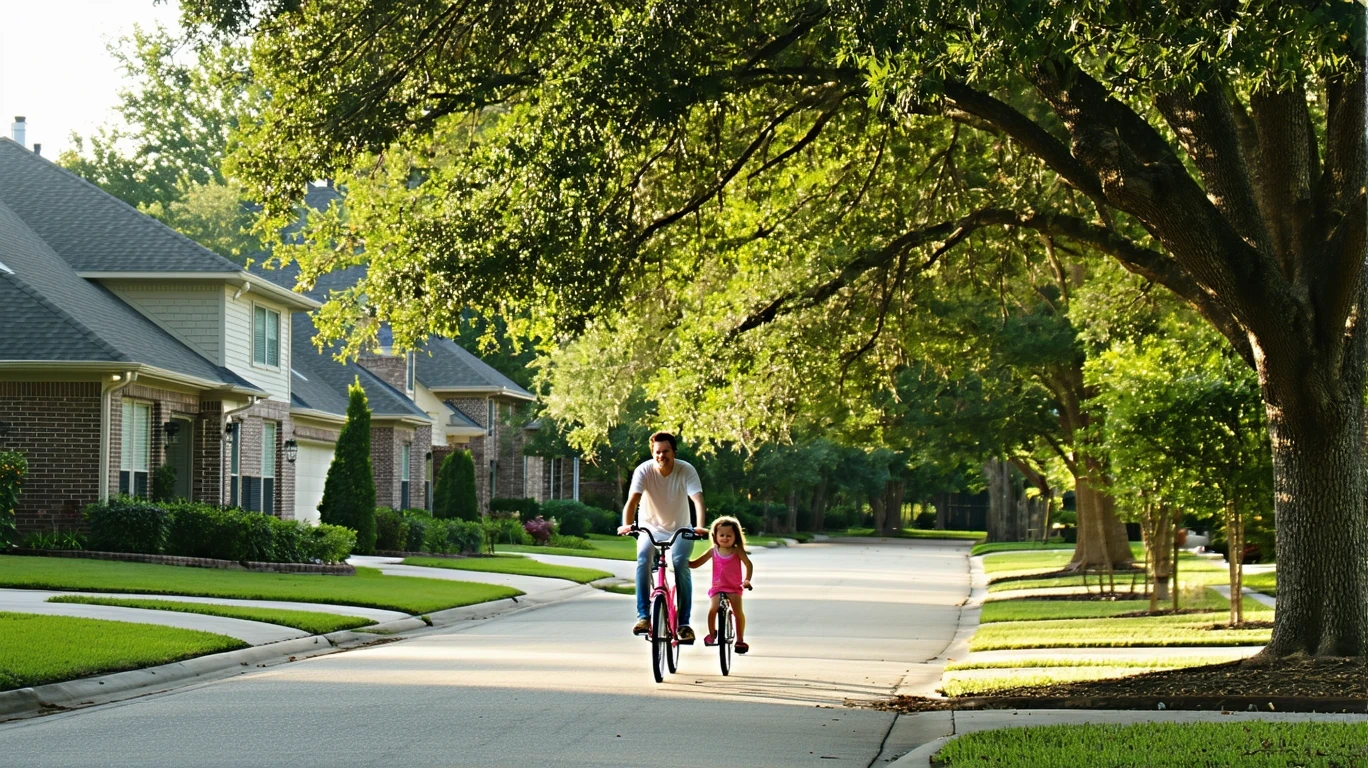
Grocery and everyday spending pressure in Humble and Pearland reflects both regional price parity and local access patterns. Both cities fall within the same Houston metro market, with identical regional price parity indices, meaning grocery staples like bread, milk, eggs, and chicken cost roughly the same at comparable stores. The difference lies not in prices themselves but in how access, convenience, and household composition shape spending behavior.
Humble’s experiential signals show food establishments concentrated along corridors rather than distributed evenly, with grocery density in the medium band. This suggests households may need to plan trips more deliberately, combining errands or driving farther to access preferred stores. For families managing multiple children or tight schedules, this can mean fewer quick stops and more reliance on bulk shopping or warehouse clubs. Single adults or couples with flexible schedules may find this less burdensome, especially if they already own a car and can batch errands efficiently.
Pearland’s higher median household income suggests a retail environment with more specialty stores, prepared food options, and convenience-oriented shopping. While grocery staples cost the same, the presence of more dining options, coffee shops, and quick-service restaurants can increase spending through convenience creep—small purchases that feel insignificant individually but accumulate over time. Dual-income households with less time to cook may find themselves spending more on takeout or meal kits, even when grocery prices are identical. The cost pressure isn’t higher prices; it’s the friction between time scarcity and the availability of convenient alternatives.
Household size amplifies these differences. A family of four in Humble may save by planning weekly grocery trips and cooking at home, but faces more logistical complexity if errands require multiple stops across spread-out corridors. The same family in Pearland may pay more for convenience but gain time back through denser retail access. A single adult in Humble may find grocery costs manageable but feel the time cost of less walkable access; in Pearland, that same adult may spend more on prepared foods simply because options are more visible and accessible.
Grocery takeaway: Humble’s cost structure rewards households that plan ahead, batch errands, and cook at home, but imposes more time and logistics burden. Pearland’s denser retail access reduces friction but increases exposure to convenience spending, especially for dual-income households with limited meal-prep time. Grocery staples cost the same; the difference is how access patterns and time pressure shape total spending.
Taxes and Fees
Property taxes represent the largest recurring tax burden for homeowners in both Humble and Pearland, and the structural difference in home values creates divergent exposure. Texas relies heavily on property taxes to fund schools, infrastructure, and local services, with no state income tax to offset that burden. Humble’s lower median home value of $176,500 means lower absolute property tax bills than Pearland’s $311,100 median, even if millage rates are similar. For a household comparing identical income levels, Humble’s property tax obligation leaves more room for other expenses, while Pearland’s higher assessment assumes higher income or greater willingness to pay for amenities like newer schools or parks.
Sales taxes in both cities reflect Texas state and local rates, with no meaningful difference between Humble and Pearland. Everyday purchases—groceries, gas, clothing—face the same tax treatment. The difference emerges in how household spending patterns interact with those rates. Higher-income households in Pearland may spend more on taxable goods and services, but that’s a function of income, not tax structure. Lower-income households in Humble face the same sales tax rate but on a smaller base, which means less absolute tax paid but similar relative burden on discretionary spending.
Recurring fees—HOA dues, trash collection, water and sewer charges—vary more by neighborhood than by city. Pearland’s newer subdivisions often include HOA fees that bundle landscaping, amenity access, and exterior maintenance, which can range from predictable and modest to high and escalating. These fees add predictability for some households (no surprise roof repairs, no lawn care costs) but reduce flexibility for others (mandatory payments regardless of usage). Humble’s older neighborhoods may lack HOAs entirely, giving homeowners more control over maintenance timing and spending but exposing them to deferred maintenance risk and less predictable repair costs.
Renters in both cities face fewer direct tax and fee burdens, though property taxes and HOA fees are often passed through indirectly in rent levels. The difference is transparency: homeowners see the full cost and can plan around it; renters see only the rent total and must infer what’s included. For renters considering a future purchase, understanding how property taxes and fees differ between Humble and Pearland helps clarify the true gap between renting and owning in each city.
Taxes and fees takeaway: Humble’s lower home values mean lower property tax obligations, which benefits households prioritizing flexibility and lower fixed costs. Pearland’s higher taxes reflect higher home values and often correlate with HOA fees that bundle services but reduce spending control. Renters in both cities face similar sales tax exposure, but future buyers should account for how property taxes and fees will shift their cost structure once they own.
Transportation & Commute Reality
Transportation costs in Humble and Pearland are shaped primarily by car dependence, commute patterns, and fuel prices rather than by transit infrastructure. Both cities sit within the Houston metro, where personal vehicles dominate daily mobility. Humble’s experiential signals confirm a car-oriented texture, with pedestrian infrastructure below low thresholds and bus service present but limited. Pearland lacks detailed experiential data in the feed, but its position within the same metro and similar suburban form suggest comparable car reliance.
Fuel prices differ slightly between the two cities: $2.82 per gallon in Humble versus $2.41 per gallon in Pearland. For a household driving 25 miles round-trip daily at 25 MPG, this translates to different per-gallon costs but not necessarily different total transportation exposure—commute distance, frequency, and vehicle efficiency matter more than the per-gallon gap. A household in Humble commuting to downtown Houston may face longer drives than a household in Pearland working closer to home, even if Humble’s gas costs slightly more per gallon. The cost difference is real but secondary to commute structure.
Humble’s bus service provides some transit option, though experiential signals suggest it’s not a substitute for car ownership for most households. Families managing school drop-offs, grocery trips, and extracurricular activities will find car dependence unavoidable. Single adults or couples without children may use transit occasionally for specific trips, but the car-oriented street texture means most errands still require driving. Pearland’s transit access isn’t detailed in the feed, but its suburban form and distance from Houston’s core suggest similar or lower transit viability.
The interaction between housing location and commute patterns creates different cost profiles. Households in Humble working in northern Houston suburbs may face shorter commutes than those in Pearland commuting to the same areas, reducing fuel and time costs despite slightly higher gas prices. Conversely, households in Pearland working in the Texas Medical Center or downtown may find shorter commutes than Humble residents, offsetting Pearland’s higher housing costs with lower transportation time and fuel consumption. The decision isn’t just about gas prices—it’s about where you work, how often you commute, and whether your household can function with one vehicle or requires two.
Transportation takeaway: Both Humble and Pearland require car ownership for most households, with limited transit serving as a supplement rather than a primary option. Humble’s slightly higher gas prices matter less than commute distance and frequency. Households should evaluate transportation costs based on job location, household vehicle needs, and whether shorter commutes in one city offset higher housing or other costs in another.
Cost Structure Comparison
Housing dominates the cost experience in both Humble and Pearland, but the nature of that dominance differs. Humble’s lower entry barrier—both for rent and ownership—means housing costs consume a smaller share of income for households at or below the metro median, leaving more flexibility for transportation, utilities, and discretionary spending. Pearland’s higher housing costs assume dual income or above-median earnings, with less room for error if income drops or other expenses rise. The tradeoff isn’t just magnitude; it’s predictability versus exposure. Humble’s older housing stock may require more maintenance spending over time, while Pearland’s newer builds reduce that risk but lock in higher fixed costs upfront.
Utilities introduce more volatility in Humble than in Pearland, but the gap is narrower than housing. Humble’s lower natural gas costs benefit households in older homes with gas heating, especially during winter cold snaps. Pearland’s higher gas costs are partially offset by newer, more efficient housing stock, but households have less flexibility to reduce consumption further. Cooling costs—driven by Houston’s long summers—affect both cities similarly, with exposure determined more by home size and age than by rate differences. For families in larger single-family homes, utility volatility can rival housing cost pressure during extreme weather months.
Daily living costs—groceries, dining, household goods—show less structural difference between the cities than housing or utilities. Both benefit from the same regional price parity, meaning staple prices are comparable. The difference lies in access friction and convenience spending. Humble’s corridor-clustered food access rewards planning and batch errands but imposes more time cost. Pearland’s denser retail environment reduces friction but increases exposure to convenience creep, especially for dual-income households with limited meal-prep time. For budget-conscious households, Humble offers more control; for time-scarce households, Pearland offers more convenience.
Transportation patterns matter more in Humble for households commuting north or east within the metro, while Pearland’s position may favor those working south or toward the Texas Medical Center. Both cities require car ownership, but commute distance and frequency determine total transportation exposure more than the per-gallon fuel price gap. Households sensitive to commute time may find one city’s location advantage offsets the other’s housing cost advantage, depending on job location and household logistics.
The decision between Humble and Pearland isn’t about which city costs less—it’s about which cost structure aligns with your household’s income stability, spending priorities, and tolerance for variability. Households sensitive to upfront barriers may prefer Humble’s lower entry costs and greater flexibility. Households prioritizing predictability, newer infrastructure, and reduced maintenance risk may find Pearland’s higher fixed costs worthwhile. For households where commute friction or time scarcity dominates, the better choice depends less on price and more about what drives expenses day to day.
How the Same Income Feels in Humble vs Pearland
Single Adult
For a single adult, housing becomes the first non-negotiable cost, and the gap between Humble and Pearland determines how much flexibility remains for everything else. In Humble, lower rent or mortgage payments leave more room for transportation, utilities, and discretionary spending, but the car-oriented texture means owning a vehicle isn’t optional—it’s a fixed cost. In Pearland, higher housing costs consume more of gross income upfront, which can feel stable if income is predictable but tight if income varies or other expenses spike. Flexibility exists in Humble through lower fixed costs; in Pearland, it exists through denser retail access that reduces time spent on errands, though that convenience can also increase spending if not managed deliberately.
Dual-Income Couple
For a dual-income couple, the cost structure shifts from survival to optimization. In Humble, lower housing costs free up income for travel, savings, or debt repayment, but the time cost of car dependence and spread-out errands can feel burdensome when both partners work full-time. In Pearland, higher housing costs assume both incomes are stable, but denser retail and newer infrastructure reduce logistical friction—fewer trips for groceries, less maintenance unpredictability, more walkable access to dining and services. The tradeoff isn’t just cash cost versus time cost; it’s also predictability versus exposure. Pearland’s higher fixed costs offer more stability if both incomes remain steady; Humble’s lower fixed costs offer more resilience if one income drops or becomes variable.
Family with Kids
For families, non-negotiable costs multiply quickly—housing, utilities, transportation, groceries, childcare, and school-related expenses all compete for the same income. In Humble, lower housing entry costs mean access to single-family homes with yards at price points where Pearland offers only apartments or townhomes, but older housing stock increases utility volatility and maintenance unpredictability. In Pearland, higher housing costs buy access to newer schools, parks, and amenities that reduce the need for separate memberships or travel, but the upfront barrier assumes stable dual income and leaves less room for error if childcare costs rise or one parent reduces hours. Flexibility in Humble comes from lower fixed costs and more control over spending timing; in Pearland, it comes from reduced logistics complexity and infrastructure that supports family routines without constant driving.
Decision Matrix: Which City Fits Which Household?
| Decision factor | If you’re sensitive to this… | Humble tends to fit when… | Pearland tends to fit when… |
|---|---|---|---|
| Housing entry + space needs | Down payment size, monthly obligation, access to single-family homes | You prioritize lower entry barriers and flexibility to allocate income elsewhere | You have stable dual income and value newer construction with less maintenance risk |
| Transportation dependence + commute friction | Commute distance, fuel costs, time spent driving | You work north or east in the metro and can tolerate car-oriented errands | You work south or toward the Medical Center and value shorter commutes despite higher housing costs |
| Utility variability + home size exposure | Seasonal bill swings, heating and cooling costs, efficiency control | You’re willing to invest in efficiency upgrades and can manage older housing stock | You prefer newer builds with better baseline efficiency and less consumption volatility |
| Grocery strategy + convenience spending creep | Time spent on errands, meal prep burden, takeout frequency | You plan ahead, batch errands, and cook at home to control costs | You value denser retail access and are willing to pay for convenience when time is scarce |
| Fees + friction costs (HOA, services, upkeep) | Predictability versus control, bundled services versus à la carte spending | You want control over maintenance timing and spending even if it means more variability | You prefer bundled HOA services that reduce surprise repair costs and logistics burden |
| Time budget (schedule flexibility, errands, logistics) | Household logistics complexity, school proximity, errands friction | You have schedule flexibility and can tolerate car-dependent errands across spread-out corridors | You manage tight schedules with kids or dual careers and need denser access to reduce trip frequency |
Lifestyle Fit
Lifestyle differences between Humble and Pearland extend beyond cost structure into how daily routines, recreation, and community access shape household satisfaction. Humble’s experiential signals reveal a car-oriented environment with pedestrian infrastructure below low thresholds, meaning most errands, social activities, and recreation require driving. Food establishments cluster along corridors rather than distributing evenly, which rewards households that plan trips deliberately but penalizes spontaneous stops. For families with young children, this can mean more time spent in the car managing school drop-offs, grocery runs, and extracurricular activities. Single adults or couples without children may find this less burdensome, especially if they already own a car and prefer lower housing costs over walkable convenience.
Pearland’s higher median income suggests a community built around dual-income professionals and families prioritizing access to amenities, schools, and newer infrastructure. While detailed experiential signals aren’t available for Pearland in the feed, its position within the Houston metro and higher home values correlate with newer subdivisions, more retail density, and amenities like parks, trails, and recreation centers that reduce the need to travel far for leisure. Families managing multiple children or tight work schedules may find Pearland’s infrastructure reduces logistical friction—shorter distances to schools, more dining options within neighborhoods, and HOA-managed amenities that eliminate the need for separate memberships. The tradeoff is higher fixed costs and less control over spending timing, but for households where time scarcity dominates, that tradeoff may feel worthwhile.
Healthcare access differs meaningfully between the cities. Humble’s experiential signals confirm a hospital is present, along with pharmacies, which provides local access to emergency and routine care without requiring long drives. Pearland’s healthcare infrastructure isn’t detailed in the feed, but its proximity to the Texas Medical Center and higher income levels suggest access to both local clinics and specialized care within reasonable commuting distance. For families with young children, elderly parents, or chronic health needs, proximity to hospitals and specialists can reduce both time and cost burdens, making healthcare access a meaningful lifestyle factor beyond direct medical expenses.
Humble’s current temperature: 71°F (feels like 72°F) reflects the Gulf Coast’s mild winter climate, while Pearland’s current temperature: 51°F (feels like 48°F) shows the same regional weather patterns with minor variation. Both cities face extended cooling seasons, high humidity, and rare freezing nights, meaning outdoor recreation is viable year-round but requires planning around heat and afternoon thunderstorms during summer months. Families prioritizing outdoor activity may find Humble’s park density in the medium band and water features present offer accessible green space, though the car-oriented texture means driving to parks rather than walking. Pearland’s newer subdivisions often include neighborhood parks and trails within walking distance, reducing the need to drive for casual outdoor activity.
Humble’s unemployment rate: 4.4% matches Pearland’s 4.4%, indicating similar regional labor market conditions. Both cities benefit from Houston’s diversified economy, with access to energy, healthcare, logistics, and professional services sectors. The difference lies less in job availability and more in commute patterns—households in Humble may face longer commutes to jobs in southern Houston or the Medical Center, while Pearland residents may commute farther to jobs in northern suburbs or downtown. For dual-income households, the ability to find jobs near home in either city depends more on industry and role than on city-specific employment density.
FAQ
Is Humble or Pearland cheaper for renters in 2026?
Humble’s median gross rent of $1,123 per month is lower than Pearland’s $1,622 per month, which means Humble offers more accessible entry points for single-income households or those early in their careers. The difference isn’t just about monthly rent—it’s about how much flexibility remains after housing is paid. Renters in Humble may find more room in their budget for transportation, utilities, or savings, while Pearland’s rent structure assumes higher baseline income or dual earners. The better choice depends on whether you prioritize lower fixed costs or access to newer housing stock and denser retail.
How do utility costs differ between Humble and Pearland in 2026?
Electricity rates are nearly identical—15.87¢/kWh in Humble and 16.11¢/kWh in Pearland—so cooling costs during Houston’s long summers behave similarly. Natural gas pricing diverges more meaningfully: $19.31 per MCF in Humble versus $30.71 per MCF in Pearland. This matters most for households in older homes with gas heating, where Pearland’s higher gas costs introduce more volatility during winter months. Humble’s lower gas costs benefit households willing to manage older housing stock, while Pearland’s newer builds often offset higher per-unit costs with better baseline efficiency.
Which city is better for families comparing Humble vs Pearland in 2026?
Families face different tradeoffs in each city. Humble’s lower home values mean access to single-family homes with yards at price points where Pearland offers only apartments or townhomes, but older housing stock increases utility volatility and maintenance unpredictability. Pearland’s higher housing costs buy access to newer schools, parks, and amenities that reduce the need for separate memberships or long drives, but the upfront barrier assumes stable dual income. Families prioritizing lower entry costs and more spending control may prefer Humble; those valuing reduced logistics complexity and newer infrastructure may find Pearland worth the higher fixed costs.
Do transportation costs favor Humble or Pearland in 2026?
Both cities require car ownership for most households, with limited transit serving as a supplement rather than a primary option. Humble’s gas price of $2.82 per gallon is slightly higher than Pearland’s $2.41 per gallon, but commute distance and frequency matter more than the per-gallon gap. Households in Humble working north or east in the metro may face shorter commutes than those in Pearland, offsetting the fuel price difference. Conversely, Pearland residents working south or toward the Texas Medical Center may save time and fuel despite higher housing costs. The decision depends on job location and whether shorter commutes in one city offset higher costs elsewhere.
How does the same household income feel different in Humble versus Pearland in 2026?
The same gross income