
Maya steps out of her apartment near FM 1960 just after 7 a.m., walks two blocks to the bus stop, and waits. The morning is already warm, the air thick with humidity. A bus arrives within ten minutes, and she boards, heading toward her job at a medical office closer to the city center. The ride takes about forty minutes, with several stops along the way. She uses the time to answer emails on her phone. When the bus drops her off, she walks another five minutes to the building. It works—but only because her schedule is predictable, her destination is on a major corridor, and she doesn’t need to make stops on the way home.
For Maya, public transit in Humble is functional. For most residents, it’s not part of the daily routine. Transportation options in Humble are shaped by the city’s layout: low-rise, spread out, and built around roads rather than pedestrian paths. The infrastructure here strongly favors driving. Sidewalks are sparse, and the distance between home, work, and errands typically requires a car. That doesn’t mean transit doesn’t exist—it does, in limited form—but it plays a supporting role rather than a central one.
Understanding how people actually get around Humble means recognizing that mobility here is less about choosing between options and more about adapting to a car-first environment. Whether that works for you depends on where you live, where you need to go, and how much flexibility your schedule allows.
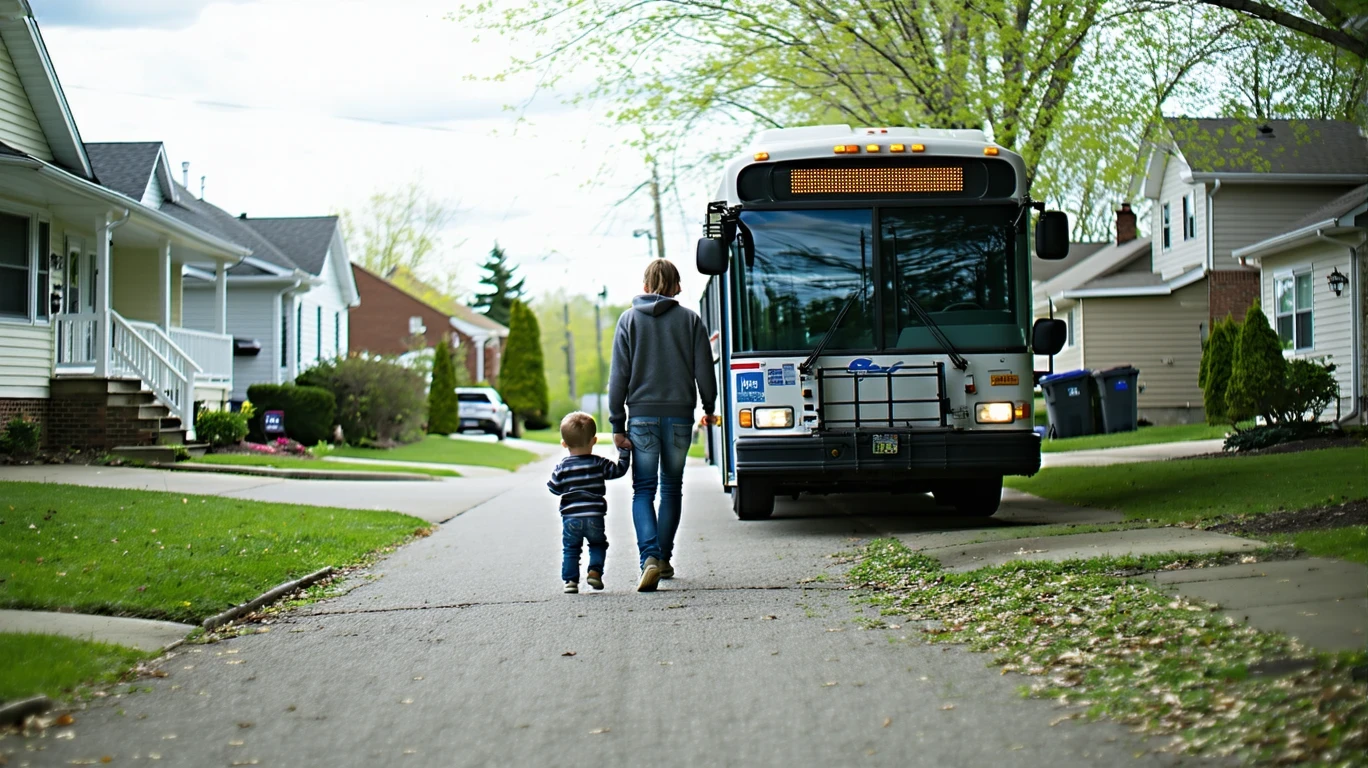
How People Get Around Humble
Humble’s transportation reality is defined by its suburban form. The city is low-rise, with residential neighborhoods separated from commercial corridors by design. Pedestrian infrastructure is minimal relative to the road network, and the ratio of walkable paths to drivable streets is low. This isn’t an oversight—it reflects how the area developed, prioritizing vehicle access and single-family housing over mixed-use density.
Most residents drive. They drive to work, to the grocery store, to drop kids at school, and to meet friends. Errands don’t cluster neatly within walking distance; instead, food and grocery options tend to concentrate along specific corridors like FM 1960 or Will Clayton Parkway. That means even short trips often require getting in the car, and daily life involves navigating a network of roads rather than streets you can easily walk.
For newcomers, the surprise isn’t that Humble is car-dependent—it’s how consistently that dependence shapes every part of the day. You don’t just need a car for commuting; you need it for nearly everything. The city’s layout doesn’t punish drivers, but it offers very little infrastructure for those trying to live without one.
Public Transit Availability in Humble
Public transit in Humble exists primarily in the form of bus service. There is no rail system, and the bus network serves specific corridors rather than blanketing the city. Routes tend to connect Humble to larger employment centers and regional hubs, which makes them more useful for commuters heading out of the area than for residents trying to run errands locally.
Bus service works best for people living near major roads where routes actually run. If your home and your destination both sit along a served corridor, and your schedule aligns with the service window, transit becomes a viable option. But coverage is uneven. Neighborhoods set back from main arteries, or those in the northern and eastern parts of the city, may have limited or no direct access to transit stops.
The role transit plays in Humble is supplementary. It provides a lifeline for residents without cars, and it offers an alternative for commuters willing to trade time for lower transportation costs. But it doesn’t replace the need for a vehicle for most households. Frequency, span of service, and geographic reach all constrain how useful the system can be for day-to-day mobility.
Transit access in the Houston metro area often centers around systems such as METRO, though coverage and route availability vary significantly by location. Residents in Humble may encounter regional bus service, but should verify specific routes and schedules based on where they live and work, as service is not uniformly distributed across the city.
Driving & Car Dependence Reality
Driving in Humble isn’t just common—it’s structurally necessary. The city’s land use separates residential areas from commercial zones, and the distance between home and daily destinations makes walking impractical for most trips. Parking is abundant and typically free, which removes one of the friction points that might otherwise encourage alternative modes of transportation.
Car dependence here isn’t about preference; it’s about infrastructure. The road network is extensive and well-maintained, designed to move vehicles efficiently across a spread-out area. Pedestrian paths, by contrast, are limited. The lack of sidewalks in many neighborhoods, combined with wide roads and long blocks, makes walking feel unsafe or simply inconvenient, even for short distances.
For families, this means managing multiple vehicles is often the norm. One car per working adult is standard, and households with teenagers frequently add another. The flexibility that comes with driving—being able to leave when you want, take multiple stops, adjust your route—becomes essential when transit can’t reliably serve your needs and the built environment doesn’t support walking or biking.
The tradeoff is exposure. Owning and maintaining a vehicle, keeping it fueled, insured, and repaired, creates a fixed cost structure that doesn’t fluctuate with how much you use it. In Humble, that cost is unavoidable for most households, and it shapes what a budget has to handle on a recurring basis.
Commuting Patterns & Daily Mobility
Commuting in Humble often means leaving the city. Many residents work in Houston proper, or in nearby employment centers like IAH Airport, Kingwood, or The Woodlands. The commute structure tends to be straightforward: a single trip in the morning, a single trip back in the evening, with limited opportunity to chain errands along the way unless they fall directly on the route.
For those who work locally, the commute is shorter in distance but still car-dependent. Humble’s commercial corridors host retail, healthcare, and service jobs, but they’re not always close to residential areas. Even a job within city limits may require a ten- or fifteen-minute drive, simply because of how land use is organized.
Commute timing matters. Humble sits near major highways—US 59 and Beltway 8—which provide access to the broader metro but also expose commuters to regional traffic patterns. Rush hour congestion can extend travel times significantly, particularly for those heading south toward downtown Houston. Flexibility in start times, or the ability to work from home part of the week, reduces that exposure. Rigid schedules amplify it.
Daily mobility in Humble isn’t just about the commute to work. It’s also about getting kids to school, picking up groceries, making it to appointments. Because errands cluster along corridors rather than distributing evenly across neighborhoods, even non-work trips require planning and vehicle access. The city’s layout doesn’t support spontaneous, walkable errands the way denser, mixed-use areas do.
Who Transit Works For — and Who It Doesn’t
Transit in Humble works for a narrow slice of residents: those who live near a bus route, work along a served corridor, and have schedules that align with service hours. Renters in apartments along FM 1960 or near other major roads are more likely to find transit usable than homeowners in subdivisions set back from main arteries.
Single commuters with predictable hours benefit most. If your job is in a regional hub served by transit, and you don’t need to make multiple stops on the way home, the bus can be a practical option. It’s slower than driving, and it requires more planning, but it eliminates the cost of vehicle ownership for those willing to make that tradeoff.
Transit doesn’t work well for families managing complex logistics. Dropping kids at school, picking up groceries, making it to after-school activities—all of these require the flexibility and speed that only a car provides in Humble’s layout. Parents, in particular, find that transit’s limited coverage and schedule constraints make it incompatible with the demands of household management.
It also doesn’t work well for residents in peripheral neighborhoods. The farther you are from a major corridor, the less likely you are to have access to a bus stop within reasonable walking distance. And even if you do, the route may not go where you need it to, or run when you need it to. For those households, car ownership isn’t optional—it’s the only way to participate in daily life.
Transportation Tradeoffs in Humble
Choosing between transit and driving in Humble isn’t really a choice for most people—it’s a question of whether transit is even viable. For the small number of households where it is, the tradeoff comes down to cost versus control.
Transit reduces the fixed costs of transportation. You’re not paying for a vehicle, insurance, maintenance, or parking. But you’re trading money for time and flexibility. Trips take longer, routes are fixed, and schedules are rigid. If you miss the bus, you wait. If your destination isn’t on the route, you walk or find another way.
Driving offers control and speed. You leave when you want, stop where you need to, and adjust on the fly. That flexibility is especially valuable in a city where errands don’t cluster and where daily life often involves multiple, dispersed stops. But it comes with a cost structure that’s both high and unavoidable. Once you own a car, the expenses don’t scale down if you drive less—they’re simply there.
For most households in Humble, the tradeoff isn’t between transit and driving—it’s between one car and two, or two cars and three. The question isn’t whether to rely on a vehicle, but how many vehicles the household needs to function smoothly. That’s the reality shaped by Humble’s infrastructure, and it’s a reality that affects household budgets, time, and daily stress in measurable ways.
FAQs About Transportation in Humble (2026)
Is public transit usable for daily commuting in Humble?
Public transit is usable for some commuters, particularly those living near major corridors and working in areas served by regional bus routes. It’s less practical for residents in peripheral neighborhoods or those with complex daily schedules that require multiple stops.
Do most people in Humble rely on a car?
Yes. The city’s layout, low pedestrian infrastructure density, and corridor-based commercial clustering make driving the dominant mode of transportation. Most households own at least one vehicle, and many own two or more.
Which areas of Humble are easiest to live in without a car?
Areas near FM 1960 and other major roads with bus service offer the most transit access. Even there, living without a car requires significant tradeoffs in time, convenience, and flexibility. Most of Humble is not structured to support car-free living.
How does commuting in Humble compare to nearby cities?
Humble’s commuting reality is similar to other suburban areas in the Houston metro: car-dependent, with limited transit options and exposure to regional traffic patterns. Proximity to highways provides access to employment centers, but also exposes commuters to congestion during peak hours.
Does Humble have bike infrastructure?
Bike infrastructure is minimal. The ratio of bike paths to roads is low, and the city’s layout—wide roads, long distances, limited connectivity—makes cycling impractical for most daily trips. Biking exists as recreation more than transportation.
How Transportation Fits Into the Cost of Living in Humble
Transportation in Humble isn’t just a line item in a budget—it’s a structural factor that shapes where people live, how they spend their time, and what kind of flexibility they have in daily life. Because the city’s infrastructure requires car ownership for most households, transportation costs are high and fixed. You can’t easily reduce them by driving less, because the expenses—insurance, registration, maintenance—don’t disappear when the car sits in the driveway.
That cost structure affects housing decisions. Living closer to work might reduce commute time, but it doesn’t eliminate the need for a vehicle. Living farther out might lower rent, but it increases exposure to traffic and lengthens the daily commute. The tradeoff isn’t between transportation and housing—it’s between different combinations of time, cost, and convenience, all of which require a car as the baseline.
For families, transportation costs multiply. Two working adults often mean two vehicles. Teenagers add a third. Each vehicle brings its own insurance, fuel, and maintenance costs, and those costs don’t scale with income—they’re simply required to participate in daily life in a city built around driving.
Understanding how transportation works in Humble means recognizing that mobility here isn’t optional or flexible—it’s embedded in the city’s layout, and it creates cost exposure that every household has to manage. Whether you’re commuting to Houston, running errands along FM 1960, or managing school drop-offs, the infrastructure assumes you’re driving. That assumption shapes what it costs to live here, and it’s one of the most important factors to understand before deciding whether Humble fits your household’s needs.
How this article was built: In addition to public economic data, this article incorporates location-based experiential signals derived from anonymized geographic patterns—such as access density, walkability, and land-use mix—to reflect how day-to-day living actually feels in Humble, TX.