
Humble sits northeast of Houston with a housing market shaped by suburban sprawl, car-dependent infrastructure, and the realities of Gulf Coast humidity. The median home value of $176,500 makes ownership accessible on paper, but new residents often underestimate the long-term exposure that comes with property taxes, maintenance in a humid climate, and the logistical burden of getting around a place built for driving. Renters face median gross rent of $1,123 per month, which is modest relative to the median household income of $58,581 per year, but the cost structure doesn’t stop at the lease—transportation, utilities, and time all add friction that changes how housing affordability actually feels.
This article breaks down how housing costs behave in Humble, what distinguishes renting from owning, and which household types fit the tradeoffs this market demands.
The Housing Market in Humble Today
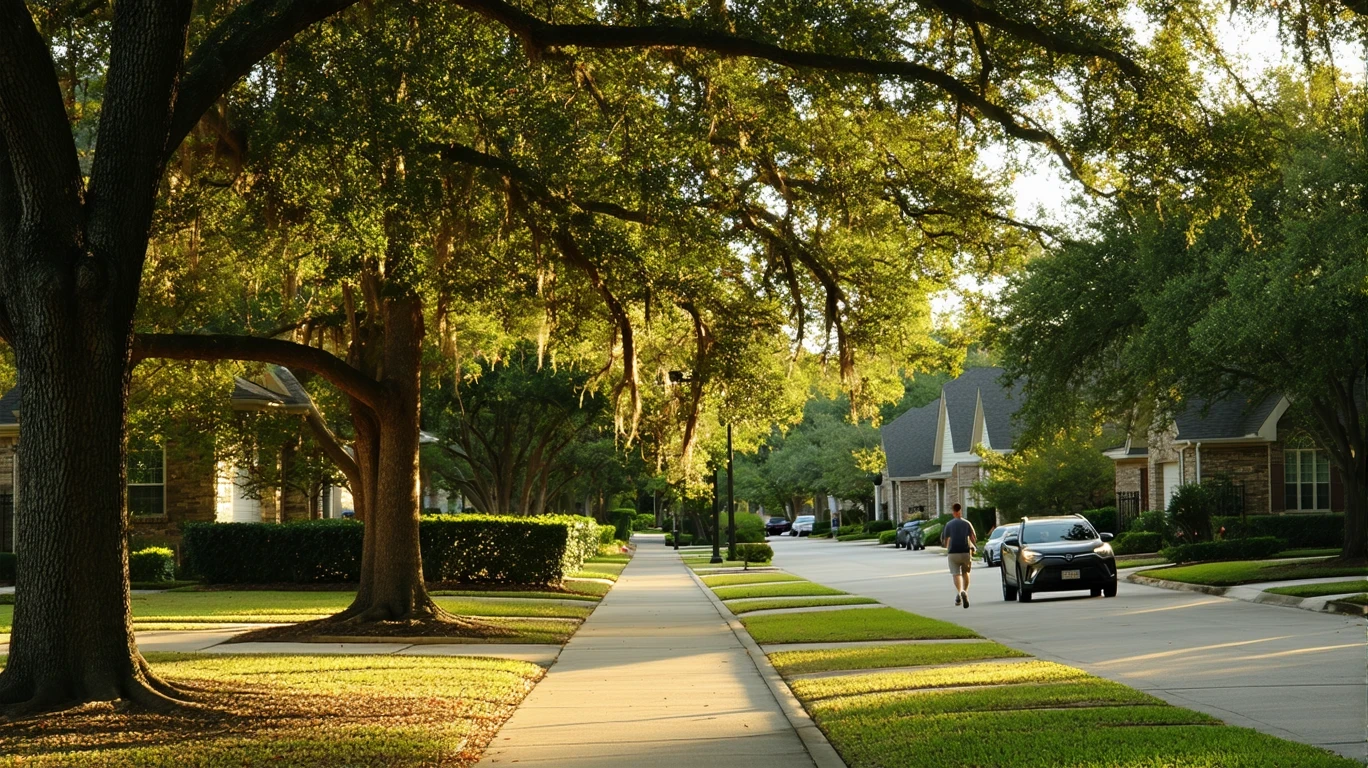
Humble’s housing market reflects its role as a commuter suburb within the greater Houston metro. The low-rise, car-oriented built environment means most residential options are single-family homes or small apartment complexes scattered along commercial corridors. Pedestrian infrastructure is minimal, and transit options are limited to bus service, so nearly every household depends on personal vehicles to reach work, groceries, and services. This isn’t a walkable neighborhood market—it’s a drive-to-everything market, and that changes the true cost of living here even when rent or mortgage payments seem reasonable.
The median home value of $176,500 is well below what you’d find closer to Houston’s core, which attracts first-time buyers and households stretching for ownership. But the accessible entry price comes with tradeoffs: property tax volatility, ongoing maintenance in a climate that stresses roofs and HVAC systems, and the reality that most errands require planning and fuel. The unemployment rate of 4.4% suggests a stable local economy, but job access often depends on commuting outward, not working locally.
What newcomers misunderstand is that Humble’s housing market isn’t expensive because of the purchase price or rent—it’s expensive because of the cumulative burden of car dependency, utility exposure, and the time cost of getting anywhere. The structure of the place determines what shapes the cost of living in Humble, and housing is the anchor that locks in those other exposures.
Renting in Humble
At $1,123 per month, median gross rent in Humble is manageable for households earning the local median income, but rental experience varies widely depending on proximity to commercial corridors and commute routes. Most rental housing is clustered along major roads where food and grocery options are concentrated, which reduces some of the friction of car dependency but also means living near higher-traffic areas. Renters in Humble rarely walk to errands—even when the store is visible from the apartment, the lack of pedestrian infrastructure makes driving the default.
Rental pressure in Humble is shaped more by Houston metro dynamics than by local demand. Lease renewals can shift quickly if regional growth pushes outward, and renters have limited leverage in a market where alternatives require similar commute tradeoffs. The stability of renting here depends on how much volatility you’re willing to accept in exchange for avoiding property tax exposure and maintenance risk.
For renters who work remotely or have flexible schedules, Humble offers lower housing costs without the long-term risk of ownership. For renters who commute daily, the savings on rent can be offset by fuel costs and time, especially if the job is located far from the main corridors. Renting in Humble works best for households who value predictability over control and who are comfortable with the logistical rhythm of a car-oriented suburb.
Owning a Home in Humble
Ownership in Humble means taking on exposure that renters avoid: property taxes, maintenance in a humid climate, and the long-term risk of cost escalation. The median home value of $176,500 is accessible, but the ongoing costs of ownership—especially in Texas, where property taxes fund local services and can rise with appraisals—add volatility that doesn’t show up in the purchase price. Homeowners also face the reality of Gulf Coast weather: extended cooling seasons, high humidity that stresses building materials, and the need for proactive HVAC and roof maintenance.
Homeownership in Humble often comes with additional governance layers. Many neighborhoods are governed by homeowners associations, which can bundle services like landscaping or amenity access but also impose fees and rules that limit flexibility. Even outside HOA communities, homeowners are responsible for all utilities, yard maintenance, and repairs, which adds both cost and time burden in a climate that accelerates wear.
The tradeoff for ownership is control and stability: fixed mortgage payments (if financed at a stable rate), the ability to modify the property, and insulation from lease-renewal pressure. But that stability comes at the cost of exposure to taxes, maintenance cycles, and the risk that the local market doesn’t appreciate as expected. Ownership in Humble fits households who plan to stay long enough to absorb those risks and who value control over the flexibility that renting provides.
Apartment vs House in Humble — Cost Behavior Comparison
The cost difference between renting an apartment and owning a house in Humble is driven by climate exposure, maintenance responsibility, and governance structure. The table below includes only categories where the distinction is meaningful in this market:
| Expense Category | Apartment | House |
|---|---|---|
| Property Tax | Included in rent; landlord absorbs volatility | Direct exposure; subject to appraisal increases |
| Cooling Costs | Lower square footage reduces load; may share walls | Larger footprint and standalone structure increase exposure |
| Maintenance | Landlord responsible for HVAC, roof, exterior | Owner responsible; humid climate accelerates wear |
| Governance Fees | Rare; typically none | HOA fees common in newer subdivisions |
| Yard Upkeep | Not applicable | Required; adds time and cost in growing season |
Why these categories: Property tax exposure is the primary long-term cost differentiator in Texas markets. Cooling costs vary by building type due to Humble’s extended heat season. Maintenance and yard upkeep reflect the climate’s impact on housing stock. Governance fees are included because HOAs are common in suburban developments here. Categories like water/sewer or insurance were excluded because they don’t vary meaningfully by housing type in this market.
Utilities & Upkeep Differences
Utility exposure in Humble is dominated by cooling costs. The electricity rate of 15.87¢/kWh is moderate, but the extended cooling season—driven by heat and humidity that persist well into fall—means air conditioning runs for much of the year. Apartments benefit from smaller square footage and shared walls, which reduce the cooling load. Houses, especially older or poorly insulated ones, face notably higher exposure, and the burden is compounded if the HVAC system is aging or undersized.
Heating costs are minor by comparison. Natural gas is priced at $19.31/MCF, but Humble experiences only brief cold snaps, so heating exposure is low for both apartments and houses. The cost asymmetry between cooling and heating is a defining feature of utility behavior here.
Maintenance exposure is shaped by humidity. Roofs, siding, and HVAC systems degrade faster in Gulf Coast conditions, and homeowners face the full cost of replacement and repair. Apartment renters are insulated from these cycles, though they may experience less control over system performance or upgrade timing. For houses, proactive maintenance is essential to avoid compounding costs, and deferred upkeep can lead to expensive failures during peak cooling months.
Rent vs Buy: Long-Term Exposure in Humble
The long-term cost difference between renting and owning in Humble is less about monthly payment size and more about exposure to volatility, control, and risk. Renters face lease-renewal uncertainty and limited ability to modify their living space, but they avoid property tax increases, maintenance surprises, and the risk of market stagnation. Owners gain stability in housing payments (if financed at a fixed rate) and control over the property, but they take on direct exposure to tax appraisals, climate-driven maintenance cycles, and the possibility that the home’s value doesn’t grow as expected.
Over time, ownership in Humble shifts cost burden from landlord to household. Property taxes can rise with appraisals, HVAC systems will need replacement, and roofs will wear out faster than in drier climates. These aren’t one-time costs—they’re recurring exposures that compound over the years. Renters avoid this exposure but sacrifice the ability to build equity or lock in housing costs.
The decision between renting and buying in Humble depends on how long you plan to stay, how much volatility you can absorb, and whether you value control over flexibility. Ownership makes sense for households who expect to stay long enough to justify the transaction costs and who are prepared to manage the ongoing risks of taxes and maintenance. Renting makes sense for households who prioritize mobility, predictable costs, or who aren’t ready to take on the full exposure that comes with owning in a car-dependent, climate-exposed suburb.
How this article was built: In addition to public economic data, this article incorporates location-based experiential signals derived from anonymized geographic patterns—such as access density, walkability, and land-use mix—to reflect how day-to-day living actually feels in Humble, TX.
FAQs About Housing Costs in Humble
Is $176,500 a realistic home price in Humble, TX?
Yes, $176,500 is the median home value in Humble, but it reflects entry-level pricing in a car-dependent suburb. Actual purchase prices vary by neighborhood, age of housing stock, and proximity to major commute routes. The accessible price point attracts first-time buyers, but ownership exposes households to property tax volatility and maintenance costs that aren’t captured in the purchase price alone.
How does renting in Humble compare to owning?
Renting at $1,123 per month offers predictability and insulates households from property tax increases and maintenance risk. Owning provides control and stability in housing payments but requires taking on exposure to taxes, repairs, and climate-driven upkeep. The tradeoff depends on how long you plan to stay and how much cost volatility you’re willing to manage.
What drives utility costs in Humble homes?
Cooling dominates utility costs due to Humble’s extended heat season and high humidity. Electricity at 15.87¢/kWh is moderate, but air conditioning runs for much of the year, especially in standalone houses. Heating costs are minor because cold weather is brief and infrequent. Utility exposure is higher for houses than apartments due to larger square footage and standalone construction.
Are HOA fees common in Humble?
HOA fees are common in newer subdivisions and planned communities in Humble, though prevalence varies by neighborhood. Fees can cover landscaping, amenities, or shared infrastructure, but they also add a recurring cost layer that renters don’t face. Homebuyers should verify HOA presence and fee structure before purchasing, as these costs are mandatory and can increase over time.
Does Humble’s car dependency affect housing costs?
Yes, indirectly. Humble’s car-oriented infrastructure means nearly every household needs at least one vehicle, which adds fuel, insurance, and maintenance costs that compound what a budget has to handle in Humble. Housing may seem affordable, but the lack of walkable errands and limited transit options mean transportation costs are unavoidable and must be factored into the true cost of living here.
Making Housing Choices in Humble
Housing costs in Humble are shaped by the interplay of accessible pricing, car dependency, and climate exposure. The median home value of $176,500 and median rent of $1,123 per month are modest by metro standards, but the true cost of living here extends beyond the lease or mortgage payment. Ownership exposes households to property tax volatility, maintenance in a humid climate, and the long-term risk that costs escalate faster than income. Renting offers predictability and flexibility but sacrifices control and insulation from lease-renewal pressure.
The housing choice that fits depends on how long you plan to stay, how much cost volatility you can manage, and whether you value stability over mobility. Humble works best for households who are prepared for the logistical rhythm of a car-oriented suburb and who understand that the structure of the place—not just the price of housing—determines what it costs to live here. For those considering a pods vs trucks: which move is best for you? decision, understanding these cost tradeoffs before relocating can clarify whether Humble’s housing market aligns with your long-term plans.