

Mint Hill, NC vs Rock Hill, SC in 2026: Housing entry barrier differs by over $120,000. Commute patterns split by 14 percentage points on long-distance travel. Electricity rates vary by nearly 2¢ per kilowatt-hour. Both cities sit in the Charlotte metro, share similar climate exposure, and offer walkable pockets with hospital access—yet cost pressure concentrates differently depending on which expenses dominate your household.
People compare these two cities because they represent different tradeoffs within the same regional economy. Mint Hill attracts households prioritizing space, newer housing stock, and proximity to Charlotte’s eastern employment corridors. Rock Hill draws those seeking lower housing entry costs, a college-town infrastructure (Winthrop University), and a South Carolina tax structure. The decision isn’t about which city costs less overall—it’s about where financial pressure shows up, how predictable it feels, and which households can absorb volatility in housing, transportation, or utilities without losing flexibility elsewhere.
This comparison explains how the same income feels different in each city, where cost structure diverges, and which households fit best in Mint Hill versus Rock Hill based on 2026 data. No totals, no savings math—just the mechanics of how expenses behave and what that means for renters, owners, commuters, and families managing day-to-day logistics in each place.
Housing Costs: Entry Barrier vs Ongoing Flexibility
Housing costs create the sharpest structural divide between Mint Hill and Rock Hill. Mint Hill’s median home value sits at $357,100, while Rock Hill’s reaches $232,500—a difference that changes down payment requirements, mortgage qualification thresholds, and property tax exposure. For renters, Mint Hill’s median gross rent of $1,409 per month compares to Rock Hill’s $1,193 per month, a gap that compounds over lease terms and affects how much flexibility remains after housing obligations.
The difference isn’t just magnitude—it’s what kind of housing pressure dominates. Mint Hill’s higher housing costs reflect newer construction, larger lot sizes, and proximity to Charlotte’s eastern suburbs, where single-family homes with HOA-managed amenities are common. Rock Hill’s lower housing costs come with trade-offs: older housing stock in some neighborhoods, a mix of single-family and attached housing near Winthrop University, and variability in maintenance obligations depending on property age. Both cities show mixed building heights and land-use diversity, meaning apartments, townhomes, and detached houses coexist—but the price floor differs significantly.
For first-time buyers, Rock Hill’s lower entry barrier matters more than Mint Hill’s newer inventory. A household stretching to qualify for a mortgage faces less front-loaded pressure in Rock Hill, where closing costs, down payments, and initial property tax assessments start from a lower base. For renters prioritizing lease flexibility or planning a short-term stay, Rock Hill’s lower monthly rent creates more room to absorb unexpected expenses—car repairs, medical bills, or temporary income disruption—without immediately threatening housing stability.
Families seeking space and newer construction may find Mint Hill’s housing stock better suited to long-term plans, particularly if they value lower maintenance risk and modern energy efficiency. But that preference only holds if the household can absorb the higher entry cost without sacrificing transportation flexibility, emergency savings, or discretionary spending. Rock Hill fits households where housing affordability is the primary constraint and where trade-offs in home age, commute distance, or neighborhood amenities are acceptable in exchange for lower monthly obligations.
| Housing Type | Mint Hill Pressure Points | Rock Hill Pressure Points |
|---|---|---|
| Single-family home (ownership) | Higher entry barrier, newer stock, lower maintenance volatility | Lower entry barrier, older stock in some areas, variable upkeep exposure |
| Apartment or townhome (rental) | Higher monthly rent, proximity to Charlotte corridors | Lower monthly rent, college-town rental supply near Winthrop |
| First-time buyer scenario | Qualification threshold higher, down payment larger | Qualification threshold lower, more entry flexibility |
Housing takeaway: Mint Hill imposes higher housing costs across ownership and rental categories, favoring households with stable income, long-term plans, and tolerance for front-loaded expenses. Rock Hill reduces housing pressure for renters, first-time buyers, and households prioritizing flexibility over newness, but shifts maintenance and upgrade risk onto the occupant depending on property age and condition.
Utilities and Energy Costs: Rate Structure vs Seasonal Exposure
Utility costs in Mint Hill and Rock Hill differ more in rate structure than in seasonal behavior. Mint Hill’s electricity rate of 13.68¢/kWh sits below Rock Hill’s 15.41¢/kWh, a gap that affects households with high cooling or heating loads, particularly those in larger single-family homes or older construction with less insulation. Natural gas pricing reverses the pattern: Mint Hill’s $17.89/MCF exceeds Rock Hill’s $15.91/MCF, though natural gas exposure matters primarily during winter heating months and depends heavily on whether the home uses gas for heat, water heating, or cooking.
Both cities experience similar climate conditions—hot, humid summers requiring extended air conditioning and mild winters with occasional heating demand. The difference lies in how rate structures interact with housing stock. Mint Hill’s newer housing tends toward better insulation and modern HVAC systems, which can offset higher natural gas rates by reducing overall consumption. Rock Hill’s older housing stock in some neighborhoods may show higher baseline electricity usage due to less efficient cooling systems, single-pane windows, or inadequate attic insulation, amplifying the impact of the higher per-kilowatt-hour rate.
For households in apartments or townhomes, utility exposure is more predictable. Smaller square footage, shared walls, and landlord-managed HVAC maintenance reduce volatility. Single-family homeowners face greater variability: a 2,500-square-foot home in Mint Hill with a well-maintained heat pump and programmable thermostat will behave differently than a similarly sized home in Rock Hill with an aging air conditioner and poor weatherization. The rate difference becomes more pronounced as household size grows and usage increases—families running multiple loads of laundry, cooling bedrooms overnight, or working from home during peak heat will feel Rock Hill’s higher electricity rate more acutely.
Utility cost pressure also depends on control. Homeowners can invest in efficiency upgrades—attic insulation, LED lighting, smart thermostats—that reduce consumption and mitigate rate exposure over time. Renters lack that control and must absorb rate structures as fixed costs. In Rock Hill, renters in older buildings face compounded exposure: higher electricity rates and less efficient infrastructure with no ability to upgrade. In Mint Hill, renters benefit from newer construction and lower electricity rates but may encounter higher natural gas costs if the unit uses gas heating.
Utility takeaway: Mint Hill offers lower electricity rates but higher natural gas costs, favoring households with high cooling loads and electric heating. Rock Hill’s higher electricity rate increases exposure for households in older, less efficient housing, particularly renters who cannot control infrastructure upgrades. Seasonal volatility remains similar across both cities, but rate structure and housing age determine which households experience more predictable bills versus ongoing cost creep.
Groceries and Daily Expenses: Access Patterns and Price Sensitivity
Grocery and daily expense behavior in Mint Hill and Rock Hill reflects access patterns more than price differences. Both cities show corridor-clustered food and grocery density, meaning stores concentrate along major roads rather than distributing evenly across neighborhoods. This structure affects how often households drive for errands, how much they rely on convenience stores versus larger grocers, and whether they can consolidate trips or must make frequent targeted runs.
Mint Hill’s proximity to Charlotte’s eastern suburbs provides access to big-box retailers, regional grocery chains, and specialty stores within a short drive, though walkable grocery access remains limited outside specific pockets. Rock Hill’s layout similarly clusters grocery options along commercial corridors, with additional college-oriented convenience retail near Winthrop University. Neither city offers dense, neighborhood-scale grocery access across all residential areas, so most households depend on cars for weekly shopping regardless of location.
Price sensitivity varies by household type. Single adults and couples can optimize grocery spending by shopping sales, buying in bulk at warehouse clubs, and cooking at home—but only if their schedule allows time for meal planning and their housing includes adequate storage. Families managing larger volumes face less flexibility: buying in bulk saves money per unit but requires upfront cash and storage space, and the time cost of multiple weekly trips to different stores often outweighs marginal savings. Rock Hill’s lower housing costs may free up budget for groceries, but if that household is also managing longer work hours or a tighter schedule, convenience spending creeps in—prepared foods, takeout, quick stops at higher-priced neighborhood stores.
Dining out and convenience spending pressure differs by lifestyle rhythm. Mint Hill’s longer average commute (28 minutes) and higher percentage of long commutes (50.2%) leave less time for cooking, increasing reliance on takeout or restaurant meals during busy weeks. Rock Hill’s shorter average commute (25 minutes) and lower long-commute percentage (36.6%) create slightly more schedule flexibility, though the presence of a college population also supports a denser restaurant and café scene that can tempt discretionary spending.
Grocery takeaway: Both cities require car-dependent grocery shopping due to corridor-clustered access. Mint Hill’s longer commutes increase time pressure and convenience spending risk, while Rock Hill’s shorter commutes offer more schedule flexibility for home cooking. Families and single-income households feel grocery pressure more acutely when time scarcity forces reliance on prepared foods or frequent small trips instead of planned bulk shopping.
Taxes and Fees: Cross-State Structure and Predictability
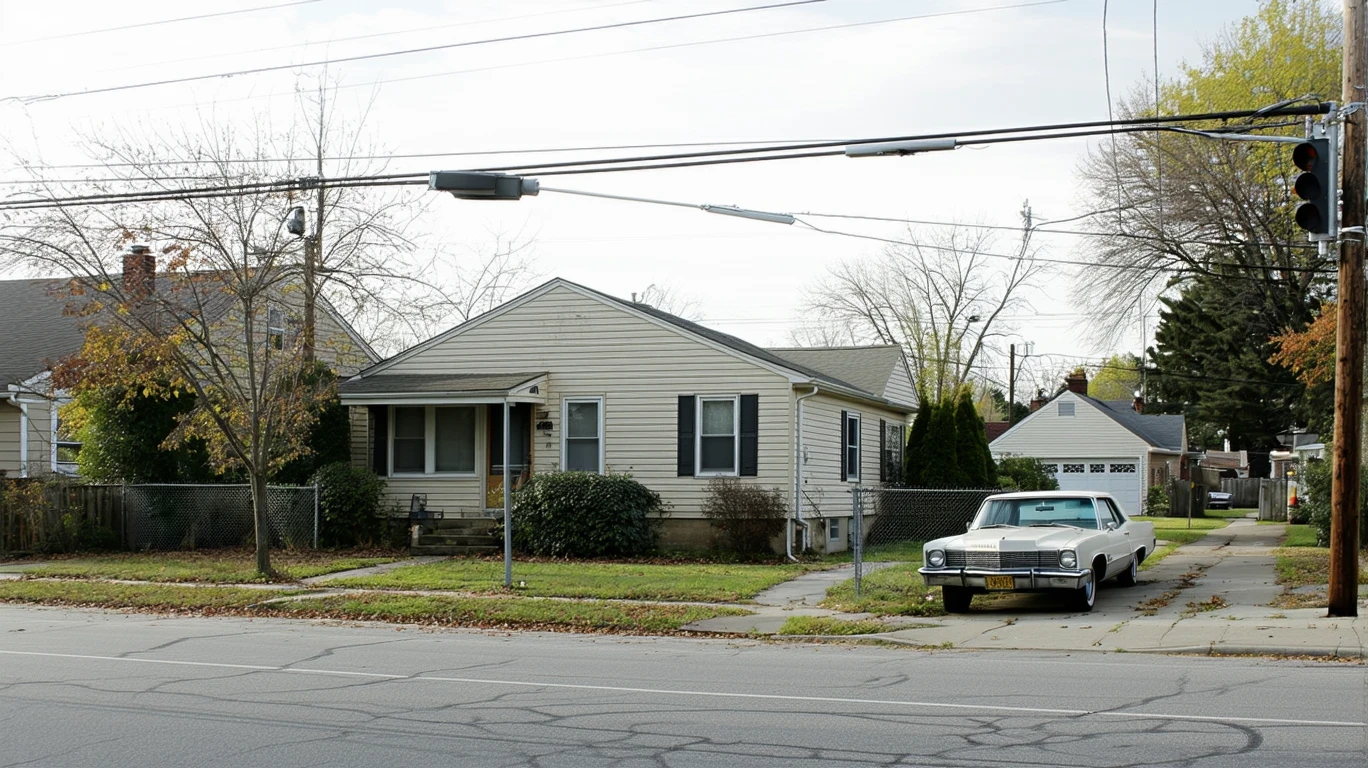
Tax and fee structures diverge significantly between Mint Hill and Rock Hill due to state-level differences between North Carolina and South Carolina. Property tax rates, sales tax structures, vehicle taxes, and local fee prevalence all vary, creating different ongoing obligations for homeowners, renters, and car owners.
North Carolina’s property tax system tends toward county-level assessment with municipal add-ons, meaning Mint Hill homeowners pay Mecklenburg County rates plus any town-specific levies. South Carolina’s property tax structure includes owner-occupied exemptions and assessment ratios that can lower effective rates for primary residences, though Rock Hill homeowners in York County still face annual obligations that scale with home value. The difference matters most for long-term owners: a household planning to stay five or more years must account for property tax exposure as part of total ownership cost, and Rock Hill’s lower home values reduce the base on which taxes are calculated, even if effective rates are similar.
Sales tax differences affect daily spending. North Carolina’s state sales tax combines with local add-ons, while South Carolina’s structure similarly layers state and county rates. The practical impact shows up in larger purchases—furniture, appliances, electronics—where a percentage-point difference compounds on higher-ticket items. Renters and homeowners alike feel this pressure, though homeowners furnishing a new house or replacing aging appliances experience it more acutely.
Vehicle-related fees and taxes also differ by state. North Carolina assesses annual vehicle property taxes based on value, while South Carolina structures vehicle fees differently, often with lower recurring costs for older cars. Households maintaining multiple vehicles—common in both cities given car-dependent infrastructure—must account for these annual obligations, which add to transportation costs beyond fuel and insurance.
HOA fees and special assessments appear in both cities, particularly in newer subdivisions and townhome communities. Mint Hill’s newer housing stock often includes HOA-managed amenities—pools, landscaping, common areas—with monthly or annual fees ranging from modest to substantial depending on the community. Rock Hill’s mix of older and newer housing means HOA exposure varies widely: some neighborhoods have no HOA, others impose fees comparable to Mint Hill’s. The predictability difference matters more than the amount—households budgeting for fixed housing costs need to know whether $200 or $400 per month in HOA fees will remain stable or increase annually.
Tax and fee takeaway: Mint Hill homeowners face North Carolina’s property and vehicle tax structures, with higher home values increasing the base for assessment. Rock Hill homeowners benefit from South Carolina’s owner-occupied property tax treatment and lower home values, reducing ongoing tax exposure. HOA fees vary by neighborhood in both cities, with Mint Hill’s newer stock more likely to include managed amenities and associated costs. Long-term owners and multi-vehicle households feel tax and fee differences more acutely than short-term renters.
Transportation & Commute Reality
Transportation costs and commute friction differ structurally between Mint Hill and Rock Hill, driven by average commute length, long-distance commute prevalence, and work-from-home rates. Mint Hill’s average commute of 28 minutes compares to Rock Hill’s 25 minutes, a difference that compounds over weekly and annual schedules. More significantly, 50.2% of Mint Hill commuters face long-distance travel, compared to 36.6% in Rock Hill—a gap that signals different employment geography and highway dependence.
Mint Hill’s higher long-commute percentage reflects its role as a bedroom community serving Charlotte’s eastern employment corridors. Households living in Mint Hill often work in Charlotte proper, University City, or other metro nodes, requiring daily highway travel during peak congestion. Rock Hill’s shorter average commute and lower long-commute percentage suggest more localized employment—jobs within Rock Hill itself, nearby Fort Mill, or southern Charlotte suburbs—reducing daily mileage and time spent in traffic.
Work-from-home rates also diverge: 4.9% in Mint Hill versus 7.2% in Rock Hill. The difference may reflect industry mix, employer policies, or housing suitability for remote work, but the practical impact is clear—Rock Hill households have slightly more flexibility to avoid commute costs entirely, while Mint Hill households are more likely to absorb daily transportation expenses regardless of fuel prices or traffic conditions.
Gas prices show minimal difference—$3.84/gal in Mint Hill versus $3.77/gal in Rock Hill—but even small per-gallon gaps compound for households driving 500+ miles per week. The larger cost driver is commute distance and frequency, not fuel price. A household in Mint Hill with two working adults, both commuting to Charlotte, faces higher cumulative mileage, more frequent fill-ups, faster vehicle depreciation, and greater exposure to traffic delays than a comparable household in Rock Hill with one or both adults working locally.
Transit availability differs as well. Mint Hill shows bus service presence, offering limited public transportation options for households willing to structure schedules around fixed routes. Rock Hill’s experiential signals do not indicate transit availability, suggesting greater car dependence for all trip types—work commutes, errands, medical appointments, and social activities. The absence of transit options in Rock Hill means every household member who needs independent mobility requires a vehicle, increasing insurance, maintenance, and registration costs.
Transportation takeaway: Mint Hill’s longer average commute, higher long-commute percentage, and lower work-from-home rate increase transportation pressure for dual-income households and those working in Charlotte. Rock Hill’s shorter commutes and higher remote-work rate reduce daily mileage and time costs, though the lack of transit options still requires car ownership. Households sensitive to commute time, schedule flexibility, and vehicle depreciation may find Rock Hill’s transportation structure less demanding, while those prioritizing proximity to Charlotte’s eastern job centers may accept Mint Hill’s higher commute friction.
Cost Structure Comparison
Housing pressure dominates the cost experience in both cities, but the nature of that pressure differs. Mint Hill imposes higher entry barriers and ongoing obligations for both renters and owners, favoring households with stable income and long-term plans. Rock Hill reduces housing costs across categories, creating more flexibility for first-time buyers, single-income households, and renters managing tight budgets. The trade-off isn’t just price—it’s predictability versus newness, maintenance risk versus move-in readiness.
Utilities introduce more volatility in Rock Hill due to higher electricity rates, particularly for households in older housing with less efficient cooling systems. Mint Hill’s lower electricity rate offsets some of that exposure, though higher natural gas costs shift pressure to households using gas heating. The difference matters most for larger homes, families with high usage, and renters who cannot control infrastructure efficiency. Seasonal exposure remains similar across both cities given regional climate, but rate structure and housing age determine whether bills feel stable or unpredictable month to month.
Transportation patterns matter more in Mint Hill, where longer commutes, higher long-distance travel prevalence, and lower work-from-home rates increase daily mileage and time costs. Rock Hill’s shorter average commute and higher remote-work rate reduce transportation pressure, though the absence of transit options still requires car ownership for all households. Families with multiple working adults or those prioritizing schedule flexibility may find Rock Hill’s commute structure less demanding, while households working in Charlotte’s eastern corridors may accept Mint Hill’s transportation friction in exchange for housing proximity.
Groceries and daily expenses behave similarly in both cities due to corridor-clustered access and car-dependent shopping patterns. The difference lies in time pressure: Mint Hill’s longer commutes leave less room for meal planning and home cooking, increasing convenience spending risk. Rock Hill’s shorter commutes create slightly more schedule flexibility, though the presence of a college-town restaurant scene can tempt discretionary spending. Households managing larger grocery volumes or tight schedules feel this pressure more acutely when time scarcity forces reliance on prepared foods instead of planned shopping.
Taxes and fees differ due to cross-state structures. Mint Hill homeowners face North Carolina’s property and vehicle tax systems, with higher home values increasing assessment bases. Rock Hill homeowners benefit from South Carolina’s owner-occupied property tax treatment and lower home values, reducing ongoing obligations. HOA fees vary by neighborhood in both cities, with Mint Hill’s newer stock more likely to include managed amenities and associated costs. Long-term owners and multi-vehicle households feel these differences more than short-term renters or single-car households.
The better choice depends on which costs dominate the household. Households sensitive to housing entry barriers and ongoing rent or mortgage obligations may prefer Rock Hill’s lower cost structure, accepting trade-offs in home age, commute distance, or maintenance risk. Households prioritizing newer housing, lower electricity rates, and proximity to Charlotte’s eastern employment corridors may find Mint Hill’s higher costs manageable if income and long-term plans support front-loaded expenses. For both cities, the decision is less about total cost and more about predictability, control, and which category of expense the household can absorb without losing flexibility elsewhere.
How the Same Income Feels in Mint Hill vs Rock Hill
Single Adult
Housing becomes non-negotiable first, and the difference between Mint Hill’s higher rent and Rock Hill’s lower baseline determines how much remains for transportation, groceries, and discretionary spending. In Mint Hill, a single adult faces longer commutes and higher housing costs, leaving less room for unexpected expenses or lifestyle flexibility. In Rock Hill, lower rent creates breathing room, but the lack of transit options still requires a car, and shorter commutes reduce time pressure without eliminating transportation costs. Flexibility exists in Rock Hill through lower fixed obligations; in Mint Hill, flexibility disappears faster under combined housing and commute pressure.
Dual-Income Couple
Housing entry costs and commute friction interact differently depending on where both adults work. In Mint Hill, higher home values and longer average commutes increase front-loaded expenses and daily mileage, but proximity to Charlotte’s eastern corridors may reduce commute time for one or both earners. In Rock Hill, lower housing costs and shorter average commutes reduce ongoing pressure, though working in Charlotte requires accepting longer drives or relocating jobs. Predictability favors Rock Hill when both incomes remain stable and local employment fits; Mint Hill fits when one or both adults prioritize access to Charlotte’s broader job market and can absorb higher housing and transportation costs without sacrificing savings or discretionary spending.
Family with Kids
Housing space, school access, and time budget become non-negotiable, and the cost structure shifts from entry barrier to ongoing logistics. In Mint Hill, higher housing costs buy newer construction and larger lots, but longer commutes and higher long-commute prevalence reduce time available for meal planning, errands, and family routines. In Rock Hill, lower housing costs free up budget for groceries and activities, but older housing stock may require more maintenance, and the lack of transit options means every trip requires a car. Families managing tight schedules feel Mint Hill’s commute friction more acutely; families prioritizing budget flexibility and lower fixed obligations may find Rock Hill’s structure more forgiving, even if home age and upkeep introduce different trade-offs.
Decision Matrix: Which City Fits Which Household?
| Decision Factor | If You’re Sensitive to This… | Mint Hill Tends to Fit When… | Rock Hill Tends to Fit When… |
|---|---|---|---|
| Housing entry + space needs | Down payment size, mortgage qualification, lease flexibility | You prioritize newer construction and can absorb higher entry costs without sacrificing emergency savings | You need lower entry barriers and more budget flexibility after housing obligations |
| Transportation dependence + commute friction | Daily mileage, time in traffic, schedule flexibility | You work in Charlotte’s eastern corridors and accept longer commutes for housing proximity | You work locally or remotely and prioritize shorter commutes and lower daily mileage |
| Utility variability + home size exposure | Seasonal bill swings, cooling costs, infrastructure efficiency | You value lower electricity rates and newer housing with better insulation and HVAC efficiency | You can manage higher electricity rates through smaller square footage or accept older housing with variable efficiency |
| Grocery strategy + convenience spending creep | Time for meal planning, reliance on takeout, bulk shopping access | You have schedule flexibility despite longer commutes and can plan grocery trips to avoid convenience spending | You benefit from shorter commutes that leave more time for home cooking and planned shopping |
| Fees + friction costs (HOA, services, upkeep) | Predictable monthly obligations, maintenance risk, special assessments | You prefer managed amenities and predictable HOA fees over variable maintenance on older housing | You accept maintenance risk and variable upkeep in exchange for lower property taxes and housing entry costs |
| Time budget (schedule flexibility, errands, logistics) | Commute time, errand consolidation, household logistics complexity | You can absorb longer commutes and higher long-commute prevalence without losing control of household routines | You prioritize shorter commutes and higher work-from-home rates to maintain schedule flexibility and reduce daily friction |
Lifestyle Fit: Regional Access and Day-to-Day Rhythms
Mint Hill and Rock Hill both offer suburban living within the Charlotte metro, but their day-to-day rhythms differ due to infrastructure, commute patterns, and local amenities. Mint Hill functions as a bedroom community with walkable pockets, corridor-clustered errands, and moderate green space access. Parks and water features provide outdoor options, and hospital presence ensures local healthcare access without requiring trips into Charlotte. The city’s pedestrian-to-road ratio exceeds high thresholds in some areas, meaning certain neighborhoods support walking for short trips, though most errands still require a car.
Rock Hill offers similar infrastructure—walkable pockets, corridor-clustered food and grocery access, moderate park density, and hospital presence—but lacks the bus service signal present in Mint Hill. The absence of transit options increases car dependence for all trip types, though shorter average commutes and higher work-from-home rates reduce daily transportation pressure. Winthrop University adds a college-town dimension, supporting a denser restaurant and café scene, cultural events, and seasonal activity tied to the academic calendar.
Both cities show mixed building heights and land-use diversity, meaning residential and commercial areas coexist rather than segregating into distinct zones. This structure supports some walkable errands in specific pockets but doesn’t eliminate car dependence for weekly grocery shopping, medical appointments, or social activities. Families seeking outdoor space will find moderate park access in both cities, though neither offers the dense, integrated green space typical of older urban neighborhoods or master-planned communities with extensive trail networks.
Lifestyle costs show up indirectly through infrastructure differences. Mint Hill’s longer commutes reduce time available for recreation, meal planning, and household logistics, increasing reliance on convenience spending and reducing opportunities for cost-saving behaviors like home cooking or DIY maintenance. Rock Hill’s shorter commutes and higher remote-work rate create more schedule flexibility, allowing households to consolidate errands, plan meals, and manage home upkeep without sacrificing work obligations or family time.
Quick fact: Mint Hill’s 50.2% long-commute rate signals significant highway dependence for households working in Charlotte, while Rock Hill’s 36.6% suggests more localized employment and shorter daily travel.
Quick fact: Both cities show hospital presence and pharmacy access, ensuring routine and urgent healthcare needs can be met locally without requiring trips to Charlotte’s medical centers.
Frequently Asked Questions
Is housing cheaper in Rock Hill or Mint Hill in 2026?
Rock Hill shows lower housing costs across ownership and rental categories, with a median home value of $232,500 compared to Mint Hill’s $357,100 and median rent of $1,193 per month versus Mint Hill’s $1,409 per month. The difference affects entry barriers, down payment requirements, and ongoing monthly obligations, favoring first-time buyers and renters in Rock Hill who prioritize lower fixed costs over newer construction or proximity to Charlotte’s eastern suburbs.
How do commute times compare between Mint Hill and Rock Hill?
Mint Hill’s average commute reaches 28 minutes, with 50.2% of commuters facing long-distance travel, while Rock Hill averages 25 minutes with 36.6% in the long-commute category. The difference reflects employment geography: Mint Hill serves as a bedroom community for Charlotte’s eastern corridors, while Rock Hill supports more localized employment. Households working in Charlotte may accept Mint Hill’s longer commutes for housing proximity, while those working locally or remotely may prefer Rock Hill’s shorter average travel time.
Which city has lower utility costs, Mint Hill or Rock Hill?
Mint Hill offers lower electricity rates at 13.68¢/kWh compared to Rock Hill’s 15.41¢/kWh, but higher natural gas prices at $17.89/MCF versus Rock Hill’s $15.91/MCF. The difference matters most for households with high cooling loads or gas heating, and housing age affects exposure—newer construction in Mint Hill tends toward better insulation, while older housing in Rock Hill may increase electricity usage. Seasonal volatility remains similar across both cities given regional climate, but rate structure and home efficiency determine which households experience more predictable bills.
Do Mint Hill and Rock Hill have similar access to groceries and errands in 2026?
Both cities show corridor-clustered food and grocery density, meaning stores concentrate along major roads rather than distributing evenly across neighborhoods. Car-dependent shopping is the norm in both places, though Mint Hill’s longer commutes reduce time available for meal planning and increase convenience spending risk. Rock Hill’s shorter commutes create slightly more schedule flexibility for home cooking and planned grocery trips, though the presence of a college-town restaurant scene can tempt discretionary spending. Access patterns are similar; time pressure differs.