
“It’s quiet, affordable, and you can actually get to LA or Riverside without losing your mind — but you’re definitely driving everywhere.”
That’s the Colton experience in a nutshell: a low-rise, car-friendly suburban city in the Inland Empire that offers breathing room, rail access, and a slower pace — without pretending to be something it’s not. For people who want space, relative affordability, and a straightforward commute to larger job centers, Colton tends to deliver. For those hoping for walkable neighborhoods, abundant nightlife, or a thriving downtown scene, it often feels like a compromise.
Understanding whether Colton feels like home depends less on whether it’s “good” or “bad” and more on whether its tradeoffs align with what you actually need day-to-day.
What It Feels Like to Live Here
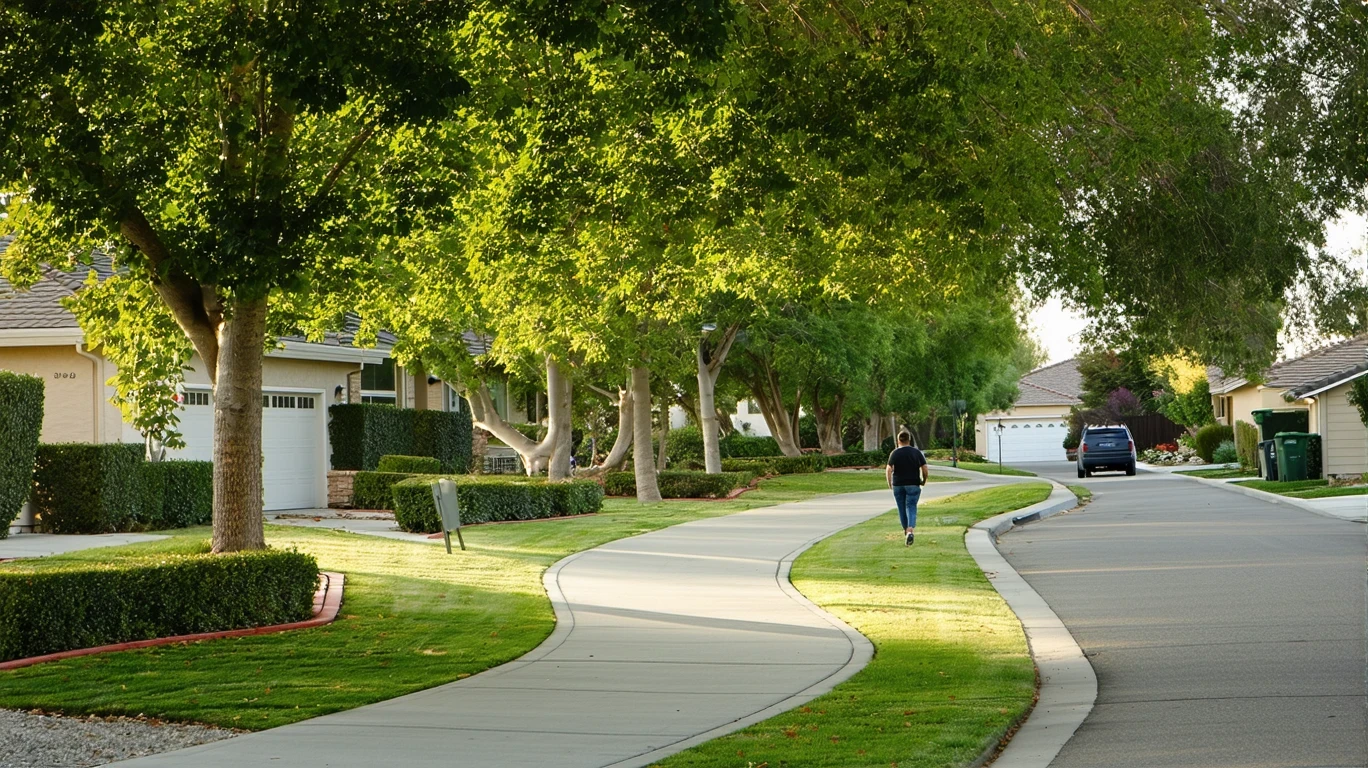
Colton sits in a practical middle ground: close enough to San Bernardino and Riverside to benefit from their infrastructure, far enough to avoid their density and noise. The city is low-rise and car-oriented, with grocery stores and services clustered along main corridors rather than woven into every neighborhood. Rail service is present, which matters for commuters, but most daily errands still require a vehicle.
People who feel at home here tend to value predictability over novelty. They’re okay with driving to the store, they appreciate having a yard, and they don’t mind that entertainment options are limited locally. Colton doesn’t try to be a destination — it’s a place where people live, work nearby or commute out, and enjoy a quieter suburban rhythm.
People who feel restless here often wanted more texture: walkable blocks, neighborhood cafes, spontaneous evening plans. Colton’s structure rewards planning and car ownership, not improvisation. If your ideal Saturday involves strolling to a farmers market or grabbing dinner on foot, you’ll feel the friction quickly.
The Pulse of Public Conversation
On platforms like Reddit, Facebook groups, and X, Colton residents tend to discuss the city in practical, grounded terms. Conversations often center on commute strategies, where to shop, and how the city compares to pricier Inland Empire neighbors. There’s a protective tone when outsiders dismiss the area, but also a realistic acknowledgment of what’s missing.
Common themes include:
- Affordability as a primary draw: “We couldn’t afford Riverside, and honestly Colton gets us close enough without the rent spike.”
- Rail access appreciated but not transformative: “The train helps, but you still need a car for basically everything else.”
- Quiet suburban comfort: “It’s not exciting, but that’s kind of the point — we wanted space and calm.”
There’s less conversation about nightlife, arts, or walkability, and more about logistics: traffic patterns, school quality, and whether new development will change the character of the city. The tone is pragmatic, not passionate.
How Local Coverage Frames the City
Local news and community outlets tend to frame Colton through the lens of growth, infrastructure, and regional identity. Coverage often reflects the tension between maintaining a small-town feel and accommodating new residents drawn by relative affordability.
Recurring topic buckets include:
- “City Weighs New Housing as Inland Empire Grows”
- “Commuters Rely on Rail Access Amid Regional Traffic”
- “Residents Debate What Amenities Should Come Next”
- “Balancing Suburban Quiet with Economic Development”
- “Community Celebrates Local Events, Seeks More Variety”
The framing is rarely dramatic. Colton doesn’t dominate regional headlines, and that’s often seen as a feature, not a bug. People who live here tend to prefer being overlooked over being the center of controversy.
What Reviews and Public Perception Reveal
On Google, Yelp, and neighborhood platforms, Colton’s public perception splits along expectation lines. People who wanted suburban affordability and car-friendly convenience tend to feel satisfied. People who expected urban texture, walkable errands, or abundant local entertainment tend to feel underwhelmed.
Positive sentiment often highlights:
- Relative affordability compared to nearby cities
- Access to rail for commuters
- Quiet streets and family-friendly pockets
- Proximity to larger cities without their intensity
Disappointment often centers on:
- Limited walkability outside a few areas
- Grocery and service options clustered on corridors, not neighborhood-level
- Modest nightlife and cultural amenities
- Perception of being “in between” rather than a destination
Neighborhood variation exists but is often described in broad terms: newer planned areas feel more uniform and car-dependent, while older pockets have slightly more pedestrian infrastructure. Neither offers the dense, walkable texture some newcomers hope for.
How Colton Compares to Nearby Cities
| Dimension | Colton | San Bernardino | Riverside |
|---|---|---|---|
| Overall Vibe | Quiet, car-oriented, practical | Urban, denser, more varied | College-town energy, more walkable pockets |
| Walkability | Pockets exist, mostly car-dependent | More pedestrian infrastructure | Stronger walkable districts |
| Affordability | More accessible entry point | Comparable, varies by neighborhood | Higher pressure, especially near downtown |
| Amenities | Modest, corridor-clustered | More variety, urban services | Broader dining, arts, nightlife |
| Commute Access | Rail present, car still primary | Regional hub, more transit | Strong transit, more commute options |
Colton works well for households who want Inland Empire proximity without Riverside’s cost or San Bernardino’s density. If you’re commuting to one of those cities for work and want a quieter home base, Colton often feels like a smart compromise. If you want to live where the action is, you’ll likely prefer Riverside’s walkable districts or San Bernardino’s urban variety.
The tradeoff is straightforward: Colton offers space and affordability, but you’re trading texture and spontaneity for it. Whether that feels like relief or limitation depends entirely on what you’re leaving behind and what you’re hoping to gain.
What Locals Are Saying
“We moved here from LA and honestly, it’s been a relief. Yeah, we drive more, but we have a yard and our rent didn’t double.”
— Young family, moved in 2022
“The train to Riverside is clutch for work. I don’t love that I still need my car for groceries, but it’s manageable.”
— Commuter, renting near transit
“It’s quiet, maybe too quiet. I thought I wanted suburban life, but I miss being able to walk to dinner or a coffee shop.”
— Remote worker, moved from San Diego
“For the price, it’s solid. You’re not getting walkable neighborhoods or nightlife, but if that’s not your priority, it works.”
— Long-time resident, owns home
“I like that it’s low-key. We’re close enough to everything without being in the middle of it.”
— Retiree, downsized from larger home
“The parks are fine, schools are okay, and we’re not drowning in housing pressure like our friends in Riverside. It’s not exciting, but it’s stable.”
— Parent of two, bought recently
“If you’re expecting a downtown vibe or walkable errands, you’ll be disappointed. But if you want space and access to bigger cities, it’s a good spot.”
— Newcomer, renting while exploring the area
Does Colton Feel Like a Good Fit?
Colton doesn’t try to be all things to all people. It’s a car-oriented, low-rise suburban city with rail access, modest amenities, and a practical location in the Inland Empire. It works well for families and commuters who prioritize affordability, space, and proximity to larger job centers over walkability and urban texture.
This tends to work for:
- Households seeking suburban comfort without Riverside-level costs
- Commuters who value rail access but accept car dependency for daily errands
- People who prefer quiet streets and predictable routines
- Families willing to trade neighborhood-level amenities for more space
This tends to frustrate:
- Walkability advocates expecting dense, pedestrian-friendly blocks
- People seeking abundant nightlife, dining variety, or cultural events locally
- Households hoping for spontaneous, car-free errands
If you’re trying to decide whether Colton aligns with your day-to-day life, consider exploring where your money actually goes each month and what quality of life factors matter most to your household. The city’s emotional fit depends less on whether it’s “good” and more on whether its structure matches how you actually want to live.
How this article was built: In addition to public economic data, this article incorporates location-based experiential signals derived from anonymized geographic patterns—such as access density, walkability, and land-use mix—to reflect how day-to-day living actually feels in Colton, CA.
The perspectives shown reflect commonly expressed local sentiment and recurring themes in public discussion, rather than individual accounts.