
“We moved here for the schools and the parks, and those delivered. But honestly? You drive everywhere. Everywhere. If you’re cool with that, it’s great. If you thought you’d walk to coffee or dinner, you’ll be disappointed.”
That tension — between what Eastvale offers and what it asks in return — defines much of the emotional experience here. This is a young, planned community in Riverside County that attracts families with solid incomes, a desire for newer housing, and a willingness to trade walkable texture for space, safety, and excellent parks. But it’s not a place that hides its tradeoffs. If you need urban variety, transit access, or the ability to run daily errands on foot, the friction shows up fast.
Understanding whether Eastvale feels like a good fit means understanding what you’re optimizing for — and what you’re willing to let go.
What It Actually Feels Like to Live Here
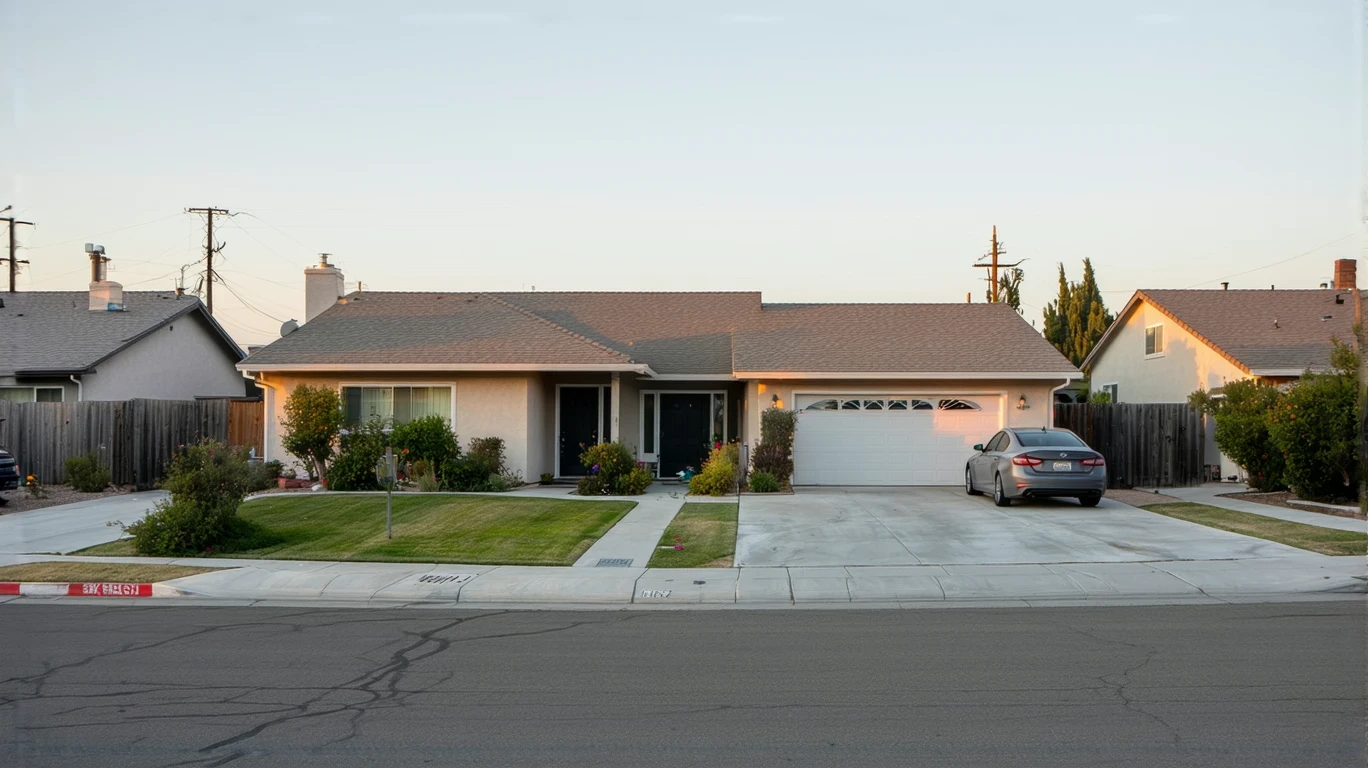
Eastvale’s vibe is shaped by its infrastructure. Parks and playgrounds are genuinely integrated into daily life here — density exceeds high thresholds, and water features add texture to the outdoor environment. Families with young kids often describe this as one of the city’s strongest assets: you don’t have to plan elaborate outings to give children access to green space. It’s woven into the neighborhood fabric.
But the pedestrian-to-road ratio, while high in pockets, doesn’t translate into walkable errands for most households. Grocery density is strong, but food and dining options cluster along corridors rather than distributing evenly. That means even short trips — picking up milk, grabbing takeout, meeting a friend — default to driving. Bus service exists, but without rail and with limited route density, transit isn’t a viable primary mode for most residents.
The result is a lifestyle that rewards those who already expect to drive and penalizes those who don’t. If your mental model of “suburban comfort” includes being able to walk your dog to a café or bike your kid to school, Eastvale’s land-use mix and mobility texture may feel more limiting than liberating.
The Conversation Online
Public discussion about Eastvale tends to split along predictable lines: those who feel the city delivers exactly what they wanted, and those who feel caught between aspiration and reality.
Common themes in local social media and community forums include pride in neighborhood upkeep, frustration with commute length, affection for the parks system, and recurring debate about what “family-friendly” actually means when school density lags behind playground density. There’s also a steady undercurrent of protectiveness — longtime residents pushing back against complaints from newcomers who expected something closer to urban Orange County.
“It’s clean, it’s safe, the parks are amazing. But if you want nightlife or walkability, you’re in the wrong zip code.”
“We love it here, but I won’t pretend the drive to everything doesn’t get old. You plan your errands like a military operation.”
“People move here and then complain it’s not Irvine. It’s not supposed to be. That’s the whole point.”
The tone isn’t angry — it’s more like a collective acknowledgment of the deal that was made. You get space, newness, and parks. You give up spontaneity, walkable texture, and proximity to urban amenities.
How Local Coverage Frames the City
Local news and community coverage tends to focus on growth, identity, and infrastructure catch-up. Headlines and story themes often circle around:
- “New Retail and Dining Options Arrive Along Major Corridors”
- “Residents Debate Whether Growth Is Outpacing Services”
- “Community Events Draw Families to Parks and Outdoor Spaces”
- “Commute Times Remain a Sticking Point for Inland Empire Workers”
- “What Makes a Suburb Feel Complete? Eastvale Residents Weigh In”
The framing is rarely critical, but it’s not boosterish either. There’s a recurring acknowledgment that Eastvale is still defining itself — figuring out what kind of place it wants to be as it matures beyond its master-planned origins.
What Reviews and Public Perception Reveal
On platforms like Google Reviews, Yelp, and Nextdoor-style community boards, Eastvale’s public perception breaks down into a few consistent patterns:
What tends to delight: Cleanliness, park quality, perceived safety, newer housing stock, family-oriented events, and a general sense of order. People who wanted a low-drama, well-maintained suburban environment tend to feel they got what they paid for.
What tends to disappoint: Limited dining variety, car dependency for every errand, longer-than-expected commutes, and a sense that the city lacks a “there” there — no downtown, no central gathering place, no walkable heart. Renters paying nearly $3,000 per month sometimes express frustration that the amenity set doesn’t feel proportional to the cost.
Neighborhood variation: Newer planned areas tend to feel more polished and park-rich, while older pockets may have slightly more established landscaping but fewer recent upgrades. The differences are subtle — this isn’t a city with stark divides.
“Great place to raise kids if you don’t mind driving to everything. Parks are top-notch.”
“It’s fine, but it feels like a bedroom community. You’re always leaving to do anything interesting.”
“We wanted safe and clean, and that’s what we got. But the commute is brutal, and there’s not much to do locally after 8 p.m.”
How Eastvale Compares to Nearby Cities
| Dimension | Eastvale | Corona | Riverside |
|---|---|---|---|
| Overall Vibe | Newer, planned, family-focused, car-dependent | More established, slightly more walkable pockets, mixed-age housing | Urban texture, more dining and nightlife, older infrastructure |
| Parks & Outdoor Access | Excellent density, well-integrated, water features | Good access, less uniformly distributed | Solid access, more urban park character |
| Errands & Daily Mobility | Corridor-clustered, requires driving | Slightly more walkable in older areas | More walkable downtown core, better transit |
| Housing Character | Newer builds, planned developments, higher price floor | Mix of older and newer, more variety | Older stock, more rental options, lower entry cost |
| Commute Tradeoff | Longer for most job centers, limited transit | Moderate, some freeway access | Shorter for Inland Empire jobs, better bus network |
If you prioritize newness, parks, and a family-first environment and you’re willing to drive for nearly everything, Eastvale tends to feel like the right call. If you want more walkable texture, dining variety, or shorter commutes, Corona offers a middle ground. If you need urban amenities, nightlife, and transit viability, Riverside delivers more of that — but with older housing stock and a different neighborhood feel.
None of these is objectively better. The question is which set of tradeoffs aligns with how you actually live.
Voices from the Ground
“We have two kids under five, and the parks here are unreal. We’re outside every day. Yeah, we drive to Target, but that’s not a dealbreaker for us.”
— Young family, moved from Los Angeles County
“I work remotely, so the commute doesn’t hit me. But my partner drives to Orange County, and it’s rough. We love the house and the neighborhood, but that drive is the price we pay.”
— Remote worker, household with one long commuter
“It’s quiet, it’s clean, and I feel safe letting my kids bike around the neighborhood. But if you want to go out to dinner somewhere interesting, you’re driving 20 minutes minimum.”
— Parent, longtime resident
“I thought I’d adjust to the car dependency, but I haven’t. I miss being able to walk to a coffee shop or meet friends without coordinating parking.”
— Renter, moved from a more urban area
“For retirees who want peace and parks but still want to drive, it works. For retirees who are done driving everywhere, it’s probably not the right fit.”
— Older resident, considering long-term aging-in-place
“The schools were the draw, but honestly, the park system is what keeps us here. We’re at the splash pad or the trails constantly.”
— Family with school-age children
“It’s a great place if you know what you’re getting. If you expect it to be something it’s not, you’ll be frustrated fast.”
— Longtime local, active in community groups
Does Eastvale Feel Like a Good Fit?
Eastvale works best for households that already expect suburban car dependency and are optimizing for parks, safety, newer housing, and family infrastructure. If your daily rhythm assumes driving to errands, and you value outdoor access more than walkable spontaneity, the city’s structure supports that life well.
It tends to frustrate people who moved expecting more walkable texture, transit viability, or urban variety. The infrastructure is honest about what it offers — but if your mental model of “suburban comfort” includes being able to walk to dinner or take a bus to work, the gaps show up quickly.
The city isn’t trying to be something it’s not. The question is whether what it is aligns with how you want to live. If you’re still weighing that decision, it may help to explore where money goes each month, what quality of life factors matter most to your household, and how housing tradeoffs play out in practice.
How this article was built: In addition to public economic data, this article incorporates location-based experiential signals derived from anonymized geographic patterns—such as access density, walkability, and land-use mix—to reflect how day-to-day living actually feels in Eastvale, CA.
The perspectives shown reflect commonly expressed local sentiment and recurring themes in public discussion, rather than individual accounts.