
Eastvale is considered expensive in 2026, with median home values at $676,500 and median rent reaching $2,965 per month. The value proposition hinges on housing entry cost versus long-term ownership stability, with transportation dependence and utility seasonality adding secondary pressure rather than day-to-day price swings.
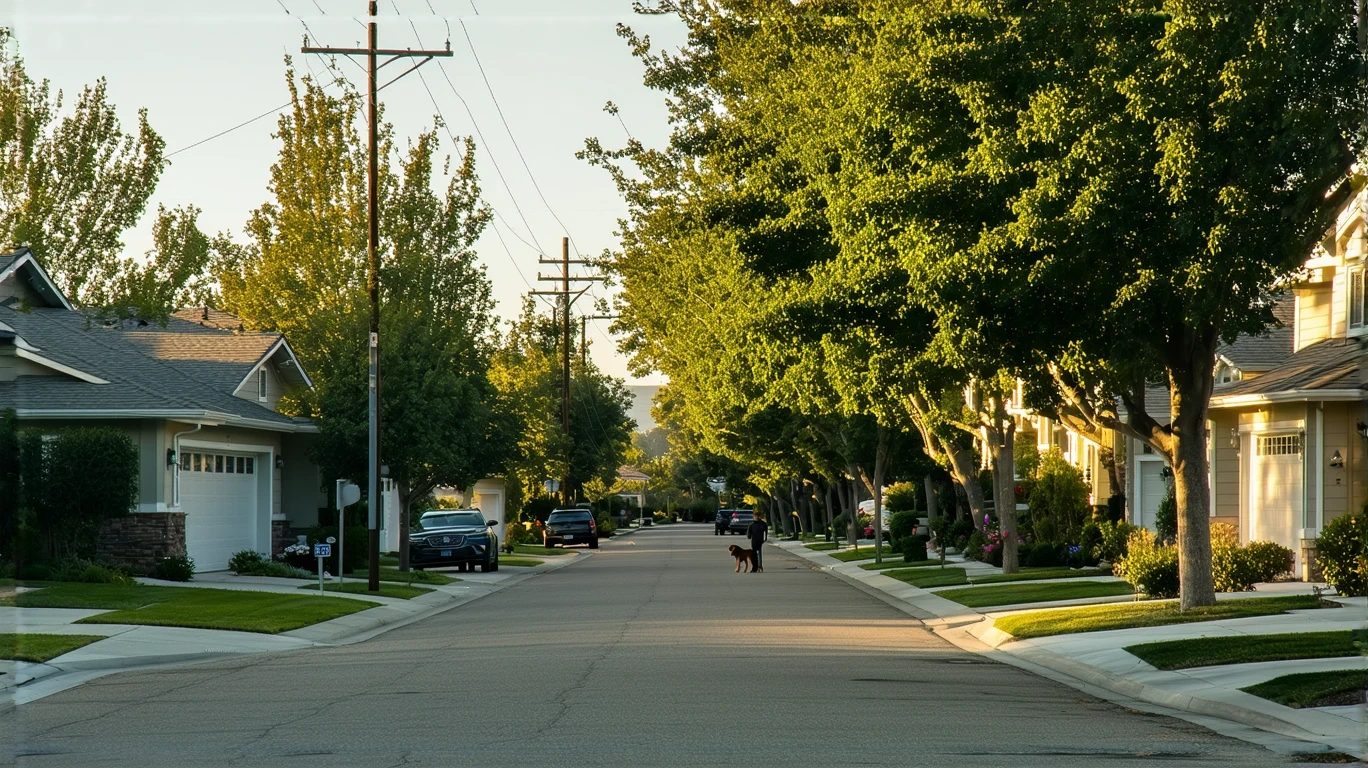
Overall Cost of Living Snapshot
Eastvale’s cost structure is dominated by housing, both for buyers and renters. The median home value of $676,500 positions the city firmly in the expensive tier for California’s Inland Empire, while rent at $2,965 per month reflects similar upward pressure. What distinguishes Eastvale from other high-cost markets is the combination of elevated housing entry costs and persistent car dependence, even in areas with walkable pockets and strong park access.
The city’s median household income of $151,615 per year signals that Eastvale attracts higher-earning families, but income alone doesn’t eliminate cost pressure—it shifts the question from “Can I afford to live here?” to “What tradeoffs come with living here?” Utility costs add seasonal volatility, particularly during extended cooling months when electricity rates of 31.91¢/kWh amplify air conditioning expenses. Transportation costs layer on top, driven by commute distance and vehicle ownership rather than fuel price alone.
Surprises tend to come not from grocery prices or day-to-day essentials, but from the cumulative weight of fixed costs: mortgage or rent, vehicle payments, insurance, and summer utility spikes. The city’s cost profile rewards those who can absorb housing entry costs and minimize transportation exposure, while penalizing households stretching across multiple high-cost categories simultaneously.
Driver verdict: Housing dominates, transportation amplifies, and utilities swing seasonally. The biggest surprises come from underestimating vehicle dependence and summer cooling costs, not from grocery aisles or gas pumps.
Housing Costs (Primary Driver)
Housing is the single largest cost anchor in Eastvale, and it shapes every other financial decision. At $676,500, the median home value requires substantial down payment reserves and monthly mortgage capacity, even for households earning well above the regional median. For renters, $2,965 per month represents a significant recurring obligation, particularly for families needing multi-bedroom units.
The choice between renting and owning in Eastvale isn’t purely financial—it’s structural. Renters face high monthly outlays but avoid maintenance, property tax exposure, and long-term market risk. Owners absorb upfront costs and ongoing expenses (insurance, taxes, repairs) but gain stability and insulation from rent increases. In a city where housing turnover is relatively low and inventory tight, ownership often functions as a hedge against future cost escalation, while renting offers flexibility at the cost of predictability.
Eastvale is neither a pure rental market nor a pure ownership market—it’s a transitional city where households often rent briefly before buying, or buy and stay long-term. The housing stock reflects this: a mix of single-family homes and some multi-family units, with land use that supports both residential density and commercial corridors. For newcomers, the question isn’t whether Eastvale is affordable in absolute terms—it’s whether the housing entry cost aligns with long-term plans and income trajectory.
| Housing Type | Cost Anchor | What That Buys You |
|---|---|---|
| Median Home Value | $676,500 | Ownership stability, equity exposure, long-term cost control |
| Median Gross Rent | $2,965/month | Flexibility, no maintenance burden, shorter commitment horizon |
Utilities & Energy Risk
Utility costs in Eastvale are shaped more by climate exposure than by rate structures. Electricity rates of 31.91¢/kWh sit well above national averages, but the real cost driver is usage intensity during Eastvale’s extended cooling season. Triple-digit summer heat pushes air conditioning into continuous operation for weeks or months at a time, and even modest homes can see significant seasonal bill increases.
Natural gas, priced at $21.89 per MCF, plays a smaller role in most households. Heating demand is minimal given the region’s mild winters, so gas costs remain a minor line item except in homes with gas water heaters, dryers, or cooking appliances. The asymmetry is notable: summer electricity bills can spike dramatically, while winter heating costs barely register.
The risk classification for utilities in Eastvale is moderate to major, depending on household cooling habits, home insulation quality, and tolerance for indoor temperature variation. Homes with older HVAC systems, poor insulation, or west-facing exposure face the highest volatility. Renters in units without efficient cooling systems absorb this risk with limited control, while homeowners can mitigate exposure through efficiency upgrades, though upfront costs are substantial.
Utility cost exposure in Eastvale isn’t a surprise once you understand the climate—it’s a predictable seasonal rhythm that households must plan for, not a hidden cost that emerges unexpectedly.
Groceries & Daily Costs
Grocery costs in Eastvale reflect California’s broader price environment but don’t add unusual pressure relative to other cost categories. Derived estimates suggest bread around $1.84 per pound, chicken at $2.04 per pound, and milk near $4.10 per half-gallon—all consistent with regional pricing and not outliers within the state. (Derived estimate based on national baseline adjusted by regional price parity; not an observed local price.)
What matters more than individual item prices is access and convenience. Eastvale benefits from high grocery density, meaning households can reach multiple options without long drives or significant time investment. This reduces the hidden costs of food shopping—fuel, time, and trip frequency—and allows for price comparison across stores. Corridor-clustered food access means that while not every neighborhood has a supermarket on the corner, most residents can reach grocery options within a short drive or, in some areas, on foot.
For most households, groceries represent a manageable recurring expense rather than a cost shock. The pressure comes from volume and household size, not from price per item. Families with children or specific dietary needs will see higher totals, but the per-unit costs don’t deviate sharply from state norms.
Transportation Reality
Transportation in Eastvale is a recurring cost exposure, not a one-time expense. The city’s structure—walkable pockets, bus-only transit, and medium bike infrastructure—means that while some errands can be completed on foot or by bike, most households depend on personal vehicles for commuting, school runs, and weekly logistics.
Gas prices at $4.61 per gallon are elevated but not the primary cost driver. The real expense comes from vehicle ownership itself: payments, insurance, registration, maintenance, and depreciation. Households with long commutes or multiple vehicles face compounding costs, as each additional car adds fixed monthly obligations on top of fuel. Even in neighborhoods with pedestrian infrastructure, the regional job market and school locations often require car access, making vehicle ownership functionally non-negotiable for most families.
Commute norms vary, but Eastvale’s position within the Inland Empire means many residents travel to jobs in neighboring cities, adding both time and distance to daily routines. The transportation tradeoff isn’t between driving and not driving—it’s between short commutes with lower vehicle wear and long commutes with higher cumulative costs. Households that can minimize commute distance or consolidate trips gain significant cost relief, while those juggling multiple daily routes face persistent pressure.
Transportation in Eastvale functions as a structural cost layer, not a variable expense you can easily reduce. It’s baked into the geography and the job market, and it shapes household budgets as much as rent or mortgage payments do.
Cost Exposure Profiles
Cost exposure in Eastvale varies sharply depending on housing tenure, commute patterns, and vehicle count. The city’s structure creates distinct exposure profiles, and understanding where you fall determines which costs dominate your financial landscape.
Low-exposure households typically own homes with significant equity or paid-off mortgages, work locally or remotely, and operate a single efficient vehicle. For these households, the primary costs are property taxes, insurance, and seasonal utility swings—all predictable and manageable. Grocery and daily expenses remain moderate, and transportation costs stay contained. The financial profile is stable, with few surprises and limited volatility.
High-exposure households face a different reality. New buyers stretching to meet the $676,500 median home value carry large mortgage payments, often alongside PMI and elevated property taxes. Add a long commute requiring a second vehicle, and fixed costs multiply quickly. Summer utility spikes hit harder in newer or less-efficient homes, and the cumulative weight of mortgage, vehicle payments, insurance, and cooling costs leaves little room for error. Renters paying $2,965 per month face similar pressure, particularly if they’re also managing vehicle loans and commute-related expenses.
The distinction isn’t about income—it’s about cost structure. A household earning $150,000 per year can experience high exposure if they’re carrying a new mortgage, two car payments, and a 50-mile daily commute. Conversely, a household earning less but owning outright and working locally may face minimal cost pressure. Eastvale’s cost profile rewards those who can minimize overlapping fixed obligations, while penalizing those juggling multiple high-cost categories simultaneously.
Frequently Asked Questions
Is Eastvale more affordable than nearby cities in the Inland Empire in 2026? Eastvale’s median home value of $676,500 and rent of $2,965 per month place it in the higher tier within the Inland Empire, though specific comparisons depend on which nearby cities you’re evaluating. The cost structure here reflects newer housing stock and higher median incomes rather than lower price pressure.
What does a typical cost profile look like in Eastvale? Housing dominates, followed by transportation (vehicle ownership and commuting) and seasonal utility costs driven by extended cooling needs. Groceries and day-to-day expenses remain moderate and don’t add unusual pressure relative to other California markets.
Do utilities cost more in Eastvale than in nearby areas? Electricity rates of 31.91¢/kWh are elevated, and the extended cooling season amplifies usage, making summer utility bills a significant seasonal expense. Natural gas costs remain minor due to minimal heating demand.
What costs tend to surprise newcomers in Eastvale? The three biggest surprises are summer utility spikes during prolonged heat, the necessity of vehicle ownership even in walkable pockets, and the cumulative weight of overlapping fixed costs (mortgage or rent, vehicle payments, insurance) rather than day-to-day price increases.
Are property taxes higher in Eastvale than in neighboring cities? Property tax rates in California are governed by Proposition 13, so the rate itself is consistent statewide at roughly 1% of assessed value plus local add-ons. The higher median home value in Eastvale means higher absolute tax bills, even if the rate structure is similar to nearby areas.
Is Eastvale a good place for renters or is it better suited for homeowners? Eastvale functions as a transitional market where many households rent briefly before buying. Renters face high monthly costs without equity accumulation, while owners absorb upfront expenses but gain long-term stability. Neither path is inherently better—it depends on timeline, savings, and risk tolerance.
How much does car dependence add to the cost of living in Eastvale? Vehicle ownership—payments, insurance, maintenance, and fuel—adds substantial recurring costs, particularly for households with long commutes or multiple cars. Even with walkable pockets and bus service, most households require at least one vehicle for work, school, and errands.
Does Eastvale’s higher median income make it more affordable than the numbers suggest? Higher income doesn’t eliminate cost pressure—it shifts the question from whether you can afford to live here to what tradeoffs you’re willing to accept. Housing, transportation, and utilities still consume a significant share of earnings, even for households well above the median.
How this article was built: In addition to public economic data, this article incorporates location-based experiential signals derived from anonymized geographic patterns—such as access density, walkability, and land-use mix—to reflect how day-to-day living actually feels in Eastvale, CA.
—