
How Grocery Costs Feel in Corona
Corona sits at the national price baseline with a regional price parity index of 100, meaning grocery costs here track close to the U.S. average rather than carrying the elevated premiums common along the California coast. For households earning Corona’s median income of $103,727 per year, baseline grocery pressure feels manageable for couples and singles, but families with children notice the squeeze more acutely. The difference isn’t that prices are unusually high—it’s that household size amplifies every trip to the store, and the gap between discount and premium tier shopping widens quickly when you’re filling multiple carts per month.
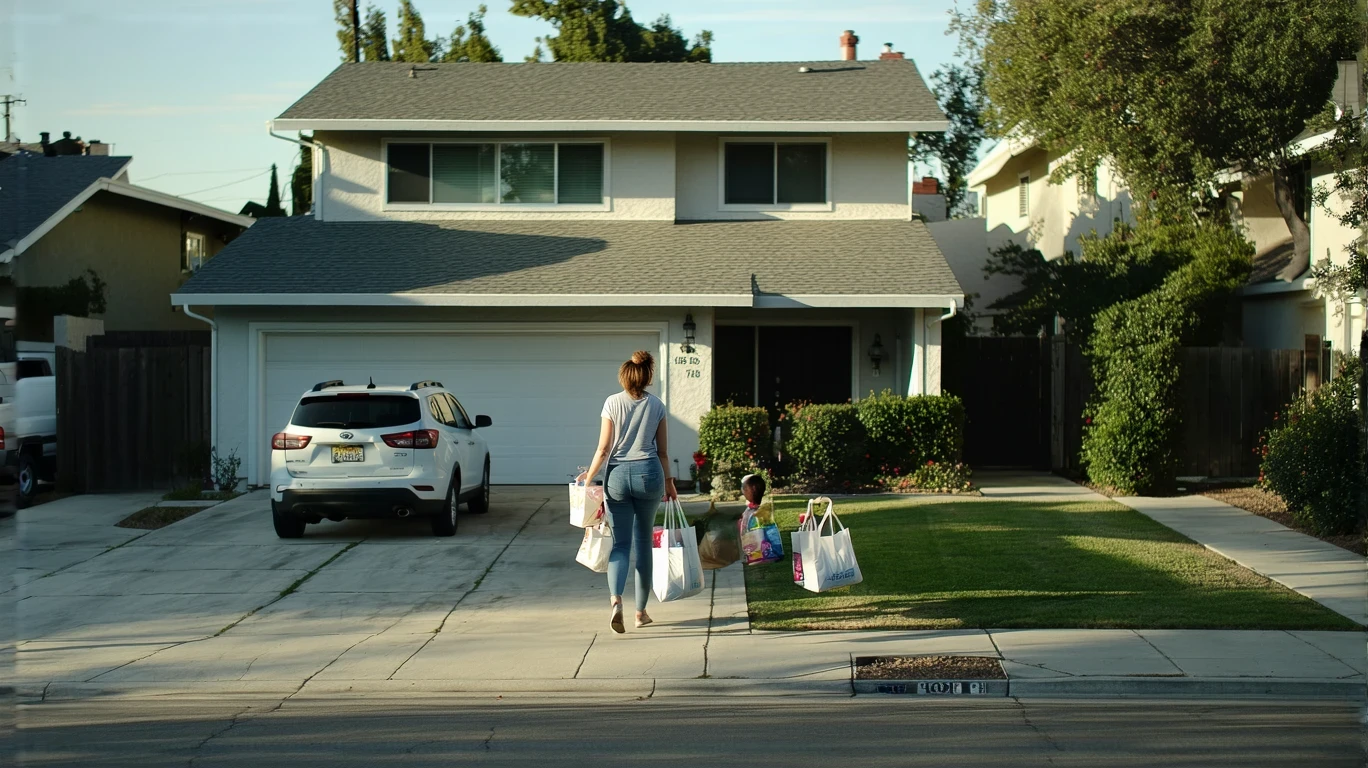
Grocery access in Corona follows a corridor-clustered pattern: grocery density exceeds regional thresholds, meaning stores are plentiful, but they concentrate along major commercial corridors rather than distributing evenly across every neighborhood. This creates a practical dynamic—most households drive to shop, and the choice of store tier (discount, mid-tier, or premium) becomes a deliberate cost-control lever rather than a convenience decision. Walkable grocery access exists in pockets, particularly in areas with higher pedestrian-to-road infrastructure ratios, but for the majority of Corona residents, grocery shopping is a planned trip, not an errand you handle on foot between other tasks.
Singles and couples without children experience grocery costs as a steady, predictable line item—one that responds well to store choice and habit but rarely dominates the budget. Families, on the other hand, feel grocery pressure as a recurring, high-frequency expense that scales with every additional person at the table. When you’re shopping for four or five instead of two, the difference between discount and premium store pricing stops being abstract and starts showing up as a meaningful monthly gap.
Grocery Price Signals (Illustrative)
These prices illustrate how staple items tend to compare locally—not a full shopping list. They reflect the regional price baseline and help position Corona relative to national norms, but they don’t represent a specific store, week, or checkout total.
| Item | Price |
|---|---|
| Bread (per pound) | $1.83 |
| Cheese (per pound) | $4.73 |
| Chicken (per pound) | $2.02 |
| Eggs (per dozen) | $2.71 |
| Ground beef (per pound) | $6.69 |
| Milk (per half-gallon) | $4.05 |
| Rice (per pound) | $1.08 |
Staples like rice, bread, and chicken sit near national averages, while proteins like ground beef and dairy items like cheese reflect the moderate cost structure typical of inland Southern California. Eggs and milk show seasonal sensitivity but remain within expected ranges for the region. The takeaway isn’t that any single item is unusually expensive—it’s that these baseline prices compound quickly when household size increases, and the choice of where you shop introduces meaningful variation even at the item level.
Store Choice & Price Sensitivity
Grocery price pressure in Corona varies significantly by store tier, and understanding that variation matters more than fixating on a single “average” price. Discount tier stores—including chains like Aldi, WinCo, and regional budget grocers—deliver the lowest per-item costs and work especially well for families buying in volume. These stores strip out service layers and focus on high-turnover staples, which translates to tighter margins and lower shelf prices. For households managing grocery costs on a fixed budget, discount tier shopping isn’t just a preference—it’s a structural cost-control strategy.
Mid-tier stores—such as Vons, Ralphs, and Stater Bros.—offer broader selection, more frequent promotions, and a shopping experience that balances cost and convenience. These stores serve as the default for many Corona households, particularly those who value one-stop shopping and aren’t willing to drive across town to save a few dollars per trip. Mid-tier pricing sits 10–20% above discount stores on average, but the gap narrows during sales cycles, and loyalty programs can offset some of the difference for repeat shoppers.
Premium tier stores—including Whole Foods, Sprouts, and specialty markets—cater to households prioritizing organic, specialty, or prepared options. Premium pricing can run 25–40% above discount tier for comparable items, and the gap widens further for niche products. For families, premium tier shopping becomes expensive quickly unless it’s reserved for specific items rather than full carts. For singles and couples with higher discretionary income, premium stores offer convenience and quality without creating budget pressure.
Because grocery stores in Corona cluster along corridors rather than distributing evenly, store choice often involves a deliberate trip rather than a walk-to decision. Households that prioritize cost control tend to plan weekly or bi-weekly trips to discount stores, while those optimizing for time and convenience default to the nearest mid-tier option. The corridor-clustered layout means you’re rarely equidistant from all three tiers—your home location influences which tier becomes your baseline, and switching tiers requires intentional routing.
What Drives Grocery Pressure Here
Grocery pressure in Corona scales directly with household size. A couple earning the median income of $103,727 can absorb baseline grocery costs without restructuring other spending, even if they lean toward mid-tier stores. A family of four or five, however, feels grocery costs as a recurring, high-frequency expense that compounds with every additional meal, snack, and school lunch. The absolute dollar amount matters less than the rate at which it grows—each additional household member doesn’t just add one more plate; they add breakfast, lunch, dinner, and everything in between, every single day.
Regional distribution patterns also shape grocery pressure. Corona’s corridor-clustered grocery access means most households drive to shop, and the choice of store tier becomes a function of proximity, habit, and cost sensitivity. Families managing tighter budgets often route intentionally toward discount stores even if it means a longer drive, because the per-trip savings justify the extra time. Households with more income flexibility default to the nearest mid-tier store and absorb the convenience premium without recalculating.
Seasonal variability introduces modest swings in produce and protein costs, but Corona’s inland climate doesn’t create the extreme seasonal pressure seen in colder regions where fresh produce costs spike in winter. Instead, seasonality here shows up as gradual shifts—stone fruits and citrus cost less in summer and fall, while root vegetables and cold-weather staples stay stable year-round. These shifts don’t rewrite the grocery budget, but they do create opportunities for households that cook seasonally and adjust menus based on what’s abundant rather than what’s convenient.
Practical Ways People Manage Grocery Costs
Households in Corona manage grocery costs through store tier discipline, not coupon clipping. The most effective strategy is simple: default to discount tier stores for staples and high-volume items, and reserve mid-tier or premium stores for specialty purchases or fill-in trips. This approach reduces per-item costs without requiring extreme planning or lifestyle changes, and it works especially well for families who buy in bulk and cook at home most nights.
Meal planning reduces waste and prevents redundant trips, which matters in a city where grocery shopping is a planned activity rather than a walk-to errand. Households that plan weekly menus around sales and seasonal availability tend to spend less per meal and throw away less food, which compounds over time. The goal isn’t to optimize every purchase—it’s to reduce the frequency of last-minute trips to the nearest (often more expensive) store when you realize you’re out of something.
Buying in bulk works well for non-perishables and freezer staples, particularly for families who have the storage space and upfront cash flow to absorb larger per-trip totals in exchange for lower per-unit costs. Warehouse clubs and discount stores both support this strategy, though the former requires membership fees that only pay off if you’re shopping for three or more people regularly. Singles and couples often find that bulk buying creates waste unless they’re disciplined about freezing portions or sharing purchases.
Cooking at home remains the most reliable way to control food costs, and it scales better than any other strategy. Households that cook most dinners and pack most lunches spend significantly less per person than those who rely on prepared foods or frequent takeout, and the gap widens as household size increases. The tradeoff is time and effort, which matters more for dual-income households managing tight schedules, but even modest increases in home cooking—say, five dinners per week instead of three—reduce monthly food costs noticeably.
Groceries vs Eating Out (Directional)
Without specific dining cost data for Corona, the comparison between groceries and eating out remains directional rather than precise. In general, households that cook at home most nights spend far less per meal than those who rely on restaurants or takeout, and the gap widens as household size increases. A family of four eating out three or four times per week can easily spend as much on dining as they do on groceries, while a couple that eats out occasionally treats it as discretionary rather than a budget driver.
The tradeoff isn’t purely financial—it’s also about time, convenience, and lifestyle fit. Dual-income households with long commutes (Corona’s average is 35 minutes) often face a choice between cooking at home and reclaiming evening hours, and the financial savings from home cooking don’t always outweigh the time cost. Singles and couples with more schedule flexibility tend to cook more frequently, while families with young children often find that home cooking is the only sustainable way to manage food costs without constant budget pressure.
Prepared foods and meal kits sit somewhere in between—they cost more than cooking from scratch but less than restaurant meals, and they reduce the planning and prep burden. For households managing tight schedules, prepared options can prevent expensive last-minute takeout decisions, but they don’t deliver the same per-meal savings as home cooking with staple ingredients.
FAQs About Grocery Costs in Corona (2026)
Is it cheaper to shop in bulk in Corona? Bulk buying reduces per-unit costs for non-perishables and freezer staples, especially for families with storage space and upfront budget flexibility. Warehouse clubs and discount stores both support this strategy, though membership fees only pay off if you’re shopping for three or more people regularly.
Which stores in Corona are best for low prices? Discount tier stores deliver the lowest per-item costs and work well for families buying in volume. Mid-tier stores offer broader selection and frequent promotions, while premium stores cater to households prioritizing organic or specialty items. Store choice depends on proximity, household size, and cost sensitivity.
How much more do organic items cost in Corona? Organic and specialty items typically run 25–40% above conventional equivalents at premium tier stores, with smaller gaps at mid-tier grocers that carry limited organic lines. For families, buying organic across the board becomes expensive quickly unless reserved for specific high-priority items like produce or dairy.
How do grocery costs for two adults in Corona tend to compare to nearby cities? Corona’s regional price parity index of 100 means grocery costs here track close to the national average and sit below coastal California premiums. Nearby Riverside and San Bernardino show similar baseline pricing, while Orange County and Los Angeles carry higher grocery costs due to elevated regional price parity.
How do households in Corona think about grocery spending when cooking at home? Most households treat grocery spending as a high-frequency, controllable expense that responds well to store tier choice and meal planning. Families prioritize discount tier shopping for staples, while couples and singles balance cost and convenience by mixing discount and mid-tier stores depending on proximity and trip frequency.
Does Corona’s climate affect grocery costs? Corona’s inland Southern California climate creates modest seasonal variation in produce costs—stone fruits and citrus cost less in summer and fall—but doesn’t introduce the extreme winter spikes seen in colder regions. Seasonality here shows up as gradual shifts rather than budget-rewriting swings.
How does commute time in Corona affect grocery shopping habits? With an average commute of 35 minutes and 56.0% of workers facing long commutes, many Corona households consolidate grocery trips into weekly or bi-weekly runs rather than frequent small trips. This makes store tier choice and meal planning more important, since last-minute fill-in trips to the nearest (often pricier) store add up quickly.
How Groceries Fit Into the Cost of Living in Corona
Grocery costs in Corona sit at the national baseline and remain manageable for most households earning near the median income, but they scale quickly with household size and become a recurring pressure point for families. Unlike housing—which dominates the budget as a single large fixed cost—or utilities—which vary seasonally—groceries show up as a high-frequency, controllable expense that responds directly to behavior, store choice, and planning discipline.
For a complete picture of how grocery costs fit into [your monthly budget in Corona](/corona-ca/monthly-budget/), including housing, transportation, and utilities, the Monthly Budget article provides the full breakdown. Groceries rarely make or break affordability on their own, but they compound with other costs, and households that manage food spending effectively create room for discretionary spending or savings without requiring income increases.
The key to managing grocery costs in Corona isn’t finding secret deals or extreme couponing—it’s understanding how store tier choice, household size, and trip frequency interact, and then building habits that align with your budget and schedule. Families benefit most from discount tier discipline and meal planning; couples and singles have more flexibility to prioritize convenience without creating budget pressure. Either way, grocery costs remain one of the few major expenses where behavior change delivers immediate, measurable results.
How this article was built: In addition to public economic data, this article incorporates location-based experiential signals derived from anonymized geographic patterns—such as access density, walkability, and land-use mix—to reflect how day-to-day living actually feels in Corona, CA.