
Corona is considered expensive in 2026, with a median home value of $624,200 and median rent of $2,020 per month. The value proposition depends on housing entry cost versus transportation dependence and commute tolerance.
When Maya transferred to a new role in Orange County, she chose Corona for its relative affordability compared to coastal alternatives. Within weeks, she realized the city’s cost structure wasn’t what she expected: her rent was manageable, but her 35-minute commute and $4.50/gallon gas bills added up fast. Then she discovered the Metrolink station near her apartment complex and started noticing the tree-lined sidewalks in her neighborhood—suddenly, her weekly grocery runs didn’t require a car, and her transportation costs dropped noticeably.
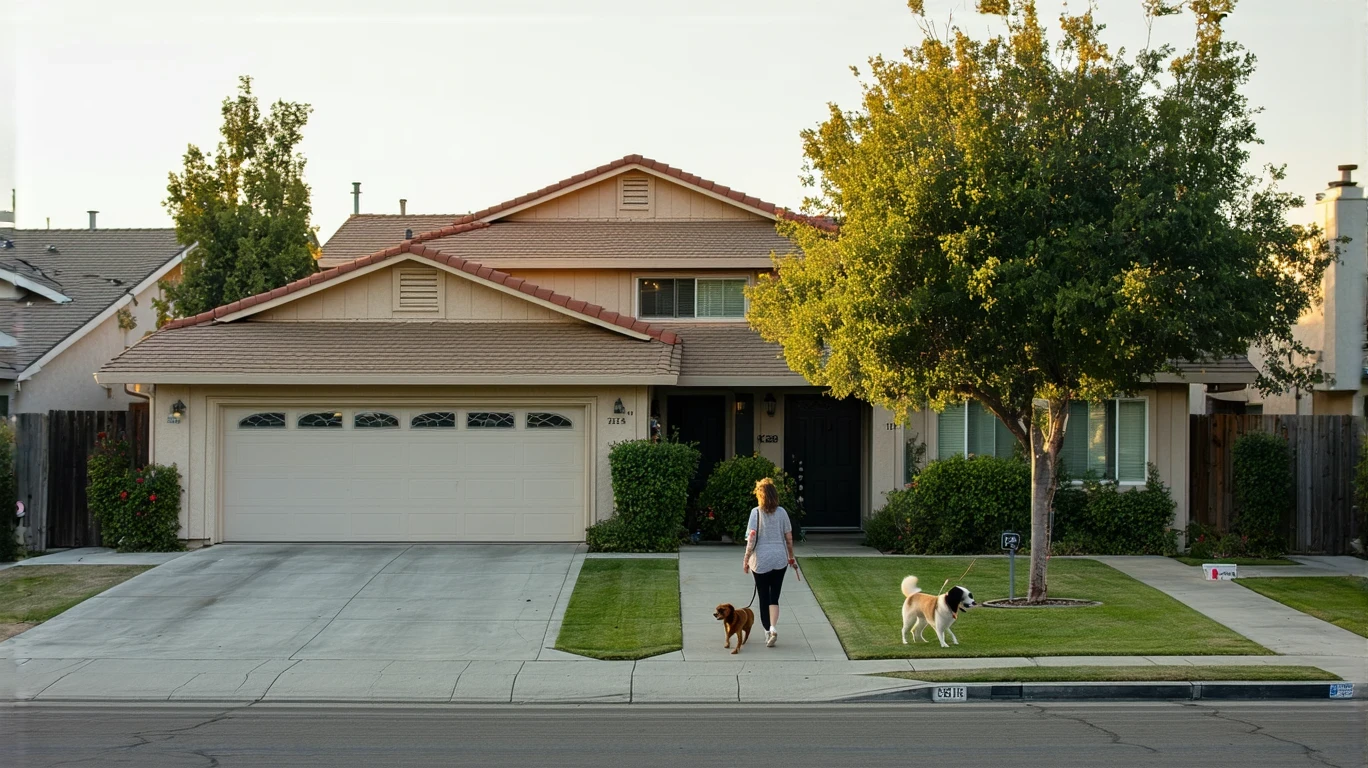
Overall Cost of Living Snapshot
Corona’s cost structure is shaped by three dominant forces: housing entry barriers, transportation exposure, and moderate utility volatility. The city sits at the national baseline for regional price parity (RPP index of 100), meaning its cost pressure comes from specific local conditions rather than broad regional inflation.
Housing dominates the cost equation. Whether renting or buying, the upfront commitment is substantial compared to much of the country, though notably lower than nearby Orange County or Los Angeles. This creates a classic Inland Empire tradeoff: lower housing costs in exchange for longer commutes and car dependency—except Corona complicates that narrative.
Unlike many suburban Inland Empire cities, Corona has walkable pockets with substantial pedestrian infrastructure and rail transit access. For households near these areas, transportation costs can be meaningfully lower than the regional norm. For everyone else—particularly the 56% of workers with long commutes—transportation becomes a recurring, high-exposure cost category that rivals or exceeds housing pressure over time.
Utilities add moderate seasonal pressure, driven primarily by extended cooling seasons and California’s high electricity rates (31.91¢/kWh). Natural gas pricing ($21.89/MCF) introduces winter volatility, though heating demand is far less intense than cooling. Grocery costs track close to national norms, with high grocery store density but more moderate food establishment availability clustered along commercial corridors.
Driver verdict: Housing entry cost is the gatekeeper, but transportation exposure—shaped heavily by where you live within the city and whether you can access walkable infrastructure or rail—determines long-term financial pressure. Utility seasonality is predictable but not trivial.
Housing Costs (Primary Driver)
Corona’s housing market reflects its position as an Inland Empire city with Orange County proximity. The median home value of $624,200 is steep by national standards but represents a significant discount compared to coastal alternatives. Median rent of $2,020/month follows a similar pattern: expensive in absolute terms, but often the most viable entry point for households priced out of nearby metros.
Renting offers flexibility and avoids the six-figure down payment barrier, but it leaves households exposed to renewal volatility and provides no equity accumulation. Ownership locks in principal and interest but introduces property tax exposure, insurance costs, maintenance obligations, and the risk of market corrections. For households planning to stay long-term and able to clear the entry hurdle, ownership shifts cost from unpredictable (rent renewals) to structured (mortgage, taxes, upkeep).
Corona functions as a transitional city for many: a place where households gain space and stability they couldn’t access closer to job centers, accepting longer commutes and car dependency in exchange. But the city’s walkable pockets and rail access mean that tradeoff isn’t universal—proximity to these features changes the housing value equation significantly.
| Housing Type | Cost Anchor | What That Buys You |
|---|---|---|
| Median Home Purchase | $624,200 | Equity-building ownership with property tax, insurance, and maintenance exposure; locks in principal/interest but not total cost |
| Median Rental | $2,020/month | Flexibility and lower entry barrier; exposure to annual renewal increases and no equity accumulation |
Conclusion: Corona is a buying city for households with down payment capacity and long-term plans; a renting city for those prioritizing flexibility or unable to clear the ownership threshold. The decision hinges on commute tolerance, access to walkable or transit-served areas, and whether the household values cost predictability over liquidity.
Utilities & Energy Risk
California’s electricity rates are among the highest in the nation, and Corona is no exception at 31.91¢/kWh. The Inland Empire’s extended cooling season—characterized by triple-digit summer heat—means air conditioning dominates household energy usage for several months each year. Even modest homes can see significant seasonal swings in electricity bills during peak summer months.
Natural gas pricing at $21.89/MCF introduces winter volatility, though heating demand is far less intense than cooling. Gas is typically used for heating, water heating, and cooking, with usage spiking modestly during cooler months. The cost exposure is real but secondary to electricity.
Utility costs in Corona are not a crisis, but they are a recurring, non-negotiable expense that rises with household size, home square footage, and insulation quality. Older homes with poor insulation or single-pane windows face higher exposure. Efficiency upgrades—programmable thermostats, weatherization, and behavioral adjustments—can reduce usage and stabilize bills, though they require upfront investment or discipline.
Risk classification: Moderate. Utilities are a predictable seasonal pressure rather than a financial wildcard, but they are not negligible—especially for larger homes or households with high cooling demands.
Groceries & Daily Costs
Corona’s grocery landscape is characterized by high grocery store density, meaning dedicated supermarkets are broadly accessible across the city. However, food establishment density—restaurants, cafes, and prepared food options—falls into a medium band, with these options more concentrated along commercial corridors rather than evenly distributed.
For households doing most of their shopping at supermarkets, access is strong and costs track close to national norms (the city’s RPP index of 100 confirms no regional price premium). For households relying on prepared food, convenience stores, or frequent restaurant meals, access becomes more location-dependent, and costs rise accordingly.
Day-to-day grocery pressure in Corona is shaped more by household behavior—how often you cook, how much you buy in bulk, whether you chase sales—than by structural price disadvantages. The city doesn’t impose a grocery accessibility penalty, but it also doesn’t offer the density of low-cost ethnic markets or discount chains found in denser urban cores.
Transportation Reality
Transportation in Corona is a tale of two realities. For the majority of residents, the city functions like a classic car-dependent suburb: the average commute is 35 minutes, 56% of workers have long commutes, and only 21.1% work from home. Gas at $4.50/gallon and California’s vehicle registration and insurance costs make car ownership a significant recurring expense—especially for households running two or more vehicles.
But Corona also has rail transit access and notable bike infrastructure, with walkable pockets where pedestrian-to-road ratios exceed typical suburban norms. For households living near these areas—particularly those with jobs accessible via Metrolink or who work remotely—car dependency pressure drops meaningfully. This isn’t the norm, but it’s also not rare, and it creates a sharp divide in transportation cost exposure across the city.
Commuters driving long distances to Orange County, Los Angeles, or San Diego face the highest exposure: fuel, vehicle depreciation, insurance, and time all compound. Households able to work remotely, use transit, or live within biking distance of daily needs experience Corona very differently. The city’s infrastructure supports both patterns, but most residents still default to cars for most trips.
Transportation as recurring exposure: For long commuters and multi-car households, transportation rivals housing as a cost driver. For rail-accessible or remote workers in walkable pockets, it becomes a manageable, controllable expense.
Cost Exposure Profiles
Corona’s cost structure creates distinct exposure profiles depending on housing choice, commute pattern, and access to walkable or transit-served infrastructure.
Low-exposure situation: A household renting near a Metrolink station in a walkable pocket, with one or both adults working remotely or commuting by rail. Housing cost is fixed and predictable, transportation costs are minimal, utilities are moderate and manageable with efficiency measures. Grocery access is strong. The primary financial pressure is rent renewal risk, but month-to-month costs remain stable.
High-exposure situation: A household owning a home far from transit, with two adults commuting 40+ minutes each way to separate job sites, running two vehicles. Housing costs include mortgage, property tax, insurance, and maintenance. Transportation costs include fuel, insurance, registration, and depreciation on two cars. Utilities swing seasonally with cooling demands in a larger home. The household faces compounding recurring costs across multiple categories, with limited ability to reduce exposure without relocating or changing jobs.
The difference between these profiles isn’t income—it’s structure. Corona rewards households that can access its rail and walkable infrastructure, work remotely, or tolerate single-vehicle logistics. It penalizes long commuters and car-dependent households with compounding transportation and time costs that persist indefinitely.
Frequently Asked Questions
Is Corona more affordable than nearby Orange County cities in 2026? Yes, Corona’s housing costs are significantly lower than most Orange County cities, though this often comes with longer commutes. The affordability advantage depends on whether transportation savings from Corona’s rail access offset the distance from coastal job centers.
What does a typical cost profile look like in Corona? Most households face high housing entry costs (either $624,200 to buy or $2,020/month to rent), moderate utility bills driven by summer cooling, and variable transportation costs depending on commute length and vehicle count. Grocery costs track close to national averages.
Do utilities cost more in Corona than in nearby Riverside or Moreno Valley? Electricity rates are set regionally by utility providers, so Corona’s 31.91¢/kWh is comparable to nearby Inland Empire cities. The bigger variable is home size, insulation quality, and cooling season length, which are similar across the region.
What costs tend to surprise newcomers in Corona? Transportation costs often exceed expectations, especially for households underestimating fuel expenses, vehicle depreciation, or the time cost of long commutes. Summer electricity bills also surprise renters unfamiliar with California rates and Inland Empire heat.
Are property taxes higher in Corona than in Temecula or Murrieta? Property taxes in California are governed by Proposition 13, so rates are relatively uniform statewide at around 1% of assessed value plus local bonds and assessments. Differences between Corona and nearby cities are typically small and driven by local measures rather than structural rate differences.
Can you live in Corona without a car? It’s possible in specific areas near Metrolink stations and within walkable pockets with high pedestrian infrastructure, but the majority of the city still requires a car for daily errands, work commutes, and household logistics. Corona offers more car-free viability than many Inland Empire cities, but it’s not the default experience.
How does Corona’s cost of living compare to Los Angeles? Corona is less expensive than Los Angeles, primarily due to lower housing costs. However, transportation costs can be higher for Corona residents commuting into L.A., and the time cost of commuting is significant. The tradeoff depends on job location, remote work flexibility, and tolerance for long commutes.
Is Corona a good value for families? Corona offers more space per housing dollar than coastal alternatives, with moderate school density and integrated park access. Families benefit most if they can minimize transportation exposure—either through remote work, rail commuting, or jobs within the Inland Empire—and if they prioritize space and stability over proximity to urban amenities.
How this article was built: In addition to public economic data, this article incorporates location-based experiential signals derived from anonymized geographic patterns—such as access density, walkability, and land-use mix—to reflect how day-to-day living actually feels in Corona, CA.
—