
How much is enough to feel at ease? In Land O Lakes, the answer depends less on a single salary figure and more on how your household navigates space, climate, and daily logistics. Comfort here isn’t about hitting a magic number—it’s about whether your income absorbs the tradeoffs this place demands without forcing constant recalibration.
What “Living Comfortably” Means in Land O Lakes
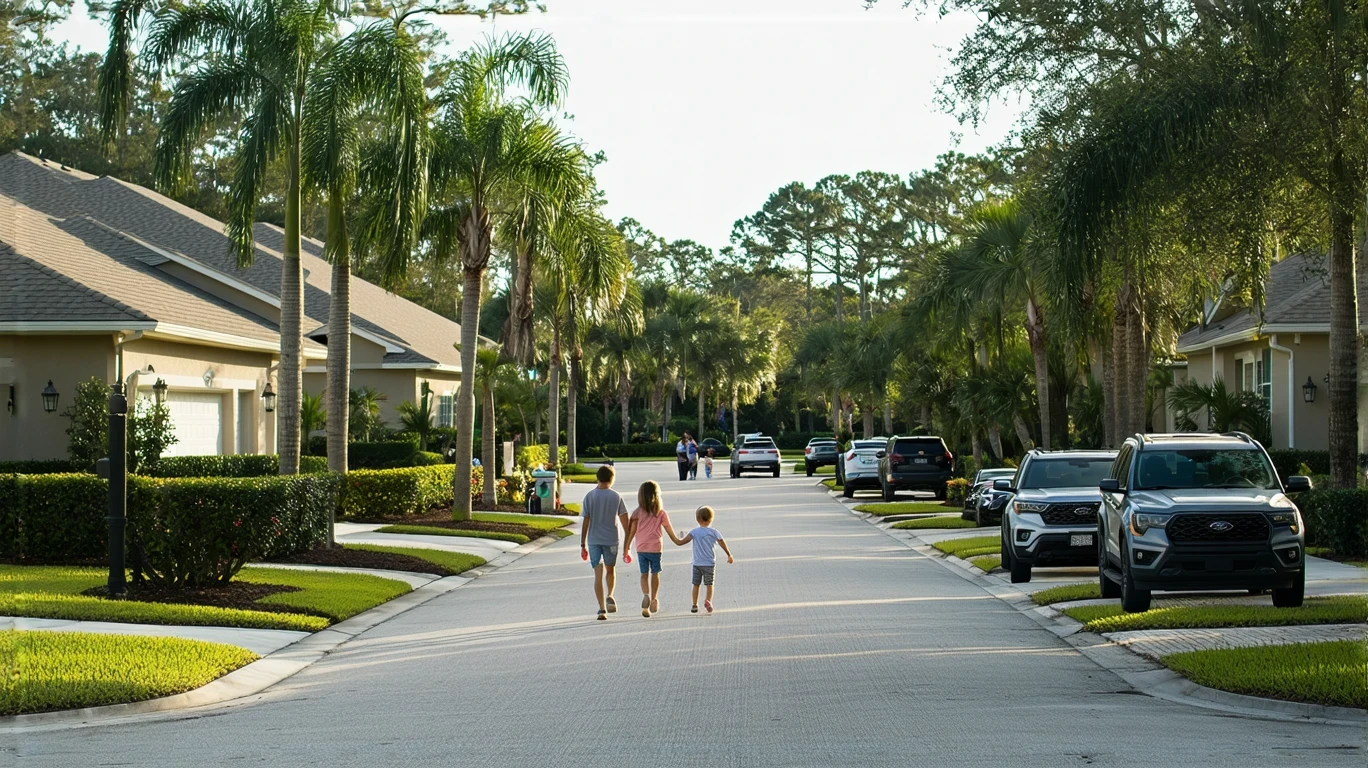
Comfort in Land O Lakes reflects suburban expectations shaped by Florida’s climate and car-oriented rhythms. It means securing enough indoor space to manage extended cooling seasons without feeling trapped, maintaining reliable transportation when errands require planning, and absorbing utility swings tied to triple-digit summer heat without panic. Comfort also means having margin—enough slack that a surprise AC repair or an extra tank of gas doesn’t cascade into other decisions.
What counts as comfortable here may not align with denser metros or walkable towns. Land O Lakes rewards households that value low-rise living, accept car dependency as baseline, and can handle the logistics of sparse grocery access. Expectations around spontaneity, walkable errands, or transit flexibility don’t match the infrastructure on the ground.
Where Income Pressure Shows Up First
Housing tradeoffs dominate early pressure, even without precise rent or purchase figures. The low-rise built form and mixed land use suggest single-family homes and townhomes rather than high-density apartments, which typically translates to higher per-unit costs and maintenance exposure. Households stretching to secure space often find themselves with less cushion for other volatility.
Utility bills create the second pressure point. Electricity rates of 15.78¢/kWh combine with Florida’s long cooling season to produce summer spikes that many newcomers underestimate. Air conditioning isn’t optional—it’s a fixed cost with variable intensity. Households without margin absorb these swings by cutting elsewhere, month after month.
Transportation costs layer on top. With bus service present but no rail, and sparse grocery accessibility, day-to-day costs require a functioning vehicle and regular fuel purchases at $2.84/gallon. The planning burden of reaching food and household goods—grocery density sits below typical thresholds—means more trips, more time, and less flexibility to consolidate errands on foot or by quick transit.
For families, limited school density and constrained family infrastructure add logistical friction. Fewer nearby options mean longer drives, more coordination, and less ability to rely on neighborhood proximity for daily routines.
How the Same Income Feels Different by Household
A single adult in Land O Lakes carries lower fixed costs but absorbs full car dependency and errands friction alone. Grocery runs, medical appointments, and routine shopping all require dedicated vehicle time. The mixed mobility texture—moderate pedestrian infrastructure relative to roads—offers some walkable moments, but sparse food access means most essentials still demand a car. Income that covers rent, utilities, and transportation may still feel tight if there’s little left for the unexpected.
Couples share transportation and housing expenses, easing per-person pressure, but they face the same access constraints. Two incomes provide more cushion against utility volatility and fuel costs, but the structural realities—car dependency, sparse grocery options, planning-intensive errands—don’t disappear. Comfort arrives when both partners’ earnings create enough margin that summer AC bills and vehicle maintenance don’t force tradeoffs.
Families experience the sharpest differentiation. Limited school density means fewer nearby options, increasing drive time and reducing schedule flexibility. Sparse grocery access turns routine shopping into a recurring logistics task rather than a quick errand. Households at similar income levels often experience very different pressure depending on how many trips they consolidate, how much schedule flexibility they retain, and whether they can absorb the time cost of car-dependent living without stress.
The Comfort Threshold (Qualitative)
The transition to comfort in Land O Lakes happens when income stops dictating daily behavior. Bills—especially summer electricity and fuel—become predictable expenses rather than monthly surprises. Housing pressure eases enough that space feels adequate, not cramped. Transportation shifts from a limiting factor to a managed routine.
Comfort also means absorbing the logistics burden without resentment. Driving to groceries, coordinating family schedules around limited school options, and planning errands in advance become part of the rhythm rather than sources of frustration. Saving becomes plausible. Choices expand. The gap between income and expenses creates breathing room, not just survival.
This threshold isn’t income-specific—it’s household-specific. A couple with no children and modest space needs may reach it at a lower earnings level than a family navigating school logistics and higher utility loads. The key variable is whether your income absorbs Land O Lakes’ structural demands without forcing you to constantly optimize.
Why Online Cost Calculators Get Land O Lakes Wrong
Most cost calculators reduce living expenses to a single total, implying that any income above that figure delivers comfort. But totals obscure texture. A calculator might estimate average rent, typical utilities, and standard transportation—yet miss that grocery access requires extra planning, that summer cooling costs spike beyond annual averages, and that limited school density forces longer commutes for families.
Calculators also assume lifestyle uniformity. They don’t account for whether you tolerate car dependency, whether you expect walkable errands, or whether sparse food access feels like an inconvenience or a dealbreaker. Two households with identical incomes experience Land O Lakes differently depending on these expectations.
People feel surprised after moving because the math looked fine but the daily friction—drive time, errand planning, utility swings—wasn’t captured. The comfort question isn’t “Can I afford the average costs?” It’s “Can I absorb the specific tradeoffs this place demands?”
How to Judge Whether Your Income Fits Land O Lakes
Start by asking how sensitive you are to housing tradeoffs. If securing space means stretching your budget, you’ll have less cushion for utility volatility and transportation costs. Can you absorb summer electricity bills that climb as cooling demand intensifies, or will those swings force cuts elsewhere?
Consider whether time or money is your limiting factor. Land O Lakes rewards households that can trade time for lower density—longer drives, planned grocery trips, coordinated family logistics. If your schedule is already tight, the car-dependent errands structure may create stress even if your income technically covers costs.
Evaluate your expectations around spontaneity and walkability. The mixed mobility texture offers some pedestrian infrastructure, but sparse grocery access and bus-only transit mean most daily needs require a car. If you expect to walk to essentials or rely on frequent transit, this place will feel more limiting than the income math suggests.
Finally, assess your flexibility month to month. Comfort in Land O Lakes depends on margin—enough income left after fixed costs to handle the variable. If you’re budgeting to the dollar, the structural volatility here (utilities, fuel, maintenance) will generate constant pressure.
FAQs About Living Comfortably in Land O Lakes
Can you live comfortably in Land O Lakes on a single income?
It depends on the income level and household size. A single adult with moderate space needs and a reliable vehicle can manage if earnings cover rent, utilities, transportation, and leave margin for summer cooling spikes. Families on a single income face sharper pressure due to limited school density, higher utility loads, and the logistics burden of sparse grocery access. Comfort requires enough cushion to absorb car dependency and seasonal volatility without constant tradeoffs.
What makes Land O Lakes feel more expensive than the numbers suggest?
The friction comes from structure, not just prices. Sparse grocery access means more trips and more planning. Limited family infrastructure increases drive time for school and activities. Summer electricity bills spike beyond annual averages due to extended cooling demand. Car dependency is non-negotiable, adding fuel and maintenance costs that don’t show up in rent or utility averages. The time cost and logistics burden often surprise newcomers who focused only on dollar totals.
Do couples have an easier time affording comfort here?
Shared income eases per-person pressure, especially for housing and transportation. Two earners create more cushion against utility swings and vehicle expenses. But the structural realities—car-dependent errands, sparse food access, limited transit—don’t disappear. Comfort depends on whether combined income leaves enough margin to absorb these demands without stress, not just whether it covers average costs.
How do families decide if their income is enough?
Families should focus on whether their earnings absorb the logistics burden. Limited school density means fewer nearby options and longer drives. Sparse grocery access turns routine shopping into a recurring task. Higher utility loads from cooling larger spaces and more occupants increase seasonal volatility. Income is enough when it covers these structural demands and still leaves flexibility for the unexpected—not just when it matches a calculated total.
What’s the biggest income mistake people make before moving here?
Assuming that meeting average costs equals comfort. Land O Lakes demands specific tradeoffs: car dependency, errand planning, utility volatility, and time spent managing logistics. Households that budget to the average without margin for these realities often find themselves stressed despite “affording” the place on paper. The mistake is focusing on whether income covers expenses rather than whether it absorbs the friction this place creates.
How this article was built: In addition to public economic data, this article incorporates location-based experiential signals derived from anonymized geographic patterns—such as access density, walkability, and land-use mix—to reflect how day-to-day living actually feels in Land O Lakes, FL.
Land O Lakes can work well for some households—but only if expectations match reality. Comfort here isn’t about hitting a salary threshold. It’s about whether your income absorbs the structural demands of this place without forcing you to constantly recalibrate. If you can handle car dependency, plan around sparse grocery access, and absorb seasonal utility swings with margin to spare, this place offers low-rise suburban living with room to breathe. If those tradeoffs feel like friction rather than rhythm, no income figure will make it feel easy.