
Is Land O Lakes expensive to live in? Land O Lakes is considered moderately priced in 2026, with costs running slightly above the national baseline due to regional price parity. The value proposition depends on housing entry cost versus car dependence, as transportation and vehicle ownership create recurring structural exposure in this suburban community.
Over the last five years, cost of living trends in suburban Tampa metro communities like Land O Lakes have been shaped by rising housing entry costs, persistent vehicle dependency, and seasonal utility volatility driven by Florida’s extended cooling season. These structural pressures have remained consistent even as inflation has moderated in other categories.
Overall Cost of Living Snapshot
Land O Lakes operates at 103 on the regional price parity index, meaning the cost structure here runs about 3% above the national baseline. That modest premium reflects the broader Tampa metro pricing environment rather than hyperlocal scarcity or luxury positioning.
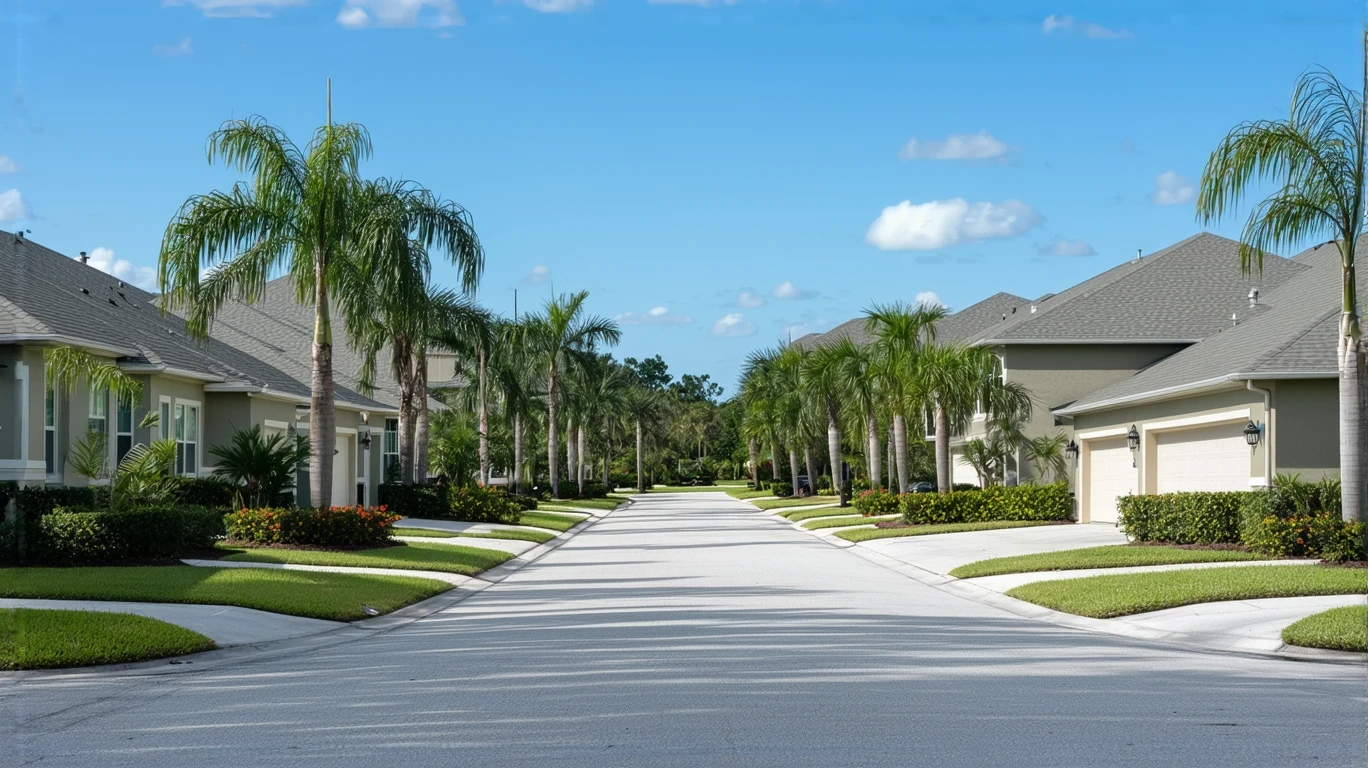
The shape of costs in Land O Lakes is defined by two dominant forces: housing entry barriers and transportation dependence. The community’s low-rise, suburban form and sparse grocery density mean that daily errands and commuting require consistent vehicle access. Pedestrian infrastructure exists in moderate density, but the ratio of walkable paths to road network suggests that most households rely on cars for routine tasks. Bus service is present, but the absence of rail transit and limited stop coverage means public transportation is not a viable primary mobility solution for most residents.
Utility costs introduce seasonal swing risk, particularly during the long cooling season when air conditioning dominates electricity usage. Grocery prices reflect the regional price parity adjustment, creating steady but not extreme pressure on food budgets.
Driver verdict: Housing entry costs and car dependency dominate the cost structure in Land O Lakes. Surprises tend to come from underestimating vehicle ownership expenses and summer utility spikes, not from day-to-day pricing volatility.
Housing Costs (Primary Driver)
Housing data for Land O Lakes is limited, but the regional price parity index and suburban character suggest that entry costs—whether buying or renting—are the primary gatekeeper to living here. The community’s low-rise building profile and mixed land use indicate a market oriented toward single-family homes and smaller multifamily properties rather than high-density rental stock.
For buyers, the value proposition hinges on long-term ownership dynamics: property taxes, insurance (including flood and windstorm exposure typical in Florida), and maintenance costs that accompany single-family homes. For renters, the sparse grocery density and car dependency mean that housing affordability must be weighed against transportation costs, as proximity to work or errands is harder to achieve without a vehicle.
Land O Lakes functions as a transitional city for households moving between renting and ownership, or for those seeking suburban space within the Tampa metro area. The housing market here rewards those who can absorb upfront entry costs and vehicle expenses, rather than those seeking walkable, transit-accessible living.
| Housing Type | Cost Anchor | What That Buys You |
|---|---|---|
| Single-family home (ownership) | Regional price parity ~103 | Suburban space, low-rise character, car-dependent access |
| Rental (multifamily) | Regional price parity ~103 | Flexibility, limited walkability, vehicle ownership required |
Conclusion: Land O Lakes is a buying and transitional city. Renting is viable for those planning to purchase or relocate, but the cost structure favors ownership for households prepared to manage vehicle dependency and suburban maintenance exposure.
Utilities & Energy Risk
Electricity in Land O Lakes is priced at 15.78¢ per kilowatt-hour, which sits near the middle of Florida’s range but carries significant seasonal exposure due to the region’s hot, humid climate and extended cooling season. For context, a household using 1,000 kWh per month—typical for a home running air conditioning consistently—would face an illustrative baseline electricity cost of around $158 before fees and taxes. That figure can climb substantially during peak summer months when cooling demand intensifies.
Natural gas is priced at $25.39 per thousand cubic feet (MCF), or roughly $0.25 per therm. In Land O Lakes, natural gas usage is minimal compared to electricity, as heating needs are rare and brief. Gas may be used for water heating or cooking in some homes, but it does not introduce the same seasonal volatility as electricity.
The primary utility risk here is summer electricity exposure. Homes with older HVAC systems, poor insulation, or large square footage face amplified costs during the long stretch of triple-digit heat. Conversely, households with efficient cooling systems, programmable thermostats, and sealed ductwork can reduce usage and stabilize bills, though the directional pressure remains upward during peak months.
Risk classification: Moderate. Electricity costs are predictable in direction but variable in magnitude, and the extended cooling season makes summer utility bills a recurring structural expense rather than an occasional surprise.
Groceries & Daily Costs
Grocery costs in Land O Lakes reflect the regional price parity adjustment, with derived estimates suggesting prices run slightly above the national baseline. For example, staples like bread are estimated around $1.90 per pound, eggs near $2.65 per dozen, and ground beef around $6.95 per pound. These figures are illustrative, derived from national baselines adjusted by regional price parity, and do not represent observed local prices.
The more significant factor for household budgets is not the per-item pricing but the accessibility friction. Grocery density in Land O Lakes falls below typical thresholds, meaning that shopping trips require deliberate planning and vehicle access. The sparse distribution of food and grocery establishments increases the time and fuel cost associated with routine errands, even if the groceries themselves are not dramatically more expensive than in other Tampa metro communities.
For single-person households or couples, grocery pressure is modest but compounded by transportation dependency. For larger families, the combination of higher per-trip volumes and the need to drive to multiple stores or make frequent trips can elevate the effective cost of feeding a household beyond the sticker price of individual items.
Transportation Reality
Transportation in Land O Lakes is a recurring structural expense, not a discretionary one. The community’s sparse grocery density, mixed pedestrian infrastructure, and bus-only transit mean that most households require at least one vehicle for daily errands, commuting, and accessing services. Gasoline is currently priced at $2.84 per gallon, which is relatively moderate, but the cost of vehicle ownership extends far beyond fuel: insurance, maintenance, registration, and depreciation all compound into a persistent monthly exposure.
Commute patterns are not explicitly documented in the available data, but the suburban form and limited transit viability suggest that most workers drive to employment centers, either within the Tampa metro area or to nearby corridors. For illustrative context, a household commuting 25 miles round trip daily in a vehicle averaging 25 miles per gallon would use roughly 20 gallons per month, translating to about $57 in fuel costs before accounting for wear, insurance, or parking.
The experiential reality of getting around in Land O Lakes is shaped by the need to plan trips, bundle errands, and accept that spontaneous or last-minute tasks require a car. Households with two working adults or those managing school drop-offs and pickups often find that a second vehicle is not a luxury but a logistical necessity, doubling the transportation cost exposure.
Transportation as exposure: Car dependency is the baseline assumption here. The cost of living in Land O Lakes must be understood as including vehicle ownership, fuel, and the time cost of driving to access groceries, healthcare, and services. Households without reliable transportation face significant friction in managing day-to-day life.
Cost Exposure Profiles
Cost exposure in Land O Lakes is shaped by three primary forces: housing entry costs, transportation dependence, and utility volatility. The relative weight of each depends on household structure and choices, but all three are present and persistent.
Low-exposure situations: Households with paid-off homes or stable long-term leases, a single fuel-efficient vehicle, and energy-efficient cooling systems face the most predictable cost structure. These households absorb the baseline regional price parity premium but avoid the compounding effects of high housing turnover, multi-vehicle ownership, or inefficient utility usage. Retirees or remote workers who minimize commuting and can time errands strategically may find Land O Lakes manageable within a fixed budget.
High-exposure situations: Households entering the housing market, managing long commutes, or operating multiple vehicles face compounded cost pressure. The combination of housing entry costs (down payments, closing costs, or security deposits), dual vehicle ownership, and peak summer utility bills creates a high-friction cost environment. Families with school-age children may also face limited family infrastructure density, requiring longer drives to access schools, playgrounds, or pediatric care, further amplifying transportation exposure.
The structural difference between low- and high-exposure households is not income level but rather the degree of transportation dependence, housing stability, and energy efficiency. Land O Lakes rewards those who can minimize vehicle trips, lock in housing costs early, and invest in cooling efficiency. It penalizes those who must navigate frequent housing turnover, multi-vehicle logistics, or older, inefficient homes.
Frequently Asked Questions
Is Land O Lakes more affordable than Tampa in 2026? Land O Lakes operates at a similar regional price parity to the broader Tampa metro area, but the cost structure differs: Land O Lakes requires higher transportation investment due to car dependency, while Tampa offers more transit and walkability options. The trade-off is between suburban space and mobility flexibility.
What does a typical cost profile look like in Land O Lakes? A typical household in Land O Lakes faces moderate housing entry costs, high transportation dependence (requiring at least one vehicle), and moderate utility exposure driven by summer cooling demand. Grocery and daily costs run slightly above the national baseline but are not the primary cost driver.
Do utilities cost more in Land O Lakes than in nearby areas? Electricity rates in Land O Lakes are near the middle of Florida’s range, but the extended cooling season and hot, humid climate mean that total utility costs can be higher than in regions with milder summers. The rate itself is not extreme, but the intensity and duration of cooling demand elevate seasonal bills.
What costs tend to surprise newcomers in Land O Lakes? Newcomers often underestimate the cumulative cost of vehicle ownership—fuel, insurance, maintenance—and the degree to which car dependency shapes daily logistics. Summer utility spikes also catch households off guard if they are not accustomed to Florida’s long cooling season.
Are property taxes higher in Land O Lakes than in other Tampa metro communities? Property tax rates vary by jurisdiction within the Tampa metro area, and specific millage rates for Land O Lakes are not provided in the available data. However, Florida’s property tax structure includes homestead exemptions and Save Our Homes caps that can moderate long-term tax growth for owner-occupants.
Is Land O Lakes a good value for families? Land O Lakes offers suburban space and low-rise character, but family infrastructure density is limited—school and playground availability fall below typical thresholds. Families should weigh the value of space against the logistical cost of driving to access schools, pediatric care, and recreational facilities.
How does car dependency affect the cost of living here? Car dependency is a structural cost exposure in Land O Lakes, not a discretionary expense. Households must budget for vehicle ownership, fuel, insurance, and maintenance as baseline recurring costs. Those without reliable transportation face significant friction in accessing groceries, healthcare, and employment.
What drives the biggest cost differences between households in Land O Lakes? The biggest cost differences stem from vehicle count (single vs. multi-vehicle households), housing stability (renters vs. long-term owners), and energy efficiency (older vs. newer HVAC systems). These factors compound into divergent cost experiences even within the same community.
How this article was built: In addition to public economic data, this article incorporates location-based experiential signals derived from anonymized geographic patterns—such as access density, walkability, and land-use mix—to reflect how day-to-day living actually feels in Land O Lakes, FL.
—