
A couple earning $95,000 moves to Lutz expecting suburban ease. Within six months, they’re surprised—not by any single bill, but by how tightly their income fits. The house they wanted required stretching. The grocery runs take longer than expected. Summer utility bills spike higher than they planned for. They’re fine, but the margin feels thinner than it looked on paper.
This is the gap between income and comfort in Lutz: not whether you can afford to live here, but whether your earnings give you room to breathe—or just enough to cover what’s expected.
What “Living Comfortably” Means in Lutz
Comfort in Lutz isn’t about luxury. It’s about whether your income lets you make choices instead of accepting tradeoffs by default.
It means securing housing that fits your household without stretching your budget so far that every other decision becomes constrained. It means absorbing the extended cooling season’s utility swings without adjusting your thermostat based on the bill. It means driving to work, errands, and daily tasks without constantly calculating fuel costs or time lost.
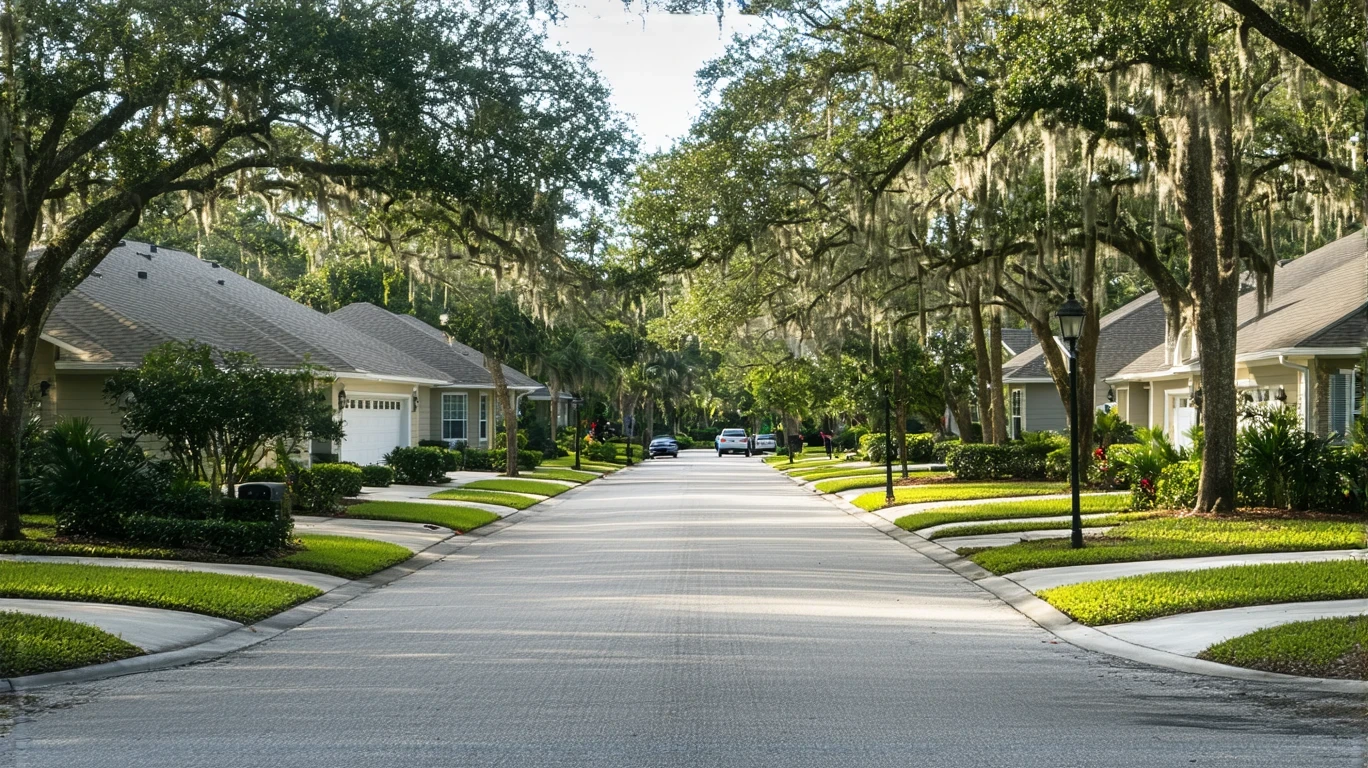
Lutz is a low-rise, car-oriented suburb where pedestrian infrastructure sits below density thresholds and food and grocery establishments are sparse. Daily life here assumes reliable transportation, tolerance for driving-based errands, and enough income flexibility to handle the fixed costs that come with that structure.
Comfort also means having margin. Not just covering expenses, but having enough left over that an unexpected car repair, a higher-than-usual electric bill, or a medical copay doesn’t force you to reshuffle everything else.
For some households, Lutz delivers that. For others, it doesn’t—even at income levels that look solid on paper.
Where Income Pressure Shows Up First
In Lutz, housing dominates. The median home value sits at $403,200, and median gross rent reaches $1,562 per month. Whether you’re buying or renting, housing absorbs a large share of gross income before other costs enter the picture.
For renters, that monthly figure is the baseline. For buyers, the pressure compounds: not just the mortgage, but property taxes, insurance (which has climbed steeply in Florida in recent years), and maintenance on single-family homes in a humid, storm-exposed climate.
Utility costs add seasonal volatility. Electricity rates stand at 15.02¢/kWh, and Lutz’s extended cooling season means air conditioning runs for much of the year. Households that budget tightly may find summer months particularly stressful, as bills rise and discretionary spending contracts.
Transportation is the third pillar. Lutz’s car-oriented texture and sparse errands accessibility mean nearly every household needs at least one vehicle. Gas prices currently sit at $2.90 per gallon, but the real cost isn’t just fuel—it’s insurance, maintenance, and the time spent driving to work, groceries, and errands that aren’t within walking distance.
For families, pressure intensifies. School and playground density both fall below thresholds, meaning parents often drive kids to activities, school, and playdates. Logistics become a daily cost in time and fuel, even if no single line item feels unmanageable.
Income pressure in Lutz doesn’t announce itself with one overwhelming bill. It accumulates across housing, utilities, and transportation—each one reasonable on its own, but together leaving less room than many households expect.
How the Same Income Feels Different by Household
A single adult earning $70,000 in Lutz may feel financially stable or stretched, depending entirely on housing. If they secure a rental at or below the median, they’ll have room for savings and discretionary spending. If they’re priced into something higher—or if they’re buying—housing costs can consume 40% or more of gross income, leaving utilities, transportation, and food to compete for what’s left.
Car dependency adds fixed costs that don’t scale down for solo living. A single vehicle is non-negotiable, and sparse errands accessibility means more driving, more fuel, and more time spent managing logistics that would be simpler in a denser, more walkable area.
Couples with combined income around $100,000 often find Lutz more manageable, but not effortless. Dual incomes ease the housing burden, but many couples here operate two vehicles because car-oriented infrastructure makes sharing impractical. That doubles insurance, maintenance, and fuel costs. If one partner works outside Lutz or has variable hours, transportation becomes a significant budget category.
Households at similar income levels often experience very different pressure depending on how many people share the costs and how many vehicles the household requires. A couple splitting a $1,600 rent feels far less strain than a single adult covering the same amount alone.
Families face the most complexity. Even at $120,000 or higher, a household with children encounters compounding costs: larger housing needs, higher utility usage, multiple vehicles, and the time cost of driving kids to school, activities, and social events in an area where family infrastructure is limited.
The same income that provides comfort for a couple may feel tight for a family of four, not because any single expense is unaffordable, but because the volume and coordination of costs leave less flexibility than expected.
The Comfort Threshold (Qualitative)
Comfort in Lutz begins when income stops dictating behavior.
It’s the point where you choose your housing based on preference, not just budget ceiling. Where you set the thermostat based on comfort, not the bill. Where an unexpected $800 car repair is inconvenient but not destabilizing.
It’s when you can absorb Lutz’s structural costs—housing, cooling, driving—without constantly rebalancing other categories. When saving becomes a regular action, not an aspiration. When a dinner out or a weekend trip doesn’t require advance planning to make the math work.
For single adults, that threshold is higher than it appears. For couples, it often arrives in the $90,000–$110,000 range, assuming moderate housing costs and no major debt. For families, it typically requires $130,000 or more, depending on household size and whether both parents work.
But income alone doesn’t guarantee comfort. A household earning $150,000 can still feel pressure if they stretch for a $500,000 home, finance new vehicles, or carry significant debt. Conversely, a household earning $85,000 may feel genuinely comfortable if they rent modestly, drive paid-off cars, and avoid lifestyle inflation.
The threshold isn’t a number. It’s the point where your income consistently exceeds your fixed costs by enough that discretionary decisions feel like choices, not tradeoffs.
Why Online Cost Calculators Get Lutz Wrong
Most cost-of-living calculators treat Lutz as a data point: plug in the rent, add utilities, multiply by averages, and output a total.
But totals don’t explain how living here actually feels.
Calculators assume you’ll spend a fixed percentage on transportation, but they don’t account for the fact that Lutz’s car-oriented layout and sparse errands accessibility mean you’ll drive more than you expect—and that “more” isn’t just fuel, it’s time, wear, and the mental load of managing a car-dependent household.
They include a line for utilities, but they don’t convey that Florida’s extended cooling season makes summer bills feel like a recurring surprise, or that keeping a single-family home comfortable in humid heat costs more than the same square footage in a drier or milder climate.
They list housing costs, but they don’t explain that Florida’s property insurance market has become volatile, or that maintenance on a home exposed to heat, humidity, and occasional storms adds up faster than in less demanding climates.
Calculators also assume lifestyle is constant. They don’t ask whether you’re comfortable driving everywhere, whether you value walkable errands, or whether your household can absorb the logistics of limited family infrastructure.
People feel surprised after moving to Lutz not because the costs were hidden, but because the structure of those costs—and the daily behaviors they require—wasn’t clear until they lived it.
How to Judge Whether Your Income Fits Lutz
Rather than asking “Is my income enough?”, ask whether your income aligns with how Lutz actually works.
Start with housing. Can you secure a home that fits your household while keeping housing costs below 30% of your gross income? If not, are you prepared for that pressure to shape every other financial decision?
Consider utilities. Can you absorb seasonal swings in cooling costs without adjusting your comfort level or stressing over the bill? Florida summers are long, and air conditioning isn’t optional.
Evaluate transportation. Are you comfortable driving for nearly every errand, appointment, and social event? Can your household afford and maintain the vehicles that requires—and the time it takes?
If you have children, think about logistics. Are you prepared to drive kids to school, activities, and playdates in an area where school and playground density are limited? Does your schedule and income allow for that time and fuel cost?
Finally, assess your flexibility. Does your income provide enough margin that an unexpected $1,000 expense—car repair, medical bill, higher utility month—can be handled without reshuffling your budget or skipping other priorities?
If the answers are yes, Lutz can work well. If several answers are no, the income may technically cover costs, but comfort will be elusive.
FAQs About Living Comfortably in Lutz
Is $80,000 a year enough to live comfortably in Lutz?
For a single adult or couple without children, $80,000 can work if housing costs stay moderate and lifestyle expectations align with car dependency and sparse walkability. For a family, that income will feel tight, especially once childcare, transportation, and housing compete for the same dollars.
Why do people say Lutz is affordable if housing costs are high?
Lutz is often compared to more expensive parts of the Tampa metro area, where housing costs are even higher. Relative to those areas, Lutz feels more accessible. But “more affordable than nearby” doesn’t mean affordable in absolute terms, especially for households earning below the median.
Do utilities really make that much difference?
Yes. Florida’s extended cooling season and Lutz’s typical single-family housing stock mean air conditioning runs most of the year. Electricity costs aren’t catastrophic, but they’re persistent, and they add up in ways that households from milder climates often underestimate.
Can you live in Lutz without a car?
Technically possible, but practically difficult. Bus service exists, but Lutz’s car-oriented texture and sparse errands accessibility mean daily tasks—groceries, appointments, errands—require either significant time on transit or reliance on others. Most households here operate at least one vehicle, and many need two.
What income level do most families need to feel comfortable?
Comfort for families typically begins around $120,000–$140,000, depending on household size, housing choice, and debt load. Below that, families can manage, but margin shrinks and tradeoffs multiply. Above that, choices expand and financial stress eases.
How this article was built: In addition to public economic data, this article incorporates location-based experiential signals derived from anonymized geographic patterns—such as access density, walkability, and land-use mix—to reflect how day-to-day living actually feels in Lutz, FL.
Lutz can work well for households with stable income, realistic expectations, and comfort with car-dependent suburban life. But it’s not forgiving of tight budgets, and it rewards those who enter with clarity about what “comfortable” actually costs here.