
How Grocery Costs Feel in Lutz
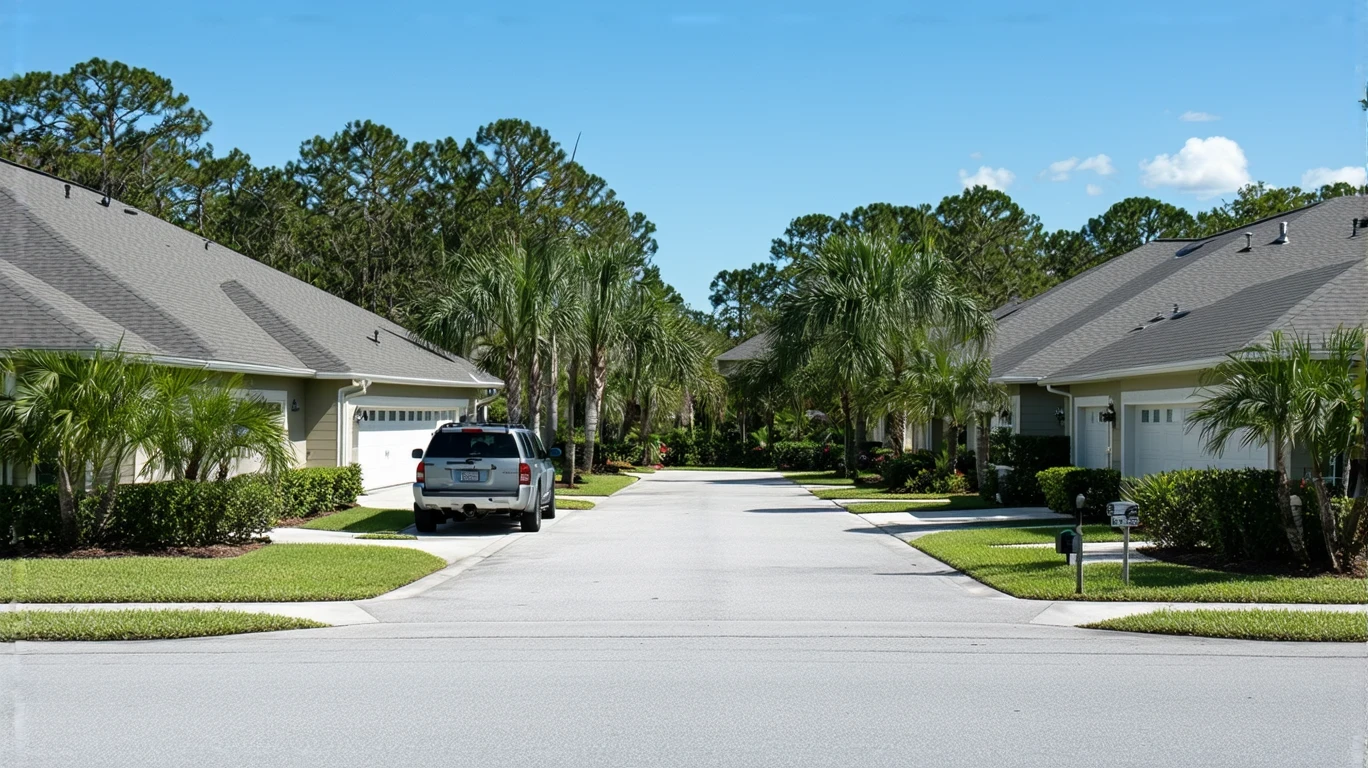
Grocery shopping in Lutz unfolds differently than in denser, more walkable cities. The physical structure of the area—car-oriented with limited pedestrian infrastructure and food establishments spread thin—means most households plan intentional trips rather than stopping by a store on the way home from work or during a midday errand. That planning burden doesn’t show up on a receipt, but it shapes how grocery costs feel: less about spontaneous top-ups, more about stocking up efficiently and making each trip count. For families managing tight schedules or single parents juggling multiple responsibilities, the logistics can add invisible friction even before price enters the picture.
Lutz sits at a regional price parity index of 103, meaning the overall cost structure runs about 3% above the national baseline. That modest elevation doesn’t make groceries prohibitively expensive, but it does mean staple items tend to cost slightly more than in lower-cost regions, and households notice the difference most when buying in volume or feeding larger families. With a median household income of $101,159 per year, many dual-earner households absorb grocery costs without major strain. But for single earners, retirees on fixed incomes, or families with three or more children, even small price differences compound quickly. Grocery pressure in Lutz isn’t about sticker shock on any single item—it’s about the cumulative weight of feeding a household week after week in a place where access requires a car and prices reflect regional cost patterns.
The experience of grocery shopping here is also shaped by the area’s limited daily errands accessibility. Food establishment density falls below typical thresholds, and grocery density sits in a medium band—enough options to avoid a food desert, but not the saturation that creates competitive pricing or convenient fallback stores. Households can’t easily comparison-shop on the fly or duck into a nearby market for a forgotten ingredient. Instead, grocery runs become deliberate: choosing a store, driving there, and buying enough to last. That structure favors households with storage space, reliable transportation, and the ability to plan meals in advance. It’s harder on those living paycheck to paycheck, relying on older vehicles, or managing unpredictable work schedules.
Grocery Price Signals (Illustrative)
These prices illustrate how staple items tend to compare locally—not a full shopping list, and not a guarantee of what any specific store charges on any given week. They’re derived estimates based on national baselines adjusted by regional price parity, useful for understanding relative cost positioning but not for budgeting to the dollar.
| Item | Price |
|---|---|
| Bread (per pound) | $1.90 |
| Cheese (per pound) | $4.99 |
| Chicken (per pound) | $2.10 |
| Eggs (per dozen) | $2.65 |
| Ground beef (per pound) | $6.95 |
| Milk (per half-gallon) | $4.22 |
| Rice (per pound) | $1.09 |
Derived estimate based on national baseline adjusted by regional price parity; not an observed local price.
Eggs at $2.65 per dozen and chicken at $2.10 per pound reflect moderate protein costs—not bargain-bin pricing, but not premium either. Ground beef at $6.95 per pound sits higher, which matters for households that rely on red meat as a dietary staple. Cheese at nearly $5 per pound and milk over $4 per half-gallon add up quickly for families with young children or anyone cooking from scratch regularly. Rice remains the budget anchor at just over a dollar per pound, offering reliable, low-cost bulk calories. Bread at $1.90 per pound is neither cheap nor expensive, but it’s another item that households buy frequently, so small differences accumulate.
These numbers don’t account for sales, store brands, or bulk discounts—all of which exist but require access, flexibility, and often upfront cash. A household shopping at a discount-tier store with a membership and the ability to buy in larger quantities will experience meaningfully lower costs than one picking up items as needed at a mid-tier grocer. The price signals above represent a middle ground, useful for understanding the baseline cost environment but not the full range of what’s possible depending on store choice and shopping strategy.
Store Choice & Price Sensitivity
Grocery costs in Lutz vary significantly by store tier, and the structure of the area—car-dependent, with grocery density in a medium band—means households must choose intentionally rather than defaulting to the closest option. Discount-tier stores offer the lowest prices on staples, often through larger pack sizes, limited selection, and no-frills environments. These stores reward households that can buy in bulk, store perishables properly, and plan meals around what’s available rather than what’s preferred. For families stretching a budget, the savings are real and meaningful, but they require transportation, time, and often a willingness to shop at multiple locations to cover all needs.
Mid-tier grocers dominate the everyday shopping experience for most Lutz households. They balance price, selection, and convenience, offering familiar brands, prepared foods, and a layout that makes quick trips manageable. Prices run higher than discount stores but lower than premium options, and the trade-off is accessibility: easier parking, shorter lines, and the ability to find most items in one trip. For dual-income households managing tight schedules, the time saved often justifies the modest price premium. But for single earners or larger families, those incremental costs—an extra 50 cents on milk here, a dollar more on chicken there—add up to noticeable monthly pressure.
Premium-tier stores cater to households prioritizing organic options, specialty ingredients, or prepared meals. Prices can run 20–40% higher on comparable items, and the selection skews toward quality and variety rather than value. For higher-income households or those with specific dietary needs, premium stores offer convenience and choice that justify the cost. But for most Lutz residents, especially those managing monthly expenses carefully, premium shopping remains occasional rather than routine—a place to pick up specific items, not to fill a cart. The car-oriented structure of Lutz means accessing any of these tiers requires intentional driving, so store choice becomes a deliberate decision rather than a matter of walking a few extra blocks.
What Drives Grocery Pressure Here
Income plays a defining role in how grocery costs feel. At a median household income of $101,159, many Lutz families can absorb food costs without cutting into other priorities. But that median masks significant variation: single-earner households, retirees, and those in service or gig work often earn far less, and for them, grocery spending competes directly with rent, utilities, and transportation. A family of four spending even modestly on groceries—buying mid-tier staples, avoiding waste, skipping premium items—can still face $800 to $1,000 monthly in food costs. That’s manageable on a six-figure income but tight on $50,000, especially when housing and transportation costs claim their share first.
Household size amplifies every price difference. A single adult or couple can navigate grocery costs with relative ease, adjusting portions, buying smaller quantities, and absorbing occasional price spikes without major disruption. But a family with three or four children faces a different reality: milk disappears in days, not weeks; snacks and school lunches add constant demand; and growing teenagers consume volumes that make even budget staples feel expensive. Ground beef at $6.95 per pound might be a minor line item for two adults; for a family of five, it’s a meaningful weekly expense. The car-oriented structure of Lutz, where grocery trips require planning and driving, makes it harder to respond dynamically to price changes—households can’t easily pop into a different store mid-week if one item is on sale elsewhere.
Regional distribution patterns also matter. Lutz’s grocery density sits in a medium band, meaning fewer stores compete for customers compared to denser suburban areas. That reduced competition can limit the frequency and depth of sales, and it means households have less leverage to shop around without adding significant drive time. Seasonal variability—Florida’s long growing season, proximity to regional distribution hubs—can moderate produce costs at times, but staples like dairy, meat, and packaged goods reflect broader regional pricing that tracks the RPP index more than local harvest cycles. The result is a cost environment that feels stable but not particularly flexible: prices don’t swing wildly, but they also don’t drop dramatically, and households looking for bargains need to work for them.
Practical Ways People Manage Grocery Costs
Meal planning reduces waste and helps households avoid the premium prices that come with last-minute shopping or reliance on prepared foods. In a car-oriented area like Lutz, where grocery trips require intentional effort, planning a week’s worth of meals and shopping once or twice rather than daily makes both logistical and financial sense. Households that plan around sales, buy proteins in bulk when prices drop, and cook larger batches for leftovers gain control over food costs without sacrificing variety or nutrition. The discipline required isn’t trivial—especially for families managing unpredictable schedules—but the payoff comes in steadier spending and fewer emergency runs to higher-priced convenience stores.
Store brand substitutions offer one of the most reliable levers for lowering grocery bills. On staples like rice, pasta, canned goods, and dairy, store brands often match or closely approximate name-brand quality at 20–30% lower prices. Over a month, those differences compound, especially for households buying in volume. The car-dependent structure of Lutz means most shopping happens at larger-format stores where store brands are widely available, making this strategy accessible to most households. The key is knowing which categories tolerate substitution well (dry goods, frozen vegetables, basic dairy) and which don’t (specialty items, certain snacks, products where brand preference runs strong).
Buying in bulk works best for households with storage space, upfront cash, and the ability to use perishables before they spoil. Discount-tier stores and membership warehouses offer meaningful per-unit savings on items like rice, pasta, canned goods, and frozen proteins, but those savings require the capacity to buy larger quantities and the transportation to get them home. For families with multiple children or adults, bulk buying aligns well with consumption patterns. For singles or couples, the math is trickier—buying a 10-pound bag of rice saves money per pound, but only if it gets used before quality degrades. In Lutz, where grocery density is moderate and trips are planned rather than spontaneous, bulk buying fits naturally into the shopping rhythm for those who can manage it.
Seasonal produce and flexible proteins help households navigate price variability without locking into expensive routines. Chicken and pork often cost less per pound than beef, and rotating proteins based on weekly sales keeps costs down while maintaining variety. Produce prices shift with season and supply, and households that adapt—buying what’s abundant rather than what’s preferred—gain an edge. The trade-off is flexibility: it requires comfort with improvisation, willingness to try new recipes, and the ability to pivot when a planned ingredient is priced higher than expected. For some households, that flexibility feels natural; for others, especially those managing picky eaters or specific dietary needs, it’s harder to execute consistently.
Groceries vs Eating Out (Directional)
Cooking at home consistently offers the most reliable path to controlling food costs, but the trade-off is time, effort, and the need for planning—all of which carry their own cost in a car-oriented area like Lutz where grocery trips require intentional effort. Eating out, whether at sit-down restaurants or fast-casual chains, costs significantly more per meal than home cooking, but it eliminates prep time, cleanup, and the mental load of meal planning. For dual-income households managing long commutes and tight schedules, occasional restaurant meals aren’t indulgence—they’re a release valve that preserves time and energy for other priorities.
The financial gap between cooking and dining out widens with household size. A family of four can prepare a home-cooked dinner with chicken, rice, and vegetables for a fraction of what the same meal costs at a restaurant, even a casual one. But a single adult or couple faces a narrower margin: the convenience of picking up food on the way home, avoiding grocery shopping, and skipping dishes can feel worth the premium, especially when cooking for one or two often means leftovers or waste. The car-dependent structure of Lutz means dining out requires driving just like grocery shopping does, so the convenience advantage is more about time and effort than proximity.
Households managing grocery costs carefully tend to treat dining out as occasional rather than routine, reserving restaurant meals for weekends, celebrations, or particularly exhausting weeks. The strategy isn’t about eliminating restaurants entirely—it’s about making them a deliberate choice rather than a default. In Lutz, where day-to-day costs reflect a modest regional price elevation and transportation expenses claim a meaningful share of household budgets, the cumulative cost of frequent dining out can push monthly expenses higher than many families can comfortably sustain. Cooking at home remains the anchor, with dining out as the flexibility households build in when time, energy, or circumstance demands it.
FAQs About Grocery Costs in Lutz (2026)
Is it cheaper to shop in bulk in Lutz? Bulk buying can lower per-unit costs significantly, especially on staples like rice, pasta, and frozen proteins, but it requires upfront cash, storage space, and the ability to use perishables before they spoil. For larger families, the savings are meaningful and align well with consumption patterns; for singles or couples, the math is trickier and depends on whether you can actually use what you buy.
Which stores in Lutz are best for low prices? Discount-tier stores generally offer the lowest prices through larger pack sizes and limited selection, rewarding households that can plan meals around availability and buy in volume. Mid-tier grocers balance price and convenience, while premium stores cater to those prioritizing organic options or specialty ingredients. The car-oriented structure of Lutz means accessing any tier requires intentional driving, so store choice becomes a deliberate decision rather than a matter of proximity.
How much more do organic items cost in Lutz? Organic products typically carry a noticeable premium over conventional equivalents, often running higher by a meaningful margin on produce, dairy, and proteins. The exact difference varies by item and store, but households prioritizing organic options should expect to allocate a larger share of their grocery budget to food, especially if feeding a family.
How do grocery costs for two adults in Lutz tend to compare to nearby cities? Lutz’s regional price parity index of 103 suggests grocery costs run modestly above the national baseline, similar to other suburban areas in the Tampa metro. Prices won’t feel dramatically different from nearby communities with comparable income levels and car-oriented infrastructure, but they may run slightly higher than more rural or lower-cost regions within Florida.
How do households in Lutz think about grocery spending when cooking at home? Most households treat grocery shopping as a planned activity requiring intentional trips, not something done on the fly. The car-oriented layout and moderate grocery density mean families stock up efficiently, plan meals in advance, and prioritize stores that balance price and convenience. Cooking at home remains the anchor for controlling food costs, with store choice, meal planning, and flexibility around proteins and produce serving as the primary levers for managing spending.
Do grocery prices in Lutz change a lot from season to season? Staples like dairy, meat, and packaged goods tend to reflect steady regional pricing patterns rather than dramatic seasonal swings. Produce costs can shift with availability and supply, and households that adapt to what’s abundant rather than sticking to fixed preferences can gain an edge, but the overall grocery cost environment in Lutz feels stable rather than volatile.
Can you save money by shopping at multiple stores in Lutz? Shopping at multiple stores—hitting a discount-tier grocer for staples and a mid-tier store for fresh items or specialty products—can lower costs, but it requires extra time, additional driving, and the ability to plan around what each store offers. For households with tight schedules or limited transportation flexibility, the savings may not justify the added complexity; for those with more time and a clear strategy, it’s a viable way to reduce grocery spending without sacrificing variety.
How Groceries Fit Into the Cost of Living in Lutz
Groceries represent a meaningful but secondary cost pressure in Lutz, sitting behind housing and transportation in the hierarchy of what drives household budgets. At a median home value of $403,200 and median rent of $1,562 per month, housing claims the largest share of income for most families, and the car-oriented infrastructure—where getting to work, school, and errands requires reliable transportation—makes vehicle costs unavoidable. Groceries add steady, recurring pressure, but they’re also one of the few categories where households retain real control: store choice, meal planning, and shopping discipline can meaningfully reduce spending without requiring a move, a job change, or a major lifestyle shift.
For families managing tight budgets, grocery costs interact with other expenses in ways that amplify pressure. A household stretching to afford rent or a mortgage has less flexibility to absorb higher food costs, and the car-dependent structure of Lutz means transportation expenses—gas, insurance, maintenance—compete for the same dollars. Utilities in Florida, driven by long cooling seasons and electricity rates around 15 cents per kilowatt-hour, add another layer of recurring cost. Groceries don’t exist in isolation; they’re part of a broader cost structure where every category pulls from the same pool of income, and households must balance tradeoffs across all of them.
Understanding how groceries fit into the full picture requires looking at total monthly expenses, not just food costs in isolation. The Monthly Budget article provides that comprehensive view, breaking down how housing, transportation, utilities, and groceries combine to shape affordability in Lutz. Grocery costs matter, but they’re one piece of a larger puzzle, and managing them effectively means understanding how they interact with the other financial pressures households face. For those moving to Lutz or evaluating whether the area fits their budget, groceries are part of the equation—but not the whole story.
How this article was built: In addition to public economic data, this article incorporates location-based experiential signals derived from anonymized geographic patterns—such as access density, walkability, and land-use mix—to reflect how day-to-day living actually feels in Lutz, FL.