
How Grocery Costs Feel in Blue Diamond
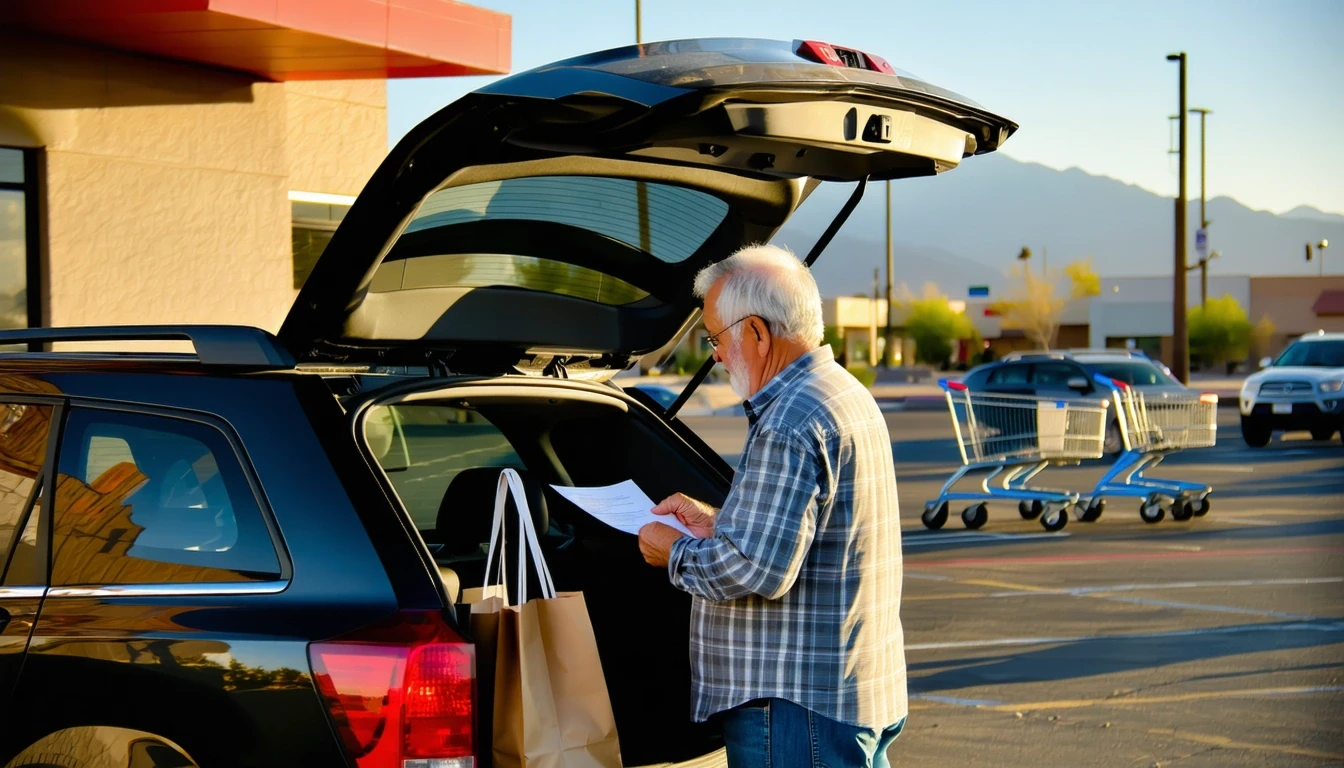
Grocery prices in Blue Diamond feel shaped less by the town itself and more by its position as a small community outside the Las Vegas metro area. Blue Diamond doesn’t have large-format grocery stores within its immediate boundaries, so most residents drive to nearby Henderson, southwest Las Vegas, or occasionally further into the metro for their main shopping trips. That distance creates a practical tradeoff: you’re not paying urban-core premiums, but you’re also not walking to a neighborhood grocer. The experience tends to feel more deliberate—people plan bigger trips, stock up intentionally, and think about fuel and time as part of the grocery equation.
For singles and couples, this setup can work smoothly if routines are flexible and storage space isn’t an issue. A once-weekly trip to a mid-tier chain in Henderson covers most needs without feeling like a major expedition. For families with children, especially those managing school schedules, activities, and varying appetites, the lack of a nearby fallback store adds friction. Running out of milk or needing a last-minute ingredient means another drive, and that compounds over time. Families in Blue Diamond tend to feel grocery costs not just in prices but in logistics—how much planning it takes to avoid waste, manage variety, and keep the household running smoothly.
Grocery pressure in Blue Diamond is also sensitive to income and household size in ways that aren’t always obvious. A two-person household with steady income can absorb the cost of driving to a premium grocer occasionally or choosing organic staples without reshaping their budget. A family of four or five on a tighter income feels every decision more acutely: store choice, brand choice, and trip frequency all matter. The absence of ultra-discount options within a few minutes means that cost-conscious households often drive further to access those savings, which shifts the pressure from the register to the fuel tank and the clock.
Store Choice and Price Sensitivity
In Blue Diamond, grocery cost pressure is less about a single “average” price level and more about which tier of store you’re willing to drive to and how often. Discount grocers—typically no-frills chains focused on private-label staples and limited selection—offer the lowest per-item costs but require the most planning. You’re buying in larger quantities, accepting less variety, and often driving a bit further to reach them. For households that can plan meals a week ahead and have the storage space, this tier delivers meaningful savings. For households that need flexibility, frequent fresh items, or specialty products, the savings get harder to capture.
Mid-tier chains—the familiar regional and national names—sit closer to Henderson and southwest Las Vegas and offer the best balance for most Blue Diamond households. Prices are higher than discount stores but not prohibitively so, and the selection is broad enough to handle varied diets, preferences, and last-minute needs. These stores feel like the default for families and working couples who want predictability without driving across the metro. You’re paying a convenience premium, but it’s a manageable one if your income supports it.
Premium grocers—whether specialty organic markets or upscale chains—are available in the broader Las Vegas metro but require a longer drive from Blue Diamond. These stores cater to households prioritizing organic produce, prepared foods, specialty ingredients, or a curated shopping experience. The price gap is substantial: staples can cost fifty to seventy percent more than discount equivalents, and prepared items or specialty cuts push even higher. For Blue Diamond residents, premium shopping tends to be occasional or supplemental rather than the primary strategy, unless household income makes the premium feel negligible.
The practical reality is that most Blue Diamond households mix tiers. A monthly bulk trip to a discount grocer for pantry staples and household goods, weekly mid-tier runs for fresh items and variety, and occasional premium stops for specific ingredients or treats. That mix lets families control costs without feeling deprived, but it also requires more planning, more driving, and more mental overhead than living next to a single well-stocked store.
What Drives Grocery Pressure in Blue Diamond
Grocery pressure in Blue Diamond is driven as much by structure as by price. The town’s small size and distance from major retail corridors mean that access, not affordability alone, shapes how people experience food costs. Households with flexible schedules, reliable transportation, and storage space can optimize around lower-cost stores and bulk buying. Households without those advantages—single parents, older residents on fixed incomes, or anyone managing unpredictable work hours—face higher effective costs because their options narrow.
Income interaction is another key driver. In a metro area where housing costs are moderate but not trivial, grocery spending becomes one of the few budget categories where households feel they have control. Higher-income households treat groceries as a quality-of-life lever: they drive to premium stores, buy organic, and don’t track per-item prices closely. Lower-income households treat groceries as a pressure point: every trip is planned, every brand choice is weighed, and store loyalty is driven entirely by price. The same physical distance to the same stores feels completely different depending on where you sit financially.
Household size amplifies everything. A single person or couple can absorb inefficiency—buying smaller quantities, shopping more frequently, or choosing convenience over savings—without destabilizing their budget. A family of four or more can’t. Every percentage point of price difference scales across dozens of items per trip, and waste becomes a real cost. Families in Blue Diamond tend to feel grocery pressure earlier and more intensely than smaller households, even at the same income level, because the volume of food moving through the house makes every decision more consequential.
Regional distribution patterns also matter. Blue Diamond sits outside the densest parts of the Las Vegas metro, which means fewer stores compete for residents’ business. That reduces price competition slightly and shifts the burden onto households to drive further if they want access to the lowest-cost options. It’s not that groceries are expensive in Blue Diamond—it’s that capturing the lowest prices requires more effort, more time, and more fuel than it would in a denser suburb with three competing chains within two miles.
Practical Ways People Manage Grocery Costs
Households in Blue Diamond manage grocery costs primarily through planning and store choice rather than extreme couponing or deprivation. The most effective strategy is consolidating trips: one large weekly or biweekly run to a mid-tier or discount grocer, supplemented by smaller trips only when necessary. This reduces fuel costs, limits impulse purchases, and makes it easier to stick to a list. Families that plan meals a week ahead and shop with a detailed list consistently spend less than those who shop reactively or frequently, even if they’re using the same stores.
Another common approach is splitting shopping across tiers. Buying shelf-stable staples, frozen goods, and household items in bulk from a discount grocer once a month, then handling fresh produce, dairy, and proteins through weekly mid-tier runs. This captures the savings where they’re largest—on high-volume, low-variability items—without sacrificing quality or variety on the things that matter most to household satisfaction. It requires more logistical effort, but for cost-conscious families, the tradeoff is worth it.
Brand flexibility is another lever. Store brands and private-label products at mid-tier and discount grocers are often produced by the same manufacturers as name brands but priced twenty to thirty percent lower. Households that treat brands as interchangeable rather than loyalty markers can reduce their grocery bills meaningfully without changing what they eat. The exceptions are items where quality or taste differences are noticeable—condiments, snacks, or specialty ingredients—but even there, selective brand loyalty costs less than blanket loyalty.
Seasonal awareness helps, too. Produce prices fluctuate with availability, and buying what’s in season locally or regionally tends to be cheaper and fresher. Families in Blue Diamond who adjust their meal planning around seasonal produce rather than fixed recipes find it easier to keep costs stable without feeling restricted. This doesn’t require expert knowledge—just paying attention to what’s on sale and what’s priced unusually high, then adjusting accordingly.
Finally, minimizing waste is one of the highest-return behaviors. Food that spoils before it’s eaten is money lost at full retail price. Households that use leftovers intentionally, freeze surplus ingredients, and track what’s in the fridge and pantry before shopping avoid the silent budget drain that comes from over-buying or under-using what they already have. For families, this can be one of the largest sources of hidden savings, larger than switching stores or clipping coupons.
Groceries vs Eating Out
The tradeoff between cooking at home and eating out in Blue Diamond is shaped by the same access dynamics that affect grocery shopping. Blue Diamond itself has limited dining options, so eating out typically means driving into Henderson or Las Vegas, just like grocery shopping. That makes the decision less about convenience and more about intent: eating out is a planned activity, not a fallback when you don’t feel like cooking. For families, this structure naturally tilts the balance toward home cooking, because the friction of driving somewhere for dinner is often higher than the friction of preparing a meal.
For singles and couples, especially those with higher incomes or demanding work schedules, the calculus is different. Eating out a few times a week can feel like a reasonable tradeoff for time and mental energy, even if the per-meal cost is three to four times higher than cooking. The key difference is that in Blue Diamond, eating out rarely happens impulsively. It’s a choice made earlier in the day or week, which gives households more control over frequency and cost than they might have in a denser area with restaurants on every block.
The cost gap between groceries and dining is still substantial. A home-cooked meal for a family of four might represent eight to twelve dollars in ingredient costs, depending on complexity and quality. The same family eating out at a casual restaurant is looking at fifty to seventy dollars before tip, and that’s for a mid-tier experience. Over a month, even a modest shift from two restaurant meals per week to one can free up meaningful budget room, especially for households feeling pressure in other categories. The challenge is that cooking requires time, energy, and skill, and those aren’t evenly distributed across households.
FAQs About Grocery Costs in Blue Diamond (2026)
Is it cheaper to shop in bulk in Blue Diamond? Shopping in bulk can lower per-unit costs significantly, especially for shelf-stable staples, frozen goods, and household items, but it requires upfront cash, storage space, and the ability to use items before they expire. For families and couples with predictable consumption patterns, bulk buying from discount or warehouse stores is one of the most effective ways to reduce grocery pressure over time.
Which stores in Blue Diamond are best for low prices? Blue Diamond itself doesn’t have large grocery stores, so most residents drive to nearby Henderson or southwest Las Vegas. Discount-tier grocers offer the lowest prices but require more planning and larger trips, while mid-tier chains provide better convenience and selection at moderate prices. The best choice depends on how much time and fuel you’re willing to trade for per-item savings.
How much more do organic items cost in Blue Diamond? Organic products typically cost thirty to sixty percent more than conventional equivalents, depending on the category. Produce and dairy tend to show the largest premiums, while packaged goods and grains show smaller gaps. For households prioritizing organic options, shopping at premium grocers or natural food stores in the broader metro offers the widest selection, but at the highest price point.
How do grocery costs for two adults in Blue Diamond tend to compare to nearby cities? Grocery costs in Blue Diamond are largely determined by which stores residents choose to drive to, rather than by the town itself. Prices at the same chain stores in Henderson or Las Vegas are nearly identical, so the main difference is the time and fuel cost of reaching them. Compared to more urban parts of the metro, Blue Diamond households may face slightly less price competition but also avoid some of the convenience markups common in denser neighborhoods.
How do households in Blue Diamond think about grocery spending when cooking at home? Most households treat grocery spending as one of the few budget categories where they have direct control. Planning meals ahead, shopping with a list, mixing store tiers, and minimizing waste are the most common strategies. Families tend to feel grocery pressure more intensely than smaller households because the volume of food needed scales quickly, making every price decision more consequential.
Does shopping at premium grocers make sense for Blue Diamond families? Premium grocers can make sense for households with higher incomes who prioritize quality, variety, or specific dietary preferences, but they require a longer drive and come with substantially higher per-item costs. Most Blue Diamond families use premium stores occasionally or for specific items rather than as their primary grocer, reserving the bulk of their shopping for mid-tier or discount options.
How does distance to grocery stores affect food costs in Blue Diamond? Distance doesn’t change the price on the shelf, but it does change the effective cost of groceries by adding fuel, time, and planning overhead. Households that can consolidate trips and shop efficiently absorb this cost easily, while those needing frequent or last-minute trips feel the friction more acutely. For families, the lack of a nearby fallback store means that running out of something mid-week is more disruptive and costly than it would be in a denser area.
How Groceries Fit Into the Cost of Living in Blue Diamond
Groceries sit in the middle of Blue Diamond’s cost structure—less dominant than housing, more controllable than utilities, and more predictable than transportation. For most households, food costs represent one of the few budget categories where behavior and planning directly influence outcomes. You can’t negotiate your rent or eliminate your cooling costs in summer, but you can choose which store to drive to, which brands to buy, and how much waste to tolerate. That sense of control makes groceries feel less oppressive than fixed costs, even when the absolute dollars are significant.
For families, groceries interact closely with what a budget has to handle in Blue Diamond. A household spending four hundred dollars per month on groceries might feel comfortable if housing and transportation are manageable, but strained if those categories are already stretched. The flexibility of grocery spending—your ability to trade down, plan better, or shift tiers—makes it a natural release valve when other costs rise. But that flexibility has limits, especially for larger households where cutting food quality or variety too aggressively affects health, satisfaction, and household stability.
The practical advice for anyone moving to or living in Blue Diamond is to treat grocery costs as a planning challenge, not a fixed expense. Understand which stores are within reasonable driving distance, what each tier offers, and how your household size and income shape your sensitivity to price differences. Build routines that minimize trip frequency and waste, and be honest about where you’re willing to trade convenience for savings. Groceries in Blue Diamond aren’t unusually expensive, but managing them well requires more intentionality than in denser areas with more nearby options.
For a fuller picture of how grocery costs fit alongside housing, utilities, transportation, and other essentials, the monthly budget breakdown walks through the complete financial structure households navigate in Blue Diamond. Groceries are one piece of that picture, but understanding how all the pieces interact is what turns cost awareness into confident decision-making.
How this article was built: This article draws on regional cost patterns, household budgeting principles, and the structural realities of grocery access in small communities near metro areas. It reflects how distance, store choice, and household composition shape food costs, without simulating specific spending totals or guaranteeing outcomes.