
Imagine a household earning what feels like a solid income in most mid-sized cities—enough to cover rent, groceries, and bills with a little left over. They’re drawn to Blue Diamond by the promise of quiet desert living, lower housing pressure than Las Vegas, and a slower pace. Within months, they realize their income doesn’t stretch the way they expected. Not because costs are wildly high, but because distance, isolation, and time create friction that money alone can’t solve. Comfort here isn’t just about earnings—it’s about whether your lifestyle expectations align with what a small, remote community actually offers.
What “Living Comfortably” Means in Blue Diamond
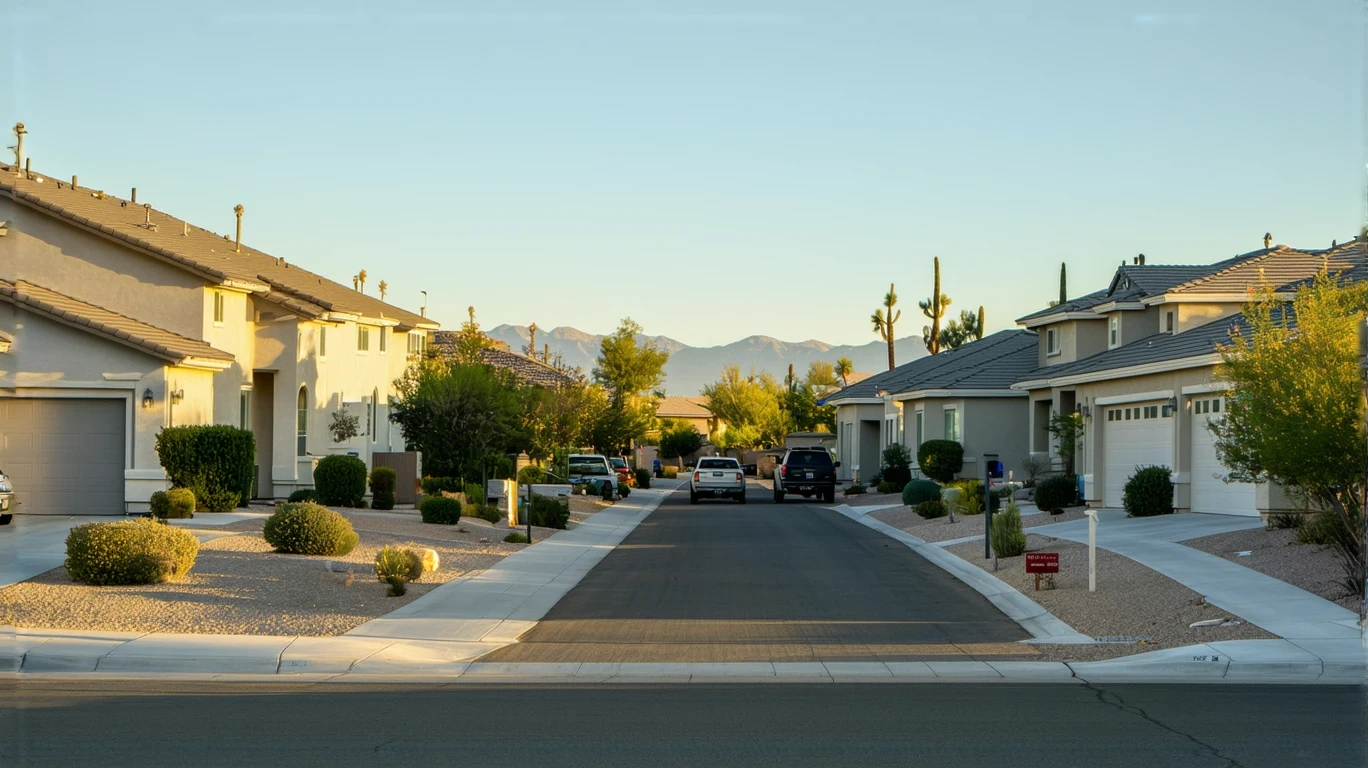
Comfort in Blue Diamond looks different than it does in a connected suburb or urban neighborhood. It’s not defined by walkable coffee shops, quick errands, or abundant dining options. Instead, it’s shaped by space, quiet, and proximity to dramatic desert landscapes. For some households, that tradeoff feels like freedom. For others, it feels like isolation.
Living comfortably here means accepting that nearly every errand, appointment, or social outing requires planning and drive time. It means your home becomes the center of daily life—not a base you leave frequently. It means utility bills swing with the seasons, and summer cooling costs can dominate household budgets. It means your income needs to cover not just rent or a mortgage, but the time cost of distance and the reality that convenience comes at a premium.
Comfort is contextual. A household that thrives on solitude, outdoor access, and low-density living may feel more comfortable here on a modest income than a higher-earning household that expects quick access to services, dining variety, or social infrastructure. The question isn’t whether your income is “enough”—it’s whether your income supports the lifestyle Blue Diamond actually offers.
Where Income Pressure Shows Up First
Housing in Blue Diamond doesn’t follow the same patterns as nearby Las Vegas. Supply is limited, and options tend to cluster around single-family homes or small rental properties. That scarcity can create unexpected pressure, even when headline prices seem reasonable. Households often face a choice: accept what’s available, extend the commute further, or stretch the budget to secure space that meets their needs.
Transportation costs aren’t just about gas prices—they’re about time. Blue Diamond sits roughly 20 miles from the western edge of Las Vegas, and most employment, healthcare, and retail centers lie even farther east. A commute that looks manageable on a map can consume hours each week, and that time cost compounds when both adults in a household work, or when children need to reach schools and activities. Families feel this pressure most acutely: every soccer practice, doctor’s visit, or grocery run becomes a logistical event.
Utilities in the desert aren’t optional expenses—they’re survival infrastructure. Summer heat drives cooling costs sharply upward, and households without efficient systems or shaded homes face bills that can rival rent. Winter heating needs are lighter but still present. The volatility matters more than the averages: a household that can absorb a summer spike without cutting back elsewhere experiences far less stress than one operating month-to-month.
For families, pressure also emerges around access to schools, childcare, and extracurriculars. Blue Diamond’s small size means many of these services require travel, and that travel requires either time or money—often both. Single adults and couples without children avoid some of this friction, but they face their own version: social isolation, limited dining and entertainment options, and the need to drive for nearly every non-work activity.
How the Same Income Feels Different by Household
Households at similar income levels often experience very different pressure depending on their composition, expectations, and flexibility.
Single adults with remote work or flexible schedules can find Blue Diamond surprisingly workable. Without school logistics or partner coordination, they control their own time. If they value solitude, outdoor access, and low-density living, the isolation feels like an asset rather than a cost. But single adults who commute daily, or who rely on social infrastructure for connection, often feel the distance more acutely. Their income may cover expenses, but the lifestyle cost—measured in time and limited spontaneity—can erode comfort quickly.
Couples benefit from shared housing costs and the ability to divide logistics. One partner might handle a longer commute while the other manages errands closer to home. That flexibility reduces pressure, but it doesn’t eliminate it. Couples still face the same transportation costs, the same utility swings, and the same scarcity of nearby services. Comfort depends on whether both partners embrace the tradeoffs, or whether one feels stranded by the location.
Families face the most complex pressure. Children add school commutes, activity logistics, and healthcare appointments—all of which require time and fuel. Families also tend to need more space, which narrows housing options and increases costs. A family income that feels comfortable in a connected suburb may feel stretched in Blue Diamond, not because costs are higher across the board, but because the time and logistical costs don’t show up in a budget spreadsheet. Parents often describe feeling like they spend more time driving than living.
The Comfort Threshold (Qualitative)
Comfort in Blue Diamond emerges when income creates enough margin that households stop making decisions based purely on cost. It’s the point where a summer utility spike doesn’t force cutbacks elsewhere. Where housing options expand beyond “whatever’s available.” Where transportation costs feel manageable rather than punishing. Where saving becomes plausible, not aspirational.
That threshold isn’t a number—it’s a condition. It depends on housing type, commute length, household size, and lifestyle expectations. A couple in a well-insulated home with remote work may reach it at a much lower income than a family with two commuters and school-aged children. A household that embraces isolation and outdoor recreation may feel comfortable sooner than one that expects frequent dining, entertainment, and social options.
The transition point is recognizable: bills stop dictating behavior. Choices expand. Tradeoffs ease. Households below that threshold describe constant calculation—every trip, every purchase, every decision filtered through cost. Households above it describe breathing room, even if money isn’t abundant. Blue Diamond rewards households whose income aligns with the lifestyle the place actually supports, not the lifestyle they wish it offered.
Why Online Cost Calculators Get Blue Diamond Wrong
Most cost-of-living calculators treat Blue Diamond as a data point—a set of averages for housing, utilities, and transportation. They miss everything that matters. They don’t account for the time cost of distance. They don’t capture the logistical friction of raising children in a small, isolated community. They don’t reflect the reality that “average” utility costs in the desert mean wild seasonal swings, not steady monthly bills.
Calculators also assume lifestyle is constant across locations. They treat a dollar in Blue Diamond the same as a dollar in a walkable suburb, ignoring that proximity, convenience, and access have value that doesn’t appear in price indexes. A household that moves here expecting calculator-based totals often feels blindsided—not because the numbers were wrong, but because the numbers didn’t explain what daily life actually requires.
People feel surprised after moving because they underestimated isolation, overestimated convenience, and didn’t account for the compounding effect of distance on every aspect of household logistics. The issue isn’t affordability in the abstract—it’s whether their income supports the specific demands of living here.
How to Judge Whether Your Income Fits Blue Diamond
Rather than asking “Is my income enough?”, ask these questions:
- How sensitive are you to housing tradeoffs? Can you accept limited options, or do you need choice and flexibility?
- Can you absorb seasonal utility swings? Does a summer cooling spike force cutbacks, or can you ride it out?
- Is time or money your limiting factor? If commuting and errands consume hours each week, does your income justify that cost?
- How much do you rely on nearby services? If you expect quick access to dining, healthcare, shopping, and entertainment, does your income cover the time and fuel to reach them?
- How much flexibility do you expect month to month? Can you handle variability, or do you need predictable, stable costs?
- Does your household embrace isolation, or endure it? If Blue Diamond’s remoteness feels like a burden rather than a benefit, no income level will create comfort.
These questions don’t produce a pass/fail score. They surface whether your income, lifestyle, and expectations align with what Blue Diamond actually offers. Comfort here isn’t about earning more—it’s about wanting what the place provides.
FAQs About Living Comfortably in Blue Diamond
Is Blue Diamond cheaper than Las Vegas?
In some ways, yes—housing pressure is generally lower, and the pace of life reduces certain discretionary costs. But transportation costs rise due to distance, utility costs swing with desert heat, and the time cost of accessing services can offset financial savings. Cheaper doesn’t always mean more comfortable.
Can a single income support a family here?
It depends entirely on the income level, housing situation, and whether the family can manage logistics with one working parent. Families with one income face the same transportation and utility costs as dual-income households, but with less financial cushion. It’s workable for some, but it requires careful alignment between income and lifestyle expectations.
Do remote workers have an advantage in Blue Diamond?
Yes—significantly. Remote work eliminates daily commute costs and time, and it allows households to treat Blue Diamond as a home base rather than a commuting outpost. Remote workers can embrace the isolation without paying the transportation penalty that defines life here for most households.
How much do utilities really swing in summer?
Enough that households notice and adjust behavior. Cooling costs can dominate summer budgets, especially in older or poorly insulated homes. The swing isn’t just financial—it’s behavioral. Comfortable households absorb it without stress. Stretched households feel it as a recurring crisis.
What income level feels “comfortable” here?
There’s no universal number. Comfort depends on household size, housing type, commute length, and whether your lifestyle aligns with isolation and distance. A couple in a modest home with remote work may feel comfortable at a much lower income than a family with two commuters and school-aged children. The threshold is personal, not statistical.
How this article was built: This article draws on qualitative analysis of small-community dynamics, desert living patterns, and household decision factors in remote locations. It reflects how income pressure, lifestyle expectations, and logistical realities interact in Blue Diamond, NV, without relying on cost averages or income calculators.
Blue Diamond can work well for some households—but only if expectations match reality. Comfort here isn’t about earning a certain amount. It’s about whether your income supports the life this place actually offers: space, quiet, and distance. If that tradeoff feels like freedom, Blue Diamond may fit. If it feels like compromise, no income level will make it comfortable.