
Is Blue Diamond expensive to live in? Blue Diamond is considered moderately priced to expensive in 2026, shaped primarily by limited housing inventory in an isolated desert setting near Red Rock Canyon. The value proposition depends on housing entry cost versus total car dependence, with distance to services creating ongoing transportation exposure that rivals or exceeds housing pressure for many households.
When Maya and her partner started looking for a place near Las Vegas with more space and access to hiking, Blue Diamond kept appearing in their search results. The photos were stunning—desert views, quiet streets, Red Rock Canyon practically in the backyard. But as they dug deeper, they realized the cost structure here wasn’t just about the rent or mortgage. It was about the 25-mile round trip to the grocery store, the fuel bills that added up faster than expected, and the reality that every errand required planning. Blue Diamond wasn’t expensive in the traditional sense—it was expensive in a way that revealed itself slowly, through distance and dependency.
Overall Cost of Living Snapshot
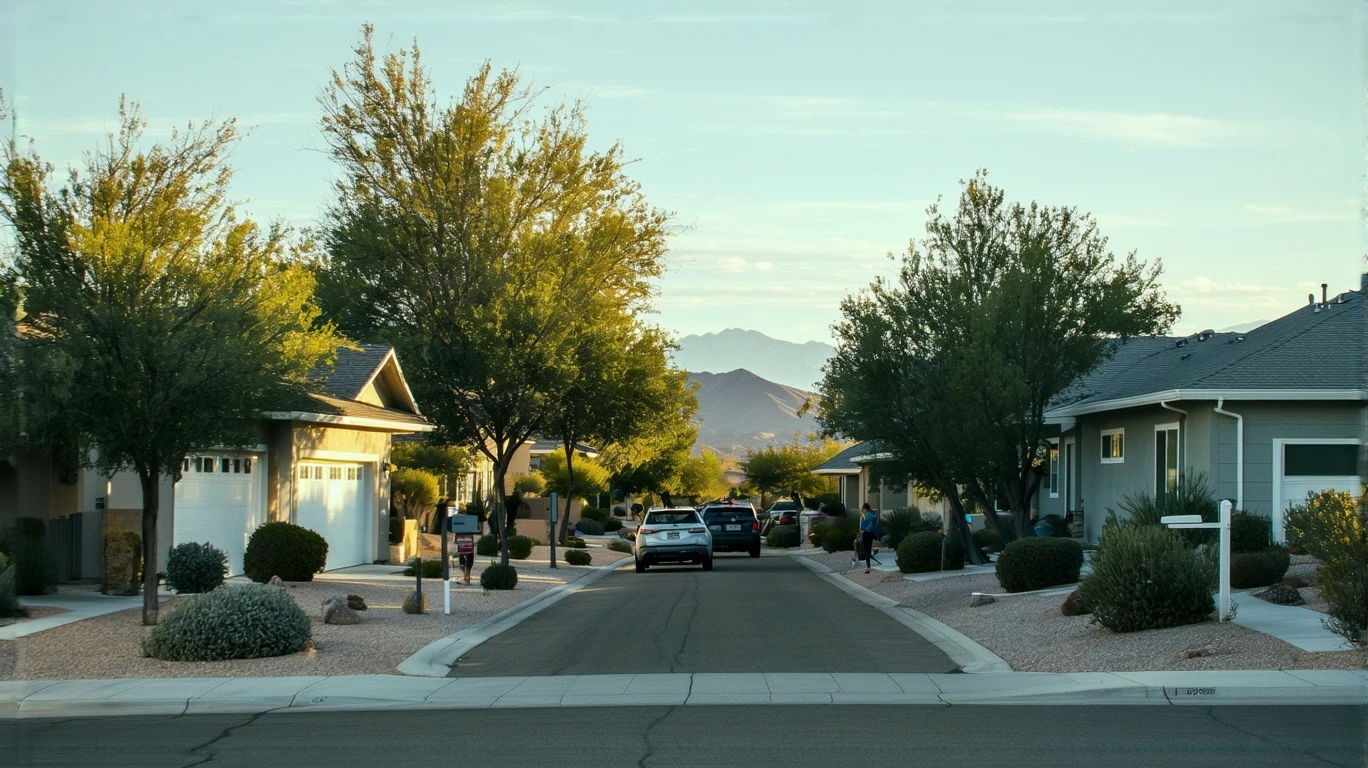
Blue Diamond is an unincorporated town in Clark County, Nevada, situated along the western edge of the Las Vegas Valley near Red Rock Canyon National Conservation Area. Its cost structure is defined by two dominant forces: housing scarcity in a low-density, recreation-adjacent setting, and total reliance on personal vehicles for every aspect of daily life.
Unlike nearby Henderson or Summerlin, Blue Diamond has no commercial district, no grocery stores, no gas stations, and no public transit. Residents drive to Las Vegas metro for work, errands, healthcare, and schools. This creates a cost profile where housing entry cost and transportation exposure together form the primary financial pressure, with utilities adding seasonal volatility due to desert heat.
The town’s appeal lies in space, quiet, and proximity to outdoor recreation. But that appeal comes with a tradeoff: every household must absorb the cost of distance—fuel, vehicle maintenance, time, and planning burden. For remote workers or retirees who don’t commute daily, the equation shifts. For families with school-age children or dual commuters, transportation becomes a recurring, non-negotiable expense that rivals housing itself.
Driver verdict: Cost pressure in Blue Diamond is dominated by housing entry barriers and mandatory vehicle dependence. Surprises come from the cumulative weight of distance—fuel, maintenance, and the hidden cost of needing a reliable car at all times.
Housing Costs (Primary Driver)
Blue Diamond’s housing market is small, specialized, and shaped by its location. The town offers single-family homes on larger lots, often with desert landscaping and mountain views. Inventory is limited, and turnover is low. Homes here appeal to buyers seeking space, recreation access, and separation from urban density, which creates upward pressure on prices relative to the town’s size and isolation.
Renting in Blue Diamond is uncommon. The housing stock is predominantly owner-occupied, and rental listings are rare. For newcomers, this means the primary path to living here is purchasing a home, which requires both upfront capital and comfort with long-term commitment to a car-dependent lifestyle.
Ownership here is a tradeoff: you gain space, views, and proximity to Red Rock Canyon, but you accept distance from services, longer commutes, and higher transportation costs. For buyers who value outdoor access and don’t mind driving, the equation works. For those who prioritize convenience or walkability, it doesn’t.
Conclusion: Blue Diamond is a buying market, not a renting one. It rewards households who can afford entry and who structure their lives around driving.
| Housing Type | Cost Anchor | What That Buys You |
|---|---|---|
| Single-family home (ownership) | Limited inventory, recreation premium | Space, desert views, proximity to Red Rock Canyon, quiet setting |
| Rental | Rare, informal market | Occasional listings, typically single-family homes, limited options |
Utilities & Energy Risk
Desert living brings predictable seasonal utility exposure. Blue Diamond experiences triple-digit summer heat, creating an extended cooling season that dominates electricity usage from May through September. Homes here often rely on central air conditioning running continuously during peak summer months, and the combination of heat intensity and duration makes cooling the largest single utility expense for most households.
Heating costs are lower but still present. Winter nights in the high desert can drop below freezing, and homes may use electric heat, propane, or natural gas depending on the property. Propane users face delivery logistics and price volatility, adding a layer of planning and cost unpredictability that grid-connected homes avoid.
Water and waste services vary by property. Some homes are on well systems, others on municipal water. Waste services may require private hauling contracts. These details matter—they shift fixed costs into variable ones and require active management.
Risk classification: moderate to major. Summer cooling exposure is significant and unavoidable. Propane dependence, where present, adds volatility. Utility costs here are not a surprise in direction, but they are a surprise in magnitude for newcomers unfamiliar with desert heat and the cost of maintaining comfort in an isolated setting.
Groceries & Daily Costs
Blue Diamond has no grocery stores, pharmacies, or retail services within town limits. Residents drive to Las Vegas metro—typically to nearby areas like Summerlin, Spring Valley, or Henderson—for all shopping needs. This transforms grocery shopping from a convenience errand into a planned trip, and it embeds transportation cost into every purchase.
Grocery prices in the Las Vegas metro area are broadly in line with regional averages, but the cost of accessing them is not. Fuel, time, and vehicle wear become part of the grocery equation. Households adapt by consolidating trips, buying in bulk, and planning around other errands, but the friction remains.
For families, this adds logistical complexity. Forgotten items mean another 30-minute round trip. Last-minute needs require either stocking a deep pantry or accepting the drive. The cost isn’t just financial—it’s time, flexibility, and spontaneity.
Daily costs in Blue Diamond are less about price per item and more about access friction. The town rewards households who plan ahead and penalizes those who rely on convenience.
Transportation Reality
Transportation in Blue Diamond is not optional. Every household needs at least one reliable vehicle, and most need two. There is no public transit, no ride-sharing presence, and no walkable access to services. Commuters face a minimum 20–30 minute drive to reach employment centers in Las Vegas, and longer commutes to Henderson or other parts of the valley are common.
Fuel costs accumulate quickly. A household with two commuters driving daily to Las Vegas metro can easily cover several hundred miles per week, and that mileage translates directly into fuel expense, oil changes, tire wear, and maintenance cycles. Vehicle reliability becomes a cost factor in itself—breakdowns here are more disruptive and expensive than in urban settings with backup options.
For remote workers or retirees, transportation pressure is lower but still present. Even without a daily commute, errands require driving, and the distances add up. Medical appointments, social activities, and routine shopping all require planning and fuel.
Transportation is a recurring exposure in Blue Diamond, not a discretionary one. It functions as a second fixed cost alongside housing, and for many households, it rivals or exceeds utility spending. The town’s isolation makes driving non-negotiable, and that dependence shapes the entire cost structure.
Cost Exposure Profiles
Cost exposure in Blue Diamond varies sharply based on household structure and lifestyle, but certain pressures are universal: housing entry barriers and transportation dependence dominate for nearly everyone.
Low-exposure households are typically remote workers or retirees who own their homes outright, drive infrequently, and have structured their lives around minimal errands. For these households, the primary costs are utilities (seasonal cooling), vehicle maintenance, and property upkeep. The isolation is an asset, not a burden, and the cost structure is manageable because distance doesn’t translate into daily expense.
High-exposure households are dual-income commuters, families with school-age children, or anyone whose daily routine requires frequent trips to Las Vegas metro. For these households, transportation becomes a dominant cost driver—fuel, maintenance, and time all compound. Add in cooling costs during summer, and the cost structure becomes layered and relentless. Families also face logistical complexity: school drop-offs, extracurriculars, and social activities all require driving, and the distances make spontaneity expensive.
The key structural difference is this: Blue Diamond rewards households whose lives are centered at home and penalizes those whose lives require frequent access to urban services. Ownership versus renting matters less here than commute length and household mobility needs. A renter with no commute may have lower total costs than a homeowner driving 50 miles daily.
Utility volatility affects everyone, but transportation exposure is the variable that separates manageable cost structures from overwhelming ones. Households considering Blue Diamond must evaluate not just whether they can afford the home, but whether they can sustain the distance.
Frequently Asked Questions
Is Blue Diamond more affordable than nearby Las Vegas suburbs in 2026? Blue Diamond offers more space and lower density than urban Las Vegas, but affordability depends on total cost structure, not just housing. Transportation costs here often exceed what residents save on housing, especially for commuters.
What does a typical cost profile look like in Blue Diamond? The typical profile is dominated by housing entry cost, high transportation expense from mandatory driving, and seasonal utility swings due to desert heat. Households here spend more on fuel and vehicle maintenance than in walkable or transit-served areas.
Do utilities cost more in Blue Diamond than in Henderson or Summerlin? Cooling costs are comparable across the Las Vegas Valley due to shared climate, but Blue Diamond homes on propane or well systems may face higher or less predictable utility expenses than grid-connected suburban homes.
What costs tend to surprise newcomers in Blue Diamond? Fuel and vehicle maintenance costs surprise most newcomers, along with the time cost of driving for every errand. Propane delivery, if applicable, and higher home insurance due to wildfire exposure near Red Rock also catch some households off guard.
Are property taxes higher in Blue Diamond than in other Clark County areas? Property taxes are set at the county level, so rates are consistent across Clark County. However, home values in Blue Diamond may carry a premium due to location and lot size, which can result in higher absolute tax bills.
Is Blue Diamond a good fit for families with children? Families here must account for long school commutes, limited local activities, and the need for reliable transportation at all times. It works well for families who value space and outdoor access, but it requires significant logistical planning and higher transportation costs.
Can retirees live affordably in Blue Diamond? Retirees who own their homes and drive infrequently can find Blue Diamond manageable, especially if they value quiet and recreation access. However, distance to healthcare and services becomes more significant as mobility needs change over time.
How does Blue Diamond compare to other small towns near Las Vegas? Blue Diamond is more isolated than towns like Boulder City or Mesquite, which have their own commercial centers and services. The tradeoff is proximity to Red Rock Canyon and a smaller, quieter community, but that comes with higher transportation dependence and fewer local amenities.
—