
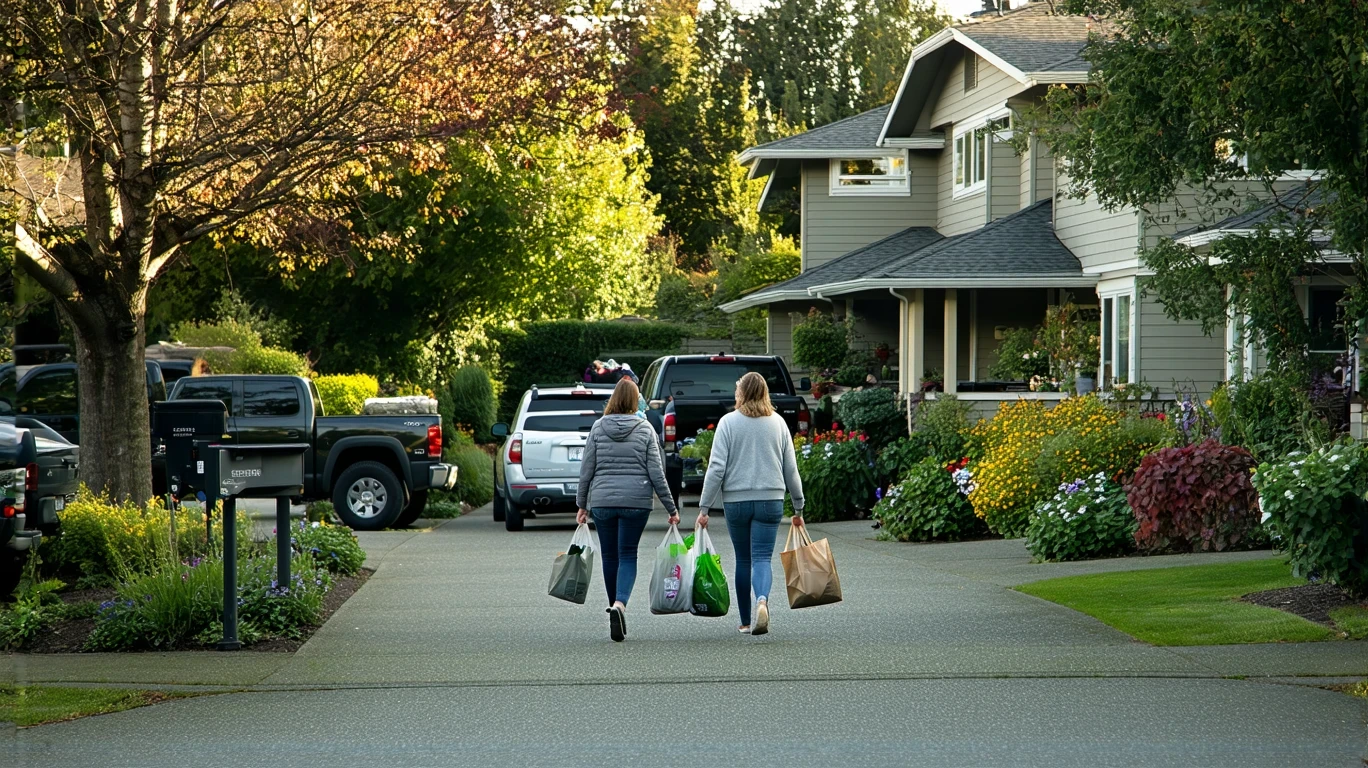
How Grocery Costs Feel in Bothell
Grocery prices in Bothell sit noticeably above the national baseline, driven by the broader Seattle metro cost structure and a regional price index of 113—meaning everyday staples cost roughly 13% more here than in an average U.S. city. For households moving to Bothell or budgeting carefully, that premium shows up most clearly in weekly shopping trips: the same cart of basics—milk, eggs, chicken, bread—costs more than it would in much of the country, and the gap compounds quickly for families buying in volume.
That said, grocery cost pressure in Bothell is highly income-sensitive. With a median household income of $127,944 per year, many residents absorb the regional price premium without major lifestyle adjustments. For these households, grocery spending feels manageable, even routine. But for singles, younger renters, or families earning below the metro median, food costs take a larger share of monthly income and require more active management. The difference isn’t just about prices—it’s about how much room a household has to absorb variability, choose premium options, or shop without planning every trip.
Bothell’s food retail landscape also shapes how grocery costs feel day-to-day. Food shopping here often means driving to specific corridors where grocery options cluster. While some neighborhoods have walkable access to convenience stores or smaller markets, the medium grocery density means households typically plan trips to reach their preferred store tier rather than walking to the nearest option. This clustering pattern makes store choice more intentional—and more consequential for weekly food costs. Families who default to the closest option may pay more than those willing to drive a bit farther to access discount or mid-tier chains.
Grocery Price Signals (Illustrative)
These prices illustrate how staple items tend to compare locally—not a full shopping list. They reflect the regional price premium and help anchor what “higher than average” actually means at the shelf level. Prices vary by store tier, season, and promotion, so treat these as reference points rather than guarantees.
| Item | Illustrative Price |
|---|---|
| Bread (per pound) | $2.07/lb |
| Milk (half-gallon) | $4.57 |
| Eggs (dozen) | $3.06 |
| Chicken (per pound) | $2.28/lb |
| Ground beef (per pound) | $7.56/lb |
| Cheese (per pound) | $5.35/lb |
| Rice (per pound) | $1.22/lb |
Items like ground beef and cheese show the regional premium most clearly—these are everyday staples, not specialty products, yet they sit well above national averages. For a family of four buying these items weekly, the cumulative effect is significant. Singles and couples may notice the premium less acutely, but it still shapes decisions around meal planning, protein choices, and whether to buy in bulk.
Store Choice & Price Sensitivity
Grocery price pressure in Bothell varies sharply by store tier, and understanding that range is one of the most practical ways to manage food costs. Discount grocers—often featuring store brands, no-frills layouts, and limited selection—offer the lowest per-item prices and appeal strongly to budget-conscious households, especially those buying staples in volume. Mid-tier chains provide a balance: broader selection, frequent promotions, and competitive pricing on everyday items, making them the default choice for many Bothell families. Premium grocers emphasize organic options, specialty products, and prepared foods, but those conveniences come with noticeably higher checkout totals.
The difference between tiers isn’t just about price—it’s about friction and access. Because grocery options in Bothell cluster along specific corridors rather than being evenly distributed, reaching a discount store may require a longer drive or a detour from a daily commute. For households with tight schedules or limited transportation flexibility, that friction can push them toward the nearest mid-tier or premium option, even if it costs more. Conversely, households with time and mobility can treat store choice as a meaningful cost lever, saving significantly over the course of a month by prioritizing discount or mid-tier stops.
Store tier also interacts with household size. A single person buying for one may not notice much difference between a mid-tier and premium grocer—spending an extra dollar or two per trip feels minor. But a family of four buying the same items in larger quantities will see that gap multiply quickly. For these households, choosing a discount grocer over a premium one can mean the difference between grocery costs feeling tight and feeling sustainable, especially when combined with attention to unit pricing and seasonal promotions.
What Drives Grocery Pressure Here
The regional price index of 113 is the foundational driver—it reflects higher costs across the entire Seattle metro, from wholesale distribution to retail rent to labor. Bothell doesn’t set its own grocery prices in isolation; it inherits the cost structure of the broader region, and that structure consistently runs above the national average. For households moving from lower-cost metros, this adjustment can feel sudden and persistent, showing up in every shopping trip regardless of store choice or habits.
Income distribution also shapes how grocery costs feel across Bothell. High earners—those well above the metro median—experience grocery prices as a minor line item, easily absorbed within monthly expenses. But for households earning closer to or below the median, especially singles or single-income families, grocery costs take a larger share of disposable income and require more active trade-offs. This creates a bifurcated experience: for some, Bothell’s grocery costs are invisible; for others, they’re a weekly planning challenge.
Household size amplifies the regional premium. A couple might spend modestly more here than elsewhere, but a family of four or five buying in volume will feel the compounding effect of higher per-unit prices across dozens of items each week. Protein, dairy, and fresh produce—categories where Bothell’s prices run notably high—are also the categories families buy most frequently and in largest quantities, so the pressure concentrates where it’s hardest to avoid.
Seasonal variability plays a quieter but real role. Produce prices fluctuate with growing seasons and regional supply chains, and Bothell’s reliance on West Coast distribution means some items cost more in winter or during supply disruptions. Households that shop flexibly—buying what’s in season or on promotion rather than sticking to fixed lists—can soften some of this variability, but it requires planning and adaptability that not all households have time or flexibility to manage.
Practical Ways People Manage Grocery Costs
Store tier choice is the single most effective lever for managing grocery costs in Bothell. Households that prioritize discount grocers or mid-tier chains with strong private-label offerings can reduce per-item costs significantly without sacrificing quality on staples like rice, pasta, canned goods, and frozen vegetables. The key is treating store choice as intentional rather than default—planning trips around the stores that align with budget priorities rather than convenience alone.
Buying in bulk works well for non-perishables and household staples, especially for families or multi-person households. Warehouse clubs and bulk sections at mid-tier grocers offer lower per-unit pricing on items like rice, beans, flour, and canned goods, and these purchases stretch further when stored properly. Singles and couples may find bulk buying less practical unless they have storage space and can use items before they expire, but for larger households, it’s a reliable way to lower the effective cost per meal.
Meal planning reduces waste and helps households avoid impulse purchases or last-minute takeout, both of which drive up food costs without adding much value. Planning around sales, seasonal produce, and pantry staples allows households to shop strategically rather than reactively. This doesn’t require elaborate systems—just a rough weekly plan and a shopping list based on what’s actually needed rather than what looks appealing in the moment.
Private-label and store-brand products offer near-equivalent quality to name brands at meaningfully lower prices, especially for staples like milk, eggs, bread, pasta, and canned vegetables. In Bothell’s higher-cost environment, choosing store brands consistently across a shopping trip can lower checkout totals without requiring households to change what they eat or how they cook. This strategy works across all store tiers, but it’s especially effective at mid-tier and discount grocers where private-label selection is broad and quality is reliable.
Shopping seasonally and locally—when practical—can reduce costs on produce and sometimes dairy, though the savings are more modest than store tier or bulk strategies. Farmers’ markets and seasonal farm stands occasionally offer competitive pricing on in-season items, and they provide an alternative to the regional premium baked into conventional grocery chains. That said, this approach requires flexibility and isn’t a substitute for broader cost management; it works best as a complement to other strategies rather than a primary lever.
Groceries vs Eating Out (Directional)
Cooking at home in Bothell consistently costs less per meal than eating out, but the gap between the two varies by household type and dining habits. For families, the cost advantage of home cooking is substantial—preparing meals from grocery staples spreads the regional price premium across multiple servings, making the per-person cost much lower than restaurant or takeout pricing. For singles or couples, the gap narrows somewhat, especially when comparing home cooking to casual dining or fast-casual options, but grocery-based meals still come out ahead when planned efficiently.
The tradeoff isn’t purely financial. Eating out saves time and reduces planning burden, which matters for households with tight schedules, long commutes, or limited kitchen access. In Bothell, where food options cluster along corridors and aren’t always walkable, dining out also adds transportation friction unless it’s tied to an existing errand or commute. Households that eat out frequently—whether by choice or necessity—will feel that cost pressure more acutely than those who cook most meals at home, but the decision often hinges on time and convenience as much as price.
For households trying to balance cost and convenience, hybrid strategies work well: cooking staple meals at home during the week and dining out occasionally on weekends, or preparing simple meals from grocery staples and supplementing with takeout when time is short. This approach captures most of the cost savings of home cooking without requiring rigid meal planning or eliminating the flexibility that makes eating out appealing in the first place.
FAQs About Grocery Costs in Bothell (2026)
Is it cheaper to shop in bulk in Bothell? For non-perishables and household staples, bulk buying lowers per-unit costs and works especially well for families or multi-person households. Singles and couples may find it less practical unless they have storage space and can use items before they expire.
Which stores in Bothell are best for low prices? Discount grocers and mid-tier chains with strong private-label offerings tend to provide the lowest per-item costs. Store choice is one of the most effective levers for managing grocery expenses, especially for households buying in volume.
How much more do organic items cost in Bothell? Organic products typically carry a premium over conventional items, and that gap persists across store tiers. Households prioritizing organic options should expect meaningfully higher checkout totals, though the exact difference varies by category and season.
How do grocery costs for families in Bothell compare to nearby cities? Bothell’s grocery costs reflect the broader Seattle metro price structure, which runs above the national average. Families buying in volume will notice the regional premium more acutely than singles or couples, especially on protein, dairy, and fresh produce.
How do households in Bothell think about grocery spending when cooking at home? Most households treat grocery costs as a manageable but noticeable line item. Store tier choice, meal planning, and attention to unit pricing help control expenses, but the regional price premium means grocery costs here require more active management than in lower-cost metros.
Does shopping seasonally help lower grocery costs in Bothell? Buying produce in season can reduce costs modestly, especially at farmers’ markets or farm stands. However, this strategy works best as a complement to broader cost management—like store tier choice and bulk buying—rather than a primary lever.
How does grocery cost pressure vary by household size in Bothell? Singles and couples may absorb the regional price premium without major adjustments, but families buying in volume feel the compounding effect more acutely. Household size amplifies the impact of per-unit pricing, making store tier choice and bulk strategies especially important for larger households.
How Groceries Fit Into the Cost of Living in Bothell
Grocery costs in Bothell are a noticeable but secondary component of overall cost of living. Housing pressure dominates the financial landscape here—whether renting or owning—and utilities, transportation, and other fixed expenses follow closely behind. Groceries matter, especially for families or households managing tight budgets, but they’re more manageable than housing costs and more flexible than most fixed bills. The key is recognizing that grocery spending is one of the few categories where behavior and store choice create meaningful control.
For a complete picture of where money goes each month—and how grocery costs fit alongside housing, utilities, transportation, and other essentials—see Your Monthly Budget in Bothell. That breakdown shows how all the pieces interact and helps households prioritize the levers that matter most for their situation. Grocery costs are part of the equation, but they’re rarely the deciding factor in whether Bothell feels affordable or tight.
Understanding grocery costs here isn’t about finding perfect prices or eliminating every premium—it’s about knowing where the pressure comes from, which households feel it most, and how intentional choices around store tier, bulk buying, and meal planning create room to manage it. Bothell’s regional price structure isn’t going away, but households that approach grocery shopping strategically can reduce its impact without sacrificing quality or convenience. The goal is to make grocery costs predictable and controllable, not invisible.
How this article was built: In addition to public economic data, this article incorporates location-based experiential signals derived from anonymized geographic patterns—such as access density, walkability, and land-use mix—to reflect how day-to-day living actually feels in Bothell, WA.