
Imagine sitting down with your partner to compare two rental listings side by side: a two-bedroom apartment in Edmonds at $1,821 per month, and a similar unit in Bellevue at $2,422 per month. Then you pull up the grocery receipt from last week—bread at $2.08 per pound in Edmonds, $2.07 in Bellevue. Eggs, $2.91 per dozen versus $3.06. Ground beef, $7.63 per pound versus $7.56. The line items blur together, but one thing stands out: the apartment costs $600 more every month in Bellevue, while the groceries cost nearly the same. That’s the texture of this decision—not whether one city is universally cheaper, but where the financial pressure concentrates and which household can absorb it.
Edmonds and Bellevue sit in the same Seattle metro area, share the same regional price environment, and face similar climate conditions. Both cities offer rail transit access, walkable pockets, and integrated park systems. Yet the cost experience diverges sharply depending on whether a household prioritizes lower housing entry costs and is willing to manage longer commutes, or values urban density, transit convenience, and immediate access to amenities at a higher baseline expense. In 2026, the decision between these two cities hinges on how different cost structures interact with household income, commute tolerance, and daily logistics—not on which city saves more money overall.
This article explains where cost pressure shows up in Edmonds versus Bellevue, how housing, utilities, transportation, and daily errands behave differently, and which households find a better structural fit in each city. It does not calculate total cost of living or declare a winner. Instead, it clarifies the trade-offs that matter most when choosing between these two Seattle-area communities.
Housing Costs
Housing dominates the cost structure in both Edmonds and Bellevue, but the magnitude and entry barriers differ substantially. Edmonds’ median home value sits at $761,300, while Bellevue’s reaches $1,139,500—a difference that reshapes down payment requirements, mortgage qualification thresholds, and long-term equity exposure. For renters, the gap narrows but remains significant: median gross rent in Edmonds is $1,821 per month, compared to $2,422 per month in Bellevue. These figures reflect structural differences in housing stock, density, and proximity to employment centers, not just price inflation.
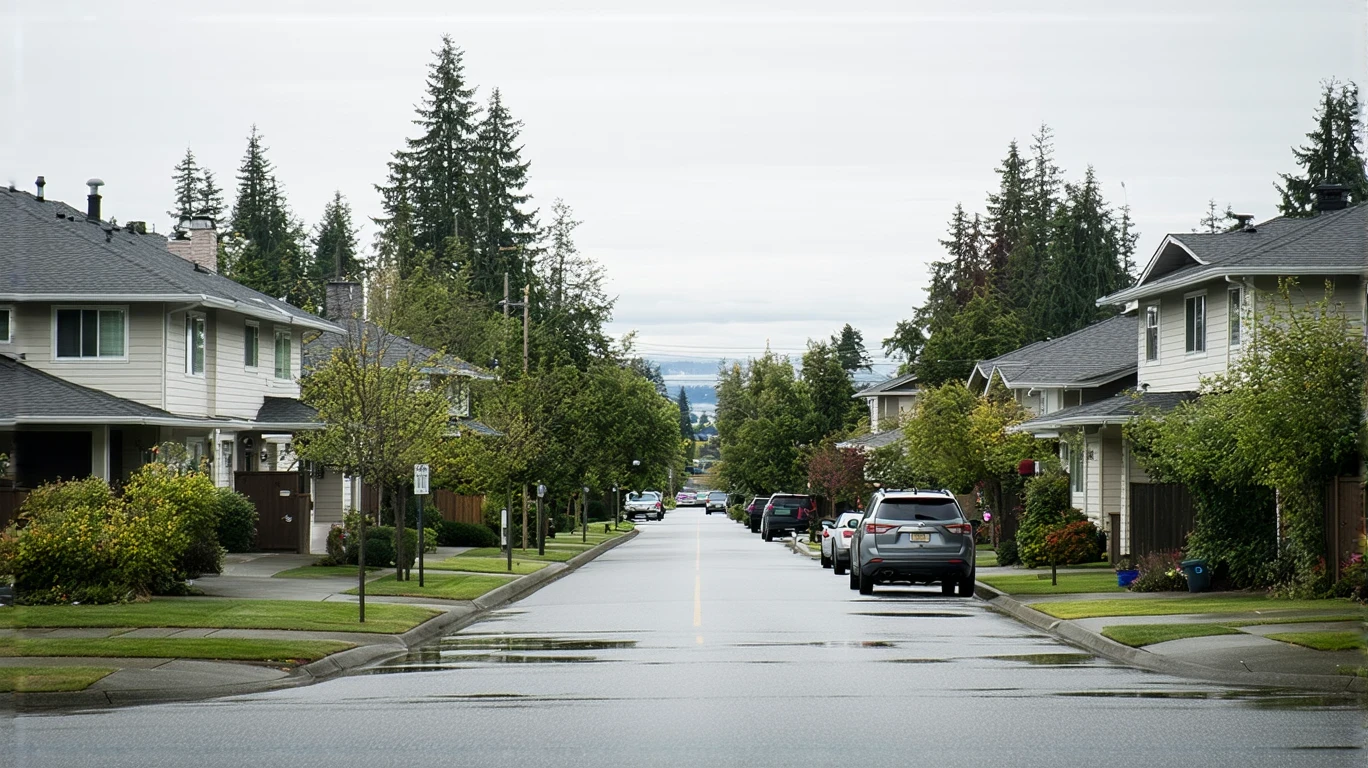
Edmonds offers more single-family homes and lower-density neighborhoods, which tend to attract households seeking yard space, quieter streets, and a suburban feel with walkable pockets near the downtown core. Bellevue’s housing market includes more vertical construction, condominiums, and apartment complexes concentrated near transit hubs and commercial corridors. This urban form supports shorter commutes and immediate access to groceries, healthcare, and services, but it comes with higher baseline housing costs. Households choosing Bellevue absorb that entry cost in exchange for reduced transportation friction and time savings. Households choosing Edmonds trade lower housing entry costs for longer commutes and more reliance on car-based errands.
For first-time buyers, the difference in median home value translates directly into down payment size, closing costs, and monthly mortgage obligations. A household aiming for a 10% down payment faces a $76,130 threshold in Edmonds versus $113,950 in Bellevue—a gap that can delay homeownership by years for households without significant savings. Renters experience similar pressure: the $601 monthly rent difference between Edmonds and Bellevue compounds over a year into more than $7,200 in additional housing expense, which must be offset by higher income, reduced spending elsewhere, or acceptance of smaller living space.
| Housing Type | Edmonds | Bellevue |
|---|---|---|
| Median Home Value | $761,300 | $1,139,500 |
| Median Gross Rent | $1,821/month | $2,422/month |
| Median Household Income | $110,057/year | $149,551/year |
Housing Takeaway: Households with lower baseline income or limited savings face lower entry barriers in Edmonds, but they absorb that savings through longer commutes and reduced walkable access to daily needs. Households with higher income and prioritization of time over distance find Bellevue’s housing costs more manageable when offset by transit convenience, shorter commutes, and immediate access to urban amenities. The decision is not about which city is cheaper, but which housing cost structure aligns with a household’s income level, commute tolerance, and lifestyle priorities.
Utilities and Energy Costs
Utility costs in Edmonds and Bellevue reflect similar electricity rates but divergent natural gas pricing, which introduces meaningful differences in heating exposure during the cooler months typical of the Pacific Northwest. Edmonds’ electricity rate sits at 13.85¢ per kWh, while Bellevue’s is slightly higher at 14.06¢ per kWh—a difference too small to drive household decisions. Natural gas, however, tells a different story: Edmonds’ rate is $16.72 per MCF, compared to Bellevue’s $24.71 per MCF. For households relying on natural gas for heating, water heating, or cooking, Bellevue introduces higher baseline exposure that compounds over the heating season.
The Pacific Northwest’s mild winters mean heating demand is moderate compared to colder regions, but the extended shoulder seasons—late fall and early spring—still require consistent furnace use. Households in older single-family homes with less efficient insulation and older HVAC systems experience higher natural gas consumption than those in newer apartment buildings with shared walls and modern climate control. Bellevue’s higher concentration of vertical housing and newer construction can offset some of the natural gas price disadvantage through better insulation and reduced heating surface area. Edmonds’ housing stock skews older and more spread out, which increases heating exposure per square foot but benefits from the lower natural gas rate.
Electricity costs remain predictable year-round in both cities, with cooling demand minimal due to the region’s temperate summers. Households using electric heat pumps or baseboard heating avoid natural gas exposure entirely but face higher electricity consumption during winter months. The choice between gas and electric heating often depends on housing type and age rather than household preference, meaning renters and buyers inherit the cost structure of their unit rather than selecting it. Utility volatility in both cities is low compared to regions with extreme seasonal swings, but Bellevue’s higher natural gas pricing introduces a structural cost disadvantage for households in gas-heated homes.
Utility Takeaway: Households in Bellevue’s newer, vertical housing stock experience more predictable utility costs due to better insulation and shared-wall efficiency, but those in older single-family homes face higher heating exposure due to elevated natural gas rates. Edmonds offers lower natural gas costs, which benefits households in older, less efficient homes that rely on gas heating. The primary driver of utility cost differences is housing type and age, not city-level pricing, but Bellevue’s natural gas rate introduces a baseline disadvantage that matters most for families in larger, detached homes.
Groceries and Daily Expenses
Grocery costs in Edmonds and Bellevue operate within the same regional price environment, reflected in nearly identical derived estimates for staple items: bread at $2.08 per pound in Edmonds versus $2.07 in Bellevue, eggs at $2.91 per dozen versus $3.06, and ground beef at $7.63 per pound versus $7.56. These figures, derived from national baselines adjusted by regional price parity, suggest that raw grocery pricing does not drive meaningful cost differences between the two cities. Instead, the cost experience diverges based on how accessible grocery options are, how much time households spend traveling to stores, and how often convenience spending replaces planned shopping trips.
Bellevue’s grocery infrastructure is broadly accessible, with high food and grocery establishment density that supports frequent, short shopping trips on foot or by transit. This density reduces the need for bulk shopping runs and allows households to avoid food waste by purchasing smaller quantities more often. Edmonds’ grocery access is corridor-clustered, meaning options concentrate along main roads and commercial strips rather than spreading evenly across neighborhoods. Households in Edmonds’ walkable pockets near downtown enjoy similar convenience, but those in outlying residential areas rely more heavily on car-based shopping trips, which introduce time costs and reduce flexibility.
Daily convenience spending—coffee shops, takeout, prepared foods, household goods—follows a similar pattern. Bellevue’s urban density and mixed-use development place these options within walking distance for many residents, which lowers the friction of grabbing a quick meal or picking up forgotten items but increases the temptation to spend on convenience rather than cooking at home. Edmonds offers fewer immediate options outside its downtown core, which forces more planning and reduces spontaneous spending but also requires more time and effort to manage errands. Families with children, dual-income couples managing tight schedules, and single adults working long hours experience these trade-offs differently: Bellevue’s accessibility reduces time pressure but increases spending creep, while Edmonds’ lower density requires more logistical planning but offers fewer opportunities for unplanned purchases.
Grocery Takeaway: Households prioritizing time efficiency and walkable access to daily errands find Bellevue’s grocery infrastructure reduces friction and supports flexible schedules, though this convenience can lead to higher spending on prepared foods and impulse purchases. Households comfortable with car-based shopping and bulk grocery runs benefit from Edmonds’ lower housing costs without facing meaningfully higher grocery prices, but they absorb the trade-off through longer shopping trips and reduced spontaneity. The difference is not about price sensitivity but about how grocery access interacts with household schedules, transportation habits, and tolerance for planning.
Taxes and Fees
Washington State imposes no personal income tax, which simplifies the tax comparison between Edmonds and Bellevue by eliminating one of the largest cost variables in other states. Both cities rely on property taxes, sales taxes, and local fees to fund municipal services, but the structure and predictability of these costs differ based on housing type, ownership status, and neighborhood characteristics. Property taxes in both cities are assessed as a percentage of home value, meaning Bellevue’s higher median home value of $1,139,500 translates into higher absolute property tax bills compared to Edmonds’ $761,300 median, even if the millage rates are similar. Renters do not pay property taxes directly, but landlords pass these costs through in rent, contributing to Bellevue’s higher median gross rent of $2,422 per month versus Edmonds’ $1,821 per month.
Sales taxes in the Seattle metro area hover around 10%, with minor variations depending on local levies and special districts. Both Edmonds and Bellevue fall within this range, meaning households experience similar sales tax exposure on everyday purchases, dining out, and retail spending. The difference in sales tax impact comes not from the rate but from spending volume and frequency: households in Bellevue’s denser, more walkable environment may spend more often on prepared foods, coffee, and convenience items, which increases cumulative sales tax paid over time. Households in Edmonds, with less immediate access to retail and dining options, may spend less frequently but in larger increments during planned shopping trips.
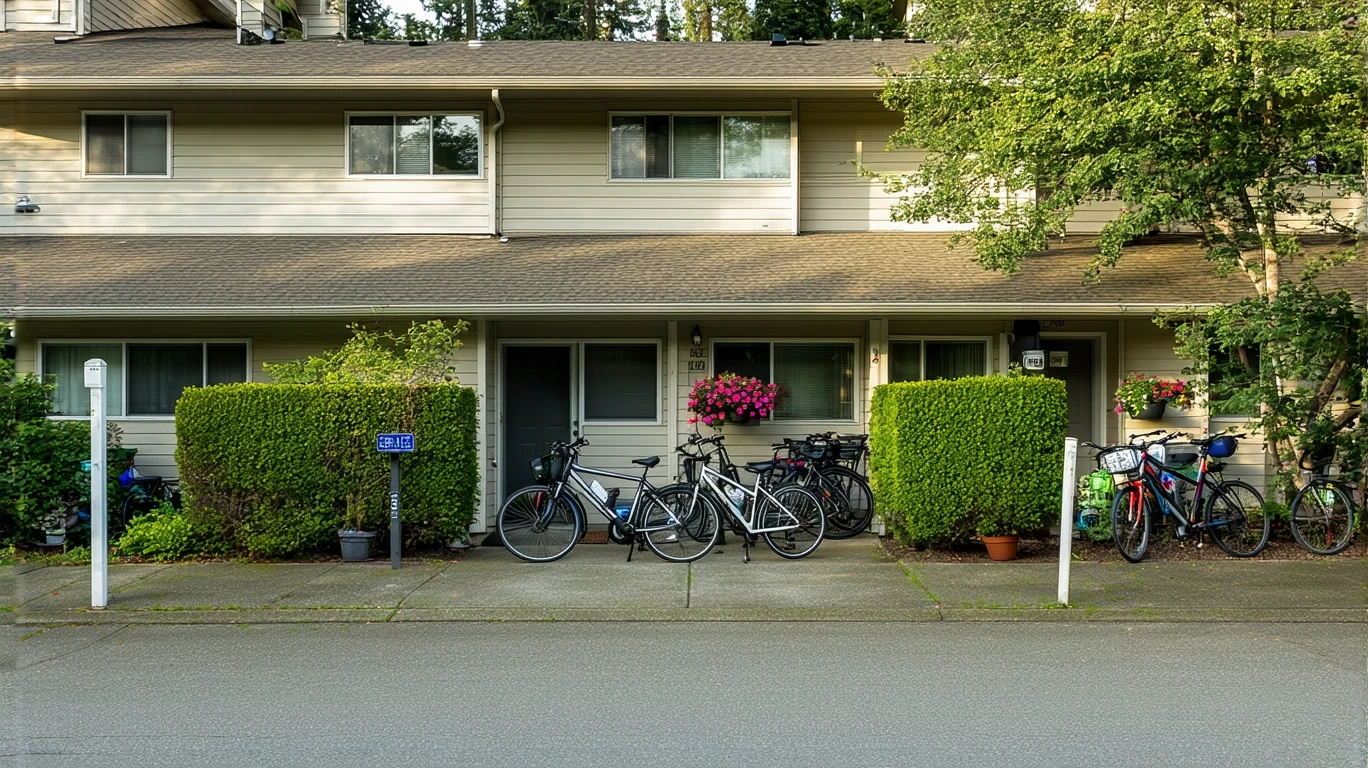
Local fees—trash collection, water and sewer, parking permits, HOA assessments—vary widely by neighborhood and housing type. Bellevue’s newer condominium and apartment complexes often bundle utilities and services into HOA fees, which can range from modest to substantial depending on amenities like gyms, pools, and landscaping. These fees introduce predictability by consolidating multiple costs into a single monthly payment, but they also reduce flexibility and can increase over time without direct household control. Edmonds’ housing stock includes more single-family homes with separate utility billing and fewer mandatory HOA fees, which gives households more control over individual expenses but requires more active management of multiple bills and service providers.
Taxes and Fees Takeaway: Homeowners in Bellevue face higher property tax exposure due to elevated home values, while renters absorb this indirectly through higher rent. HOA fees in Bellevue’s vertical housing stock introduce predictability but reduce cost control, while Edmonds’ single-family homes offer more flexibility at the cost of managing multiple bills. The primary difference is not magnitude but structure: Bellevue consolidates costs into fewer, larger payments, while Edmonds distributes them across more individual line items. Households planning to stay long-term should evaluate whether they prefer bundled predictability or itemized control.
Transportation and Commute Reality
Transportation costs in Edmonds and Bellevue diverge not through gas prices—which sit at $4.15 per gallon in Edmonds and $3.85 per gallon in Bellevue—but through commute length, transit viability, and car dependence. Edmonds’ average commute time is 28 minutes, with 47.9% of workers facing long commutes and only 11.0% working from home. These figures suggest that most Edmonds residents travel significant distances for work, likely crossing into Seattle or other employment centers within the metro area. Bellevue’s commute data is unavailable, but its role as a major employment hub and its higher concentration of office space imply shorter average commutes for residents working locally.
Both cities offer rail transit access, which provides a viable alternative to driving for households living near stations and working along transit corridors. Edmonds’ walkable pockets near downtown and transit stops support car-free or car-light lifestyles for some residents, but the majority of the city’s neighborhoods require a vehicle for daily errands and commuting. Bellevue’s higher urban density and broadly accessible grocery and service infrastructure reduce the need for frequent car trips, even for households that still drive to work. This difference in daily mobility friction compounds over time: households in Edmonds spend more hours per week commuting and more trips running errands by car, while households in Bellevue consolidate errands into shorter, walkable trips and face less time pressure from transportation logistics.
Gas price differences between the two cities are minimal and do not drive meaningful cost distinctions. A household driving 25 miles round trip daily at 25 MPG consumes roughly one gallon per day, meaning the 30-cent difference in gas prices translates to about $9 per month—a negligible factor compared to housing, insurance, and vehicle maintenance costs. The real transportation cost difference lies in time: longer commutes in Edmonds reduce flexibility, increase wear on vehicles, and limit the hours available for household tasks, childcare, and leisure. Bellevue’s shorter commutes and transit-oriented development reduce these time costs, which can feel like a financial advantage even when the dollar amounts are similar.
Transportation Takeaway: Households in Edmonds face longer commutes and higher car dependence, which introduces time costs and reduces schedule flexibility even when gas prices are comparable. Households in Bellevue benefit from shorter commutes, more walkable errands, and viable transit options, which reduce transportation friction and free up time for other priorities. The difference is not about fuel costs but about how transportation structure affects daily logistics, household stress, and the ability to manage competing demands on time and attention.
Cost Structure Comparison
Housing pressure dominates both Edmonds and Bellevue, but the magnitude and entry barriers differ sharply. Edmonds’ lower median home value of $761,300 and median rent of $1,821 per month create a more accessible entry point for households with moderate incomes or limited savings, while Bellevue’s $1,139,500 median home value and $2,422 per month median rent require higher baseline income to sustain. Renters and first-time buyers feel this difference most acutely: the gap in down payment requirements, monthly rent obligations, and mortgage qualification thresholds can delay homeownership or force households to accept smaller living spaces in Bellevue. Families seeking yard space, single-family homes, and lower housing entry costs find Edmonds more structurally aligned with their needs, while dual-income professionals prioritizing proximity to work and urban amenities absorb Bellevue’s higher housing costs in exchange for convenience.
Utilities introduce more volatility in Bellevue due to higher natural gas pricing at $24.71 per MCF compared to Edmonds’ $16.72 per MCF. Households in older, gas-heated single-family homes in Bellevue face higher heating exposure during the extended shoulder seasons typical of the Pacific Northwest, while those in newer, vertical housing benefit from shared-wall efficiency and better insulation. Edmonds’ lower natural gas rate offers a structural advantage for households in older homes, but the difference matters most for families in larger, detached properties rather than apartment dwellers. Electricity rates remain nearly identical between the two cities, meaning the primary utility cost driver is housing type and heating fuel, not city-level pricing.
Daily living costs—groceries, dining, convenience spending—show minimal price differences between Edmonds and Bellevue, but access patterns diverge meaningfully. Bellevue’s broadly accessible grocery infrastructure and high density of food establishments reduce the time and effort required to run errands, which supports flexible schedules but increases opportunities for unplanned spending. Edmonds’ corridor-clustered grocery access requires more car-based shopping trips and planning, which reduces convenience spending but introduces time costs. Families managing tight schedules, dual-income couples, and single adults working long hours experience these trade-offs differently: Bellevue’s walkable errands reduce friction but can lead to spending creep, while Edmonds’ lower density requires more logistical effort but offers fewer temptations for impulse purchases.
Transportation patterns matter more in Edmonds, where the average commute time of 28 minutes and 47.9% long commute rate suggest significant time spent traveling to work. Bellevue’s role as an employment hub and higher urban density imply shorter commutes for residents working locally, which reduces transportation friction and frees up time for household tasks, childcare, and leisure. The difference is not about gas prices—which sit at $4.15 per gallon in Edmonds versus $3.85 per gallon in Bellevue—but about how commute length and car dependence affect daily logistics and schedule flexibility.
The better choice depends on which costs dominate the household’s financial and time budget. Households sensitive to housing entry barriers and willing to manage longer commutes may prefer Edmonds’ lower baseline costs and more accessible homeownership thresholds. Households with higher income, prioritizing time efficiency and walkable access to daily needs, may find Bellevue’s higher housing costs offset by reduced transportation friction and immediate access to services. For households managing tight schedules or balancing childcare with work, the difference is less about price and more about predictability: Bellevue consolidates errands and reduces commute time, while Edmonds requires more planning and absorbs savings through longer travel and logistical complexity.
How the Same Income Feels in Edmonds vs Bellevue
Single Adult
For a single adult, housing becomes the first non-negotiable cost, and the $601 monthly rent difference between Edmonds and Bellevue determines how much flexibility remains for discretionary spending, savings, or debt repayment. In Edmonds, lower rent leaves more room for building an emergency fund or absorbing irregular expenses like car repairs, but the longer commute of 28 minutes each way reduces the hours available for meal prep, exercise, or side projects. In Bellevue, higher rent tightens the monthly budget, but shorter commutes and walkable errands reduce the time cost of daily logistics, which can feel like a financial advantage even when the dollar amounts are higher. The trade-off is front-loaded housing expense versus ongoing time pressure.
Dual-Income Couple
For a dual-income couple, the decision hinges on whether both partners work locally or commute to different employment centers. In Edmonds, lower housing costs create more breathing room for saving toward a down payment or managing student loans, but the 47.9% long commute rate suggests at least one partner likely faces significant travel time, which reduces the hours available for shared meals, household tasks, or relationship maintenance. In Bellevue, higher housing costs absorb more of the combined income, but shorter commutes and transit access reduce the friction of coordinating schedules and running errands together. The difference is less about total spending and more about whether the couple prioritizes financial flexibility or time flexibility.
Family with Kids
For a family with children, housing space needs and school proximity become non-negotiable, and the cost structure shifts toward managing time pressure rather than minimizing expenses. In Edmonds, lower home values and rents make single-family homes with yards more accessible, but longer commutes and car-dependent errands increase the logistical complexity of managing school drop-offs, extracurriculars, and grocery runs. In Bellevue, higher housing costs limit space options, but walkable schools, integrated parks, and broadly accessible groceries reduce the daily friction of coordinating multiple schedules. The trade-off is front-loaded housing expense versus ongoing household logistics: Edmonds offers more space at the cost of more driving and planning, while Bellevue offers more convenience at the cost of higher baseline housing obligations.
Decision Matrix: Which City Fits Which Household?
| Decision Factor | If You’re Sensitive to This… | Edmonds Tends to Fit When… | Bellevue Tends to Fit When… |
|---|---|---|---|
| Housing entry + space needs | Down payment size, monthly rent, yard space | You prioritize lower entry barriers and single-family home access over proximity to work | You prioritize shorter commutes and urban density over lower housing costs |
| Transportation dependence + commute friction | Commute length, car reliance, time budget | You can absorb longer commutes in exchange for lower housing costs and more space | You value shorter commutes and transit access enough to offset higher housing expense |
| Utility variability + home size exposure | Heating costs, older homes, natural gas reliance | You benefit from lower natural gas rates in older, detached homes | You live in newer, vertical housing with shared-wall efficiency that offsets higher gas rates |
| Grocery strategy + convenience spending creep | Walkable errands, impulse purchases, meal planning | You prefer car-based bulk shopping and can manage less frequent, planned grocery trips | You value walkable, frequent shopping trips and immediate access to prepared foods |
| Fees + friction costs (HOA, services, upkeep) | Bundled vs itemized costs, predictability vs control | You prefer managing individual bills and avoiding mandatory HOA fees | You prefer bundled HOA fees that consolidate utilities and services into predictable payments |
| Time budget (schedule flexibility, errands, logistics) | Household coordination, childcare, dual schedules | You can absorb longer commutes and car-dependent errands in exchange for lower housing costs | You prioritize reducing daily logistics friction and maximizing time for household tasks |
Lifestyle Fit
Edmonds and Bellevue offer distinct lifestyle experiences shaped by urban form, density, and proximity to natural amenities. Edmonds retains a quieter, small-town character with walkable pockets concentrated near its historic downtown and waterfront. The city’s integrated park system and water features—including access to Puget Sound—support outdoor recreation like walking, kayaking, and beachcombing. Neighborhoods outside the downtown core skew residential and car-dependent, with single-family homes, tree-lined streets, and a slower pace that appeals to families seeking yard space and a suburban feel. The city’s rail transit connection provides a viable commute option for workers traveling to Seattle, but most daily errands require a car.
Bellevue operates as a regional employment and retail hub, with a more vertical urban form, mixed-use development, and higher concentration of office space, shopping centers, and dining options. The city’s broadly accessible grocery infrastructure, hospital presence, and strong family amenities—including schools and playgrounds meeting density thresholds—support households managing complex schedules and prioritizing convenience. Bellevue’s integrated park system and water features offer green space within walking distance of many neighborhoods, and the city’s notable cycling infrastructure and rail transit access reduce car dependence for residents living near transit corridors. The urban density and mixed land use create a faster-paced environment that appeals to dual-income professionals, retirees seeking walkable access to services, and families willing to trade yard space for reduced logistics friction.
Lifestyle differences between the two cities indirectly affect costs through time allocation and household logistics. Edmonds’ longer commutes and car-dependent errands increase the hours spent on transportation and reduce the time available for meal prep, exercise, and leisure, which can lead to higher spending on convenience foods and outsourced services. Bellevue’s shorter commutes and walkable errands reduce these time costs, but the immediate access to dining, coffee shops, and retail increases opportunities for unplanned spending. Families with young children may find Edmonds’ quieter streets and larger homes more conducive to outdoor play and homework routines, while dual-income couples may prefer Bellevue’s consolidated errands and reduced coordination friction. Retirees seeking walkable access to healthcare, groceries, and parks find Bellevue’s infrastructure more supportive, while those prioritizing lower housing costs and waterfront access may prefer Edmonds’ slower pace and coastal proximity.
Quick Facts: Edmonds offers waterfront access and a historic downtown core with walkable shops and restaurants, while Bellevue serves as a regional employment hub with higher urban density and more vertical housing. Both cities provide rail transit access, integrated park systems, and mixed residential and commercial land use, but Bellevue’s infrastructure supports car-free or car-light lifestyles more broadly across neighborhoods.
Frequently Asked Questions
Is Edmonds or Bellevue cheaper for renters in 2026? Edmonds offers lower median gross rent at $1,821 per month compared to Bellevue’s $2,422 per month, which creates a more accessible entry point for renters with moderate incomes. However, Edmonds’ longer commutes and car-dependent errands introduce time costs that offset some of the housing savings, while Bellevue’s higher rent comes with shorter commutes and walkable access to groceries and services. The better choice depends on whether a household prioritizes lower monthly rent or reduced transportation friction.
How do utility costs compare between Edmonds and Bellevue in 2026? Electricity rates are nearly identical, but Bellevue’s natural gas rate of $24.71 per MCF is higher than Edmonds’ $16.72 per MCF, which increases heating exposure for households in gas-heated homes. Bellevue’s newer, vertical housing stock often offsets this through better insulation and shared-wall efficiency, while Edmonds’ lower gas rate benefits households in older, detached homes. The primary driver of utility cost differences is housing type and age, not city-level pricing.
Which city has better grocery access for families in 2026? Bellevue’s grocery infrastructure is broadly accessible, with high food and grocery establishment density that supports frequent, walkable shopping trips and reduces the need for bulk purchases. Edmonds’ grocery access is corridor-clustered, meaning options concentrate along main roads and require car-based trips for most residents outside the downtown core. Families managing tight