
“I thought I’d need a car for everything, but once I figured out the rail line and which blocks had the coffee shops and grocery stores, Edmonds actually worked as a student base—especially since I’m commuting to UW three days a week.”
—Current student living in Edmonds
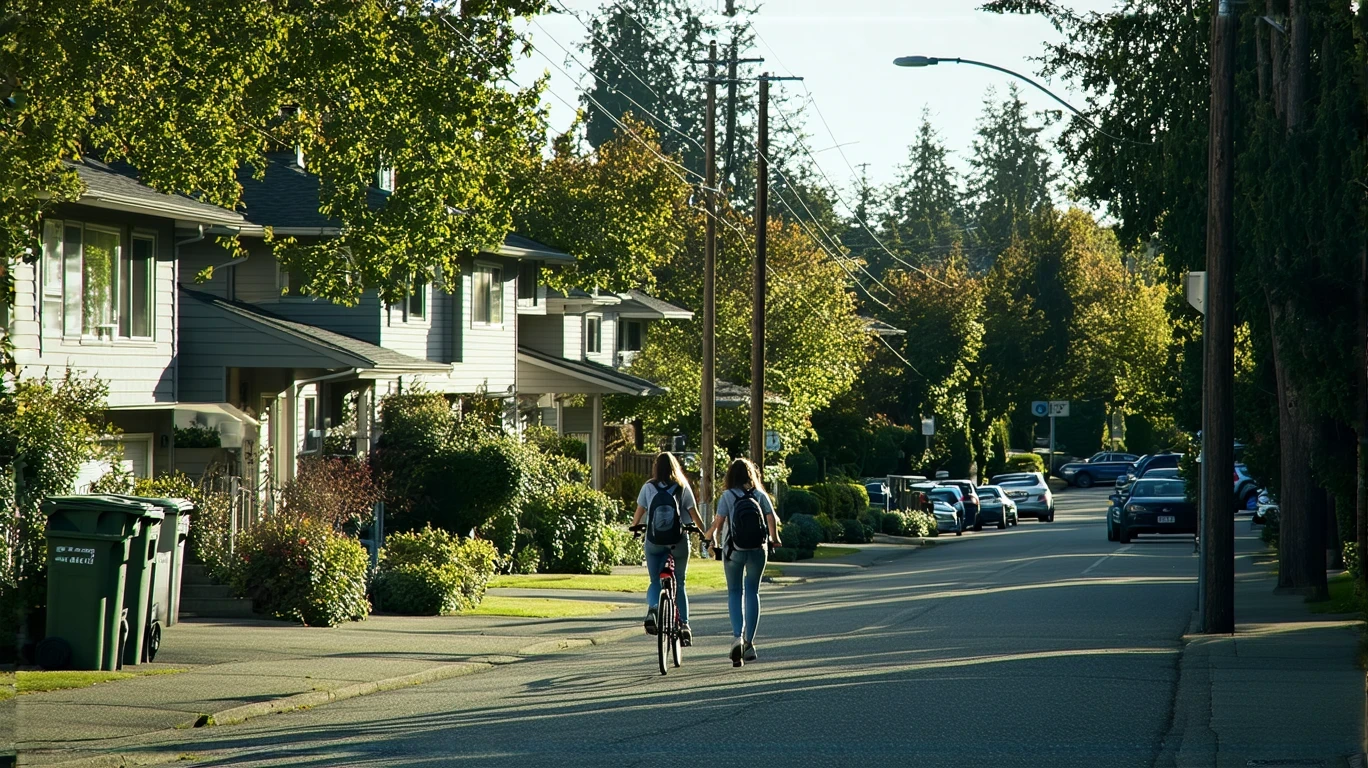
Why Students Consider Edmonds
Edmonds isn’t a traditional college town with dorms lining every street and campus life dominating the social scene. Instead, it functions as a commuter-friendly base for students attending Edmonds College locally or commuting to larger institutions like the University of Washington in Seattle. The city’s appeal lies in its rail connectivity, walkable pockets with student-friendly amenities, and integrated green spaces that provide study and recreation options. For students willing to navigate a higher-cost environment—often through shared housing or family support—Edmonds offers a quieter, more residential alternative to urban campus neighborhoods, with the infrastructure to make daily logistics manageable.
From a student-friendliness perspective, Edmonds scores around 62 out of 100. It earns points for transit access, pedestrian-friendly corridors, and park availability, but loses ground due to limited on-campus housing, higher rental costs, and the absence of a dense, campus-centric social scene. Students who thrive here tend to be self-directed commuters, community college attendees, or those who value residential calm over constant campus energy.
Housing Options for Students
Student housing in Edmonds requires realistic expectations. There are no large-scale student apartment complexes or university-managed dorms dominating the market. Instead, students typically rent rooms in shared houses, apartments split with roommates, or studio units if budget allows. The median gross rent of $1,821 per month reflects a family-oriented market, but students can make it work by dividing costs. A two-bedroom apartment split between two people might bring individual costs down to $900–$1,000 per month before utilities, while a three-bedroom house shared among three students could reduce individual rent to $700–$850.
Lease terms generally follow 12-month cycles, and landlords typically require a security deposit equal to one month’s rent plus first and last month upfront. Students without established credit may need a co-signer, often a parent. Roommate-finding happens through campus bulletin boards, local Facebook groups, and word-of-mouth rather than dedicated student housing platforms. Proximity to Edmonds College or transit stations increases desirability and sometimes cost, so students balancing budget and convenience need to weigh walking distance against rent savings in less central areas.
On-campus housing is limited to Edmonds College, which does not offer traditional dormitories. Students attending other institutions and living in Edmonds are entirely reliant on the private rental market, making early lease hunting and roommate coordination essential.
Getting Around: Transportation and Campus Access
Transportation shapes daily life for students in Edmonds, especially those commuting to Seattle-area campuses. The city’s rail service—part of the regional transit network—connects students to University of Washington, Seattle University, and other institutions within a reasonable commute window. The average commute time of 28 minutes reflects this regional connectivity, and students report that the train makes attending classes in Seattle feasible without the cost and hassle of parking on campus.
Within Edmonds, the walkable pockets identified by local infrastructure patterns mean that students living near downtown corridors or transit hubs can handle daily errands—groceries, coffee shops, pharmacies—on foot. The pedestrian-to-road ratio exceeds high thresholds in these areas, creating a functional walking environment even though the city as a whole remains car-oriented in some neighborhoods. Cycling infrastructure exists in pockets, with bike-to-road ratios in the medium band, so students comfortable biking can use it as a secondary option, though it’s not as comprehensive as in denser urban cores.
For students without cars, bus service supplements rail access, and ride-sharing fills gaps for late-night or off-route trips. Gas prices at $4.15 per gallon make car ownership expensive, especially when combined with insurance, parking, and maintenance. Many students find that living near transit and walkable amenities reduces car dependency enough to avoid ownership altogether, though those attending Edmonds College or working off-transit routes may still need vehicles.
Student Cost of Living
Living as a student in Edmonds requires navigating a cost structure designed for working families rather than college budgets. A frugal student sharing a three-bedroom house, cooking most meals, and relying on transit might manage on $1,200–$1,400 per month including rent, food, and transportation. A moderate lifestyle—occasional dining out, ride-sharing when needed, some entertainment—pushes that to $1,600–$1,900 per month. A comfortable budget with solo housing, regular social spending, and a car climbs to $2,200–$2,600 per month or more.
Food costs vary by approach. Students cooking at home can expect $250–$350 per month for groceries, with corridor-clustered food options providing access to supermarkets and budget-friendly stores in walkable zones. Dining out regularly adds up quickly in Edmonds, where casual meals often run $12–$18 and coffee shop visits add $5–$7 per trip. Textbooks and course materials remain a wild card, ranging from $200–$600 per term depending on major and whether students buy used or access digital versions.
Part-time work opportunities exist in retail, food service, tutoring, and campus roles at Edmonds College, with typical wages around $16–$18 per hour reflecting Washington’s minimum wage and local market. The unemployment rate of 4.2% suggests a stable job market, though competition for student-friendly schedules can be tight. Students balancing 15–20 hours of work per week can offset $1,000–$1,400 per month in expenses, making shared housing and careful budgeting more sustainable.
Monthly Student Budget in Edmonds
Here’s what a typical monthly student budget might look like in Edmonds:
| Category | Shared Housing (Frugal) | Solo Living (Moderate) |
|---|---|---|
| Housing (rent + utilities) | $750–$900 | $1,400–$1,700 |
| Food (groceries + occasional dining) | $280–$350 | $400–$500 |
| Transportation (transit pass or gas) | $80–$120 | $150–$250 |
| Textbooks & supplies | $70–$100 | $70–$100 |
| Entertainment & social | $50–$100 | $150–$250 |
| Personal care & misc. | $50–$80 | $100–$150 |
| Total | $1,280–$1,650 | $2,270–$2,950 |
Estimates based on average student spending patterns and local costs; figures are illustrative and exclude tuition, fees, and insurance.
Student-Friendly Amenities and Services
Edmonds offers a solid base of amenities that support student life, even without a traditional campus ecosystem. Coffee shops with Wi-Fi cluster along downtown corridors, providing study spaces outside the home. The Edmonds Library serves as a quiet work zone with extended hours, and the city’s integrated park system—with park density exceeding high thresholds—provides outdoor study spots, walking trails, and recreational areas that students use for breaks and social gatherings.
Healthcare access is routine-local, with clinics and pharmacies present but no hospital within city limits. Edmonds College provides student health services for enrolled students, and those attending other institutions typically rely on campus health centers or local clinics. Mental health resources are available through campus counseling services and community providers, though students may need to navigate insurance and appointment availability.
Student discounts exist but aren’t as pervasive as in larger college towns. Some local businesses offer deals, and students can access transit discounts and gym memberships through campus affiliations. On-campus job opportunities at Edmonds College include library assistants, tutoring roles, and administrative support, providing flexible schedules that fit class commitments.
Social Scene and Nightlife
Edmonds’ social scene is quieter and more residential than a traditional college town. There’s no dense cluster of student bars, late-night venues, or campus-adjacent nightlife. Instead, students create social life through campus organizations at Edmonds College, study groups, and weekend trips to Seattle for concerts, events, and larger social scenes. The city’s mixed-use corridors host cafes, breweries, and casual restaurants that serve as informal gathering spots, but the energy is more community-oriented than student-dominated.
For students attending Seattle-area universities, the rail connection makes it feasible to participate in campus social life and return to Edmonds for housing, effectively splitting their time between the two environments. Intramural sports, clubs, and student organizations remain campus-based, and students living in Edmonds need to factor in commute time and last-train schedules when planning evening activities.
Cultural activities include local festivals, farmers markets, and waterfront events, which provide low-cost entertainment and a sense of place, even if they don’t replicate the intensity of a college town’s social calendar. The dating scene and social networking happen more through campus connections and online platforms than through spontaneous local interactions.
Safety and Practical Considerations
Edmonds is generally safe for students, with a residential character that reduces late-night safety concerns compared to denser urban areas. Campus security at Edmonds College provides on-site support, and students commuting to Seattle should remain aware of transit safety practices—traveling during peak hours, staying alert, and knowing last-train times. The city’s walkable pockets are well-lit and pedestrian-friendly, though students living in more car-oriented neighborhoods should plan routes carefully after dark.
Academic support services at Edmonds College include tutoring centers, writing labs, and counseling, helping students manage coursework and transitions. Those attending other institutions rely on their home campus for these resources. Internship opportunities exist locally in healthcare, retail, and small business sectors, and proximity to Seattle expands access to corporate internships, tech roles, and nonprofit positions for students willing to commute.
FAQs About Student Life in Edmonds
What’s the average cost of student living in Edmonds?
Students sharing housing can manage on $1,200–$1,650 per month with careful budgeting, while solo living or more flexible spending pushes costs to $2,200–$2,950 per month. Rent is the largest variable, and roommate arrangements make the biggest difference.
How safe is it for students to live off-campus?
Edmonds is a low-crime, residential city. Students should follow standard safety practices—locking doors, staying aware on transit, avoiding isolated areas late at night—but the overall environment is stable and family-oriented.
Are there good part-time job opportunities?
Yes, with an unemployment rate of 4.2% and typical wages around $16–$18 per hour, students can find work in retail, food service, tutoring, and campus roles. Competition exists, but the job market is functional.
What’s the social scene like for college students?
Edmonds is quieter than a traditional college town. Social life centers on campus organizations, study groups, and trips to Seattle rather than local nightlife. Students who value residential calm over constant campus energy tend to adapt well.
Making the Decision: Is Edmonds Right for Your College Years?
Edmonds works best for students who are self-directed, comfortable commuting, and willing to navigate a higher-cost environment in exchange for residential calm, transit access, and green space. It’s a strong fit for Edmonds College students, commuters attending UW or other Seattle-area institutions, and those who value walkable amenities and outdoor access over dense campus nightlife. The city’s rail connectivity and pedestrian-friendly pockets make daily logistics manageable without a car, and shared housing arrangements bring costs within reach for students with part-time income or family support.
The tradeoffs are real: limited on-campus housing, higher rent, and a quieter social scene mean students need to be proactive about building community and managing budgets. Those who thrive in Edmonds tend to appreciate the balance between access and calm, using the city as a stable base while engaging with campus life and Seattle’s broader opportunities. For students seeking that balance, Edmonds offers a functional, livable option—just not a traditional college town experience.
How this article was built: In addition to public economic data, this article incorporates location-based experiential signals derived from anonymized geographic patterns—such as access density, walkability, and land-use mix—to reflect how day-to-day living actually feels in Edmonds, WA.