
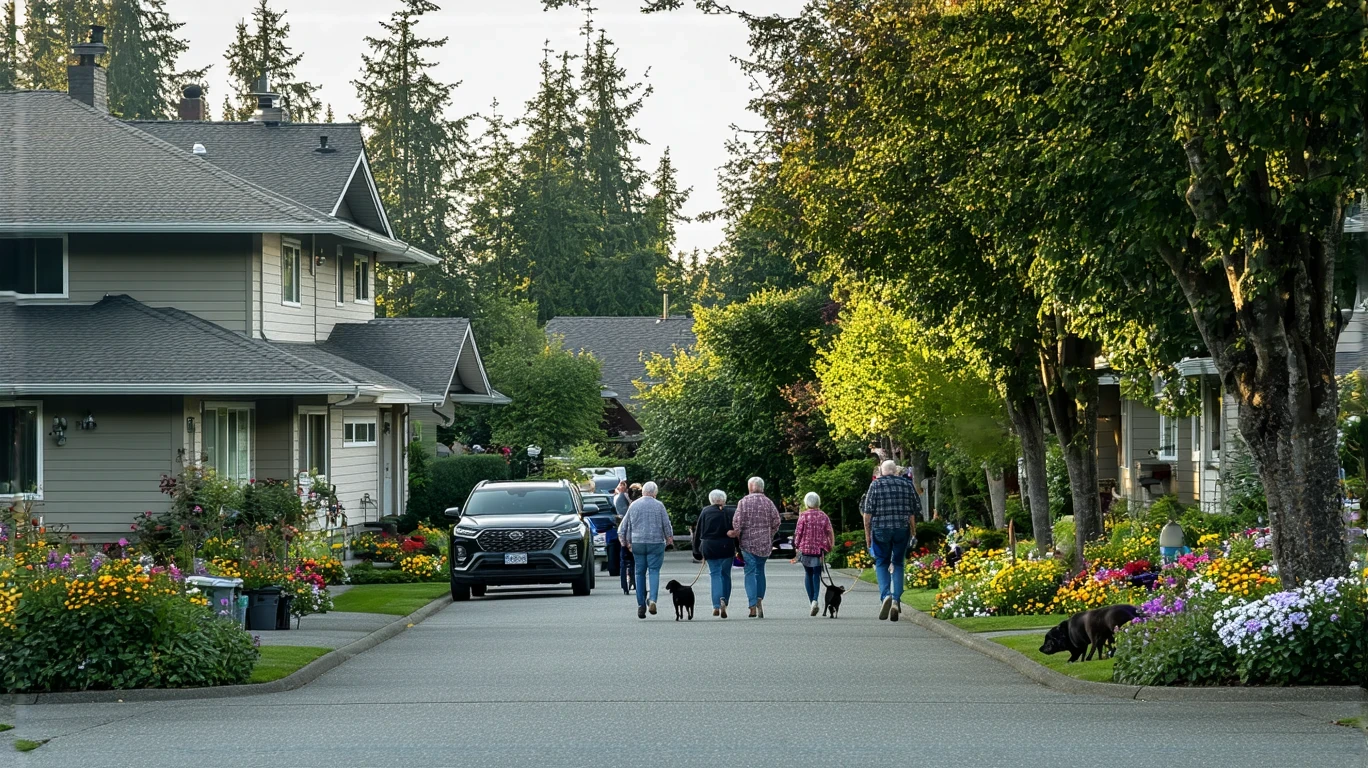
Why Retirees Choose Edmonds
Is Edmonds the right place to spend your golden years? For retirees drawn to the Pacific Northwest’s mild coastal climate, walkable neighborhoods, and access to both natural beauty and urban convenience, Edmonds presents a compelling—if financially demanding—option. This small city north of Seattle offers integrated park access, rail transit connections, and a pedestrian-friendly texture in key pockets, all of which support an active, engaged retirement lifestyle. Yet the high cost of housing and the absence of a local hospital require careful evaluation of financial readiness and healthcare logistics.
Edmonds earns a retirement suitability score of 72 out of 100. The score reflects strong environmental and mobility assets—walkable corridors, rail service, abundant green space, and a temperate climate—balanced against significant cost pressures and healthcare limitations. Retirees who prioritize outdoor activity, pedestrian access, and reduced car dependency will find Edmonds well-suited to their preferences. Those requiring frequent specialist care, tight budget constraints, or immediate hospital proximity may face friction.
Checklist: Retirement-Friendly Amenities in Edmonds
- ✅ Walkable pockets with substantial pedestrian infrastructure
- ✅ Rail transit service present, reducing driving burden
- ✅ Integrated park density and waterfront access for low-impact activity
- ✅ Corridor-clustered food and grocery options
- ✅ Mild coastal climate with minimal temperature extremes
- ⚠️ Routine local healthcare only (clinics present, no hospital)
- ⚠️ High housing costs relative to fixed incomes
- ⚠️ Regional prices 13% above national baseline
Healthcare Access for Seniors
Healthcare access in Edmonds is best characterized as routine and local. Clinics and pharmacies provide primary care, prescription management, and preventive services, but no hospital facility is present within city limits. For retirees managing chronic conditions, routine checkups, and medication refills, local providers offer convenient, walkable access in commercial corridors. However, specialized care—cardiology, orthopedics, oncology—and emergency services require travel to larger medical centers in nearby communities or Seattle.
This structure works well for healthy, active retirees who need occasional primary care and prefer to avoid the intensity of hospital-adjacent living. It becomes more complex for those with multiple specialists, frequent imaging needs, or conditions requiring rapid emergency response. Drive times to major hospital systems typically range from 15 to 30 minutes depending on traffic and destination, a manageable distance for planned appointments but a consideration for urgent situations.
Medicare acceptance is standard across local clinics, and pharmacy coverage through Part D plans is widely supported. Physical therapy, dental care, and vision services are available locally, though the depth of specialist networks is limited compared to larger metro hubs. Retirees should confirm that their preferred providers and specialists are accessible within a comfortable travel radius and that their Medicare Supplement or Medicare Advantage plan includes the regional networks they’ll rely on.
Senior-Friendly Amenities and Services
Edmonds’s walkable pockets and integrated park density create a foundation for active senior living. The high pedestrian-to-road ratio in key areas means that errands, social outings, and recreational walks are feasible without a car, reducing isolation and supporting physical health. Parks and waterfront access provide low-impact activity options—walking paths, benches, open space—that accommodate a range of mobility levels. The presence of rail transit further reduces car dependency, offering a reliable connection to Seattle and surrounding communities for cultural events, medical appointments, and family visits.
Corridor-clustered food and grocery access means that daily errands are concentrated along commercial streets rather than scattered across the city. For seniors living near these corridors, shopping, dining, and services are within walking distance or a short transit trip. For those in quieter residential areas, a car or ride service remains necessary for comprehensive access. Grocery delivery and meal kit services are available regionally, offering flexibility for those who prefer to minimize driving or carrying heavy bags.
Libraries, community centers, and lifelong learning opportunities—such as community college courses and lecture series—are typical in cities of Edmonds’s character, though specific program availability should be verified locally. Senior shuttles, volunteer driver programs, and ride-hailing services provide transportation alternatives for those who no longer drive or prefer not to navigate traffic. The mixed building character suggests a range of housing types, including condos and townhomes, which may offer lower-maintenance alternatives to single-family homes.
Cost of Living for Retirees in Edmonds
The cost of living in Edmonds is shaped by two dominant forces: high housing costs and a regional price parity 13% above the national baseline. The median home value of $761,300 places homeownership out of reach for many retirees on fixed incomes, particularly those relocating from lower-cost regions. For those who already own a home in Edmonds or can afford the entry price, property taxes and maintenance become the primary ongoing expenses. Washington State offers no income tax, which benefits retirees with pension, Social Security, and investment income, but property taxes and sales taxes are relatively high, offsetting some of that advantage.
For renters, the median gross rent of $1,821 per month represents a substantial share of a typical retirement budget. A modest retirement income of $3,000 per month would see more than 60% consumed by rent alone, leaving limited room for healthcare, food, transportation, and discretionary spending. A more comfortable income of $5,000 per month brings rent to roughly 36%, closer to the standard affordability threshold but still tight when regional price parity elevates groceries, services, and utilities.
Utility costs are moderate but not negligible. Electricity at 13.85¢/kWh and natural gas at $16.72/MCF translate to manageable monthly bills in Edmonds’s mild climate, where heating and cooling demands are lower than in regions with temperature extremes. A typical household using 1,000 kWh per month would see an electricity bill around $138 before fees and taxes, with natural gas adding another $17–$50 depending on seasonal heating needs. These costs are predictable and controllable, a relief for retirees managing fixed budgets.
Transportation costs depend heavily on lifestyle. Retirees living in walkable pockets near rail transit can reduce or eliminate car ownership, avoiding insurance, maintenance, and fuel expenses. For those who drive, gas at $4.15/gallon is above the national average, making frequent long-distance trips or daily errands more expensive. A retiree driving 500 miles per month at 25 MPG would spend roughly $83 on fuel alone, plus insurance, registration, and upkeep.
Monthly Retirement Budget in Edmonds
Here’s what a typical monthly retirement budget might look like in Edmonds:
| Expense Category | Modest Lifestyle | Comfortable Lifestyle |
|---|---|---|
| Housing (rent or mortgage) | $1,800 | $2,400 |
| Healthcare (Medicare supplement, out-of-pocket) | $400 | $600 |
| Food (groceries, occasional dining) | $450 | $700 |
| Transportation (car or transit) | $200 | $400 |
| Utilities (electricity, gas, water, internet) | $200 | $250 |
| Entertainment (hobbies, outings, travel) | $150 | $400 |
| Miscellaneous (clothing, personal care, gifts) | $150 | $250 |
| Total | $3,350 | $5,000 |
Estimates based on average senior spending patterns and local costs, before taxes and fees.
These figures are illustrative context, not guarantees. Actual costs vary by housing type, healthcare needs, and lifestyle choices. Retirees who own their home outright can redirect housing costs toward healthcare, travel, or savings. Those with significant out-of-pocket medical expenses or who maintain a car for frequent travel will see higher totals.
Community and Social Opportunities
Edmonds’s walkable corridors, integrated parks, and waterfront access create natural gathering points for social connection. Farmers’ markets, community events, and seasonal festivals are common in cities of this character, offering low-cost opportunities to meet neighbors and engage with local culture. Faith communities, volunteer organizations, and hobby clubs provide structured social networks for retirees seeking regular interaction and purpose.
The presence of rail transit expands social and cultural access beyond Edmonds itself. Retirees can reach Seattle’s museums, theaters, and lecture series without driving, reducing isolation and broadening engagement. For those with family in the region, transit and highway access make visiting easier for both parties, a meaningful quality-of-life factor for retirees who prioritize proximity to children and grandchildren.
Walking groups, gardening clubs, and outdoor recreation programs thrive in environments with integrated green space and pedestrian infrastructure. Edmonds’s park density and waterfront trails support these activities naturally, encouraging low-impact physical activity and informal social connection. Intergenerational programs—community gardens, library events, school partnerships—offer retirees a chance to contribute skills and experience while staying connected to the broader community.
Aging in Place Considerations
Aging in place in Edmonds is most feasible for retirees in walkable pockets near transit and commercial corridors. The high pedestrian-to-road ratio reduces reliance on driving as mobility declines, and rail transit offers a safety net for those who eventually stop driving altogether. Mixed building character suggests availability of single-level condos and townhomes, which eliminate stairs and reduce exterior maintenance—key factors for long-term aging in place.
The mild coastal climate is a significant advantage. Winters are cool but rarely freezing, and summers are warm but not oppressively hot, reducing the physical stress of temperature extremes and lowering the risk of weather-related isolation. The absence of heavy snow, ice, or prolonged heat waves makes outdoor activity safer and more predictable year-round, supporting independence and mobility.
However, the absence of a local hospital introduces risk for retirees with complex or unstable health conditions. In-home care services, physical therapy, and routine medical visits are manageable locally, but emergency response and specialist care require travel. Retirees should evaluate their current health trajectory, family support network, and comfort with medical travel when deciding whether Edmonds supports their long-term needs.
Home modification services—grab bars, ramps, stairlifts—are available regionally, and assisted living facilities exist in nearby communities. The key question is whether a retiree’s current housing, health, and financial position align with the specific infrastructure Edmonds offers: walkable access, transit, parks, and routine care, but not hospital proximity or low-cost housing.
FAQs About Retirement in Edmonds
What’s the average cost of retirement in Edmonds?
A modest retirement lifestyle in Edmonds typically requires $3,350 per month, while a comfortable lifestyle runs closer to $5,000 per month. Housing dominates the budget, with median rent at $1,821 and median home value at $761,300. Regional prices run 13% above the national baseline, elevating groceries, services, and dining.
How good is healthcare access for seniors?
Healthcare access is routine and local. Clinics and pharmacies provide primary care and prescriptions, but no hospital is present in Edmonds. Specialized care and emergency services require travel to nearby medical centers, typically 15–30 minutes away. This works well for healthy retirees but requires planning for those with chronic or complex conditions.
Are there active senior communities?
Edmonds supports active senior living through walkable corridors, integrated parks, and rail transit access. Social opportunities arise through community events, volunteer programs, and outdoor recreation. Dedicated senior centers and age-restricted housing exist regionally, though specific program availability should be verified locally.
What are the tax implications of retiring in Washington?
Washington has no state income tax, which benefits retirees with pension, Social Security, and investment income. However, property taxes and sales taxes are relatively high, and there is no senior property tax exemption universally available. Retirees should model their specific tax situation, including property tax, sales tax, and any federal tax on retirement income.
Making the Move: Is Edmonds Right for Your Retirement?
Edmonds offers a rare combination of walkable infrastructure, rail transit, integrated green space, and mild climate—assets that support an active, engaged retirement lifestyle. For retirees who value pedestrian access, outdoor activity, and reduced car dependency, Edmonds delivers meaningfully. The absence of state income tax and the proximity to Seattle’s cultural and medical resources add further appeal.
Yet the financial and healthcare tradeoffs are real. Housing costs—whether rent or purchase—consume a large share of fixed income, and regional prices elevate everyday expenses. The lack of a local hospital requires retirees to plan for medical travel and to assess their comfort with that arrangement as health needs evolve. For retirees with substantial savings, paid-off homes elsewhere, or high fixed incomes, these challenges are manageable. For those on tight budgets or with significant healthcare needs, they may be disqualifying.
The decision hinges on financial capacity, health trajectory, and lifestyle priorities. Retirees should visit Edmonds, walk the corridors, test the transit, and evaluate whether the environmental and social benefits justify the cost and healthcare logistics. For the right retiree, Edmonds is a compelling choice. For others, nearby communities with lower costs or stronger healthcare infrastructure may offer a better fit.
How this article was built: In addition to public economic data, this article incorporates location-based experiential signals derived from anonymized geographic patterns—such as access density, walkability, and land-use mix—to reflect how day-to-day living actually feels in Edmonds, WA.