
Budgeting Smarter in Edmonds
Understanding the monthly budget in Edmonds starts with recognizing that this Puget Sound city runs about 13% above the national cost baseline—but the real challenge isn’t any single line item. It’s how costs interact with the city’s layout and commute patterns. Median gross rent sits at $1,821 per month, while the median home value reaches $761,300. For newcomers, the surprise usually isn’t the housing figure itself—it’s the stack of secondary costs that appear once you’ve settled in: the commute fuel burn from a job in Seattle or Bellevue, the natural gas bills during wet winter months, and the small friction costs—HOA dues, parking permits, water and sewer—that don’t show up on the lease but shape the budget every month.
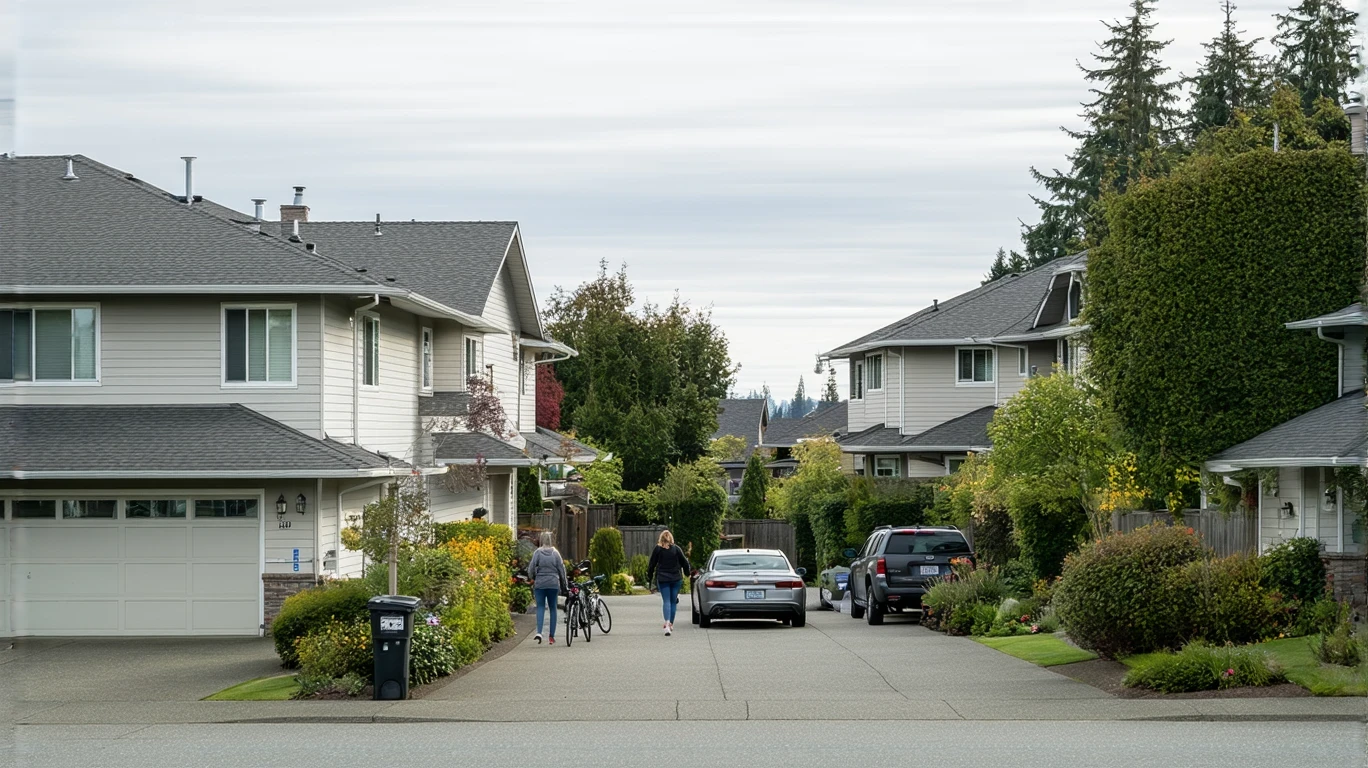
Edmonds sits in a middle position between car dependency and walkable access. The city has rail service and walkable pockets with strong pedestrian infrastructure, but food and grocery options cluster along corridors rather than spreading evenly across neighborhoods. That means many households still drive for weekly errands, and with nearly half of workers facing long commutes and only 11% working from home, transportation becomes a material cost driver—not just for getting to work, but for managing daily household logistics.
What newcomers typically underestimate is how the city’s structure affects budget control. If you live near a walkable corridor with transit access, you can reduce transportation exposure significantly. If you’re farther out or commuting daily to another city, fuel costs and vehicle maintenance move from background expenses to primary budget considerations. The difference between these two patterns can be the equivalent of an entire discretionary spending category.
A Simple Budget Map: How Costs Behave by Household Type
Let’s walk through a sample budget line by line, focusing on how each category behaves rather than trying to pin down exact totals. The table below shows cost behavior across three household types commonly seen in Edmonds: a single renter, a couple, and a family of four who own their home.
| Category | Jasmine (single renter) | Sam & Elena (couple) | Ortiz family (2 kids, owners) |
|---|---|---|---|
| Housing (Rent or Mortgage) | $1,821/month median rent; stable lease term, volatile at renewal | Shared rent or entry mortgage; stable if locked rate | Mortgage on $761,300 median home; fixed if conventional loan, plus tax/insurance volatility |
| Utilities | Electricity 13.85¢/kWh, gas $16.72/MCF; solo usage, heating-season sensitive | Shared usage reduces per-person exposure; winter heating dominates | Size-sensitive; larger home increases baseline load and seasonal swings |
| Food (Groceries + Eating Out) | Solo shopping reduces bulk savings; corridor-clustered access may require driving | Shared grocery runs; meal planning reduces waste and per-person cost | Volume-sensitive; four-person household increases frequency and cart size |
| Transportation | Gas $4.15/gal; commute-dependent if working outside Edmonds; rail option reduces exposure if job-aligned | One or two vehicles; commute footprint dominates if both work outside city | Two-vehicle household typical; school runs, activities, and long commutes (47.9% of workers) increase fuel and maintenance exposure |
| Fees / Friction Costs | Minimal if renting; parking permits possible depending on location | Moderate; may include HOA if renting in newer development | Admin-heavy: HOA dues common, trash/recycling, water/sewer billed separately, seasonal upkeep (HVAC, yard) |
| Discretionary (life + surprises) | Flexible but compressed by rent and commute exposure | Shared discretionary budget; more flexibility than solo household | Discretionary-compressed by ownership costs, childcare, and activity fees |
| What Changes This Most | Commute distance and housing location relative to walkable corridors | Whether both partners commute and vehicle count | Commute footprint, home size, and HOA/maintenance obligations |
Methodology: This guide uses only city-level figures provided in the IndexYard data feed for 2026. Where exact category totals aren’t provided, categories are described directionally to show budget behavior rather than a receipt-accurate total.
The Real Cost Drivers in Edmonds
In Edmonds, the budget stress point is rarely one big bill—it’s the stack of small “friction” costs that show up after move-in. Housing anchors everything: renters face the $1,821 median monthly rent, while owners navigate mortgage payments on a $761,300 median home value, plus property taxes and insurance that shift annually. But housing alone doesn’t explain why some households feel stretched while others maintain comfortable discretionary spending.
Transportation is where Edmonds households diverge sharply. Gas sits at $4.15 per gallon, and with 47.9% of workers facing long commutes and only 11% working from home, many residents drive 25 miles or more round trip daily. For illustrative context, assuming a standard work schedule and typical fuel efficiency (25 MPG), a 25-mile round-trip commute at $4.15/gallon translates to roughly $83 per month in fuel alone—before maintenance, insurance, or parking. Households with two commuters or those driving to Seattle or Bellevue face meaningfully higher exposure. The city’s rail service and walkable pockets help some residents reduce car dependency for errands, but the corridor-clustered layout of food and grocery options means most households still drive weekly, layering errand miles on top of commute miles.
Utilities add seasonal volatility. Electricity runs 13.85¢ per kWh, and natural gas costs $16.72 per MCF. The Pacific Northwest’s mild but wet winters mean heating dominates cooling, and natural gas becomes the primary exposure from roughly October through April. For context, a typical household using 1,000 kWh per month would see an illustrative electricity cost around $138.50 monthly, before fees or taxes. Larger homes or families face higher baseline loads, and older housing stock without modern insulation can push heating costs higher during extended cold snaps. The city’s current temperature of 39°F (feels like 32°F) reflects the kind of persistent chill that keeps furnaces running steadily rather than spiking into extreme cold.
Here’s where friction costs typically appear in Edmonds budgets:
- HOA or association dues: Common in newer developments and townhome communities; often cover exterior maintenance, landscaping, and shared amenities, but add a fixed monthly obligation.
- Trash and recycling: Billed separately in many cases; structures vary by provider and service level.
- Water and sewer: Typically billed by the city or utility district; costs vary by household size and usage but are rarely included in rent.
- Parking permits: Required in some neighborhoods or for street parking near downtown corridors.
- Seasonal upkeep: HVAC servicing before winter, gutter cleaning during fall, and occasional storm prep for heavy rain or wind.
These costs don’t dominate individually, but together they create a baseline “operating cost” for the household that sits underneath the big three categories. For families, the administrative load—tracking due dates, coordinating service calls, managing multiple billing cycles—becomes its own form of budget friction.
How Households Keep the Budget Under Control (Without Living Like a Monk)
The households that manage Edmonds budgets successfully focus on controlling exposure rather than cutting everything to the bone. Location decisions matter more than most people expect: living near a walkable corridor with grocery access and transit options reduces transportation costs without requiring lifestyle compromise. Choosing housing closer to work—or closer to the rail line if your job aligns—can eliminate one commute vehicle entirely, which removes not just fuel costs but insurance, maintenance, and parking from the monthly equation.
Timing and seasonality create opportunities for control. Utilities follow predictable patterns in the Pacific Northwest: heating costs rise from October through April, then drop sharply in summer. Households that address insulation gaps, seal drafts, or service HVAC systems before winter reduce peak-month exposure without sacrificing comfort. Grocery shopping benefits from planning around sales cycles and buying shelf-stable staples in bulk when prices dip, which matters more in a region where ground beef runs $7.63 per pound and cheese costs $5.47 per pound.
Behavioral adjustments around transportation make a measurable difference. Consolidating errands into fewer trips, carpooling when possible, or shifting one partner to remote work even part-time reduces fuel burn and vehicle wear. For families, coordinating school runs and activity schedules to minimize redundant trips keeps transportation from becoming the second-largest budget category after housing.
Here are practical tactics Edmonds households use to maintain budget control:
- Choose housing with location leverage: Proximity to work, transit, or walkable errands reduces transportation exposure more than rent savings farther out.
- Lock in fixed costs early: Long-term lease terms, fixed-rate mortgages, and pre-paying annual fees (parking permits, memberships) reduce mid-year surprises.
- Consolidate trips: Batch errands, coordinate grocery runs, and plan routes to minimize fuel use and vehicle wear.
- Weatherize before winter: Seal drafts, service furnaces, and check insulation to reduce heating costs during the wet, cold months.
- Track friction costs separately: Create a dedicated line item for HOA dues, water/sewer, trash, and permits so they don’t disappear into “miscellaneous.”
- Use rail and walkable corridors strategically: If your work or errands align with transit routes, one fewer vehicle changes the entire transportation budget.
- Plan grocery shopping around sales and bulk buys: Stock up on staples when prices drop; avoid last-minute convenience runs that add up over the month.
- Coordinate household schedules: For families, aligning school, work, and activity schedules reduces redundant driving and opens up carpool opportunities.
FAQs About Monthly Budgets in Edmonds (2026)
What’s the biggest budget surprise for people moving to Edmonds?
It’s usually not rent or home prices—it’s the combination of commute costs and friction fees that don’t show up until after move-in. With gas at $4.15/gallon and nearly half of workers facing long commutes, transportation becomes a primary cost driver, and HOA dues, water/sewer, and parking permits add a layer of fixed costs that many newcomers don’t anticipate.
How much does the typical commute cost in Edmonds?
Commute costs depend entirely on distance and frequency. For illustrative context, a 25-mile round-trip commute at $4.15/gallon and typical fuel efficiency (25 MPG) runs roughly $83 monthly in fuel alone, before insurance, maintenance, or parking. Households with two commuters or longer distances face meaningfully higher exposure, which is why location decisions relative to work and transit matter so much.
Is Edmonds affordable for a single renter?
It depends on income and commute footprint. Median rent sits at $1,821 per month, and median household income is $110,057 annually. A single renter earning around that median would find rent manageable, but transportation and utilities add material costs—especially if commuting daily outside the city. Living near walkable corridors or rail service reduces car dependency and improves budget flexibility.
How do utility costs behave in Edmonds throughout the year?
Heating dominates cooling in the Pacific Northwest. Natural gas at $16.72/MCF drives winter bills from October through April, while electricity at 13.85¢/kWh stays relatively stable year-round. Larger homes and older housing stock without modern insulation see higher seasonal swings, and households that weatherize before winter reduce peak-month exposure without sacrificing comfort.
What’s the best way to control grocery costs in Edmonds?
Plan around sales cycles, buy shelf-stable staples in bulk, and consolidate shopping trips to reduce fuel costs. With ground beef at $7.63/lb and cheese at $5.47/lb, meal planning and reducing food waste make a noticeable difference. The city’s corridor-clustered grocery access means most households drive for weekly shopping, so batching errands saves both time and transportation costs.
Planning Your Next Step
The three biggest drivers in Edmonds budgets are housing (whether rent at $1,821/month or ownership around $761,300), transportation (shaped by commute distance, gas at $4.15/gallon, and the city’s mixed walkability), and utilities (with heating costs dominating from October through April). How these categories interact depends on where you live relative to work, transit, and walkable corridors—and whether your household runs one vehicle or two.
If you want to understand how Edmonds’ housing pressure shapes monthly obligations and the rent-versus-own tradeoff, explore the full breakdown of ownership costs, property taxes, and HOA structures. For a closer look at how seasonal heating and electricity costs behave throughout the year, the utilities guide explains what drives winter bills and where efficiency upgrades reduce exposure. And if you’re trying to understand how much of your budget groceries and dining will claim, the food costs guide walks through category-by-category pricing and shopping strategies.
The households that manage Edmonds budgets successfully don’t rely on extreme frugality—they make location and timing decisions that reduce exposure to the city’s primary cost drivers. Whether you’re a single renter weighing walkable neighborhoods against commute distance, a couple deciding between one or two vehicles, or a family balancing ownership costs with school access, the key is understanding which categories you can control and which ones require planning around. Edmonds rewards that kind of precision.
How this article was built: In addition to public economic data, this article incorporates location-based experiential signals derived from anonymized geographic patterns—such as access density, walkability, and land-use mix—to reflect how day-to-day living actually feels in Edmonds, WA.