
Is Edmonds the kind of place you grow roots—or just pass through? For many, it’s a city that rewards those who value texture over speed: walkable pockets near the water, rail access into Seattle, and a slower rhythm that feels intentional rather than accidental. But that same character comes with tradeoffs—housing costs that stretch budgets, convenience that clusters rather than spreads, and a community identity caught between preservation and growth. Whether Edmonds feels like home or a compromise depends less on what the city offers and more on what you need it to be.
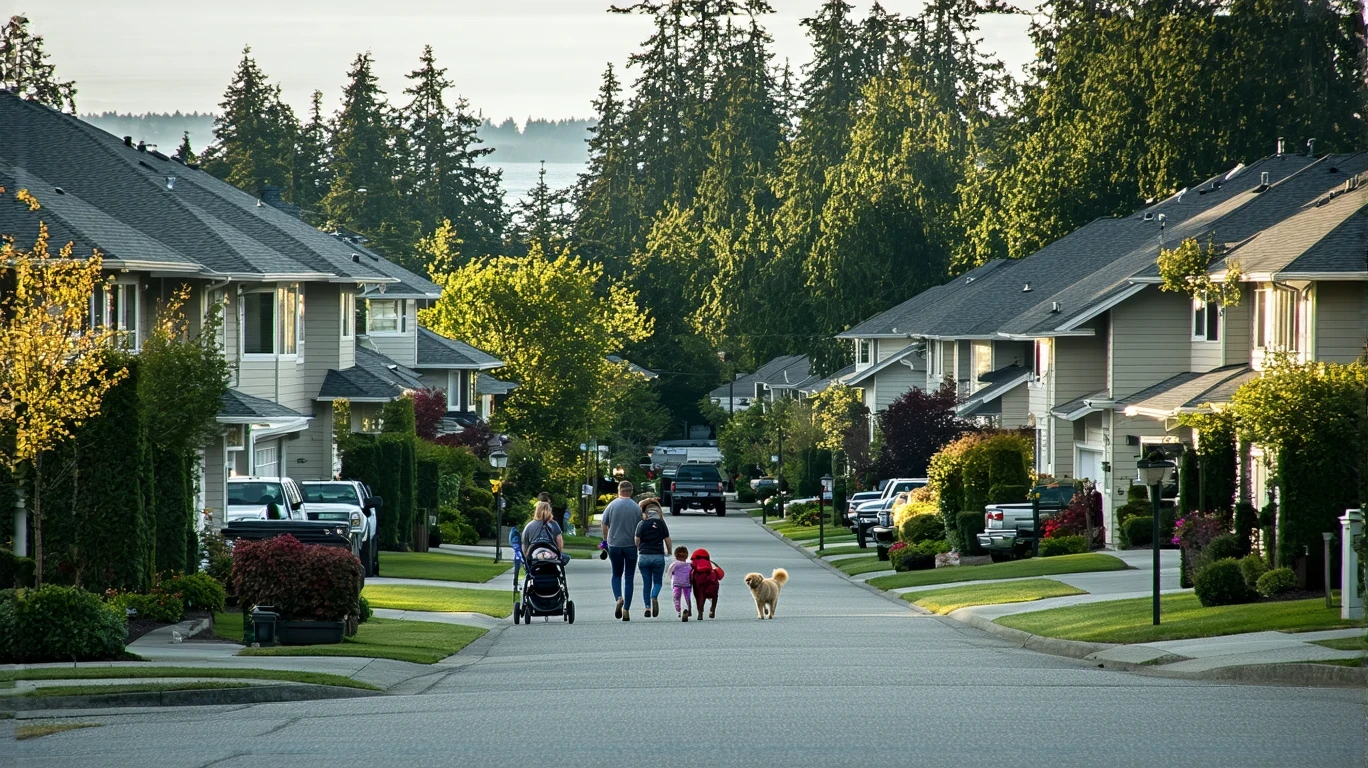
The Emotional Landscape of Edmonds
Edmonds tends to attract people looking for a blend: small-town warmth with access to urban infrastructure. The waterfront, the downtown core, and the presence of rail transit create a sense of place that feels more rooted than many suburban alternatives. Park density is high, water features are present, and pedestrian infrastructure exceeds what you’d find in typical car-oriented suburbs. For households who value being able to walk to coffee, catch a train, or spend weekends near the water, Edmonds delivers on lifestyle in ways that feel earned rather than engineered.
But the city’s appeal is also its friction point. Housing costs are steep—median home values sit at $761,300, and median rent is $1,821 per month—which means many households face a constant negotiation between space, location, and financial breathing room. The walkability and transit access that define the city’s core don’t extend uniformly, so living outside those pockets often means reverting to car dependency. And while the community feel is real, it comes with the growing pains of a place trying to figure out how much it can change without losing what people moved here for.
What People Talk About Online
In local Facebook groups and on platforms like Reddit, Edmonds residents tend to express pride mixed with protectiveness. Conversations often circle around preserving the downtown character, debating new development, and celebrating the waterfront and ferry access. There’s a recurring theme of people feeling lucky to live here—but also feeling stretched by the cost of staying.
“We moved here for the walkability and the water, and it’s everything we hoped for—but we’re definitely paying for it.”
“It’s a great place if you can afford it. If you’re on the edge financially, it’s hard not to feel like you’re one rent increase away from having to leave.”
“I love that it still feels like a real town, not just a suburb. But I also see how much that’s changing, and it makes me nervous.”
The tone is rarely angry, but it’s often wistful—people appreciate what they have while worrying about whether it’s sustainable, either financially or culturally.
How Local Coverage Frames the City
Local news and community blogs tend to frame Edmonds as a city navigating identity questions. Coverage often focuses on development proposals, transportation improvements, and efforts to balance growth with character preservation. The tone is rarely alarmist, but it reflects an ongoing conversation about what kind of place Edmonds wants to be as it absorbs pressure from the broader Seattle metro.
Typical headline-style themes include:
- “Community Debates What Growth Should Look Like”
- “New Amenities Arrive as Waterfront Identity Evolves”
- “Residents Weigh Convenience Against Quiet”
- “Transit Access Expands While Housing Costs Climb”
- “Balancing Small-Town Feel with Regional Connectivity”
The framing tends to emphasize tradeoffs rather than crises—this is a city where people care deeply about outcomes, but the conversation is more about direction than emergency.
Review-Based Public Perception
On platforms like Google, Yelp, and Nextdoor, Edmonds tends to earn praise from people who wanted exactly what it offers: a walkable downtown, access to parks and water, and a community that feels engaged. The complaints, when they appear, usually come from people who expected more uniform walkability, lower costs, or a wider range of dining and entertainment options.
Positive reviews often highlight:
- The downtown core and waterfront as genuine lifestyle assets
- Park access and outdoor recreation opportunities
- Community events and a sense of local identity
- Rail access making Seattle commutes manageable
Common frustrations include:
- Housing costs that feel disproportionate to space and amenities
- Errands requiring a car if you live outside the core
- Limited nightlife and dining variety compared to denser urban areas
- Parking challenges in the downtown area
Newer planned areas tend to feel more car-dependent and less textured, which disappoints people who moved to Edmonds specifically for walkability. Older pockets near downtown deliver on that promise but come with higher costs and less space.
How Edmonds Compares to Nearby Cities
| Dimension | Edmonds | Lynnwood | Mukilteo |
|---|---|---|---|
| Overall Vibe | Walkable waterfront town with community feel | Suburban convenience hub with retail focus | Quiet residential with ferry access |
| Walkability | Strong in core, mixed elsewhere | Car-oriented throughout | Limited, mostly residential |
| Transit Access | Rail present, bus service available | Bus-focused, no rail | Ferry access, limited bus |
| Housing Costs | High, especially near downtown | Moderate, more space for the price | High, waterfront premium |
| Community Feel | Strong, engaged, protective | Functional, less identity-driven | Quiet, family-oriented |
Edmonds tends to appeal to people who want more character and walkability than Lynnwood offers, and more activity and transit access than Mukilteo provides. If you prioritize affordability and space, Lynnwood may feel like a better fit. If you want waterfront quiet without the downtown energy, Mukilteo might align better. Edmonds sits in the middle—offering texture and connectivity, but at a price that requires financial commitment.
What Locals Are Saying
“We love being able to walk to the farmers market and catch the train into Seattle. It’s the best of both worlds, even if we’re paying a premium for it.”
“I thought I’d be able to walk everywhere, but once you’re a few blocks off Main Street, you’re back in your car. It’s not as walkable as I expected.”
“The parks and waterfront access are incredible. We spend every weekend outside, and it never gets old.”
“Housing costs are brutal. We’re renting a small place and saving to buy, but it feels like the goalposts keep moving.”
“It’s a great place to raise kids—good schools, safe neighborhoods, lots of outdoor space. But you definitely need two incomes to make it work.”
“I moved here from Seattle and I don’t miss the noise or the crowds. Edmonds feels like a real community, not just a place to sleep.”
“I wish there were more restaurants and nightlife options. It’s charming, but it can feel a little sleepy if you’re used to more energy.”
Does Edmonds Feel Like a Good Fit?
Edmonds tends to work best for households who value lifestyle texture over affordability, who prioritize outdoor access and walkability in specific pockets, and who are willing to pay a premium for community feel and transit connectivity. It’s a city that rewards people who know what they’re getting—and who have the financial flexibility to absorb housing tradeoffs without constant stress.
It tends to frustrate people who expect uniform walkability, who need lower costs to feel secure, or who want the energy and variety of a denser urban environment. The city’s identity is still evolving, and that tension—between preservation and growth, between character and convenience—shapes much of the emotional experience of living here.
If you’re considering Edmonds, the question isn’t whether it’s happy or affordable in the abstract. It’s whether the specific things it does well—walkable downtown, rail access, park density, waterfront proximity—align with what you need day-to-day, and whether the costs and limitations feel like reasonable tradeoffs or constant friction. For some, it’s exactly right. For others, it’s a beautiful place that never quite stops feeling expensive.
Understanding where money goes each month and what drives quality of life in Edmonds can help clarify whether the city’s character matches your priorities—or whether you’d feel more at home somewhere else.
How this article was built: In addition to public economic data, this article incorporates location-based experiential signals derived from anonymized geographic patterns—such as access density, walkability, and land-use mix—to reflect how day-to-day living actually feels in Edmonds, WA.
The perspectives shown reflect commonly expressed local sentiment and recurring themes in public discussion, rather than individual accounts.