
How much is enough to feel at ease? In Edmonds, that question doesn’t have a single answer — because comfort isn’t just about earnings. It’s about how housing, commute patterns, and daily logistics align with what you expect from your time and money. Some households thrive here on incomes that would leave others feeling stretched. The difference comes down to tradeoffs, not totals.
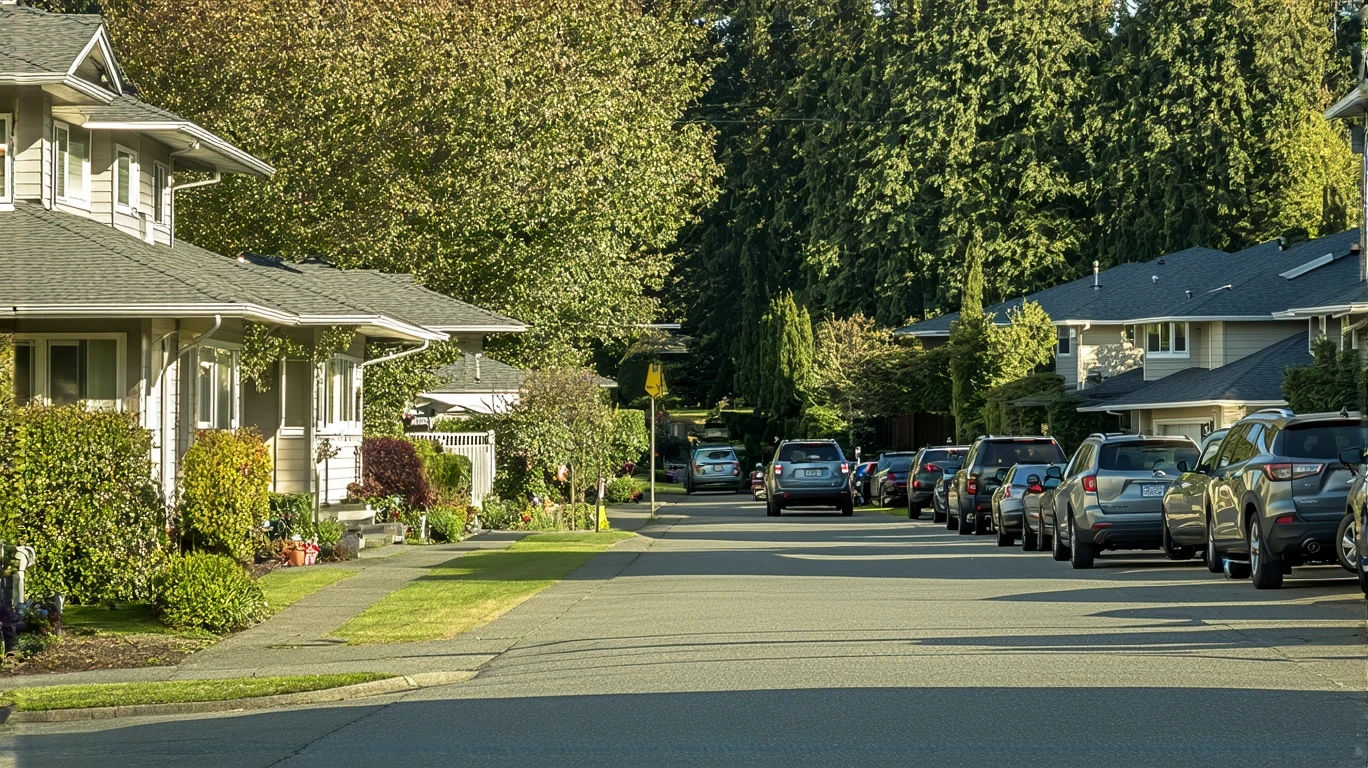
What “Living Comfortably” Means in Edmonds
Comfort in Edmonds means different things depending on what you prioritize. For some, it’s securing a home within walking distance of parks and water access, where green space is woven into daily life rather than requiring a weekend drive. For others, it’s minimizing commute time in a region where nearly half of workers face long trips to employment centers. And for families, it’s finding enough space without sacrificing proximity to schools, playgrounds, and errands.
The city sits in a region where costs run above the national baseline — reflected in a regional price index of 113 — and housing dominates household budgets. The median home value stands at $761,300, while renters face a median gross rent of $1,821 per month. These figures set the floor for housing access, but they don’t capture the texture of daily life: whether you can walk to the grocery store, whether your commute eats into family time, or whether routine healthcare requires a drive to another city.
Comfort here isn’t about luxury. It’s about having enough margin that bills don’t dictate behavior, that seasonal utility swings feel manageable, and that you can make choices — about housing location, commute length, or how you spend weekends — without constant financial recalibration.
Where Income Pressure Shows Up First
Housing pressure arrives first and stays longest. Whether renting or buying, housing tradeoffs dominate decision-making. Renters at the median rate face limited flexibility to absorb rent increases or move without financial disruption. Prospective buyers confront a median home value that requires substantial down payments and monthly obligations extending well beyond principal and interest — property taxes, insurance, and maintenance all scale with home price.
Transportation costs layer on top. Gas prices sit at $4.15 per gallon, and nearly 48% of workers endure long commutes, with an average of 28 minutes each way. For households where both adults work outside the home, commute time compounds quickly. Rail service exists and offers an alternative for some, but the infrastructure doesn’t eliminate car dependency for most families. Walkable pockets provide relief in certain neighborhoods, but errands remain clustered along corridors rather than distributed evenly, meaning many trips still require driving and planning.
Utility costs add seasonal variability. Electricity rates run 13.85¢ per kWh, and natural gas costs $16.72 per MCF in a climate where heating matters more than cooling. Winter months bring predictable increases, but the swings are moderate compared to regions with extreme heat or cold. Still, for households operating with little monthly cushion, even moderate volatility creates stress.
For families, pressure intensifies around logistics. School density remains low despite the presence of playgrounds, meaning parents often navigate longer distances for educational options. Routine healthcare is available locally through clinics, but hospital access requires travel. Errands — groceries, pharmacies, appointments — require intentionality rather than convenience, adding time and planning to weekly routines.
How the Same Income Feels Different by Household
Households at similar income levels often experience very different pressure depending on size, commute patterns, and expectations around convenience.
Single adults face the most direct housing pressure. Rent or mortgage costs claim the largest share of income, leaving less room for discretionary spending or savings. However, the city’s infrastructure offers some relief: walkable pockets and rail access reduce car dependency for those who live and work near transit corridors. Errands clustered along commercial strips require planning, but solo households can often consolidate trips more easily than families. Healthcare access remains routine-local, meaning serious medical needs require travel, but day-to-day care is manageable.
Couples benefit from dual income, which eases housing pressure without eliminating it entirely. The ability to split costs opens up more housing options and creates breathing room for savings or discretionary spending. However, commute patterns still dictate daily rhythms. In a region where nearly half of workers face long commutes, couples often navigate competing schedules, transportation costs, and the time-versus-money tradeoff that comes with living farther from work to access more affordable housing. The city’s integrated green space — parks and water access distributed throughout — supports low-cost recreation, which helps offset other expenses.
Families encounter the most complex pressure. Housing needs expand with children, pushing costs higher while limiting location flexibility. School density remains low, meaning families often travel farther for educational options that fit their needs. Errands become more frequent and less flexible, and the corridor-clustered layout of grocery stores and services means most trips require a car. Long commutes reduce family time, and the logistics of managing schedules, childcare, and activities compound quickly. Playgrounds are present and park density is high, which provides free recreational outlets, but the overall infrastructure demands more planning and coordination than in cities with denser, more evenly distributed services.
The Comfort Threshold (Qualitative)
Comfort in Edmonds begins when housing stops being a source of constant negotiation. It’s the point where you can choose a home based on fit — proximity to work, access to parks, neighborhood character — rather than purely on affordability. It’s when transportation costs become predictable rather than volatile, when you can absorb a gas price spike or an unexpected car repair without reshuffling other expenses.
It’s also when errands and healthcare stop requiring advance planning. When you can pick up groceries on the way home without mapping out the most efficient route. When routine medical appointments don’t require a half-day commitment. When utility bills fluctuate with the seasons but don’t force you to defer other spending.
For families, the threshold includes having enough margin to manage logistics without constant stress. It’s when school location and childcare options expand beyond the minimum. When extracurricular activities become possible without sacrificing other needs. When one partner’s long commute doesn’t destabilize the household’s entire schedule.
This threshold isn’t tied to a single income figure because it depends on household size, commute tolerance, housing expectations, and how much flexibility you need month to month. But it’s recognizable when you reach it: choices expand, tradeoffs ease, and financial decisions shift from survival mode to planning mode.
Why Online Cost Calculators Get Edmonds Wrong
Most cost-of-living calculators reduce Edmonds to a set of averages: median rent, typical utility bills, standard transportation costs. They produce a total, imply a required income, and suggest that hitting that number equals comfort. But totals mislead because they ignore how costs interact with daily life.
A calculator might flag housing pressure and transportation expenses, but it won’t tell you that walkable pockets exist only in certain neighborhoods, or that errands cluster along corridors rather than spreading evenly across the city. It won’t explain that rail service offers a real alternative for some commuters but doesn’t eliminate the need for a car in most households. It won’t capture the fact that school density is low, or that hospital access requires leaving town, or that nearly half of workers face long commutes despite the city’s proximity to Seattle.
Calculators also assume uniform preferences. They treat housing, transportation, and convenience as interchangeable budget lines, when in reality, people weight these differently. Some households tolerate long commutes to access better housing. Others prioritize walkability and accept smaller spaces. Families navigate school access and childcare logistics that single adults never encounter. Calculators flatten these distinctions into a single figure, which is why people often feel surprised after moving — the total was accurate, but the texture was wrong.
How to Judge Whether Your Income Fits Edmonds
Rather than asking “Is my income enough?”, ask whether your income aligns with how Edmonds actually works. Consider:
- How sensitive are you to housing tradeoffs? Can you accept a smaller space, an older building, or a location farther from parks and water access in exchange for lower rent or purchase price? Or do you need specific housing features that will push you toward the higher end of the market?
- Can you absorb seasonal utility swings? Heating costs rise in winter, and while the swings are moderate, they’re predictable. Do you have enough monthly cushion to handle variability without stress?
- Is time or money your limiting factor? Nearly half of workers here face long commutes. Can you tolerate 45–60 minutes each way to access more affordable housing farther out? Or do you need to live closer to work, even if it means higher housing costs?
- How much do you value walkability and transit access? Walkable pockets and rail service exist, but they don’t cover the entire city. If car-free or car-light living matters to you, your housing options narrow significantly.
- How complex are your household logistics? Families managing school drop-offs, errands, and activities face more friction here than in cities with denser, more evenly distributed services. Can you handle the planning and driving that corridor-clustered errands require?
- How much healthcare access do you need locally? Routine care is available through clinics, but hospital services require travel. If you or a family member has ongoing medical needs, factor in the time and cost of accessing specialized care outside Edmonds.
These questions don’t produce a pass/fail score. They help you identify where your expectations and Edmonds’ realities align — and where they don’t.
How this article was built: In addition to public economic data, this article incorporates location-based experiential signals derived from anonymized geographic patterns—such as access density, walkability, and land-use mix—to reflect how day-to-day living actually feels in Edmonds, WA.
FAQs About Living Comfortably in Edmonds
Is the median household income in Edmonds enough to live comfortably?
The median household income in Edmonds is $110,057 per year (gross). Whether that feels comfortable depends entirely on household size, housing expectations, and commute tolerance. For a single adult or couple without children, it often provides meaningful flexibility. For families, especially those navigating school access, long commutes, and clustered errands, the same income can feel much tighter. Comfort isn’t guaranteed by hitting the median — it’s determined by how well your priorities align with what that income can access here.
Can you live in Edmonds without a car?
It’s possible in specific neighborhoods where walkable infrastructure and rail access converge, but it’s not the norm. Errands remain clustered along corridors rather than evenly distributed, and many essential services — groceries, pharmacies, schools — require either driving or significant planning to reach by foot or transit. For most households, a car remains necessary for day-to-day logistics, even if rail service reduces commuting costs for some workers.
How do families manage the low school density in Edmonds?
Families often travel farther for school options that fit their needs, which adds time and transportation costs to daily routines. Playgrounds are present and park access is strong, but educational infrastructure is less dense than in some neighboring areas. This means parents need to factor in longer drop-off and pick-up commutes, and childcare logistics become more complex. Families who prioritize school proximity may find their housing options more limited or expensive.
What happens if you need hospital care in Edmonds?
Routine healthcare is available locally through clinics, but hospital services require travel to nearby cities. For households with ongoing medical needs, chronic conditions, or young children, this adds both time and logistical complexity. Emergency care and specialized treatment aren’t immediately accessible within city limits, so proximity to regional medical centers becomes an important consideration when evaluating whether Edmonds fits your household’s needs.
Do higher earners feel more comfortable in Edmonds, or do the same pressures apply?
Higher income expands housing choices and reduces the sting of transportation and utility costs, but it doesn’t eliminate the structural realities of living here. Long commutes still consume time. Errands still require planning. School density remains low. Hospital access still requires travel. Income buys more flexibility and reduces financial stress, but it doesn’t fundamentally change how the city’s infrastructure shapes daily life. Comfort improves with income, but the tradeoffs don’t disappear — they just become less painful.
Edmonds can work well for some households — but only if expectations match reality.