
Can you live in Auburn without a car? The answer depends heavily on where in Auburn you settle and where you need to go. While rail service connects parts of the city to Seattle and surrounding areas, daily life for most residents still revolves around driving. Auburn’s layout creates pockets of walkability and transit access, but the city’s broader structure favors car ownership for errands, flexibility, and reliability.
Understanding transportation options in Auburn means recognizing that mobility here isn’t one-size-fits-all. Rail access opens doors for some commuters, but gaps in local coverage, the clustering of services along corridors, and the realities of household logistics mean that most people keep a car—even if they don’t use it every day.
How People Get Around Auburn
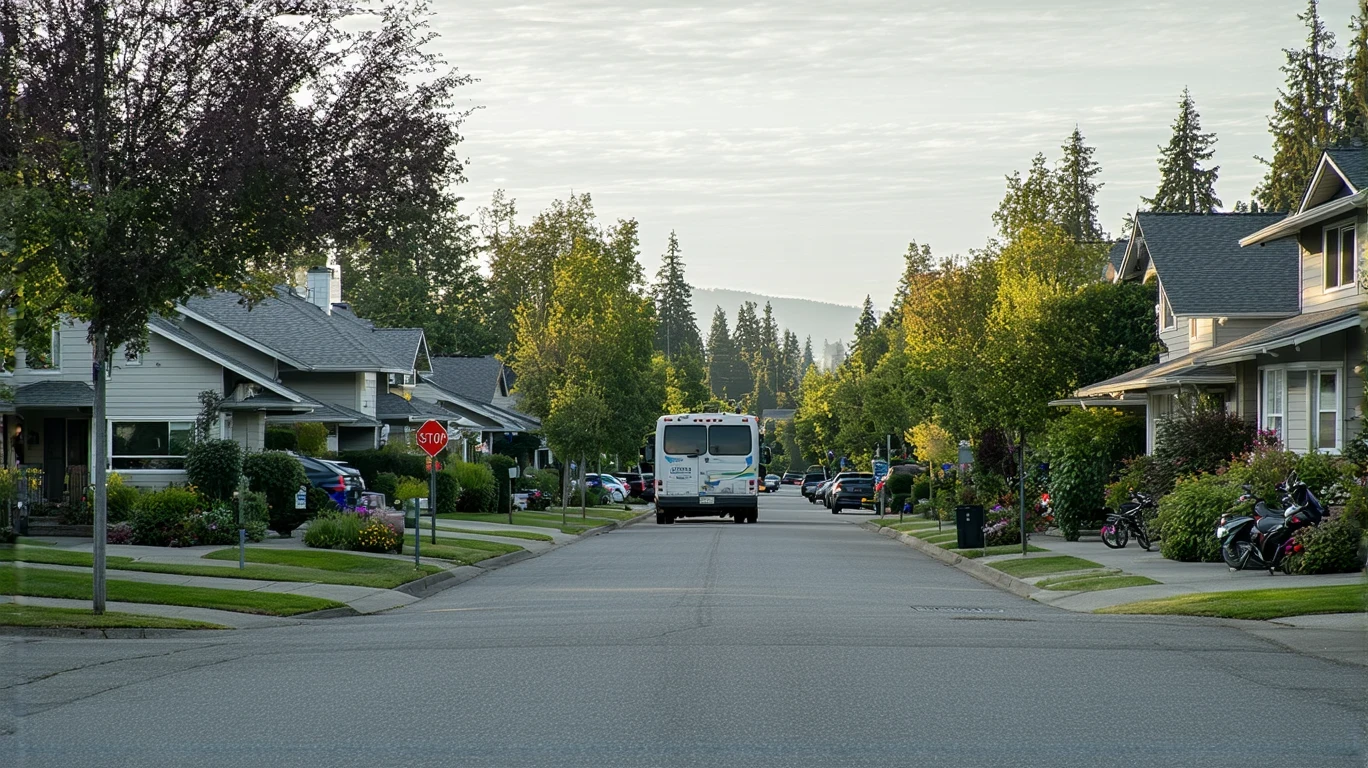
Auburn functions as a car-oriented city with selective transit utility. The pedestrian-to-road ratio in certain areas exceeds typical suburban thresholds, creating neighborhoods where walking to nearby destinations is practical. But these walkable pockets don’t define the entire city. Outside these zones, sidewalks thin out, distances stretch, and car dependency becomes the default.
Rail service plays a meaningful role for residents near station areas, particularly those commuting to Seattle or Tacoma. For that subset of households, transit becomes a viable daily option. But for most residents—especially those living beyond walking distance of a station or working locally—driving remains the primary mode of transportation.
The city’s development pattern reinforces this split. Food and grocery options cluster along commercial corridors rather than distributing evenly across neighborhoods. That concentration works well for drivers who can navigate between errands efficiently, but it creates friction for households trying to manage daily needs on foot or by transit.
Public Transit Availability in Auburn
Public transit in Auburn often centers around systems such as Sound Transit’s Sounder commuter rail, which provides service to Seattle and Tacoma during peak hours. This rail connection is Auburn’s strongest transit asset, offering a predictable, congestion-free option for workers whose schedules align with train times and whose destinations lie along the line.
Bus service supplements rail access, but coverage varies significantly by neighborhood. Routes tend to serve main corridors and connect to transit hubs, leaving residential areas farther from these spines with limited or infrequent options. For residents near these corridors, transit can support certain trips—grocery runs, appointments, or errands that don’t require hauling heavy loads. For those outside the coverage zone, transit becomes impractical for daily use.
Transit works best in Auburn when your origin, destination, and schedule all align with the available network. That alignment is common for Seattle-bound commuters living near the station, but rare for households managing school drop-offs, multi-stop errands, or jobs in neighboring suburbs.
Driving & Car Dependence Reality
Most Auburn households own at least one vehicle, and many own two. This isn’t a preference—it’s a structural response to how the city is built. Parking is abundant and free in most areas, which removes one of the usual friction points that discourage driving in denser cities. Roads are designed to move cars efficiently, and the distance between home, work, and services makes driving the fastest and most flexible option for the majority of trips.
Car dependence in Auburn isn’t just about commuting. It’s about managing the full scope of household logistics: getting kids to school, running errands across multiple locations, reaching healthcare appointments, and accessing services that aren’t clustered near your home. Even households that use transit for commuting often keep a car for everything else.
For families, car ownership often scales with the number of working adults and the complexity of daily schedules. Single-car households can work if schedules are tightly coordinated, but two-car households gain significant flexibility and reduce the planning burden that comes with shared vehicle access.
Commuting Patterns & Daily Mobility
According to the U.S. Census Bureau American Community Survey, the average commute in Auburn is 31 minutes, and 49.9% of workers face commutes that qualify as long by regional standards. About 14.4% of workers work from home, which removes commute exposure entirely for that group but leaves the majority navigating distance, traffic, or transit schedules.
Commuters fall into distinct categories based on destination and mode. Seattle-bound workers near the rail station can avoid traffic and parking costs by taking the train, though they sacrifice schedule flexibility and must plan around departure times. Workers commuting to nearby suburbs, industrial areas, or local employers typically drive, as transit options for these trips are sparse or nonexistent.
Multi-stop commutes—common among parents, caregivers, or workers with side gigs—almost always require a car. Transit can’t accommodate the layered logistics of dropping off kids, stopping for groceries, and reaching a workplace that isn’t on a direct route. For these households, driving isn’t about convenience; it’s about making daily life possible within the time available.
How this article was built: In addition to public economic data, this article incorporates location-based experiential signals derived from anonymized geographic patterns—such as access density, walkability, and land-use mix—to reflect how day-to-day living actually feels in Auburn, WA.
Who Transit Works For — and Who It Doesn’t
Transit in Auburn works best for single commuters with Seattle-area jobs, predictable schedules, and housing near the rail station. For this group, the train eliminates traffic stress, reduces fuel and parking costs, and provides a reliable alternative to driving. Renters in walkable pockets near the station can often structure a car-light lifestyle, relying on transit for commuting and walking for nearby errands.
Transit works less well—or not at all—for families managing complex schedules, workers commuting to non-Seattle destinations, and residents living outside the walkable corridors. Households with children face the added challenge of coordinating school, activities, and errands, which rarely align with transit routes or schedules. For these households, car ownership isn’t optional.
Even within Auburn’s walkable pockets, transit utility depends on where you need to go. If your daily destinations cluster along transit-served corridors, you gain real flexibility. If they don’t, you’ll find yourself driving most of the time despite living in a nominally transit-accessible area.
Transportation Tradeoffs in Auburn
Choosing between transit and driving in Auburn means weighing predictability against flexibility. Rail transit offers schedule certainty and eliminates traffic exposure, but it locks you into fixed departure times and limits your ability to make spontaneous stops or adjust plans mid-trip. Driving offers control and convenience but exposes you to traffic variability, fuel price fluctuations, and the ongoing cost of vehicle ownership.
For households trying to minimize car dependence, proximity to the rail station becomes the defining factor. Living within walking distance of the station allows you to use transit for commuting while keeping a car for errands and weekend trips. Living farther out shifts the balance heavily toward driving, as the time and effort required to reach the station by bus or bike often outweighs the benefits of taking the train.
The tradeoff isn’t just financial—it’s about time, autonomy, and household complexity. Transit simplifies the commute but complicates errands. Driving simplifies errands but adds commute stress. Most Auburn households end up with a hybrid approach: driving for most trips, using transit when it saves time or reduces hassle, and structuring their housing choice around which mode they want to prioritize.
FAQs About Transportation in Auburn (2026)
Is public transit usable for daily commuting in Auburn?
Yes, but only for a subset of residents. If you live near the rail station and commute to Seattle or Tacoma during peak hours, transit is a strong option. For other destinations or schedules, driving is usually necessary.
Do most people in Auburn rely on a car?
Yes. The majority of Auburn households own at least one vehicle, and many own two. Even residents who use transit for commuting typically keep a car for errands, family logistics, and trips that transit doesn’t serve well.
Which areas of Auburn are easiest to live in without a car?
Neighborhoods within walking distance of the rail station and along commercial corridors with higher pedestrian infrastructure offer the most car-light viability. Outside these areas, car ownership becomes much more practical.
How does commuting in Auburn compare to nearby cities?
Auburn’s average commute time of 31 minutes reflects its role as a suburban city with both local employment and Seattle-area commuters. Proximity to rail service gives Auburn an advantage over more car-dependent suburbs, but it doesn’t match the transit density of Seattle itself.
Can families manage without a car in Auburn?
It’s difficult. Families face layered logistics—school, activities, errands, and work—that rarely align with transit routes or schedules. Most families find that car ownership significantly reduces daily friction and planning burden.
How Transportation Fits Into the Cost of Living in Auburn
Transportation in Auburn isn’t just a line item—it’s a structural factor that shapes where you live, how you spend your time, and what tradeoffs you accept. Choosing housing near the rail station may cost more upfront but can reduce commute stress and fuel exposure. Choosing a neighborhood farther out may lower rent or mortgage costs but increases car dependence and the time spent managing logistics.
For a fuller picture of how monthly expenses interact with housing, transit access, and household structure, the Monthly Budget article provides detailed context. Transportation decisions in Auburn aren’t isolated—they ripple through housing choice, time allocation, and financial flexibility.
Understanding how you’ll actually move through Auburn—day to day, week to week—helps you choose housing, evaluate neighborhoods, and set realistic expectations. Transit exists and works well for some households, but most residents will find that car ownership remains the foundation of daily mobility here.