
Is New Braunfels the Right Place to Spend Your Golden Years?
Choosing where to retire means weighing healthcare access, day-to-day convenience, cost predictability, and quality of life—and New Braunfels presents a compelling but nuanced picture. This central Texas city offers hospital-level medical care, a cost structure below the national average, and a warm climate that appeals to many retirees. Yet the texture of daily life here requires understanding: grocery options are more spread out than in denser metros, errands often require a car, and the extended cooling season shapes both comfort and utility bills. For retirees who value access to serious medical care, moderate housing costs, and don’t mind planning their shopping trips, New Braunfels earns a retirement suitability score of 72 out of 100—a solid choice with specific tradeoffs to consider.
What sets New Braunfels apart is the combination of hospital presence, economic stability (unemployment at 3.6%), and a regional price level at 94 (below the national baseline of 100). The city also offers rail transit access—unusual for a Texas retirement market—and pockets of walkable infrastructure. But the day-to-day rhythm differs from higher-density retirement destinations: food and grocery establishments are more corridor-clustered than broadly accessible, meaning retirees need to think through logistics rather than walk to the corner store. Understanding these patterns is essential for anyone evaluating whether New Braunfels aligns with their retirement priorities.
Healthcare Access for Seniors in New Braunfels
For retirees, healthcare infrastructure isn’t optional—it’s foundational. New Braunfels delivers on this front with a hospital facility present in the area, supported by pharmacy access that ensures prescription continuity. This level of care means seniors aren’t dependent on driving to San Antonio for routine hospitalizations, specialist consultations, or emergency services. The presence of a hospital signals capacity for inpatient care, surgical services, and the specialist networks that often cluster around major medical centers.
Beyond the hospital, the city’s healthcare ecosystem includes clinics that handle routine care—annual checkups, chronic disease management, minor urgent needs—reducing the burden of long drives for everyday medical appointments. Pharmacies are accessible, which matters significantly for retirees managing multiple prescriptions or needing same-day medication access. For more specialized care—certain oncology services, advanced cardiac procedures, or academic medical centers—San Antonio’s major hospital systems remain within reasonable drive time, offering a safety net without requiring relocation.
Medicare acceptance is widespread in Texas, and New Braunfels providers generally participate in Medicare Advantage and supplement plans. Retirees should verify specific network participation for their plans, but the infrastructure is in place. Physical therapy, outpatient rehabilitation, and senior-focused care services are available locally, supporting aging in place and post-hospitalization recovery. The healthcare access level here is a genuine strength, particularly compared to more rural Texas retirement markets where hospital care requires significant travel.
Senior-Friendly Amenities and Services
New Braunfels offers senior centers and recreational programming, though the density of family-oriented infrastructure—schools, playgrounds—is below typical thresholds, which can serve as a proxy for broader community service density. What this means in practice: retirees will find organized senior activities and social programming, but the city’s infrastructure is more spread out than in higher-density metros. Libraries, community spaces, and lifelong learning opportunities exist, often tied to regional community college systems or local cultural institutions.
Transportation is a critical consideration. The city has rail transit access—a notable feature in Texas—but day-to-day mobility for most retirees will still center on personal vehicles. Some walkable pockets exist, particularly in areas where pedestrian infrastructure is more developed, but grocery density is below accessibility thresholds and food establishments cluster along corridors rather than distributing evenly. This means errands require planning: you’ll likely drive to the grocery store, pharmacy, and most appointments rather than walking or relying on frequent transit.
For retirees who don’t drive or prefer not to, ride services (Uber, Lyft) operate in the area, and some senior shuttle programs may be available through local agencies or nonprofit organizations. Grocery delivery has become more common, and meal programs—whether through senior centers, Meals on Wheels, or private services—can fill gaps. But the baseline assumption should be car dependency for most tasks, with alternatives requiring more advance coordination than in transit-rich cities.
Cost of Living for Retirees in New Braunfels
Retirement budgets hinge on housing, healthcare, and the everyday costs that add up over decades. New Braunfels’s regional price parity of 94 means the overall cost structure runs about 6% below the national average—a meaningful cushion for retirees on fixed incomes. Housing options vary: the median home value of $290,800 reflects the single-family market, while median rent of $1,426 per month offers a benchmark for those preferring not to own. Condos, townhomes, and 55+ communities provide alternatives, often with lower maintenance burdens and age-restricted amenities.
Texas offers a significant tax advantage for retirees: no state income tax, meaning Social Security benefits, pension income, IRA distributions, and investment income aren’t taxed at the state level. Property taxes in Texas tend to run higher than in income-tax states, but homeowners over 65 qualify for exemptions that reduce school district taxes and freeze certain taxable values. These exemptions don’t eliminate property taxes, but they provide meaningful relief and predictability—important for retirees managing long-term cash flow.
Utility costs reflect the climate reality: New Braunfels experiences extended heat, and cooling dominates summer bills. Electricity rates sit at 15.87¢/kWh, and a typical household using around 1,000 kWh per month in moderate months might see bills rise significantly during triple-digit summer stretches when air conditioning runs continuously. Natural gas, priced at $19.31/MCF, plays a smaller role given the mild winters, but heating costs remain modest. Some utilities offer senior rate programs or budget billing to smooth seasonal swings—worth investigating during the planning phase.
Healthcare costs beyond Medicare—Part B premiums, supplement or Advantage plan premiums, prescription copays, dental, and vision—vary by individual need and plan choice. Texas’s competitive insurance market offers options, but retirees should budget for out-of-pocket medical expenses as a recurring line item. Compared to higher-cost metros, New Braunfels’s overall expense structure leaves more room in the budget for these non-negotiable costs.
Monthly Retirement Budget in New Braunfels
Here’s what a typical monthly retirement budget might look like in New Braunfels:
| Expense Category | Modest Lifestyle | Comfortable Lifestyle |
|---|---|---|
| Housing (rent or mortgage + insurance + taxes) | $1,400 | $2,000 |
| Healthcare (Medicare supplement, prescriptions, copays) | $400 | $600 |
| Food (groceries and occasional dining) | $450 | $700 |
| Transportation (car payment/maintenance, gas, insurance) | $350 | $550 |
| Utilities (electricity, water, internet, phone) | $250 | $300 |
| Entertainment & Recreation | $200 | $400 |
| Miscellaneous (clothing, personal care, home maintenance) | $200 | $350 |
| Total Monthly | $3,250 | $4,900 |
Estimates based on average senior spending patterns and local costs. Actual expenses vary by housing choice, health needs, and lifestyle preferences. Figures are illustrative and exclude one-time costs or major medical events.
Community and Social Opportunities for Retirees
Retirement isn’t just about costs—it’s about connection, purpose, and staying engaged. New Braunfels supports this through senior groups, volunteer networks, and faith communities that provide social infrastructure. Parks offer walking paths and outdoor gathering spaces, and the presence of water features adds recreational variety. The city’s moderate park density and mixed land use create pockets where retirees can build routines—morning walks, regular coffee meetups, library visits—without needing to drive across town every time.
Volunteer opportunities span food banks, literacy programs, hospital auxiliaries, and environmental stewardship projects. Many retirees find purpose and social connection through structured volunteering, and New Braunfels offers enough organizational density to support this. Hobby clubs—gardening, quilting, woodworking, book clubs—often form through senior centers, libraries, or community colleges offering non-credit courses.
Cultural activities and seasonal events provide rhythm to the year, and the city’s proximity to San Antonio expands access to museums, performing arts, and major sporting events without requiring a long-distance move. For retirees with family nearby, New Braunfels’s location within the San Antonio metro area makes visiting easier for out-of-town relatives, and the rail transit option offers an alternative to driving for some trips.
Intergenerational programming—where seniors interact with younger community members through schools, mentorship, or joint events—exists but may be less dense given the lower school and playground infrastructure. Retirees seeking regular interaction with families and children may need to seek out specific programs rather than encountering them organically in every neighborhood.
Aging in Place: Practical Considerations for New Braunfels Retirees
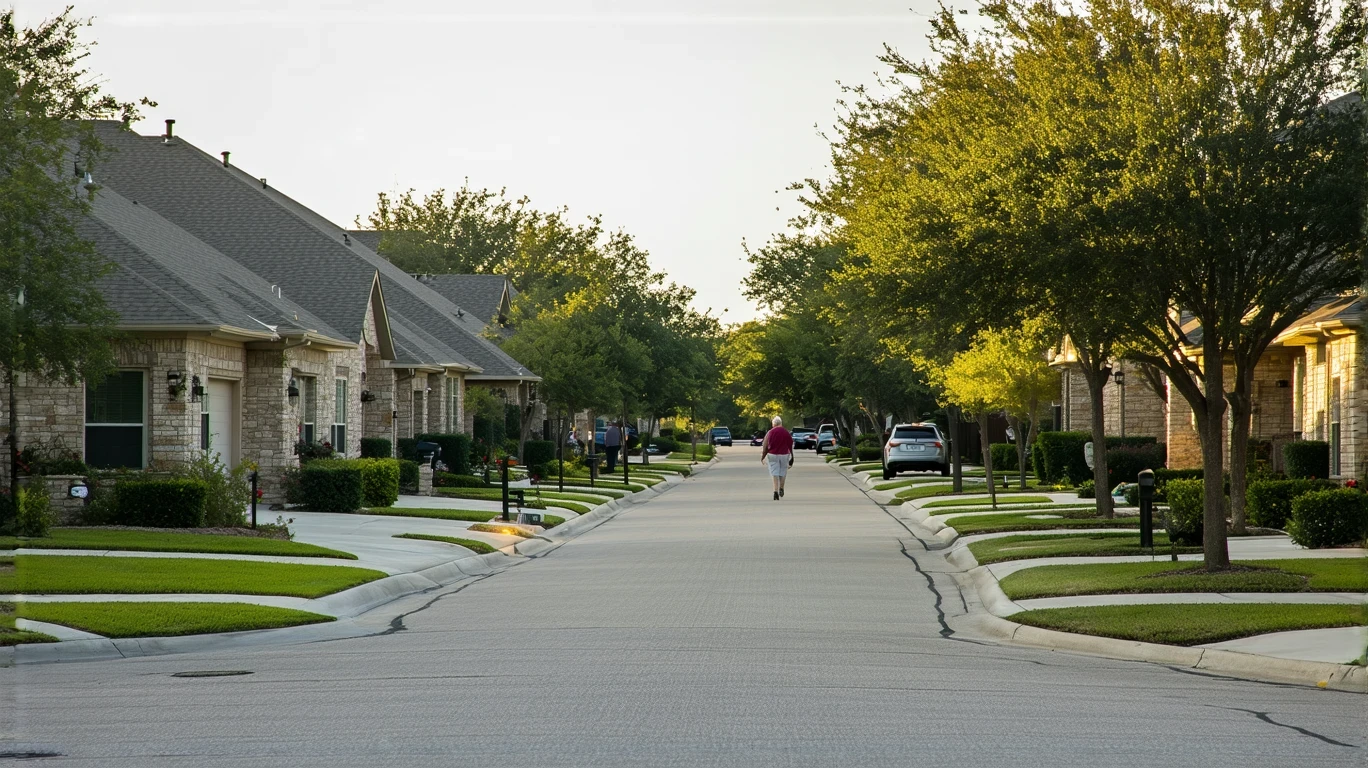
Aging in place means your home and community can adapt as your needs change. New Braunfels’s low-rise building character—most structures remain single-story or low-profile—reduces the prevalence of walk-up apartments and makes single-level living more common. This matters for mobility: ranch-style homes, ground-floor condos, and accessible townhomes are easier to modify with grab bars, widened doorways, and roll-in showers than multi-story layouts.
Home modification services—contractors experienced in aging-in-place renovations—are available regionally, and occupational therapists can assess homes for safety and function. In-home care, whether through agencies or private caregivers, operates in the area, though availability and cost vary. Assisted living facilities and memory care communities exist within and near New Braunfels, providing a continuum of care if independent living becomes impractical.
Walkability varies by neighborhood. Some areas feature pedestrian infrastructure that supports short walks, but the sparse grocery density and corridor-clustered food establishments mean most errands still require a car. For retirees planning decades ahead, this raises an important question: what happens when driving is no longer safe or comfortable? Planning for that transition—whether through ride services, family support, delivery services, or eventual relocation to higher-density senior housing—is essential.
Climate considerations center on heat. Extended summer warmth is a double-edged sword: it eliminates snow, ice, and the fall risks associated with winter weather, but it also demands reliable air conditioning and increases the risk of heat-related illness during power outages. Retirees with cardiovascular conditions, respiratory issues, or heat sensitivity should plan for indoor cooling, hydration routines, and backup plans during extreme weather. Emergency services respond locally, and the hospital presence ensures serious medical events receive timely care.
How this article was built: In addition to public economic data, this article incorporates location-based experiential signals derived from anonymized geographic patterns—such as access density, walkability, and land-use mix—to reflect how day-to-day living actually feels in New Braunfels, TX.
Frequently Asked Questions About Retirement in New Braunfels
What’s the average cost of retirement in New Braunfels?
For a modest lifestyle, retirees might budget around $3,250 per month covering housing, healthcare, food, transportation, and utilities. A more comfortable retirement—with extra travel, dining, and recreation—could run closer to $4,900 per month. These are illustrative figures; actual costs depend on housing choice (own vs. rent), health needs, and personal spending patterns. The city’s cost structure runs about 6% below the national average, offering meaningful savings compared to higher-cost metros.
How good is healthcare access for seniors in New Braunfels?
New Braunfels has a hospital facility present, along with clinics and pharmacies, providing strong local access to both emergency and routine care. This is a significant advantage over more rural Texas markets where hospital care requires long drives. For highly specialized services, San Antonio’s major medical centers remain accessible. Medicare acceptance is widespread, and the infrastructure supports aging in place with physical therapy, outpatient services, and senior-focused care options available locally.
Are there active senior communities and social opportunities?
Yes, though the texture differs from denser metros. Senior centers, volunteer networks, faith communities, and recreational programming provide social infrastructure. Parks and outdoor spaces support walking groups and casual gatherings. The city’s mixed land use and some walkable pockets allow retirees to build routines, but car dependency remains the norm for errands and appointments. Cultural activities, hobby clubs, and lifelong learning opportunities exist, often through community colleges or local organizations.
What are the tax implications of retiring in Texas?
Texas has no state income tax, meaning Social Security, pensions, IRA distributions, and investment income aren’t taxed at the state level—a major advantage for retirees. Property taxes tend to run higher than in income-tax states, but homeowners over 65 qualify for exemptions that reduce school taxes and freeze certain assessed values. These exemptions provide meaningful relief and budget predictability, though they don’t eliminate property taxes entirely. Overall, the tax structure favors retirees with diverse income sources.
Making the Move: Is New Braunfels Right for Your Retirement?
New Braunfels offers a strong foundation for retirement: hospital-level healthcare access, a cost structure below the national average, warm weather that eliminates winter hazards, and economic stability reflected in low unemployment. The city’s rail transit access and walkable pockets add options uncommon in Texas retirement markets. For retirees who value medical infrastructure, moderate costs, and don’t mind driving for most errands, New Braunfels delivers.
The tradeoffs center on daily logistics. Grocery and food establishments are more spread out, requiring planning rather than spontaneous walks to the store. Car dependency is the baseline assumption, and retirees should think ahead to how they’ll manage errands if driving becomes difficult. The extended cooling season drives summer utility bills higher, and the low-rise, spread-out character means less density of services within walking distance.
Before committing, visit during summer to experience the heat firsthand. Drive the routes you’d take for groceries, medical appointments, and social activities. Investigate specific Medicare networks, senior exemptions, and in-home care availability. Talk to current retirees about their day-to-day experience—what works, what requires workarounds, and whether the community feels like the right fit. Retirement is a long game, and New Braunfels’s strengths are real, but they come with a specific lifestyle pattern that won’t suit everyone. For those it does suit, the city offers a compelling combination of care, cost, and climate that earns serious consideration.
For more context on how costs break down across categories, see New Braunfels Affordability: What’s Easy, What’s Expensive. If you’re weighing ownership versus renting in retirement, Renting vs Buying in New Braunfels: The Real Tradeoffs offers detailed analysis of housing decisions and long-term cost implications.