
“I tried the bus for two weeks when my car was in the shop. It worked fine getting downtown, but anything else? Forget it. You need a car here.”
That’s the reality most people discover about transportation options in Everett: the city has public transit infrastructure, including rail service, but daily life for most residents still revolves around driving. Everett sits in a geographic position that makes it both a commuter suburb to Seattle and a regional employment center in its own right, and that dual role shapes how people move through the city. Newcomers often assume transit will work the way it does in denser urban cores, only to find that outside specific corridors and rail-accessible pockets, getting around without a car means planning every trip with care.
Understanding how transportation actually works in Everett—where transit succeeds, where it falls short, and who benefits from each mode—matters as much as knowing monthly expenses, because mobility determines how much time, flexibility, and control you have over daily logistics.
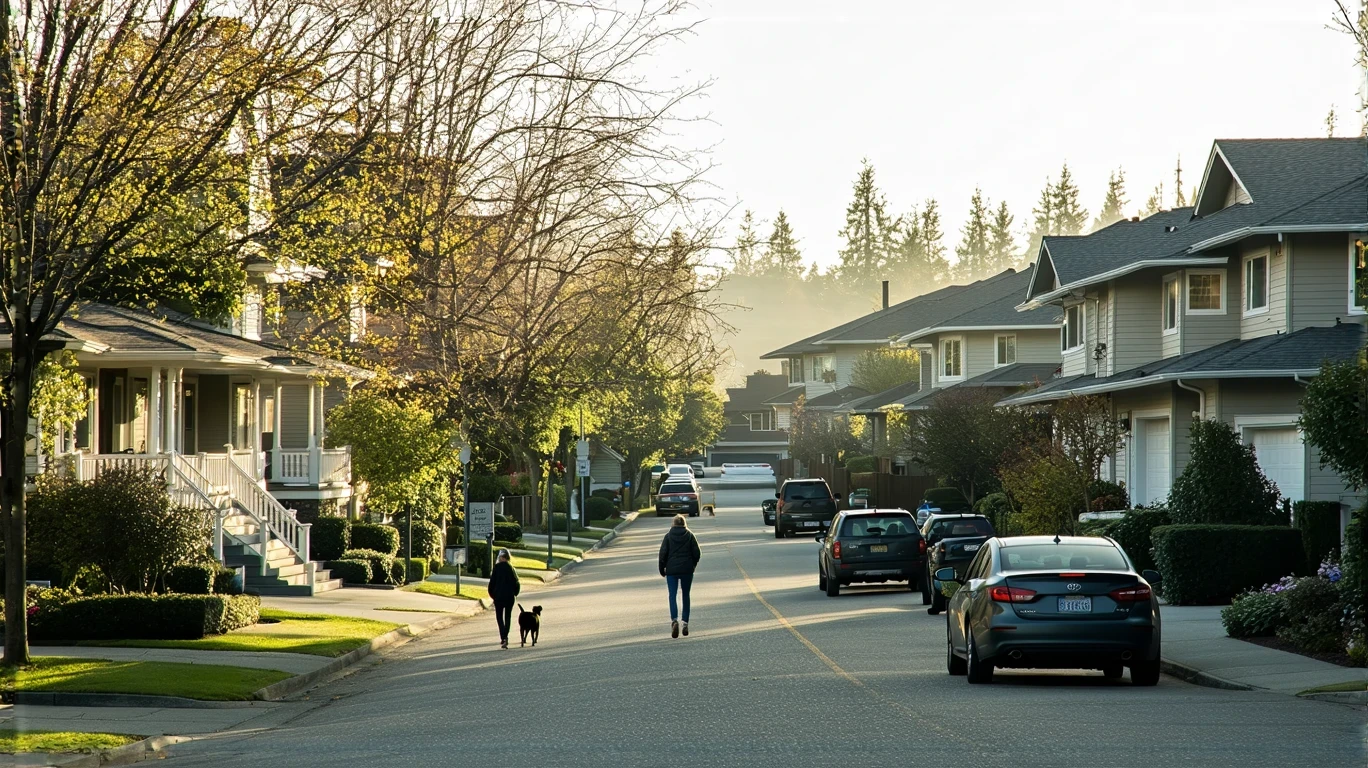
How People Get Around Everett
Everett is a car-first city with transit options layered on top. The street grid and development pattern reflect decades of automobile-oriented planning, with residential neighborhoods spreading outward from the historic core and commercial activity clustering along major arterials. Most households own at least one vehicle, and for the majority of residents, driving is the default for work commutes, errands, and family logistics.
That said, Everett does have rail service and bus routes that connect key corridors, and in certain neighborhoods—particularly those with higher pedestrian infrastructure density—residents can structure their lives around transit if their destinations align with service coverage. The city’s layout creates pockets where walking, transit, and cycling are viable, but these areas are geographically limited. Outside those zones, car dependency rises sharply.
What newcomers often misunderstand is that Everett’s transit infrastructure isn’t evenly distributed. Rail stations anchor specific neighborhoods, and bus routes follow main corridors, but coverage thins quickly in peripheral areas. If your home, workplace, and daily errands all fall within the transit-served core, you can reduce or eliminate car reliance. If any one of those falls outside that network, driving becomes necessary.
Public Transit Availability in Everett
Public transit in Everett often centers around systems such as Community Transit and Sound Transit, which provide bus and rail connections within the city and to neighboring employment centers, including Seattle. Rail service in particular offers a reliable option for commuters traveling to downtown Seattle or other regional hubs, and for those living near a station, it can eliminate the need for a personal vehicle on workdays.
Bus service covers more ground than rail, with routes running along major corridors and connecting residential neighborhoods to commercial districts, transit centers, and park-and-ride facilities. In areas where food and grocery establishments cluster along these corridors—a pattern reflected in the city’s infrastructure—transit becomes more practical for daily errands, not just commuting. However, frequency and span of service vary by route, and off-peak hours see reduced coverage.
Where transit tends to fall short is in the outer residential areas, where lower density and longer distances between destinations make service less frequent and less direct. Late-night and weekend coverage is limited compared to peak commute hours, and multi-stop trips that require transfers can stretch travel time significantly. For households with children, irregular schedules, or errands that don’t align with fixed routes, transit becomes a supplement rather than a primary solution.
Driving & Car Dependence Reality
For most Everett residents, driving isn’t optional—it’s the backbone of daily logistics. The city’s layout, with residential neighborhoods separated from commercial centers and employment scattered across multiple zones, makes a car necessary for flexibility. Grocery runs, medical appointments, school pickups, and social activities rarely align neatly with transit schedules, and the time cost of waiting for connections or walking the last mile adds friction that driving eliminates.
Parking in Everett is generally abundant and less contested than in denser urban areas. Most homes include driveways or garages, and commercial districts offer surface lots. This ease of parking reinforces car dependency—there’s little structural pressure to reduce vehicle use. For families, owning two vehicles is common, as coordinating schedules around a single car becomes impractical when both adults work and children have activities.
The tradeoff is exposure to fuel prices, maintenance costs, and the time spent behind the wheel. With 39.3% of commuters facing long commutes, many Everett residents spend significant portions of their day driving, and that time compounds when traffic slows on major routes during peak hours. Car dependence also means that any disruption—vehicle breakdowns, insurance lapses, or rising fuel costs—can destabilize household logistics quickly.
Commuting Patterns & Daily Mobility
Commuting in Everett reflects the city’s role as both a bedroom community and a regional employment center. Some residents work locally, keeping their commutes short and predictable. Others travel to Seattle or neighboring cities, and for them, the average commute time of 26 minutes can stretch longer depending on traffic, route, and mode. Nearly 40% of workers face long commutes, a figure that signals significant suburban spread and reliance on regional highways.
Single-job commuters who work standard hours and live near rail stations benefit most from transit. They can structure their routines around fixed schedules, and the predictability of rail service makes it a viable alternative to driving. But for households juggling multiple jobs, childcare, or irregular hours, transit’s limitations become more pronounced. The need to make stops on the way home—picking up groceries, dropping off kids, running errands—requires the flexibility that only a car provides.
Work-from-home adoption in Everett stands at 11.6%, below regional and national averages. This suggests that most residents still commute regularly, and for them, proximity to transit or major roads directly affects daily quality of life. Those living in peripheral neighborhoods without easy access to rail or frequent bus service absorb more commute friction, both in time and in the mental load of planning around limited options.
Who Transit Works For — and Who It Doesn’t
Transit in Everett works best for single adults or couples without children who live in walkable pockets near rail stations and work in transit-accessible locations. For this group, the combination of rail service, higher pedestrian infrastructure density, and clustered errands along corridors makes car-free or car-light living feasible. Renters in these areas often find that proximity to transit offsets slightly higher rent, as transportation costs and time drop.
Families, particularly those with school-age children, face a different reality. School bus coverage varies, extracurricular activities rarely align with public transit routes, and the logistics of managing multiple schedules make a car nearly essential. Homeowners in peripheral neighborhoods—where housing is more affordable but transit coverage thins—are almost universally car-dependent. For them, transit serves as a backup option or a way to avoid parking costs on occasional trips downtown, but it doesn’t replace daily driving.
Older adults and those with mobility limitations may find transit access uneven. While some routes and stations are fully accessible, the distances between stops, the need to navigate weather exposure, and the lack of door-to-door service can make driving or ride-hailing more practical despite higher costs.
Transportation Tradeoffs in Everett
Choosing between transit and driving in Everett isn’t about which is cheaper in absolute terms—it’s about which aligns better with your household structure, schedule, and location. Transit offers predictability for fixed commutes and eliminates the exposure to fuel price swings and parking hassles. It works when your life fits the routes and schedules, and when you’re willing to trade time flexibility for lower direct costs.
Driving offers control, speed, and the ability to handle multi-stop trips without planning around transfers or waiting. It’s necessary for households with children, irregular work hours, or homes in areas where transit coverage is sparse. The tradeoff is higher ongoing exposure—fuel, maintenance, insurance, and depreciation—and the time spent navigating traffic during peak hours.
For many Everett households, the real question isn’t transit versus driving, but how much driving can be reduced. Living near a rail station and using transit for work commutes while keeping a car for errands and weekends is a common middle ground. This approach reduces vehicle miles traveled without requiring a full commitment to car-free living, which remains impractical for most residents outside the core.
FAQs About Transportation in Everett (2026)
Is public transit usable for daily commuting in Everett?
Yes, if you live near a rail station and work in a transit-accessible location. Rail service provides reliable connections to Seattle and regional employment centers, and for single-job commuters with standard schedules, it can replace driving entirely. Outside rail-served areas, bus routes cover major corridors but require more planning and time, especially for trips involving transfers.
Do most people in Everett rely on a car?
Yes. The majority of Everett residents drive for daily errands, commuting, and family logistics. While transit infrastructure exists, the city’s layout and suburban density make car ownership the norm. Households with children, those living in peripheral neighborhoods, or anyone with irregular schedules find driving necessary for flexibility and time efficiency.
Which areas of Everett are easiest to live in without a car?
Neighborhoods near rail stations with higher pedestrian infrastructure density and clustered commercial corridors offer the best conditions for car-free or car-light living. These areas allow residents to walk to errands, access frequent transit, and reach regional destinations without driving. Outside these pockets, car dependency increases sharply.
How does commuting in Everett compare to nearby cities?
Everett’s average commute time of 26 minutes sits in the middle range for the region, but nearly 40% of workers face long commutes, reflecting the city’s role as a commuter suburb. Compared to denser urban cores, Everett offers less transit frequency and coverage, but compared to more rural areas, it provides better access to regional rail and bus networks.
Can you get by with just one car in Everett?
It depends on household structure and location. Single adults or couples without children can often manage with one car, especially if one partner works from home or uses transit. Families with two working adults and children typically find that coordinating schedules around a single vehicle adds significant friction, making two cars the practical norm.
How Transportation Fits Into the Cost of Living in Everett
Transportation in Everett isn’t just a line item—it’s a structural factor that shapes where you can live, how much time you spend commuting, and how much flexibility you have in daily life. Living near transit may mean higher rent but lower transportation exposure and more predictable schedules. Living farther out may reduce housing costs but increase driving time, fuel expenses, and the need for multiple vehicles.
The interplay between housing location and transportation access affects household budgets in ways that aren’t always obvious upfront. A cheaper home in a peripheral neighborhood can cost more overall once you account for the time and money spent driving. Conversely, paying more to live near a rail station can reduce transportation costs and free up time, but only if your work and daily destinations align with transit routes.
For a fuller picture of how transportation fits alongside housing, utilities, and other expenses, the monthly budget breakdown offers detailed context. The key takeaway is that in Everett, transportation decisions are housing decisions, and both are shaped by the city’s infrastructure, layout, and the realities of suburban commuting.
How this article was built: In addition to public economic data, this article incorporates location-based experiential signals derived from anonymized geographic patterns—such as access density, walkability, and land-use mix—to reflect how day-to-day living actually feels in Everett, WA.