
Can you live in Chino Hills without a car? For most people, the honest answer is no—but the reality is more textured than that suggests. Chino Hills sits in the western edge of the Inland Empire, a suburban community where daily life is largely built around driving. Yet bus service does exist, certain pockets offer pedestrian-friendly infrastructure, and grocery access clusters along key corridors. Understanding transportation options in Chino Hills means recognizing both what’s available and where the gaps lie—and knowing which household types can work around car dependence, and which can’t.
This article walks through how people actually get around Chino Hills in 2026: what public transit covers, where driving becomes non-negotiable, and how commute patterns shape daily routines and long-term decisions.
How People Get Around Chino Hills
Chino Hills operates primarily as a car-first community. The street grid, residential density, and commercial layout all reflect suburban development patterns common across Southern California. Most households own at least one vehicle, and many own two. Errands, school runs, and commutes are typically structured around driving.
That said, the city isn’t uniformly car-dependent in every dimension. Certain areas show higher pedestrian infrastructure relative to road networks, meaning sidewalks, crosswalks, and pathways exist in meaningful concentrations. Grocery density is strong along commercial corridors, and mixed land use—residential and commercial development appearing side by side—creates pockets where short trips on foot become feasible for those living nearby.
What newcomers often misunderstand is the difference between “walkable for errands” and “walkable as a lifestyle.” You might be able to walk to a grocery store or pharmacy if you live near the right corridor. But getting to work, accessing healthcare beyond routine clinics, or managing multi-stop days almost always requires a car. The infrastructure supports occasional pedestrian access, not car-free living.
Public Transit Availability in Chino Hills
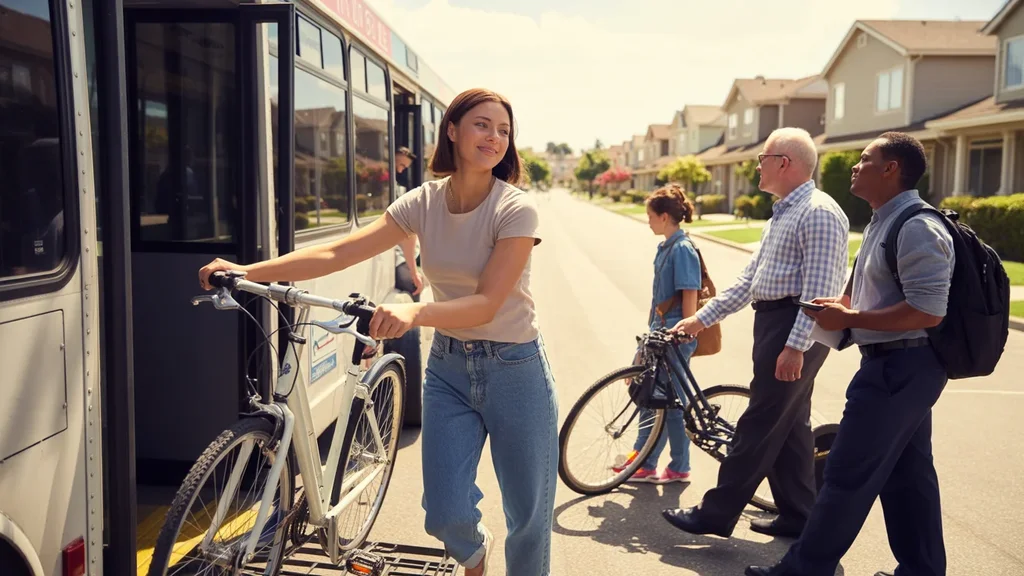
Public transit in Chino Hills centers around bus service. The city is served by regional bus routes that connect residents to neighboring communities and broader transit networks in the Inland Empire. Coverage exists, but it’s limited in scope and geographic reach.
Bus service tends to work best along major corridors where residential density and commercial activity overlap. If you live near one of these routes and your destination aligns with the network, transit becomes a viable option for specific trips. But service doesn’t blanket the city. Many residential neighborhoods—especially those in hillier or more peripheral areas—sit outside convenient walking distance to a bus stop.
Transit also falls short during non-peak hours and for trips that require transfers or indirect routing. Late-night service is minimal, and weekend schedules are often reduced. For someone working a standard weekday schedule along a serviced corridor, the bus might function as a supplement. For someone managing irregular hours, multiple stops, or destinations outside the primary network, it won’t.
There is no rail service in Chino Hills. Access to light rail or commuter rail requires driving to a nearby city with a station, which reintroduces car dependency at the front end of the trip.
Driving & Car Dependence Reality
Driving isn’t just common in Chino Hills—it’s structurally necessary for most households. The city’s layout, job distribution, and service access all assume car ownership. Parking is abundant and free in most contexts, which removes one of the friction points that discourages driving in denser urban areas.
For families, car dependence often means managing multiple vehicles. Parents juggle school drop-offs, extracurricular activities, and grocery runs that don’t align neatly with a single route or schedule. Even households with access to bus service typically keep a car for flexibility and backup.
Commuters face a similar calculus. Chino Hills is primarily residential, meaning most jobs lie outside city limits. Whether you’re commuting to Ontario, Riverside, or Los Angeles County, the trip almost certainly requires a personal vehicle. Carpooling and vanpools exist as options for some commuters, but they depend on alignment between schedules, routes, and employer participation.
The tradeoff for car dependence is control. You’re not constrained by transit schedules, route coverage, or service interruptions. But you absorb the full cost structure of vehicle ownership—fuel, insurance, maintenance, registration—and you’re exposed to volatility in gas prices. At $4.20 per gallon, fuel costs in Chino Hills reflect California’s broader pricing environment, which runs higher than much of the country.
Commuting Patterns & Daily Mobility
Because detailed commute data isn’t available for Chino Hills, we can’t pinpoint average travel times or dominant employment destinations with precision. But the city’s role as a suburban residential community within the Inland Empire suggests a commute-heavy pattern. Many residents work in regional employment centers—distribution hubs, healthcare facilities, retail concentrations—that require 20- to 40-minute drives or longer depending on traffic and destination.
Single-destination commutes are the simplest to manage. You leave home, drive to work, and reverse the trip at the end of the day. Multi-stop commutes—dropping kids at school, stopping for errands, or managing irregular shifts—add complexity and time. Flexibility becomes critical, and transit rarely accommodates that level of variability.
For households where one or both adults work from home, car dependence eases but doesn’t disappear. You still need a vehicle for groceries, appointments, and social or recreational trips. The difference is that commute costs—both time and fuel—drop significantly, which changes the overall transportation burden.
Who Transit Works For — and Who It Doesn’t
Public transit in Chino Hills serves a narrow but real slice of residents. If you live near a bus corridor, work along a route that aligns with service, and maintain a schedule compatible with transit hours, the bus can function as a primary or supplemental option. This tends to fit younger renters, individuals without school-age children, and households willing to structure their routines around transit availability.
Transit doesn’t work well for families managing multiple daily stops, residents in peripheral neighborhoods, or anyone whose job requires a car for work purposes. It also doesn’t work for households that value schedule flexibility or need reliable late-night or weekend mobility.
Renters living in denser, corridor-adjacent areas have the best shot at reducing car dependency. Homeowners in hillside or edge neighborhoods face the opposite reality: driving is non-negotiable, and transit exists primarily as a backup or occasional alternative.
The distinction isn’t about preference—it’s about infrastructure alignment. Transit works where density, land use, and service coverage overlap. Everywhere else, the car is the default.
Transportation Tradeoffs in Chino Hills
Choosing between transit and driving in Chino Hills isn’t a binary decision for most people—it’s a question of how much driving you can avoid, and at what cost in time and convenience.
Transit offers lower direct costs and removes the need to manage a vehicle. But it imposes constraints: limited coverage, fixed schedules, longer trip times for indirect routes, and reduced service during off-peak hours. For someone whose life fits within those constraints, transit can work. For everyone else, it’s a supplement at best.
Driving offers control, flexibility, and speed. You’re not waiting for a bus or planning around service gaps. But you’re also locked into ongoing expenses and exposed to fuel price swings. The predictability comes from ownership, not from avoiding costs.
The real tradeoff isn’t financial—it’s structural. Do you live and work in a way that aligns with transit coverage, or do you need the flexibility and range that only a car provides? In Chino Hills, the infrastructure tilts heavily toward the latter.
FAQs About Transportation in Chino Hills (2026)
Is public transit usable for daily commuting in Chino Hills?
Public transit is usable for a small subset of commuters whose home, work, and schedule align with available bus routes. For most residents, especially those commuting outside the city or managing multi-stop days, transit doesn’t provide sufficient coverage or flexibility. It functions better as a supplement than a primary commuting solution.
Do most people in Chino Hills rely on a car?
Yes. The vast majority of households in Chino Hills own and regularly use at least one vehicle. The city’s suburban layout, job distribution, and service access all assume car ownership. Even residents with access to bus service typically keep a car for errands, emergencies, and trips that transit doesn’t cover.
Which areas of Chino Hills are easiest to live in without a car?
Areas near commercial corridors with higher pedestrian infrastructure and bus access offer the most realistic path to reducing car dependence. These tend to be denser pockets where grocery stores, pharmacies, and other services cluster within walking distance. Even in these areas, however, full car-free living is difficult without significant lifestyle compromise.
How does commuting in Chino Hills compare to nearby cities?
Chino Hills shares the commute-heavy, car-dependent pattern common across the Inland Empire. Compared to cities with rail access or denser transit networks, Chino Hills offers less flexibility for non-drivers. Compared to more rural or isolated communities, it offers better bus coverage and proximity to regional employment centers. The comparison depends on where you’re commuting and what alternatives you’re weighing.
Can you get by with one car in Chino Hills?
Some households manage with one car, especially if only one adult commutes or if schedules can be tightly coordinated. But most families find that a second vehicle reduces friction and provides necessary backup. The feasibility depends on work locations, school schedules, and tolerance for logistical complexity.
How Transportation Fits Into the Cost of Living in Chino Hills
Transportation in Chino Hills isn’t just a line item—it’s a structural factor that shapes where money goes, how time gets spent, and which housing locations become practical. The need for a car influences where you can afford to live, how far you’re willing to commute, and how much control you have over daily routines.
For households weighing Chino Hills against other options, transportation should be evaluated alongside housing costs, not in isolation. A lower rent in a peripheral neighborhood might require a longer commute and higher fuel costs. A home near a commercial corridor might reduce driving frequency and open up transit as a backup, even if the upfront housing cost is higher.
The key is recognizing that mobility shapes everything else. If you’re moving to Chino Hills, plan for car ownership. If you’re trying to minimize transportation costs, focus on proximity to work and services, not on transit coverage alone. And if you’re comparing cities, remember that Chino Hills operates as a car-first community with supplemental bus service—not a transit-accessible alternative to driving.
How this article was built: In addition to public economic data, this article incorporates location-based experiential signals derived from anonymized geographic patterns—such as access density, walkability, and land-use mix—to reflect how day-to-day living actually feels in Chino Hills, CA.